
Florence
( 1 user review )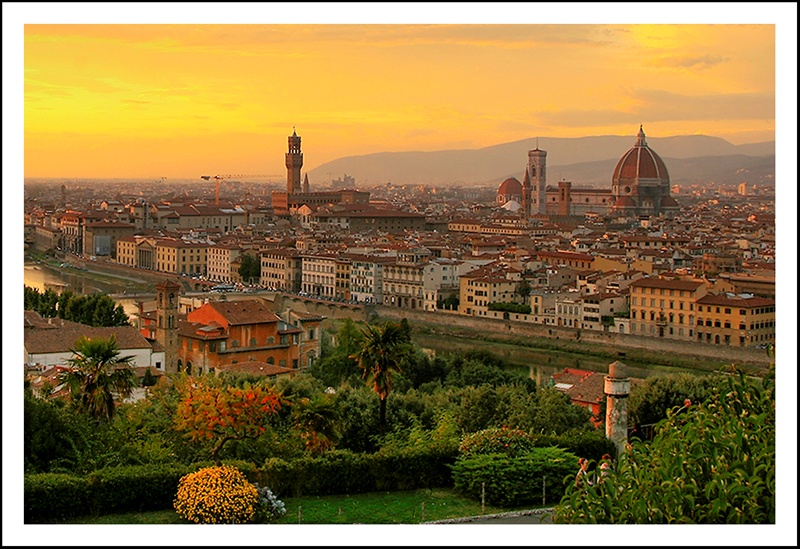
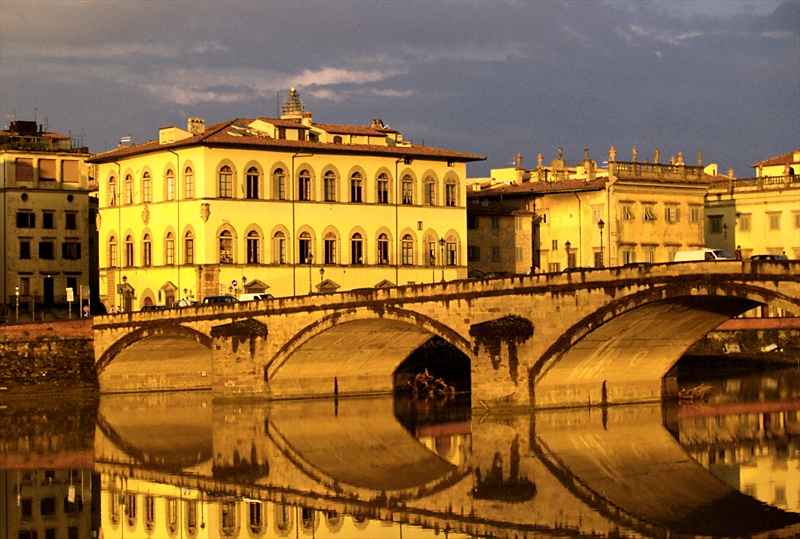
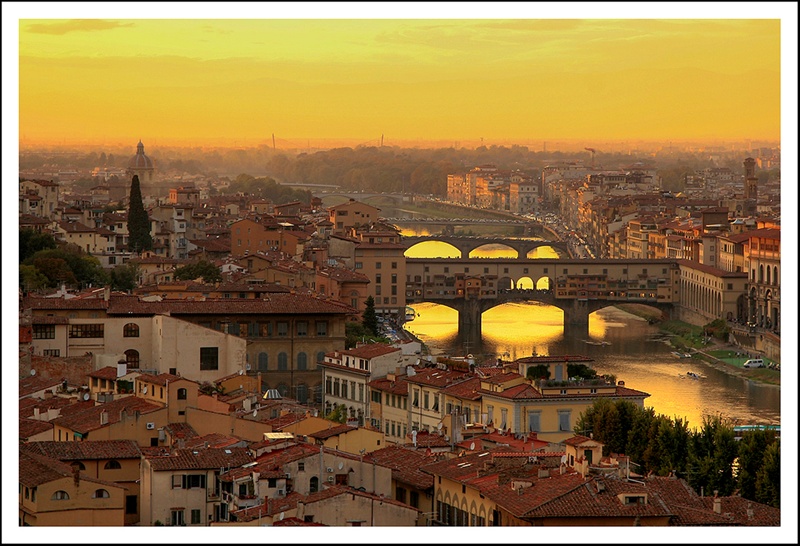
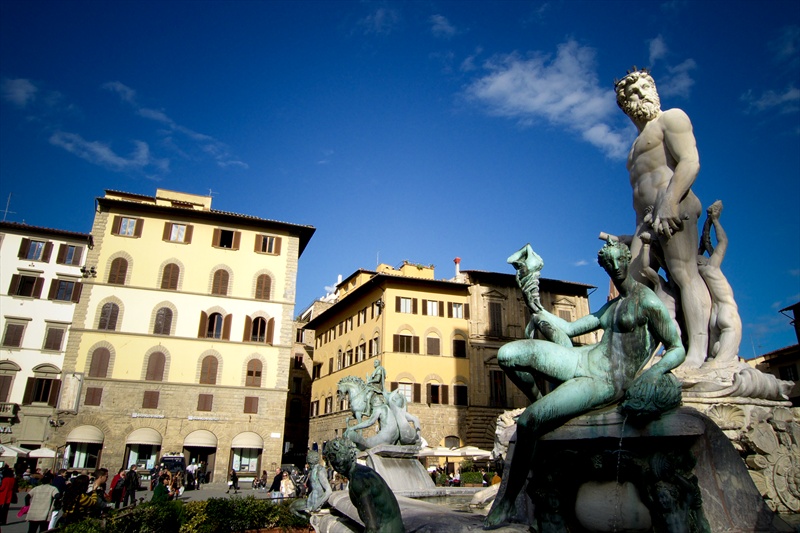
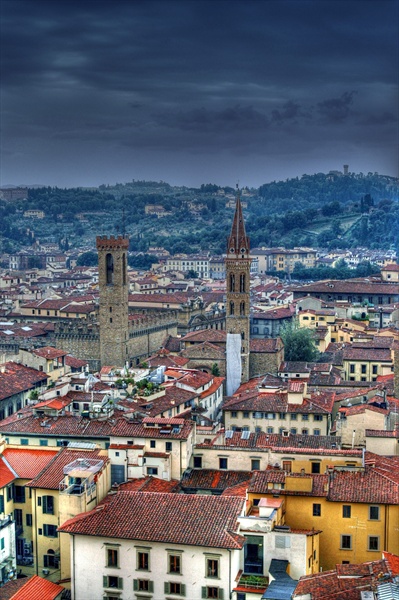
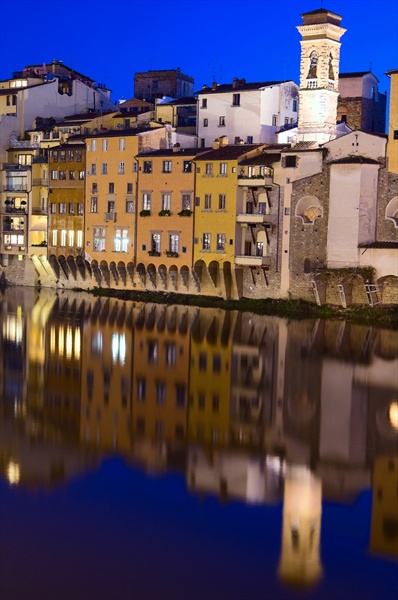
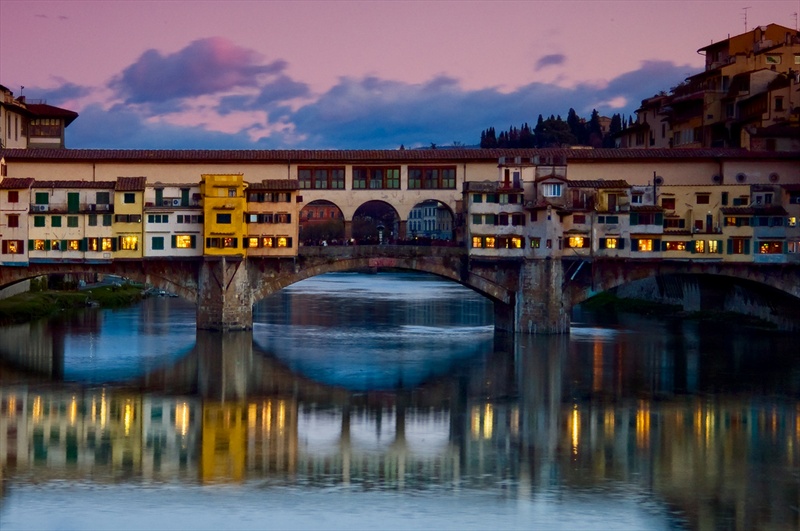
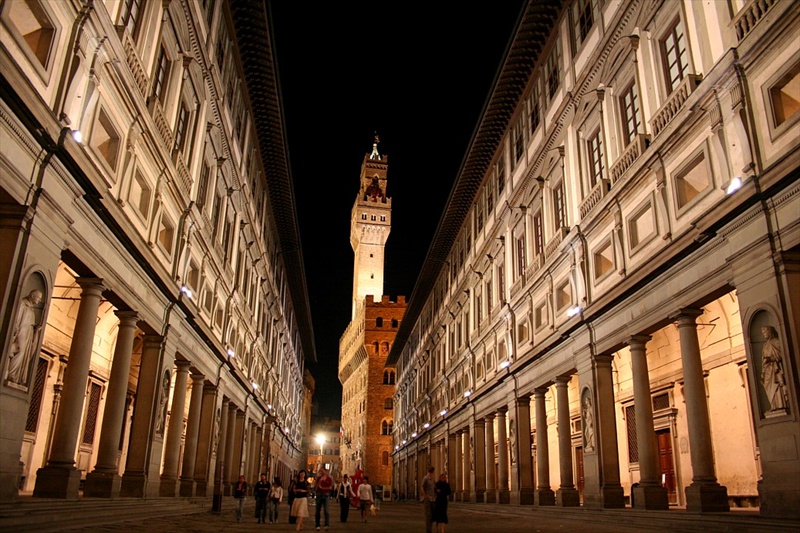
Florence (Italian: Firenze) is the capital of the region of Tuscany in Italy, with a population of about 366,488. The city is considered a cultural, artistic and architectural gem.
Understand
Florence was the birthplace of the Italian Renaissance. Politically, economically, and culturally it was just about the most important city in Europe for something approaching 250 years - from sometime before 1300 until the early 1500s.
Florentines reinvented money - in the form of the gold florin - which was the engine that drove Europe out of the "Dark Ages" a term invented by Petrarch, a Florentine. They financed the development of industry all over Europe - from Britain to Bruges, to Lyon, to Hungary. They financed the English kings during the Hundred Years War. They financed the papacy, including the construction of Avignon and the reconstruction of Rome when the papacy returned from the "Babylonian captivity".
Dante, Petrarch, and Boccaccio pioneered the use of the vernacular - the use of a language other than Latin, in their case, Tuscan, which, because of them, became Italian. Because Dante, et al., wrote in Tuscan, Geoffrey Chaucer - who spent a lot of time in Northern Italy and who stole Boccaccio's little stories - wrote in English. And others started writing in French and Spanish and so on. This was the beginning of the end of Latin as a common language throughout Europe.
The Florentines - perhaps most notably Filippo Brunelleschi (1377 - 1466) and Leon Batist'Alberti (1404 - 1472) - invented both Renaissance and neoclassical architecture, which revolutionized the way Rome, London and Paris and every other major city in Europe - from Barcelona to St. Petersburg - were built.
Florentines were the driving force behind the Age of Discovery. Florentine bankers financed Henry the Navigator and the Portuguese explorers who pioneered the route around Africa to India and the Far East. It was a map drawn by the Florentine Paulo del Pozzo Toscanelli, a student of Brunelleschi, that Columbus used to sell his "enterprise" to the Spanish monarchs, and which he used on his first voyage. Mercator's famous "Projection" is a refined version of Toscanelli's - taking into account the Americas, of which the Florentine was, obviously, ignorant. The western hemisphere, itself, is named after a Florentine explorer and mapmaker, Amerigo Vespucci.
Gallileo and other scientists pioneered the study of optics, ballistics, astronomy, anatomy, and so on. Pico della Mirandola, Leonardo Bruni, Machiavelli, and many others laid the groundwork for our understanding of political science.
Opera was invented in Florence.
And that is just a smidgen of what went on in this city, which never had a population above 60,000 from the first attack of the plague, in 1348, until long, long after it became unimportant.
And there were the Medici, perhaps the most important family that ever lived - the family that changed the world more than any other. Forget all the art for which they paid. They taught first the other Italians how to conduct state-craft, and then they taught the rest of the Europeans. Just to cite one example: Catherine de Medici (1519-1589), married Henry II of France (reigned 1547-1559). After he died, Catherine ruled France as regent for her young sons and was instrumental in turning France into Europe’s first nation-state. She brought the Renaissance into France, introducing everything from the chateaux of the Loire to the fork. She also was to 16th and 17th century European royalty what Queen Victoria was to the 19th and 20th centuries – everybody’s grandmamma. Her children included three kings of France, Francis II (ruled 1559-1560), Charles IX (ruled 1560-1574) and Henry III (ruled 1574-1589). Her children-in-law included a fourth king of France, Henry IV (ruled 1589-1610), plus Elizabeth of Hapsburg, Philip II of Spain (of Armada fame), and Mary Queen of Scots.
And that is without mentioning any "artists". From Arnolfo and Cimabue to Giotto, Nanni di Banco, and Uccello; through Lorenzo Ghiberti, and Donatello and Massaccio and the various della Robbias; through Fra Angelico and Botticelli and Piero della Francesca, and on to Michelangelo and Leonardo, the Florentines dominated the visual arts like nobody before or since. And this list does not include many who, in any other place would be considered among the greatest of artists, but in Florence must be considered among the near-great: Benvenuto Cellini, Andrea del Sarto, Benozzo Gozzoli, Domenico Ghirlandaio, Fra Lippo Lippi, Buontalenti, Orcagna, Pollaiuolo, Filippino Lippi, Verrocchio, Bronzino, Desiderio da Settignano, Michelozzo, the Rossellis, the Sangallos, Pontormo, just to name a few. And this list does not include the prolific Ignoto. Nor does it include the near-Florentines, such as Raphael, Andrea Pisano, Giambologna, the wonderfully nicknamed Sodoma and so many more, such as Peter-Paul Rubens — all of whom spent time in Florence and were nurtured by it.
In 1300, Pope Boniface VIII said that Aristotle was wrong, the universe was made out of five elements, not four: Earth, Air, Fire, Water, and Florentines.
The cathedral - the third largest Christian church, topped by Brunelleschi's dome, dominates the skyline. The Florentines decided to start building it - late in the 1200s - knowing they did not know how they were going to do it. It was "technology forcing" - like the Kennedy Administration's decision to put a man on the moon. The dome was the largest ever built at the time, and the first major dome built in Europe since the two great domes of Roman times - the Pantheon in Rome, and Hagia Sophia in Constantinople. In front of it is the medieval gem of the Baptistery, where every Florentine was baptized until modern times. The two buildings incorporate in their decoration the transition from the Middle Ages to the Renaissance. In recent years, most of the important works of art from the two buildings - and from the wonderful Bell Tower, designed by Giotto, have been removed and replaced by copies. The originals are now housed in the spectacular Museum of the Works of the Duomo, just to the east of the Cathedral.
Florence is filled with many other churches stuffed with some of the finest art in the world - San Miniato al Monte, San Lorenzo, Santa Maria Novella, Santa Trinita, the Brancacci Chapel at Santa Maria della Carmine, Santa Croce, Santo Spirito, SS Annunziata, Ognissanti, and more.
Then there are the art galleries. The Uffizi and the Pitti Palace are two of the most famous picture galleries in the world. But the heart and soul of Florence are in the two superb collections of sculpture, the Bargello and the Museum of the Works of the Duomo. They are filled with the brilliant, revolutionary creations of Donatello, Verrochio, Desiderio da Settignano, Michelangelo, and so many other masterpieces that create a body of work unique in the world. And, of course, there is the Accademia, with Michelangelo's David - perhaps the most well-known work of art anywhere, plus the superb, unfinished prisoners and slaves Michelangelo worked on for the tomb of Pope Julius II.
In all, Florence has something over 80 museums. Among those at the top of most lists - other than those above - are: The magnificent city hall, the Palazzo della Signoria (aka Palazzo Vecchio), a wonderful building with magnificent rooms and some great art; the Archeological Museum, the Museum of the History of Science, the Palazzo Davanzatti, the Stibbert Museum, St. Marks, the Medici Chapels, the Museum of the Works of Santa Croce, the Museum of the Cloister of Santa Maria Novella, the Zoological Museum ("La Specola"), the Bardini, and the Museo Horne. There is also a wonderful collection of works by the modern sculptor, Marino Marini, in a museum named after him. If you are interested in photography, you should not miss the superb collection of works by the early photographers, the Alinari brothers. The magnificent Strozzi Palace is the site of many special exhibits
To get a great overview of the city, you have plenty of choices: climb the dome of the Cathdral or Giotto's Bell Tower - which is much easier - or head for Piazzale Michelangelo a large parking lot on the hillside just south of the center of town, or climb a bit further to the church of San Miniato al Monte, a sublime 11th century masterpiece, with superb Renaissance scultpures. At vespers, the monks add to the beauty with chants.
There are also a few places to buy things, from the high-end jewelry stores lining the Ponte Vecchio to some of the most famous shops in the world - Gucci, Pucci, Ferragamo, Valentino, Prada, Armani, Ermenegildo Zegna, Buccellati, Frette, etc., as well as many wonderful shops that aren't world famous - yet. It is increasingly difficult to find bargains, but keen-eyed shoppers can still find good deals on smaller, side streets running off of those above and elsewhere in the center of town. The San Lorenzo market is now largely for tourists. There are also a couple of collections of "outlets" in the suburbs.
Great places to walk include along the Arno and across any of its bridges, through narrow, medieval back streets in the Santa Croce area and in the Oltr'Arno - on the south side of the river, in many ways like Rome's Trastevere or Paris's Left Bank - but far, far smaller. There are also superb shopping streets, such as the Via Tornabuoni, the Via del Parione, and the Via Maggio.
Getting there
By plane
Florence's Amerigo Vespucci international airport (IATA : FLR) (known to locals as "Peretola") has good connections to the center of the city, which can be reached in about fifteen minutes by taxi or bus. The Ataf-Sita "Vola in Bus" ("Fly by bus") service costs €5.00 one way, and makes the circuit between the airport and the central train station every half an hour from 5:30AM to 8:00PM, then once an hour afterwards. Note that the €1.20 bus no longer exists.
Note that 5:30AM bus leaves from the corner of Valfonda and Piazza Adua which is north of the train station instead of from the ATAF-SITA bus station which is on the west side of the train station. You can buy the ticket on the bus.
There is a €25 flat rate for taxis from the airport to any place in the historic center of Florence. They will charge €1 extra for each piece of luggage handled by the driver.
Much cheaper flights to destinations throughout Europe can be found at Pisa airport . Low-cost airlines which fly to Pisa include Thomsonfly, Easyjet, Ryanair, Transavia and HLX. Pisa airport and Florence are connected by rail and by bus. Both leave from and arrive at the main entrance to the airport. The bus station in Florence is immediately across the street from the main railroad station, "Firenze SMN". Train schedules are available at www.trenitalia.it. Bus schedules are available at www.terravision.eu/florence_pisa.html. The train costs €5.70, the bus costs €10 one way. The buses run more often. Some trains do not arrive at the main railroad station, and others require a change at Pisa Centrale.
By train
Modern, fast Eurostar trains connect Florence with Italy's main cities, and local trains from other parts of Italy and express trains from around Europe arrive in Florence. The main station is Firenze Santa Maria Novella , on the edge of the historic old town. Other small stations are Firenze Campo Marte (near Florence Stadium) and Firenze Rifredi. If you take an Intercity train to Florence, you may need to change at Rifredi for another train to Firenze S.M.N. The transfer between stations via train is usually already covered by your train ticket (to check for this, your train ticket should not differentiate between the Florence train stations and will simply say "Firenze"). If you happen to have a long wait for the transferring train, it is also possible to take a bus to the city centre, but this is probably not covered by your train ticket.
You might want to consider the overnight train connections to Florence from Paris or most German towns. For example, the train from Florence to Munich leaves at 21:53 and arrives in Munich the next morning at around 08:00. You can sleep comfortably the entire way and it costs about €100.
The train to Vienna takes about 12 hours and costs €70.
By car
Florence is connected by good highways to the rest of Italy. The easiest way to get in and out of the city from the A-1 Autostrada, which connects Florence to Bologna, Milan and the North, and to Rome and the South, is to use the "Firenze - Certosa" exit. This is the same route for those leaving for or arriving from Siena on the "Fi-Si" highway. If you are arriving from or leaving for Pisa and the West on the A-11 Autostrada, it may be best to go by way of Firenze-Certosa and use the A-1 to connect to and from the A-11.
Driving in the historic center - inside the wide "viale" where the old city walls were (and still are, on the southern side of the Arno)- is strictly prohibited, except for residents with permits. Enforcement is by camera, and is ferociously efficient. If you drive in the prohibited areas, you will be tracked down, and you will receive stiff fines in the mail.
There is a very strictly defined route to get in and out of the city for car rental agencies in the Via Fineguerra and the Borg'Ognissanti, just south of the Firenze SMN railroad station. If you rent there, be sure to ask at the office how to get in and out without violating the ZTL.
Parking in garages and parking lots is expensive, costing upwards of €1 per hour.
There are three kinds of parking places on the street: white, yellow and blue. White is for residents only, yellow ones are reserved, so you can park only on the blue places. The price is €1 per hour and you have to pay from 8AM to 8PM (12 hours). Leave the ticket inside the car in a visible place. Attention: you need coins for the parking - the machine won't accept banknotes or cards.
You can also find 'free' parking at all hours at "Piazzale Michelangelo" on the south side of the town. However, there are time limits for how long you can leave a car, which are rigidly enforced, and if you violate those limits, your car will be towed. It's about a 20 minute walk to the city centre (down the stairs and across the Arno). It has gorgeous views of the city as well.
By bus
Bus stops have clear, schematic labelling of the routes and are all named according to the street name or major landmark nearby. They do not always give an indication of bus times, however, so it is sometimes difficult to figure out how long it may take till the next bus arrives. Tickets must be bought in advance from Tobacconists or newspaper sellers, and are usually valid for one hour over the whole network, so that you can just hop on and off at will. They cost €1.20 for 70 minutes, and multiple day tickets are also available. Tickets are also available on the bus, sold by the driver, at an increased price of €2 (therefore, no more excuses in case of ticket control).
Traveling around
Walking
Most of the major tourist sights in Florence are within easy walking distance of each other. It is possible to walk from one end of the historic center of Florence to the other - North-South or East-West in a half hour. Walking is not only an easy way to get around, it also offers the chance to 'take in' much more of the city life. Be warned though, that electric motor scooters are small enough to fit where cars cannot. They are silent but quick and in the summer they often times travel into the plazas. Some of the streets in central Florence are closed off to traffic, and many more are simply too narrow for buses to get through. Therefor, bus and car tours are not recommended. This is a very small, very compact city that really needs to be seen by foot. And, of course, if you need to, you can always buy a new pair of shoes in Florence.
By bicycle
There is a bike rental service organized by the city. Bikes can be hired at several points in the city (and returned to the same place). One of the most convenient for tourists is located at SMN station. There are other locations at many railway stations, but often with restricted opening hours.
While there are hills north and south of the center of town, almost all of the historic center of Florence is easy for bikers, because it is as flat as a hat - flatter than that. But there is a problem: Traffic is terrible, and buses, trucks, cars, motorcycles, motorbikes bicycles, and pedestrians are all fighting for almost no space at all, so you'd better pay attention.
Beyond the city bikes, some of the hotels in town provide their guest with free bicycles. Bike shops also often rent bikes and some of them organize guided bike tours in the countryside.
By taxi
Taxis are available, but it may be best if you have your hotel or the restaurant you are eating at call ahead. Taxis should be called by phone and the nearest one available is sent to you through the company's radio system with its meter ticking away. In Florence, it can be difficult to hail a cab from the street curb. You either call for one or get one at the very few taxi stands. One popular taxi stand is at the central Santa Maria Novella Train Station and in a few major squares. The first taxi in the taxi stand line should be free - ask in case of doubt. Be aware that most taxis do not take credit card for payment. Be sure to have cash and ask in advance in case you only have a credit card with you. Please note that taxis in Florence are relatively expensive. Tipping is not expected, unless the driver helps you carry luggage etc.
By bus
Another way of getting around is by using the public buses from ATAF. A day ticket costs €5 and a 3 day ticket costs €12. A four-ride ticket costs €4.50. You can buy tickets at tabacchi (shops selling tobacco, which are marked with official looking "T"s out front." kiosks/newsagents/bars where the symbol "Biglietti ATAF" is shown, as well as at the ATAF ticketing office at the bus station outside Santa Maria Novella train station. Several ticket options are available. One very convenient is the 4-rides ticket and the "Carta Agile". The former needs to be stamped when entering the bus (from the front and rear doors of buses - the central door is supposed to be exit only; though now it is more accepted to enter from the central door). The latter has an embedded electronic chip and needs to be held close ("swiped") to the upper part of the ticket machine inside the bus: the "beep" of the machine will inform you that a ticket has been paid and the display will show you how many more tickets ("swipes") you have left. Within 1hr of stamping/swiping you can hop-off & hop-on on any bus of the urban ATAF network. Unfortunately and completely against Italian law, it is not uncommon to see bus drivers talking merrily on their mobile phone while driving. Don't expect riders to complain about it and don't panic - they will still drive with the same non-comfortable style as when they are "only driving". Hold tight to hand rails as Florence traffic is very unpredictable and frequent sudden breaking is necessary. Bus rides are not by all means "smooth". Buses are "safe" but pick pocketing is quite common. Please keep a close eye to your belongings and avoid showing off cash/jewelry/etc. especially in very crowded buses (especially for lines 17/23/14/22 - generally speaking any crowded bus can give a chance to pick pocket).
By car
Driving inside the historic center of Florence is virtually impossible.
Only residents with permits are allowed to drive there. Enforcement of the "Limited Traffic Zone" or "ZTL" is by camera. Violators will be tracked down and fined, but the fine may not arrive for a year or more after the infraction. The fines start at about €90. Once you enter the forbidden zone, it is virtually impossible to pass only one camera, and each time you do, it is a separate fine.
In addition, Florence has some of the teeniest streets in Europe, an amazingly fiendish one-way system that confuses even the locals, and some streets that just come to an abrupt end, with little or no warning.
Parking on the street in the historic center is out of the question. It may only be done by residents with a permit, and all other cars are towed away instantly - if not sooner - to some godforsaken suburb from which it will cost you hundreds of euros to get yours returned.
That said, you may be able to arrange a very temporary - about 30-minute - exemption through your hotel, which will need your license number and other information to make arrangements with the authorities. You will then have to get the car from the hotel out of the ZTL before the exemption expires.
A car can be useful to reach some destinations just outside the city centre, like Fiesole or Settignano (these sights are also reachable by bus service), or for day trips to wonderful places such as Siena, Volterra, Arezzo, etc. It is possible, if a bit tricky to rent a car in Florence and get out of town and back to the car rental agency without violating the ZTL. Those tempted to do so, should make sure to get precise directions from the rental agency.
See
Museums
The Uffizi is the most famous, but Florence also has other amazing museums a short walk away with world class artistic treasures.
-
Galleria degli Uffizi , +39 055 294883, Tu-Su 8:15AM-6:50PM, Piazzale degli Uffizi, Justly one of the world's most famous fine art museums. The collections of Renaissance paintings and sculptures from classical antiquity are superb. Included is **The Birth of Venus** by Sandro Boticelli. There are often long lines (several hours' wait is common) since even before the doors are open. Useful tip: You can call (+39 055 294883) to make a reservation in advance and walk right in, which is strongly recommended if you can spare the extra €4. The phone operator will give you an extension number which you quote at Gate 3 to pay (cash only) and get the tickets. Online booking is available but is much less convenient because it costs more, has a 24 hour waiting period, your specified time may change and you need to print an email. The restaurant/**caffè** has a large balcony overlooking the main piazza with good views of the Palazzo Vecchio. It is a great place to take a break for art lovers making a non-rushed visit to this fantastic collection. This cafe is rather expensive however. Street performers are often seen outside the Uffizi.
-
Bargello (Officially The National Museu of Bargello) , +39 055 294883, 8:15AM-6PM Tuesday - Sunday and the 1st, 3rd & 5th Monday of each month. Closed the 2nd & 4th Monday of each moth as well as May 1st., Via de Proconsolo 4, This museum houses one of the best examples of Renaissance and Mannerist sculpture. The works of many great Renaissance sculptors are on display here, including Michelangelo, Donatello, Ammannati, Bandinelli, Andrea and Jacopo Sansovino, Desiderio da Settignano, Giambologna, and Antonio Rossellino. The museum is located near Piazza della Signoria and can be seen in a few hours.
-
Accademia Gallery , Tuesday - Sunday 8:15AM - 6:50PM, Via Ricasoli 58-60, Highlights are Michelangelo's **David** and the unfinished **Slaves**. The David was recently cleaned in a controversial project. No photography is allowed inside. Wait times can be under one hour in the off-season. It is possible to reserve at the academia in advance and save yourself the long line. If you only interested in see David and Rape of the Sabines,and are short on cash you can see similar replicas in Palazzo Vecchino where you can also take picutres. Please note that while restoring or repairing art the gallery often showcases the replicas (you can tell because the toenail is intact for David, for example),
-
Pitti Palace. On the quieter south bank of the Arno. The former Medici family palace contains galleries of their art and treasures. The Boboli gardens behind the palazzo offer wonderful walks and excellent views of the city and the countryside south of the city.
-
Museo dell'Opera del Duomo, Reservations +39 055 230 2885, Piazza de Doumo 9, Directly behind the dome end of the cathedral, The Cathedral Museum, with artworks formerly in the Duomo and surrounding religious buildings, including sculptures by Donatello, another version of the Pietà (different from that one of Saint Peter's Basilica, in Vatican, Rome) by Michelangelo, and the losing entries in the famous contest held in 1401 to design the doors of the Baptistery. Models and drawings of the Cathedral. Worthy.
-
Institute and Museum of the History of Science , This museum shows the evolution of the instruments used in various scientific fields such as Mathematics, Physics, Biology, Chemistry, Astronomy. The room of Galileo Galilei shows some of his original instruments as well as models from his drawings. The room of Spheres and Globes houses an excellent cartographic collection. In a rather macabre twist the museum also has the middle finger of Galileo's right hand on display.
For those making longer stays in Florence, the city also has an interesting archaeological museum (the Etruscan art collection is particularly good), a Contemporary Art gallery, seated in Palazzo Strozzi, and other collections.
Other sights
In the old town center:
-
Santa Maria del Fiore , also known as the Duomo di Firenze is the city's beautiful cathedral, the symbol of the city. Brunelleschi's huge dome was an engineering feat of the rennaissance. A statue of Brunelleschi is sited in the piazza, with his figure looking upwards towards his dome. It is possible to climb the Dome (entrance on the side of the church), which has 464 steps. €6 entrance fee, and usually has a long lineup.
-
Giotto's Tower- adjacent to the Duomo, you can climb the tower for a magnificent 360-degree view of the Duomo, Florence, and the surrounding area.€6 entrance fee, and requires some tenacity to climb 414 steps.
-
Baptistery famous for the Paradise door and beautiful interior.
-
Palazzo Vecchio - old city palace/city hall, adorned with fine art. The replica of Michelangelo's "David" is placed outside the main door in the original location of the statue, which is a symbol of the Comune of Florence. The site displays an important collection of Renaissance sculptures and paintings, including the Putto, by Verrochio, and the series of murals by Giorgio Vasari at the Salone dei Cinquecento (Hall of the Five Houndreds) - the hall which used to display the now lost Renaissance masterpiece, that is, the so-called Battaglia di Anghiari, by Leonardo da Vinci.
-
Ponte Vecchio the oldest and most famous bridge over the Arno; the only Florentine bridge to survive WW2. The Ponte Vecchio (literally "old bridge") is lined with shops, traditionally mostly jewellers since the days of the Medici. Vasari's elevated walkway crosses the Arno over the Ponte Vecchio, connecting the Uffizi to the old Medici palace.
-
Santa Croce church contains the monumental tombs of Galileo, Michelangelo, Machiavelli, Dante, and many other notables in addition to artistic decorations. There is also great artwork in the church. And when you're done seeing that, a separate charge will gain you admission to the Museo dell'Opera di Santa Croce, where you can see a flood-damaged but still beautiful Crucifix by Cimabue (Giotto's teacher), which has become both the symbol of the flooding of Firenze in 1966 and of its recovery from that disaster. The Pazzi Chapel, a perfectly symmetrical example of sublime neo-Classic Renaissance architecture is also worth visiting.
-
Santa Maria Novella, near the train station, is a beautiful church and contains great artwork, including a recently restored Trinity by Masaccio. Also, the Chiostre Verde, to your left when facing the front entrance of the church, contains frescos by Paolo Uccello which are quite unusual in style and well worth seeing, if the separate entrance is open. Off of the church's cloister is the wonderful Spanish Chapel which is covered in early Renaissance frescoes.
-
Orsanmichele the beautiful old church of the Medici, converted from it's original purpose as a grainery.
-
San Lorenzo the facade of this church was never completed, giving it a striking, rustic appearence. Inside the church is pure Renaissance neo-classical splendor. If you go around the back of the church, there is a separate entrance to the Medici chapels. Be sure to check out the stunning burial chapel of the princes and the sacristy down the corridor. The small sacristy is blessed with the presence of nine Michelangelo sculptures.
-
San Marco Convent (1436) houses frescoes by Fra Angelico and Fra Bartolomeo in a series of dormitory cells in which the Dominican monks lived.
On the south bank of the Arno:
-
Boboli Gardens, elaborately landscaped and with many interesting sculptures, behind the Pitti Palace. Wonderful city views. Don't miss the Bardini gardens. Entrance to that is included in the combination ticket price for the Boboli, and it's a short walk from the Boboli Gardens. There are great views of the Duomo from the Bardini gardens. A single adult ticket to the gardens costs €10.
-
Santa Maria del Carmine has famous frescos (Masaccio’s Adam and Eve Banished From the Garden and others by Lippi and Masolino) in the Brancacci Chapel
-
Piazzale Michelangelo (Michelangelo square) plaza on a hilltop with a great view of the city (go there by bus) or climb the stairs and paths from the Lungarno della Zecca.
-
San Miniato al Monte, uphill from Piazzale Michelangelo, contains a chapel with frescoes by Spinello Aretino. On the cemetry near this church there are graves of famous people of Florence, including Carlo Lorenzi (Collodi) - author of the famous Pinocchio.
-
Santa Trinita, on the Oltrarno side of the Ponte Vecchio, contains frescos by the brilliant and weird mannerist painter, Pontormo, which are to your immediate right when entering.
Things to do
-
Climb the Duomo or Campanile, Traverse the winding staircases inside the duomo or the nearby bell tower to see some of the best views of Florence. Not only can you see the Tuscan countryside in the distance and the impressive palaces and churches of Florence in the fore, but it also shows you just how large the duomo is.
-
Stroll the Boboli Gardens, These extensive gardens behind the Piti palace provide excellent views of the city of Florence and numerous sculptures in a relaxed environment. Stop in the hilltop cafe, grab a drink and a seat outside and enjoy the view.
-
Street Performers by the Uffizi, in front of the Palazzo Vecchio, In the evenings street performers often put on a show here. Performances can range from violin duets to people dressed as sculptures. A nice place to stop while you eat your after-dinner gelato.
- Enjoy the view from the Piazzale Michelangelo, It's a big square on a hill, but somewhat distant from the traditional tourist sites. It's easy to reach it even on foot using the stairs called
Eat
Remember that restaurants have separate prices for food to go or eaten standing up versus sit down service; don't try to sit at a table after paying for food or coffee from the restaurant's to go booth. Also ask always beforehand for the price if you want to sit at a table. Otherwise you might be uncomfortably surprised. Cappuccino al banco i.e. standing up might cost €1-3; but at a table €4.
Florence's food can be as much of a treat to the palate as the art is a treat to the eye! There is good food for any price range, from fine restaurants to take out food from window stands. The best price/quality ratio you will find outside the historical center where normal Italians go to eat. The worst ratio is probably in the neighbourhood of Mercato di San Lorenzo where there are a lot of tourist restaurants, while many of the best restaurants in the city are found in the Santa Croce district. In some, requests for pizza may be met with a rebuff. For local pizza look for small shops near the Duomo.
The best lunch places don't always turn out to be the best dinner places. Dinner in Florence really starts sometime between 19:00 and 21:00. If a place looks like they're preparing to close before 20:00, it might not be the best option for dinner. Reheated pasta is not very tasty.
Typical Tuscan courses include Bistecca alla fiorentina which is huge t-bone steak weighing from 500 to 1500 grams. It has always price given per 100 grams e.g. 3,5€ etto (etto is "hecto" pronounced in Italian). Crostini toscani are crostini with tuscan liver paté.
There is also a uniqely Florentine fast food with a 1000-year history - lampredotto, a kind of tripe (cow stomach, or calf for preference, but a different part than the more familiar white "honeycomb" kind, dark brown in color; the name comes from its wrinkled appearance, which apparently reminds locals of a lamprey fish). The trippaio set their carts in the public squares in the center, dishing out the delicacy straight from the cauldron in which it is being boiled with herbs and tomatoes, chopping it and slapping the portions between halves of a Tuscan roll; the top is dipped in the broth. A mild green parsley- or basil-based sauce or a hot red one goes with it.
There are many gelato (Italian ice cream) stands; some connoisseurs consider the better Florentine gelato the finest in the world. Often gelato is made in the bar where you buy it. Because of this there are many exotic flavors of ice cream like watermelon, spumante or garlic. It's hard to find a gelato place open very late, so after dinner might not be an option. Near the Duomo though, there are a few places open after 22:00.
Tuscany is also the wellspring of cantuccini, also called biscotti di Prato. (Please note that in Italian, the singular of biscotti is un biscotto.) It's traditional to enjoy them after a meal by dipping them in Vin Santo ("Holy Wine"), a concentrated wine made from late-harvested grapes, but you can also buy bags of them in stores throughout the city and eat them however you like.
Budget
There are numerous caffè and pasticcerie where you can find excellent sandwiches. Pizza sold by weight is an equally excellent solution for budget dining, as is any caffè displaying a "Primi" card in its window where you'll find pastas and other dishes at low reasonable prices. The delis (rosticcerie) are very affordable (and the food is often quite good), and some also have dining tables if you don't want to take away.
You can buy the makings for a picnic or snack at the Mercato Centrale. This large market has everything you might need, often at more affordable prices than supermarkets. The stalls will also sometimes vacuum seal whatever you buy so you can take it home with you.
A general rule: the closer you are to the historic old town, the higher the price.
-
I fratellini, Via dei Cimatori, 38R, Nothing but the essentials: **panini** (€2.50) and wine (€1.60+) from a tiny hole in the wall. Patrons eat on the sidewalk while resting their glass of wine on small shelves nested along the street wall.
-
Oil Shoppe, Via S. Egidio 22r, . This quaint deli has affordable (€4) hot and cold sandwiches made with a variety of meats (try the meatball sandwich), sauces and fresh vegetables. You can get a meal deal with chips and small drink for €6.50. It is open from 10.30 in the morning to whenever the bread (white, wheat and sub rolls) runs out, which is usually between 6 and 7 in the evening. During the peak period of February to June, it can get very crowded in the day with students, but their love for the sandwiches there is apparent in their loyalty. A good mid-day meal to take with you on the go as you explore Florence, Via S. Egidio is not too far off the beaten track. The Oil Shoppe also sells its own extra virgin olive oil, which they generously use in their sandwiches.
-
Trattoria Mario, Via Rosina 2/R (near Piazza Mercato Centrale); Tel. 055 218550 (no bookings) The restaurant opens for lunch and they sit you with other people walking into the restaurant. There is a menu on the wall and the food is great and if you can, save room for a secondi (meat plate).
-
Trattoria Le Mossacce, 055294361, Lunch until 2PM, Dinner starting at 7PM, Via Del Proconsolo, 55R, A local eatery that has been well-reviewed by multiple publications. Local produce and meats are prepared simply using traditional recipes and time-honoured tradition. Some pastas are made fresh daily, so ask for the daily special. If you want to experience Bistecca alla Fiorentina (Florentine-style steak), they do it amazingly without breaking your wallet. They sell and cut the steak from a larger rib slab in increments of 100g (with a minimum of 500g per serving).
-
Leonardo, 055 284446, 11:45-14:45 for lunch, 18:45-21:45 for dinner. Closed on Saturday, Via de' Pecori 11, A cozy self-service restaurant at the corner of Via de' Pecori and Via de' Vecchietti. About 2 minutes walk from Duomo. Although there is a menu at the enterance, it is better to go straight to the restaurant, see what they have on their counters and pick what you like. You can also order Bistecca alla Fiorentina.
Mid-range
-
al Tramvai, Piazza T.Tasso, 14 r, Tel 055 225197. An excellent restaurant for authentic Tuscan fare away from the tourist centre. This place gets very busy around 8PM with the locals so be there a bit before. Very traditional Tuscan food at decent prices. 1st courses at €7 and 2nds at about €10 to €16. Vino at €4/0.5L. The rabbit, asparagus souffle and fiori fritti are excellent and the service very welcoming and warm.
-
"Il Latini" Restaurant, Via dei Palchetti, 6r, 055-210-916. You actually are seated at a table with other people and that is the fun of the restaurant. The owner visits each table and everyone is in a great mood. It is the combination of all that is mentioned above plus the personalities of the waiters make it a fun place to eat, visit and enjoy the whole Florentine experience. At 7:30PM when it opens, you will see a crowd outside the restaurant trying to be first in line - even with reservations! Don't panic. The restaurant is bigger than it looks. Even if you do wait, they bring you wine and cheese to those in line. The line is worth it. You might try and ask the owner if you could see the cellar because that is where there is a small private dining area for wine lovers (group party) and the wine is stored there.
-
Osteria dell'Agnolo , 055.211326, Borgo S. Lorenzo, 24r , From Santa Maria Novella train station walk along Via dei Cerretani towards Piazza Duomo. From the Baptistery in Piazza S. Giovanni, turn left into the first pedestrian street - Borgo San Lorenzo. Keep walking on the left side for a few meters to no.24, The owner is helpful and friendly, and the food is good and reasonably priced compared to other restaurants in Florence. The bisteccha alla fiorentina and the trippa are great choices for dinner, home made lemon mouse with melon ice cream is a fine dessert.
-
Palle d'Oro, Via S. Antonino, 43/45R, Tel. 055 288383. Three generations of the same family have managed the restaurant, started as a wine seller (they have also been producing wine). They specialize in Tuscany traditional food. Quality of food is excellent, since they not only are good cookers, but also use very good quality ingredients.
-
Trattoria Cammillo, 055 212427, closed Tuesdays and Wednesdays, Borgo San Jacopo 57/R, near the fountain at the 5 way dangerous intersection south of the river, Fairly good Tuscan cuisine, with a number of options for vegetarians and vegans. Make reservations or arrive at 7PM.
Splurge
-
Restaurant Terrazza Brunelleschi Piazza Unità Italiana, 6 - 50123 Florence. Ph. +39.055.23580 - Fax +39.055.23588895. . From the Panoramic "Terrazza Brunelleschi" Restaurant you can catch all of Florence in a glimpse: the dome of Santa Maria del Fiore designed by Brunelleschi and Giotto's famous campanile, the roofs of the age-old buildings of the historical center and the green hills that surround the city on the horizon.
-
Enoteca Pinchiorri Via Ghibellina, 87 - 50122 Florence. Ph. +39 055 242777 . Situated in the center, near Santa Croce, perhaps the most expensive and exclusive winery and restaurant in Florence. You will choose from a selection of the best Italian wines. Expect to spend more than €100 each, but according to your wine taste, it can easily reach much higher prices. You will be presented with separate bills for the food and for the wine.
-
Il Cibreo Via Dei Macci, 118/R - 50122 Florence, Ph. +39 055 234 11 00 - Fax +39 055 244 966. In the center near Santa Croce. Vast and great choice of Tuscan food, with highly selected ingredients. €50-100 each.
Dessert
-
Gelateria dei Neri, Via dei Neri 20r, Ice cream in many flavors, some experimental, all excellent.
-
Vivoli, Via Isole delle Stinche, 7/R; Tel 055 292 334. Close to Piazza Santa Croce. The best gelato in Florence! Vivoli features one of the best gelato fruit selections, so definately try the fragola, or strawberry! Make sure that you ask for the cream on top as well, because it adds another element to an already great dessert!
-
Perché No! - The best Gelato in town - freshly made daily from quality ingredients. E.g. pear will be made with real pears and will taste of pears. Typically fruit flavors will be made with seasonally available fruits. Chocolate flavor will taste of cocoa rather than chocolate milk-powder - if you are a chocolate fan, this is the place to go. Specialties are "sorbetto" (ice cream made with water rather than milk - both fruit and standard flavors) and "mousse" ice creams. Ask for the "special" taste of the day. In Via dei Tavolini 19.
Drink
Tap water is safe and the taste is now good enough (it got really nasty right after the flooding and stayed so for many years), but those who still prefer bottled water will find it plentiful. Sample the excellent wines of the region.
Chianti is the local wine that can be ordered cheaply. Many eateries will offer carafes of various sizes of "house chianti", usually for under €4.
Mid-range
-
Uffizi Museum The bar at this museum offers an amazing view overlooking la Piazza della Signoria, but it's only accessible through the museum, so you'll have to buy a ticket.
-
Irish Pub (The Fiddlers Elbow) Piazza Santa Maria Novella. This pub has tons of seating, in addition to live music and great staff.
-
Bebop-great coverbands everynight and a €4 pint! Can be found north of the Duomo on the right on Via Dei Servi, before you reach Piazza d Annunziata.
-
Ambrosia - Found in Piazza de Ambrosia. This is primarily a wine bar, and you can sample some great wines at a low cost provided you come with friends and share the price of whole bottles.
Splurge
-
Rivoire Piazza della Signoria. Founded in 1872 this terrace facing the Palazzo Vecchio is a Florentine institution.
-
Paszkowski or Gilli. Situated on the Piazza Republica, next to the hotel Savoy. Note that the terrasses on the other side of the piazza are equally pricey.
Sleep
As elsewhere the price of hotels in Florence has been climbing quickly in the last few years. The golden rule here is if you want something cheap you'll have to stay outside of the historic center. The area around the train station is cheaper, but not as safe, especially for women travelers at night. If you are looking at big chain hotels you should be aware that they are usually quite a ways out indeed, the Novotel for instance is almost at the airport.
Certain hotels, particularly those oriented toward business travelers offer special reduced rates during the weekend (eg. Starhotel Michelangelo) or during slow weeks like Baglioni. Sometimes you can also get a substantial discount by reserving online. In the train station there is a tourist information office which also offers hotel reservations; you can often get good deals through them at the very last minute, but it's not guaranteed.
Budget
There are quite a number of one or two-star alberghi within a short distance of the station. Young women can find accommodation with certain convents at very low prices, and usually in historic locations. On the other hand, you'll have to forget about any late-night Tuscan craziness.
Camping
- Camping Michelangelo has a scenic location on the hillside close to Piazza Michelangelo. Usually it is very crowded. It has "house tents" available, which are tents for two people with bunk beds inside.
Hostel
-
Hostel Archi Rossi - Via Faenza, 94r. Tel. 055 290804 - Fax. 055.2302601 - Never mind the renaissance-kitsch walls. This hostel is close to the SM Novella train station and not far from the city's main attractions. More importantly rooms are clean and rates include breakfast, dinner (except Saturdays) and round the clock internet access. Bonus: the Hostel offers a free walking tour daily starting at 10AM. An English speaking guide rotates between the classical and off-the-beaten-path walking tours around the city. Rates from €18 (dorm) and €26 (private room; per person)
-
Hostel 7 Santi - Viale Dei Mille, 11 Tel. 055.5048452 - Fax 055.5057085 - A recently converted 19th century convent in the Campo di Marte area, 10 min from the center by bus. Rooms are clean and quiet - no earplugs necessary! Rooms start at €18 (dorm) info@7santi.com"
Apartment rentals
-
Casa Luce in San Lorenzo , +39 347 5286380, +39 347 5286380, Piazza del Mercato 27, Near Basilica di San Lorenzo, It is located in the spacious Piazza del Mercato Centrale in San Lorenzo at number 27, within 5 minutes walking distance from the Duomo Santa Maria del Fiore and the Baptistery, and within 10 minutes walking distance from the Uffizi, Piazza della Signoria and Ponte Vecchio. On the second floor of a recently restored XVI century building, the flat itself has been modernised and redecorated to a high standard. It can sleep up to a maximum of 4 people.
-
Il Frantoio delle Grazie , +390556505510, +390556505510, Six apartments within 5 minutes drive from the A1 highway It is only 3 Km from Florence historical city centre; nearest shopping centre is one km.
Bed and Breakfast
-
Giardino di Leopolda Florence – Via Montebello, 49 - Cap: 50123, Florence, Italy. . Telephone +39 055 292407 • Fax +39 055 213272. The Giardino di Leopolda is a cosy and economic B&B of Florence with 8 bedrooms divided in double, double single use and triple, with an abundant breakfast included in the price. Most of the guestrooms also present the private bath and some a view on the garden. For those arriving by train, the Giardino di Leopolda B&B is located half mile from the Santa Maria Novella Train Station. The price for a double room is Euros 55 for a double and 39 for a single.
-
Giulia Residence , , Double rooms start from €60 in low season.
-
Piazza del Duomo Florence , +39 055.285018, +39 055.285018, Via dell'Oriuolo 49, A small B&B near the heart of Florence, rooms with private bathroom with shower , conditioned air, Lcd Tv, free WiFi.
Hotels
-
Hotel Dali , 0039 055 2340706, Via dell'Oriuolo 17, Just down the road from the Duomo. Some rooms open onto a quiet and picturesque inner courtyard. Other rooms offer a view of the Duomo. Owners Marco and Samanta are always ready with good restaurant recommendations and speak excellent English.
-
Arizona Hotel , +39 055.245321, +39 055.245321, Via Luigi Carlo Farini 2, This three star hotel is in a renewed villa from the 18th century
-
Convitto della Calza , +39 055 222 287, Piazza Della Calza 6, The Convitto della Calza is a a 16th-century cloister that has been converted into a hotel, with frescoed rooms with a modern conference center
-
Hotel Casci , +39 055 211 686, Via Cavour 13, 500 yards from the main train station, This small hotel is located in a fifteenth century palace and has some original fresco ceilings: the building was house and property of the famous composer Gioacchino Rossini during the 19th century
-
Hotel Kursaal & Ausonia Via Nazionale, 24, 50123 Florence (Tuscany), Italy Telephone: 055-496-547 Fax: 055-462-6615 . Hotel Kursaal & Ausonia is a small boutique hotel that offers traditional-styled rooms and family-run hospitality in the heart of Florence's historical centre, midway between the Duomo and Florence's central train station. Double Rooms starting from €50.
-
Hotel Delle Tele Via Panzani, 10, 50123 Florence (Tuscany), Italy Telephone: 055-238-2419 Fax: 055-290-797 . In the old town centre of Florence, between Santa Maria Novella railway station and the Cathedral. Rooms from €55.
-
Hotel Derby Via Nazionale 35, +39 055 2193308, Fax: +39 055 285839, PIVA 05265000488, . Small family run hotel located on the fifth floor of a 6th floor building. All the rooms contain private facilities and the location is convenient for those arriving in Florence by train. Doubles starting from €60.
-
Hotel Fiorita, Via Fiume, 20 - Ph. +39.055.283189/055.283693/055.2654376, fax +39.0552728153. (Toll free number from Italy 800.280722), An elegant building in the center of Florence, elegant surroundings and quality services. Rooms have air conditioning, a minibar, direct telephone line, satellite TV and a safety deposit box. Some rooms also have modem sockets. Singles starting from €65.
-
Hotel Lorena Florence – Via Faenza 1 - Cap: 50123, Florence, Italy. . Telephone +39 055 282785 • Fax +39 055 288300. The Lorena is a two star hotel located in the historic centre of Florence, with single, double, triple and quadruple rooms. Some with shared bathroom. The breakfast is optional. Wide range of rates, from 25 euros for a single with shared facilities, to 75 euros for a quadruple with private bath.
Mid-range
-
Calzaiuoli Hotel Florence , +39 055 212 456, +39 055 212 456, via Calzaiuoli 6, The Calzaiuoli Hotel Florence is in the very heart of Florence, on the Calzaiuoli street which connects Palazzo Vecchio square to Florence Dome (S. Maria del Fiore Church by Brunelleschi).
-
Hotel Borgo Castelletti , +39 055 8791915, +39 055 8791915, Via di castelletti 15, signa, Florence, Little country hotel 13 km far from the city,connected to Florence by Signa station(2 trains every hour, 15 minutes trip). The hotel has a restaurant, swimming pool and a meeting center in an ancient Villa. The staff can arrange yoga school, riding school, wine and olive oil tasting tours and much more.
-
Hotel Boston Florence – Via Guelfa, 68 - Cap: 50129, Florence, Italy. . Telephone +39 055 496747 • Fax +39 055 470934. The Boston is a three star hotel of Florence with 16 bedrooms divided in singles and doubles. Some whit private en-suites services, others with shared bathroom. Average rates. Starting from 50 euros for a single without private bath, and 135 for a double.
-
Hotel De Rose Palace, Via Solferino, 5, 50123 Florence - Ph: +39.239.6818 - Fax: +39.268.249, . 4 star Hotel housed in a traditional Florentine mansion a short walk from Ponte Vecchio and Santa Maria Novella central train station. Prices starting from: Double €100.
-
Galileo Hotel, Via Nazionale, 22/a, Ph.: +39 055.496645 - Fax: +39 055.496447 . An elegant nineteenth-century building furnished with style in the best of Tuscan tradition, in the heart of Florence. Average prices: single rooms €80, doubles €120, superiors €150.
-
Hotel Crocini, Corso Italia 28 - Ph: +39.055.212905 - Fax: +39.055.210171 . In the center of Florence, just steps from the Theater for Maggio Musicale Fiorentino, Hotel Crocini welcomes you with a typically Tuscan spirit. Average prices: twin (without private bathroom) €40, triple (without private bathroom) €50, single (with private bathroom) €40, twin (with private bathroom) €50, triple (with private bathroom) €60.
-
Hotel Il Guelfo Bianco, Via Cavour 29, 50129 Florence - Ph: +39.055.288330 - Fax: +39.055.295203, . Hotel Il Guelfo Bianco, on historic Via Cavour, in the center of Florence, where past and present blend in comfort. It is in the heart of the city, near the most famous tourist sites and monuments: in 5 minutes by foot you can easily reach Piazza San Giovanni, the Duomo and the baptistery, the Gallerie dell’Accademia and the San Marco Museum and much more. To get to the Duomo, Piazza della Signoria and Uffizi Gallery, takes around ten minutes on foot. Prices starting from: Single €105 - Double €130 - Apartments €270
-
Hotel La Gioconda, Via Panzani 2, 50123, Florence - Ph. +39-055.211023, Fax +39-055.213136, This 3 star hotel is in the historic heart of Florence, only a few steps from Santa Maria Novella, at 3 minutes from elegant Via Tornabuoni. Doubles from €85
-
Hotel La Residenza, Via Tornabuoni, 8 50123 Florence - Ph: 055.2340650 - Fax: 055.240863, . Overlooking the prestigious via Tornabuoni, the Hotel La Residenza hosts travelers in a historical and classically Florentine setting, enhanced with facilities of the highest quality. The luxury of its roof garden with a charming view, makes the Residenza one of the most fascinating hotels in the heart of Florence. Prices: Single from €78 - Double from €110 - Triple from €145
-
Hotel La Selva, Via di Barberino, 221 - Florence Calenzano - Ph: +39 055. 8876824 - Fax: +39 055. 8876806, . Located on the Tuscany hills, Hotel La Selva distinguishes itself as one of the 3-star hotels in Florence that have opted to incorporate during its remodeling the principles of bioarchitecture. Average prices: Single €40 - Double €55
-
Hotel Malaspina, Piazza Indipendenza, 24 - Florence - Ph: +39 055 489869 - Fax: +39 055 474809, . Hotel Malaspina, a charming late 19th century residence, enriched with modern comforts for the most pleasant stay possible in Florence. It is close to Fortezza da Basso (5 minute walk), the most important trade show center of the city, Palazzo dei Congressi and Palazzo degli Affari. To get to the Duomo, Piazza della Signoria and Uffizi Gallery, takes around ten minutes on foot. Average prices: Single €90 - Double €110.
-
Hotel MarignolleVia di San Quirichino a Marignolle 16, 50124, Florence Tel. +39 055 2286910 Fax +39 055 2047396, . The relais is surrounded by the typical scenery of the Florentine hills, with cypresses and cane-apple trees, broom bushes and pine trees, amongst the scents of lavender, rosemary, time and catmint. A pool with a large solarium, presenting deck chairs and sunning beds, is at guests’ disposal from May to October. Double rooms from €165
-
Hotel Mario's, Via Faenza 89, Ph. +39 055 216.801 Fax +39 055 212.039 . Romantic hotel in the heart of Florence, Hotel Mario's welcomes you in an ambiance of noble Florentine tradition. The hotel is the ideal place from which to comfortably discover on foot the city, the traditional tourist spots and even the less frequented places that are nonetheless just as charming, as well as the famous historical and artistic landmarks, the museums and suggestive areas that have made Florence famous the world over. Average prices: Single €67 - Double €82.
-
Hotel Mia Cara, Via Faenza, 90 (red) 50100 Florence - Ph: +39.055.216053 - Fax: +39.055.2302727, . The Hotel Mia Cara is a small-scale, simple yet elegant hotel in the center of Florence situated just a short walk from Santa Maria Novella and the Duomo. Friendly english speaking staff. Continental breakfast included. Prices: Single from €35 - Double from €50 - Triple from €75 - Quadruple from €80.
Splurge
-
Grand Hotel Cavour, Via del Proconsolo, 3 - 50122 Florence, Ph: +39 055.266271, Fax: + 39 055.218955 . Occupies the medieval 13th century residence of the noble Strozzi-Ridolfi families - powerful Florentine families whose history is intertwined with that of the legendary Medici dynasty as well as the Republic of Florence itself. €150-300.
-
Hotel Degli Orafi , +39 055 26622, Lungarno Archibusieri, 4, Magnificent hotel on the right bank of the Arno, next door to the Uffizi. A beautiful view of the historical center of Florence. You can stay in the famous Room With a View where the movie by James Ivory was filmed. The Ponte Vecchio is 50 yards away.
-
Hotel Mirage, Via Francesco Baracca, 231 (interno 18), Ph. +39 055 352011 (Fax +39 055 374096), . An elegant, exclusive and comfortable four star hotel 5,6km away from Piazza Duomo and less than 500mt from the Florence airport (FLR). Single rooms from €110, doubles from €140 and triples from €160; apartments from €300 per week.
-
Hotel Monna Lisa Florence,, Borgo Pinti, 27 – 50121 Florence . A hotel in a restored 14th century Florentine noble palace. Has gym facilities, sun terrace and meeting rooms. €200-550.
-
Villa la Vedetta Relais & Chateau, Viale Michelangiolo 78, +39 055 681631 Fax +39 055 6582544. One of the most exclusive boutique hotel in the city, this 5 star luxury hotel features a breathtaking view of Florence's skyline. Rooms from 299 EUR.
Buy
Souvenirs related to art and Florence's sights can be found everywhere. Shops that are not located in the very centre of the city are significantly cheaper.
Books, leather goods, art handcrafted journals, frames, pencils etc. in that gorgeous Florentine paper with swirls of color and gold.
Better stores in/near the city center offer superb leathers at sometimes decent prices...perhaps after some bickering. Goldsmiths on the Ponte Vecchio display beautiful and quality work, but can be very expensive.
Some of the most uniquely Florentine shops and sights can be found in the Oltrarno, which is Florence's "left bank" and home to countless generations of artisans. This section of town can be found by crossing "Ponte Vecchio" (the old bridge) or Ponte Trinità from the center. This "undiscovered" Florence is a must-see!
Beware:If the police catches you while buying a knock-off version of something with a brand from an (illegal) street vendor, you can be fined up to €10,000. You'll see plenty of people on the street selling imitation Gucci sunglasses, Rolex watches, and Prada purses for dirt cheap. It's okay if the item doesn't have a real brand on it, but buying a knock-off is illegal.
-
Enoteca Mondovino, +39 055 215214, Via S. Agostino 27-29/R, Decent wine and Liquor store with interesting collection of potable bitters in the back (Italian and German).
-
Beaded Lily Beads & Designer Jewelry , +39 055 239 9182, +39 055 239 9182, Via Toscanella 33r, In the Oltrarno - Steps from Piazza Della Passera *Walking directions posted on website, An inspiring array of unique beading delectables, handmade designer jewelry, Italian ribbons and yarns and more... Now offering glass beadmaking and jewelry design courses!
-
Officina Profumo-Farmaceutica di Santa Maria Novella , Via della Scala 16 N, An old farmacy, which sells high-qualitiy beauty products like soaps, shaving cream, eau de Cologne.
-
Pitti Vintage - Italian & European Vintage Clothing & Accessories , +39 055 230 2676, +39 055 230 2676, Sdrucciolo Dei Pitti 19R, In the Oltrarno - On Sdrucciolo between Palazzo Pitti & Piazza Santo Spirito, Fendi, Ferragamo, Gucci, Lancetti, Valentino. Specializes in Italian and European designer and one-of-a-kind vintage pieces!
-
Cose Del 900 - Italian Glass Connection , +39 055 283 491, +39 055 283 491, Monday - Saturday 10:30AM - 7:30PM, Borgo San Jacopo 45R, Just two minutes from Ponte Vecchio!, Since 1981 - Specializing in sized-to-order, affordable beaded jewelry featuring handmade Murano glass beads.
-
Zei Cinofilia , 055 2477909, 0900-1900, Via P. Colletta n.30/32r, Since 1962 the pet shop has been selling stylish Italian accessories for cats and dogs.
Stay healthy
Beware of Stendhal syndrome, namely, dizziness caused by being overwhelmed by Florence's fantastic art. Yes, it's a real syndrome, named after 19th-century French author Stendhal, who suffered from it during his stay in Florence. If you get overwhelmed, rest your eyes and legs, get some food (remember gelato?), and save the rest of Florence for tomorrow.
Safety
Florence is generally safe, but take precautions against the opportunistic thieves common to major tourist attractions: pickpockets and purse snatchers. Savvy thieves congregate in crowds, particularly around Santa Maria Novella train station. If you have a pocketbook with a classy, noiseless zipper, it will be opened. Also exercise caution on buses: pickpockets can be active on crowded ones and, as everywhere else, they preferably target tourists. Occasionally, some types of beggars can be insistent and distracting while at the same time another thief quietly steals your wallet or phone. Again, this is nothing new to major tourist spots.
Contact
Since there are a large number of tourists around, the center of Florence is brimming with webcafés and telephone call centers. Most evenings there are long lines for access to the phone-booths.
You can also buy a pre-paid card which will give you a steep discount on international calls by dialing a special number.
Wireless LAN access is becoming popular. Even when offered for free, you will need to provide your name and contact details to the provider of the service to obtain an access code. This is because of Italian anti-terror laws. Anonymous access is not possible.
Florence is a great starting point and base for a tour of Tuscany. Attractive day trips include Pisa, Lucca, San Gimignano, Arezzo, Fiesole, Lucignano, Siena, and of course the wine zone of Chianti. Greve in Chianti is the market town of the Chianti zone and it is in the hills surrounding Greve that you can rent a B&B room or a small apartment on a working vineyard for less than a hotel in Florence. The SITA Pullman buses take you to Greve and Panzano in about an hour. From then on you see few cars and many cypress and olive trees.
If you are to visit one place in Florence, it has to be the Piazzale Michelangelo. It offers an amazing view of the city. There is a lovely walking trail and even a large church, San Miniato, at the top of the mountain. It is a MUST SEE!
Fiesole is in the hills above Florence, only a short bus ride away from the center. It offers a beautiful view of the sunset, and a small museum located on ancient Roman and Etruscan ruins of a temple and an ampitheater.
World War II Florence American Cemetery and Memorial: 12 kilometers (7.5 miles) south of Florence on the west side of Via Cassia. The Rome-Milan highway passes near the cemetery. Open daily except for December 25 and January 1; 9:00 a.m. to 5:00 p.m. The cemetery is the final resting place for 4,402 American military dead lost during after the capture of Rome and the battle for the Apennines. A monument is inscribed with the names of 1,409 Americans whose remains were never found or identified. The atrium of the chapel contains marble maps of World War II Italy campaign. 20 minute bus ride from the Sita Station, just ask agent (get a return ticket). Free to enter.
Biking options outside of the city include the Chianti area, where you can fully enjoy the hills and the elegance of the landscape surrounding you, which has been taken care of endlessly through centuries. Strong scents can be enjoyed in Spring. The warm temperatures and usually stable weather in the good seasons can make the ride even more enjoyable. If you feel more energetic, ascents to Vallombrosa from Pontassieve through Tosi can be very enjoyable. You start from the Arno river plain and you end up in a thick, shady, fresh forest. In all cases, avoid the hottest hours in Summer and be aware of the traffic, which can be heavy and not cyclist-savvy, until you get in secondary or less populated roads.
Contact & location
1 Review

Add your review
The photos displayed on this page are the property of one of the following authors:
Steve, Chi King, untipografico, storem, Valeriano Della Longa, Chris Wee
Some photos courtesy of:
 . The photos provided by Flickr are under the copyright of their owners.
This travel guide also includes text from Wikitravel articles, all available at  View full credits
Claus Hansen, Ryan Holliday, Stefan Ertmann, jan, Timothy James, Peter Fitzgerald, Chris Playll, Jesse Miers, Philip Scranage, George H. Lesser, Carolyn Grote, Sandy, Carson Roen, David, Nick Roux, Timo Laine, Peter N, Raymond Lai, Kevin Gabbert, Colin Jensen, agoseta, Alexander Klyuch, Wandering, Marco Coppola, massimo, Carme Pla, Evan Prodromou, Stefano Pelli, Tim Sandell, Stacy Hall, Montebello, Stefano Maranzana, Marlene Radolf, Troy Pickard, John M., Max, Ricardo, TuscanyGuy, SteveG15, Clint Stevenson, margie chiechi, Celeste Mitchell, Finn Årup Nielsen, Eric Polk, Simone Bravo, Bujdosó Attila, Masha, Bob Tubbs, Mark Jaroski, Felix Gottwald, Paul N. Richter and Kasper Souren, Roundtheworld, Ikan Kekek, Burmesedays, LuisVilla, Accord, Tatatabot, Inas, Jonboy, Sprobertam, Otrebor, Wikibob, Thomaspeter, Trew, Simplylost, Rodericoco, Huckabmm, Ypsilon, Averell23, Travelbubble, Zelevin, Jscarreiro, Morph, Shabbychef, Wanderlust56, Texugo, Tristram Shandy, Episteme, Brother Francis, Sfarinel, Paul123, Herrtodd, Brendio, PierreAbbat, InterLangBot, Nzpcmad, Hypatia, Pjamescowie, Infrogmation, Rspga49, Mark Richards, Huttite and RedBit
This travel guide also includes text from Wikipedia articles, all available at  View full credits
People who've been here (11)




People who'd like to go there (2)
I liked
My favorite town in Italy.I disliked
Nothing.