
Sweden
( 1 user review )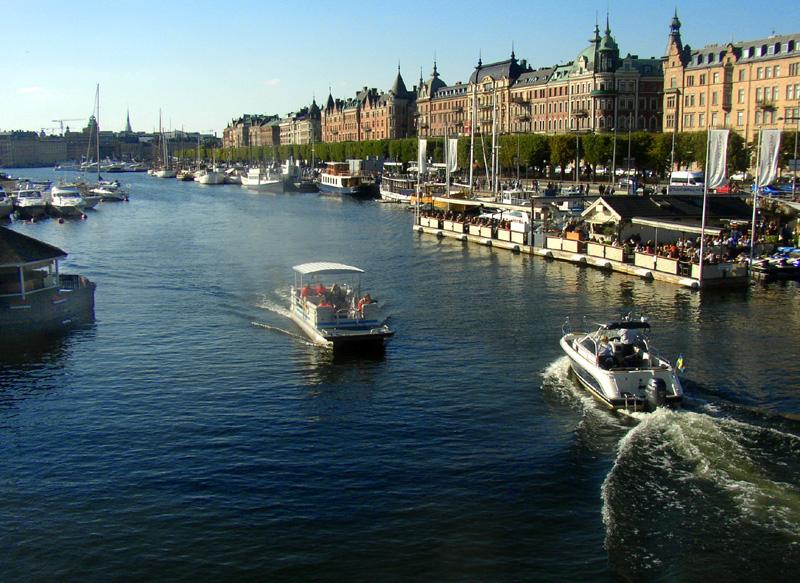
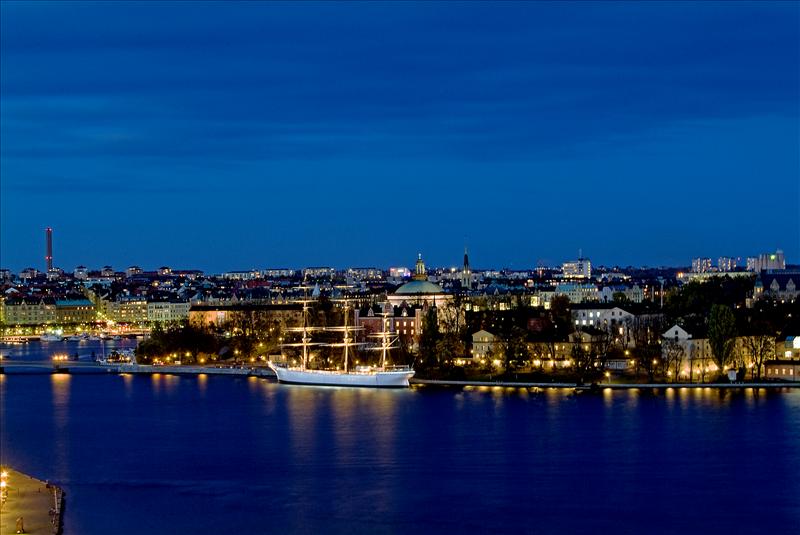
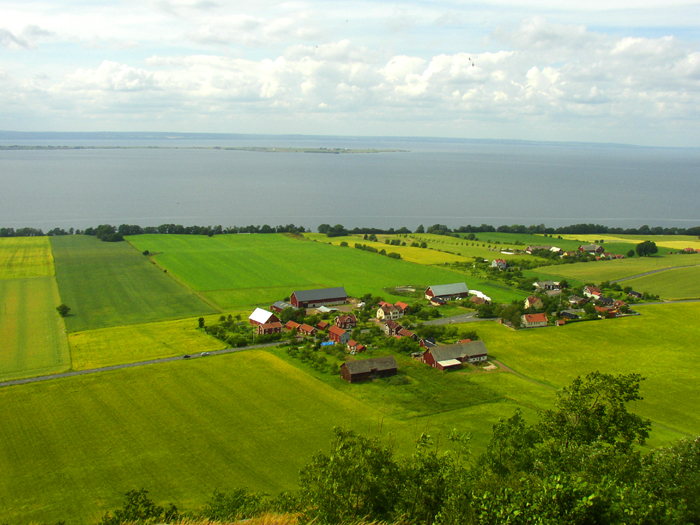
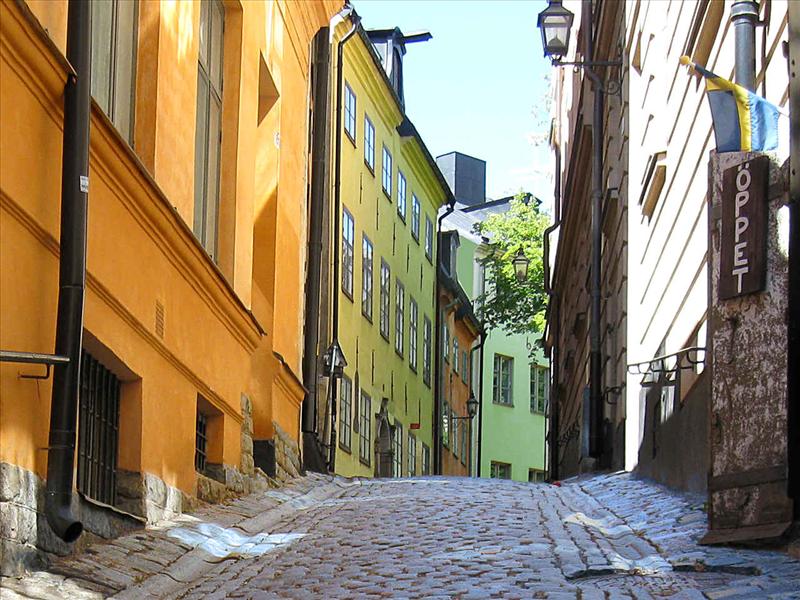
Sweden is the largest of the Nordic countries in Northern Europe, with a population of about 9,3 million. It borders Norway and Finland and is connected to Denmark via the bridge of Öresund (Öresundsbron). The Baltic Sea lies to the east of Sweden, as well as the Gulf of Bothnia, which separates Sweden from most of Finland.
Understand
Although having been a military power and spanning about three times its current size during the 17th century, Sweden has not participated in any war in almost two centuries. Having long remained outside military alliances (including both World Wars), the country has a high peace profile, with internationally renowned names such as Raoul Wallenberg, Dag Hammarskjöld, Olof Palme and Hans Blix. Sweden is a monarchy by constitution, but king Carl XVI Gustaf has no executive power. The country has a long tradition of Lutheran-Protestant Christianity, but today's Sweden is a secular state with few church-goers.
Sweden has a capitalist system and is a developed post-industrial society with an advanced welfare state. The standard of living and life expectancy rank among the highest in the world. Sweden joined the European Union in 1995, but decided by a referendum in 2003 not to commit to the European Monetary Union and the euro currency. Leadership of Sweden has for the larger part of the 20th century been dominated by the Social Democratic Party, which started out at the end of the 19th century as a labor movement, but today pursues a mix of socialism and social-liberalism. Since the most recent election, a coalition of center-right liberal/conservative parties has come into power.
Sweden has a strong tradition of being an open, yet discreet country. Citizens sometimes appear to be quite reserved at first, but once they get to know who they are dealing with, they'll be as warm and friendly as you'd wish. Privacy is regarded as a key item and many visitors, for example mega-stars in various lines of trade, have many times realized that they mostly can walk the streets of the cities virtually undisturbed.
Sweden houses the Nobel Prize committee for all the prizes except the peace prize which is hosted in Oslo, a memento of the Swedish-Norwegian union that was dissolved just over 100 years ago.
Regions
- Norrland - the sparsely populated, northern part of the country (about two-thirds of the total area), with nine provinces. Lots of wilderness, with forests, lakes, big rivers, enormous marshes and high mountains along the border to Norway. Great for hiking. Largest cities are Gävle, Sundsvall, Umeå and Luleå.
- Svealand - the central part of the country, includes Stockholm, Uppsala and the provinces of Dalarna, Närke, Värmland, Södermanland, Uppland and Västmanland.
- Götaland - comprised of the ten provinces in the southern part of the country, including the islands (and provinces) of Öland and Gotland. The largest cities in Götaland are Gothenburg in Västergötland and Malmö in Skåne.
Cities
;Major cities
-
Stockholm - The capital, spread out over a number of islands.
-
Gothenburg (Göteborg in Swedish) - On the west coast.
-
Linköping - The 5th most populous city of Sweden. University city.
-
Kiruna - a mining town in Lappland, and the northernmost city in Sweden.
-
Luleå - Industrial city in northern Norrland, with a technical university.
-
Malmö - Down south, not far from the Danish capital Copenhagen.
-
Umeå - University city in Norrland.
-
Uppsala - lively pretty old university city. Fourth largest city in Sweden.
-
Örebro - Old shoe manufacturing center, halfway between Stockholm and Oslo.
Other destinations
-
Åre - One of Sweden's largest ski resorts, with 44 lifts.
-
Esrange - A rocket launching facility near Kiruna.
-
Gotland - Sweden's largest island, as well as the largest island of the Baltic Sea, situated in the Baltic Sea. Its capital Visby is on UNESCO's World's heritage list. It's a common vacation spot for Swedes from the mainland.
-
Kebnekaise - Sweden's highest mountain surrounded by vast wilderness areas and a popular trail to Abisko National Park.
Getting there
Sweden is a member of the European Union and the Schengen Agreement.
By plane
For arrival and departure times, as well as lots of other information about flights and airports in Sweden, visit Luftfartsverket - Swedish Airports and Air Navigation Services
Major airports:
-
Stockholm Arlanda (IATA : ARN) (ICAO : ESSA) - serves most major airlines. Check the Stockholm page for information on transfer between the airport and Stockholm City.
-
Göteborg Landvetter (IATA : GOT) (ICAO : ESGG) - serves several international airlines and provides convenient bus transfer (~20 min) to central Gothenburg.
-
Copenhagen Kastrup (Denmark) (IATA : CPH) (ICAO : EKCH) - serves most major airlines. Located on an island between Copenhagen and Malmö and is ideal for travelling in southern Sweden. Train connections leave from the airport to both cities.
Smaller airports:
-
Stockholm Skavsta (IATA : NYO) (ICAO : ESKN) - airport for low fares airlines like Ryanair and Wizzair . Located quite a distance (about 100 km) from Stockholm, near the town of Nyköping.
-
Stockholm Västerås (IATA : VST) (ICAO : ESOW) - international flights to/from Copenhagen and London. Also about 100 km from Stockholm.
-
Göteborg City Airport (IATA : GSE) (ICAO : ESGP) - situated just 14 kilometers from central Gothenburg, this airport is used by Ryanair, Wizzair and Germanwings .
-
Malmö-Sturup (IATA : MMX) (ICAO : ESMS) - serves domestic flights and low fares flights. Located about 30 km from Malmö.
Most airports can be reached by Flygbussarna - Airport coaches for tickets around 70 to 100 SEK. Copenhagen airport is best reached by train. See Skånetrafiken for schedules.
By train
You can reach Sweden by train from three countries at present:
-
Denmark: Trains depart Copenhagen and Copenhagen's airport for Malmö every 20 minutes, and cost only about SEK 100 ("Öresundståg / Øresundstog" regional trains). The train goes over the magnificent Öresund Bridge to get to Sweden in less than 30 minutes. Furthermore direct trains (X2000) leave from Copenhagen to Stockholm. The Elsinore-Helsingborg connection, known as one of the busiest ferry routes in Europe, might also be used (change to ship).
-
Norway: Main connections between Oslo and Stockholm and Gothenburg as well as connections between Trondheim - Åre - Östersund and Narvik - Kiruna - Boden - Stockholm.
-
Germany: Berlin to Malmö with "Berlin Night Express". There are also several trains per day from Hamburg to Copenhagen, and night trains from München, Basel, Köln and Amsterdam to Copenhagen. See Denmark section about how to get from Copenhagen to Sweden.
-
Finland: Travel via Kemi-Tornio-Haparanda-Luleå / Boden by bus. Interrail tickets are valid on that bus. There's no train connection as Finland and Sweden use different gauge.
By bus
Get into Sweden by "Eurolines" or "Säfflebussen" . All connections here go via Copenhagen.
By boat
"Our level of drunkenness was normal for a cruise of this kind." The managing director of shipping company Tallink gave an interesting quote after his and the entire board's drunken rampage on one of Tallink's cruise ships in 2006. (The accusations against the VIP's included sexual harassment against female staff, beating up a bartender and causing a fire by putting a fish in a toaster.) The director's explanation clearly shows the main PR problem about the cruise ships on the Baltic Sea: they have a reputation as trashy booze boats, far from the glamor of other international cruises. This is largely due to the fact that the tickets can be dirt cheap - sometimes less than 50 SEK - and that tax-free alcohol shopping is among the main attractions. Still, some of the new ships are really pretty, and it is an easy and cheap way to get a glimpse of a country on the other side of the Baltic Sea. Also, not all cruises include obnoxious drunks trying to toast fish. Stockholm is the main port in Sweden for the cruises, and the main destinations are Helsinki, Åland and Turku in Finland, Tallinn in Estonia and Riga in Latvia. Ships are operated by Silja Line , Viking Line , Birka Cruises and, of course, Tallink . To get the cheapest tickets, try to go on a weekday in low season, share a four-bed cabin with some friends and make sure to keep your eyes peeled for last minute offers.
print=fullpage
Belgium
- From Ghent to Gothenburg by DFDS Torline (cargo line with limited passenger capacity)
Denmark
Estonia
Finland
Germany
Poland
-
From Gdansk to Visby by Polferries.
-
From Gdynia to Karlskrona by Stena Line.
-
From Świnoujście to Ystad by Polferries.
UK
Travelling around
By plane
Although Sweden is a fairly large country, most of the action takes place in the southern parts where the distances are not huge. Domestic flights are mainly for travellers with little time or much money, however if you are heading for the far north you may want to consider it. There are also low-price tickets, but they must be bought well in advance.
The most important domestic airlines:
-
SAS - the international airline has many domestic routes as well.
-
Skyways - the largest number of domestic routes, several from Copenhagen.
-
Nextjet - has many domestic routes to smaller places, has taken over some of Skyways routes.
-
Direktflyg - several domestic routes and also flights to Norway.
-
Norwegian - several domestic and a few international destinations.
-
Malmö Aviation - serves domestic destinations, Brussels and Nice.
-
Gotlandsflyg - connects Stockholm and the island of Gotland.
By train
Sweden has an extensive railway network. Most major lines are controlled by the government-owned company SJ. To buy a railway ticket, or to obtain information, phone +46 771 75 75 75 or check their website . As of summer 2009, the cheapest SJ tickets are released exactly 90 days before departure, so time your online ticket purchases carefully if your itinerary is set and don't buy tickets earlier than 90 days before your trip. SJ recently started auctioning last minute tickets on the Swedish eBay site Tradera (site only in Swedish), available from 48 until 6 hours before departure. Swedish Rail passes are also available for International guests to Sweden.
The national public transport authority is called Rikstrafiken , and it has online timetables in English, which include schedules for trains, buses and ferries. The service is called Resplus .
Regional public transport is usually operated by companies contracted by the counties. For instance, when travelling regionally in the province of Scania (Skåne in Swedish), one should refer to Skånetrafiken . For travelling in the region of Mälardalen (the "Lake Mälaren Valley"), you can check all train and bus operators on a mutual website, Trafik i Mälardalen . This regional traffic cooperation includes many of Sweden's major cities, such as Stockholm, Uppsala, Västerås, Linköping, Norrköping, Örebro and Eskilstuna, and reaches more than three million people. Connex provides affordable railroad transportation up north. If you're on a tight schedule, be aware that trains, especially those bound for far destinations (i.e. the Connex and SJ Norrland trains), sometimes have quite significant delays (up to 1-2 hours).
By bus
Swebus Express runs a number of bus lines in the southern third of the country, Götaland and Svealand. They tend to be a little cheaper than going by train if you can't take advantage of SJ's youth discounts. Y-buss and Härjedalingen operate between Stockholm and Norrland. Swebus Express also operates from Stockholm and Göteborg to Oslo. At the county or län level, buses are a good method for traveling short distances from town to town (as they are more frequent and cheaper than trains). It is best to check with the local transportation authority for routes and schedules.
By car
In Svealand and Götaland driving takes you quickly from one place to the other. In Norrland the distances tend to be bigger between the different sites so the time spent driving may be long. Unless you really like driving, it is often more convenient to take the train or fly to the sites, particularly in Northern Norrland. Traveling by night can be dangerous due to unexpected animals on the roads and the cold nights during the winter. Collisions with moose, roe deer, or other animals are a not uncommon cause of car accidents. See also Driving in Sweden and Winter driving.
By thumb
Sweden has a reputation for being a pretty difficult country to hitch in, though it's still quite possible to hitchhike (but not assured to be risk-free). Ordinary people are often reluctant to pick up strangers... Truck drivers are probably most likely to pick up hitchhikers, so target them. Asking at gas stations works pretty well. Bus stops are common places to attract attention, position yourself before the actual bus stop so the vehicle can stop at the stop. This works best if the road is widened at the bus stop, allowing cars to pull off easily.
By bike
Most Swedish cities have excellent bike paths, and renting a bike can be a quick and healthy method of getting around locally.
By foot
Cars are by law required to stop at any unattended crosswalks (zebra stripes in the road without red-lights) to let pedestrians cross the road. But keep in mind that you are required to make eye contact with the driver so that they know that you are about to cross the street.
The Stockholm Card
Travelling around Stockholm and visiting various places can easily turn quite expensive. Therefore, Stockholm offers a card called The Stockholm Card. With it you can ride with trains, busses, ferries and the tram for free. It also offers free admission to over 75 museums and attractions.
Things to do
Many tourists from English-speaking countries wonder where they can see real Vikings. Unfortunately, they have not been around for a thousand years. "Viking" is not the name of a separate tribe or nation - it is simply a word meaning "sailor" or "navigator of the fjords". Some Swedish, Norwegian and Danish men (and in a few cases women) gave up farming or fishing to join expeditions of trade, exploration and piracy, reaching as far as present-day Canada, Morocco and the Caspian Sea. As the pagan Scandinavians were christened around AD 1000, the Viking raids declined. There are still traces from the Viking age, such as runestones and burial mounds, everywhere in Sweden. Some good places to see Viking artifacts are The Museum of National Antiquities ("Historiska museet") in Stockholm, Gamla Uppsala in Uppsala and Birka and Adelsö just west of Stockholm.
The Viking heritage has been contorted through history - romanticized during the 19th century, abused by neo-Nazis, but more truthfully re-enacted by neo-pagans and live-action roleplayers. Most Swedes are proud of their Viking roots, though they don't take it very seriously.
Sweden is great for outdoor life - skiing, skating, hiking, canoeing, cycling and berry-picking depending of season. Stockholm and Gothenburg have great nightlife and shopping opportunities. Most cities have well-preserved pre-industrial architecture.
The year in Sweden
Swedish weather is best during the summer (late May to early September). If you like snow, go to Norrland or Dalarna in November to April.
Be aware that daylight varies greatly during the year. In Stockholm, the sun sets at 3 PM in December. North of the Arctic Circle one can experience the midnight sun and Arctic night. However, even at Stockholm's latitude, summer nights exist only in the form of prolonged twilight during June and July.
The major holidays are Easter, Midsummer (celebrated from the eve of the Friday between June 19 - 25), Christmas (Christmas Eve, Christmas Day and Boxing Day are all considered holidays), and the "industrial vacation" throughout July. Expect closed establishments, heavy traffic (for the holidays) and crowded tourist resorts (for July).
Note that most Swedish holidays are celebrated on the day before (Midsummer's Eve, Christmas Eve etc), while Swedish people do hardly anything on the holiday proper.
Eat
Adventurous diners might want to try surströmming, which is (coastal) central and northern Sweden's entry in the revolting-foods-of-the-world contest. It's herring which is fermented in a tin can until the can starts to bulge and almost bursts. It all gets so foul-smelling that the fish is only eaten outdoors to keep it from stinking up the house, although it has been known for unsuspecting visitors from other countries to be "treated" to an indoor surströmming experience for more intensity. It is considered bad manners not to notify (or invite) the neighbors before having a surströmmingsskiva, a party where the delicacy is consumed. It is claimed that the best way to get over the smell is to take a deep breath of it just when you open the can, to as quickly as possible knock out your smelling sense. Surströmming season peaks in August.
print=fullpage
-
Meatballs (köttbullar), the internationally most famous Swedish dish. Served with potatoes, brown sauce and lingonberry jam.
-
Hash (pytt i panna) consisting of meat, onions and potatoes, all diced and fried. Sliced beetroots and a fried egg are mandatory accessories.
-
Pea soup (ärtsoppa) with diced pork, followed by thin pancakes afterwards. Traditionally eaten on Thursdays since medieval times when the servants had half the day off as it is an easy meal to prepare.
-
Pickled herring (sill), available in various types of sauces. Commonly eaten with bread or potatoes for summer lunch or as a starter.
-
Blodpudding, a black sausage made by pig's blood and flour. Slice it, fry it and eat it with lingonberry jam.
-
Gravlax, a widely known and appreciated cold appetizer made by thin slices of salmon cured in salt, sugar and dill.
-
Falukorv, a big baloney from Falun. Sliced, fried and eaten with ketchup and mashed potatoes.
-
Sweden has more varieties of bread than most other countries. Many of them are whole-grain or mixed grain, containing wheat, barley, oats, compact and rich in fiber. Some notable examples are tunnbröd (thin wrap bread), knäckebröd (hard bread - might not be an interesting experience, but is nearly always available), and different kinds of seasoned loaves. Bread is mostly eaten as simple sandwiches, with thin slices of cheese or cold cuts. Some more exotic spreads are messmör (whey cheese) and leverpastej (liver paté).
-
Tunnbrödrulle, a fast food dish, consisting of a bread wrap with mashed potatoes, a hot dog and some vegetables.
-
Kroppkakor Potato dumpling stuffed with diced pork.
Other Swedish favorites:
-
Soft whey butter (messmör), breadspread with a sweetish, hard-to-describe taste.
-
Caviar, not the expensive Russian or Iranian kind but a cheaper version made from cod roe, sold in tubes and used on sandwiches. The most famous brand is Kalles Kaviar.
-
Julmust, stout-like Christmas soft drink that every year annoys The Coca-Cola Company in Sweden by lowering Coke's sales figures by 50%.
-
Crayfish (kräftor), hugely popular around August, when Swedes feast on them at big crayfish parties (kräftskivor). Silly paper hats and lots of alcohol included.
-
Semla, a cream-filled pastry eaten around Fat Tuesday.
-
Rabarberkräm/Rabarberpaj rhubarbcream or rhubarbpie with vanilla sauce ( other cakes or pies on fresh blueberries, apples, or just strawberries with cream or ice cream are also very popular in the summer)
-
Spettekaka A local cake from Skåne in south Sweden, made of eggs, sugar, and potatoflour.
-
Smörgåstårta A cold Sandwich layer cake, often with salmon, eggs, and shrimps. (Also often with tuna or roast beef) Swedish people often eat it at New Year's Eve, or birthdays and parties.
Typical Swedish "gourmet" restaurants serve steaks or other grilled dishes garnished with fragrant herbs such as dill, and vegetables such as Broccoli and red bell peppers. Most famous swedish steak is called Planka, or plank steak. It is Beef fillet, duchess potatoes, asparagus wrapped in bacon, huge amounts of bearnaise sauce, tomatoes and for some strange reason orange segments, and is decandently good!
As in most of Europe, inexpensive pizza and kebab restaurants are ubiquitous in Swedish cities, and are also to be found in almost every small village. Sushi and Thai food are also quite popular. The local hamburger chain Max is recommended before McDonald's and Burger King, for tasteful Scandinavian furnishing, clean restrooms, no trans fats and free coffee with meals. In parts of Norrland it is customary to eat hamburgers with fork and knife - available at Max. Another type of fast food establishment is the gatukök ("street kitchen"), serving hamburgers, hot dogs and tunnbrödrulle (se above).
Highway diners, vägkrogar, have generous meals, but might be of poor quality, greasy and overpriced. If you have time, a downtown restaurant is preferable. Gas stations offer decent packed salads and sandwiches.
You can get a "cheap" lunch if you look for the signs with "Dagens rätt" (meal of the day). This normally costs about 50-70 SEK and almost everywhere includes a bottle of water; soft drink; or light beer, bread & butter, some salad and coffee afterwards. Dagens rätt is served Monday to Friday.
The world famous furniture retailer IKEA has stores at the outskirts of 15 Swedish cities. These have great diners, which offer well-cooked Swedish meals for as little as 40 SEK, and the store exit usually has a café selling hot dogs for as little as 5 SEK. (They hope that you spend some money on shopping too.) Great if you happen to pass by. Expect crowds at rainy weather.
If you're on a tight budget, self-catering is the safest way to save your money.
Vegetarian and vegan lifestyles are accepted in cities, less common in the countryside but you should be able to find a falafel in every smaller town.
Drink
Coffee
Swedish people drink plenty of coffee, kaffe. Drinking coffee at home or in a café, an act called fika, is a common Swedish social ritual, used for planning activities, dating, exchanging gossip or simply spending time and money. Swedish coffee is slightly stronger than American one. Italian varieties (espresso, cappuccino, caffe latte) are available at most city cafés.
Alcoholic beverages
The most famous Swedish alcoholic beverage is Absolut Vodka, which is considered one of the world's most famous vodkas. There are several brands of distilled, and usually seasoned, liquor, called brännvin or akvavit. When served in a shot glass with a meal it is called snaps (not to confuse with the German "Schnapps").
Sweden does produce some outstanding beers, öl, like the dark Carnegie Porter, but most beers are rather nondescript lagers. The beer you get in normal food shops is called folköl and has 2.8 or 3.5% alcohol. You are able to find a varieties of different brands of beers in food stores, Swedish, English and even Czech beer. Wine is popular, but the Swedish production is very modest.
Systembolaget
Access to alcoholic beverages is, as in Norway, Finland and Iceland, quite restricted and expensive. The only place to buy strong alcohol including starköl (beer which contains more than 3.5% alcohol ABV) over the counter is in one of the state owned shops called Systembolaget . They have limited hours of operation, usually 10-6 Mon-Wed, 10-7 Thurs-Fri, and 10-3 on Saturdays, with long queues on Fridays and Saturdays. Closed on Sundays. Most shops are of supermarket style. The assortment is very good, and the staff usually has great knowledge. Please note that Systembolaget does not serve customers under the age of 20. You will most likely be asked for identification. This also applies to your companion, regardless of them buying anything.
Liquor is very expensive at Systembolaget (vodka is 300 SEK a liter), but the monopoly has brought some perks - Systembolaget is one of the world's largest bulk-buyers of wine, and as such gets some fantastic deals which it passes on to the consumers. Mid-to-high-quality wines, and exclusive spirits, are quite often cheaper in Sweden than even in the country of origin; sometimes even cheaper than if you were to buy the wine directly from the vineyard. This does NOT apply to low-quality wines, however, due to the volume-based tax on alcohol.
If you want beer, choose a variety of microbrews. All brands are treated equally and there is no large-pack discount. Beverages are not refrigerated.
Bars and nightclubs
The age limit is 18 to bars and beers in shops (to prevent teenage drunkenness, some shops have decided to have a 20 age limit for 3.5% beer as well), but 20 in Systembolaget. Many bars have an age limit of 20, but some (especially downtown in weekends) have age limits as high as 23 or 25. Bring passport or ID.
Some clubs mandate dress code, vårdad klädsel. For male guests, proper shoes (not sneakers or sandals), long-legged trousers (not blue jeans) and a dress shirt is usually good enough.
Age or dress rules are not rigid, and doormen have the right to accept or reject any patron for any reason other than gender, sexual orientation, creed, disability or race. Though illegal, nightclubs are infamous to reject "immigrants", which usually means anyone with hair and skin darker than the average Swede, by pretexts such as "members only" or "too drunk"; men of Middle Eastern or African origin are most troubled. You might avoid this problem by dressing properly, behaving well and/or going out with white friends.
Sweden has enforced non-smoking in all bars, pubs and restaurants, save outdoor areas such as terraces, and designated smoking rooms (where drinks are not allowed).
The prices at clubs/bars are often expensive compared to other countries, a large beer (half a liter) costs usually as much as 45-55 SEK (~US$7), but many low-profile bars advertise stor stark (0.4 L of draft lager) for as little as 25 SEK. A long drink costs around 60-110 SEK. For that reason many Swedes have a small pre-party ("förfest") before they go out, to get started on their buzz before they hit the town and go to nightclubs.
Large clubs can require an entrance fee of about 100 SEK (or more at special performances). They usually offer a rubber stamp on your hand so you can re-enter as you like.
Be aware that you often have to stand in line to get into a bar or a club. Many places deliberately make their customers wait in line for a while, since a long queue indicates a popular club. At the very fanciest places in the major cities the queue is replaced by a disorganized crowd, and the doorman simply points to indicate who gets in and who does not (to be sure to get in either be famous, very good-looking or a friend of the doorman. Or simply a regular).
In the cold season it is often mandatory to hand in your jacket at the club's wardrobe for a fee, usually around 20 SEK.
Authorized security guards carry a badge saying Ordningsvakt, see Stay safe.
Moonshine (hembränt) is popular in the countryside, though illegal. Though some shipments can be as good as legal vodka, most are disgusting and some even lethally dangerous, so you should stick to the real thing.
Buy
The national currency is the Swedish krona (SEK, plural kronor). 1 USD is about 6.90 SEK, 1 EUR is about 9.90 SEK and 1 GBP is about 12.53 SEK as of September 2008. Current exchange rates can be found at XE.com . Automatic teller machines take major credit cards. Most stores, restaurants and bars accept all major credit cards, although in some cases there is a SEK 5 fee or a lowest purchase limit (between 50 - 100 SEK). You usually need an ID card or a passport when shopping with a credit card, regardless of the amount involved, though ususally not in supermarkets and such where PIN code is king.
It is not common to bargain in shops but it might work in some instances, especially when buying more expensive products. Bargaining is also okay at flea markets and in antique shops. When dining out, a service charge is often included in the bill, and there is generally no reason to tip, unless you're very satisfied with the service.
Most shops, at least downtown, are open all week, even on Sundays. Closing times are rigid, most often on the minute.
Many Swedes translate the word krona, which means crown. For example, instead of saying 50 kronor they might say 50 crowns.
Costs
Sweden is considered by some to be a relatively expensive country to live in, though you can find cheap alternatives if you look around. House prices are probably amongst the cheapest in Western Europe and recently opened discount stores such as "Lidl", "Netto" and "Willy's" offer a wide range of items, why not buy a sewing machine while doing the weekend grocery shopping? Accommodation and dining out is cheaper in Stockholm than in most other West European capitals.
Shopping
-
An unofficial national symbol, the Dala Horse (Swedish: dalahäst) is the souvenir of souvenirs to bring from Sweden. Named after their origin, the province of Dalarna, these small wooden horses have been around since the 17th century. They are normally painted orange or blue with symmetrical decorations. They are fairly expensive: expect to pay around SEK 100 for a very small one or several hundred crowns for bigger versions. The horses can be bought in souvenir shops all over Sweden. If you want to know more about how the horses are made, visit Dalarna and the municipality of Mora where the horses are carved and painted in workshops open for tourists. And if driving towards Mora from Stockholm, keep your eyes open when you pass the town of Avesta where the world's largest (13 meters high) Dala Horse overlooks the highway.
-
Swedish glass is world famous for its beauty. Several skilled glass artists have contributed to this reputation through innovative, complex (and expensive) art creations, but mass-produced Swedish table glass has also been an international success. Part of the province of Småland, between the towns of Växjö and Kalmar, is known as the Kingdom of Crystal. 15 glassworks are packed into this small area, the most famous being Orrefors, Kosta and Boda. Tourists are welcome to watch the glass blowers turn the glowing melt into glittering glass, and you can even give it a try yourself.
-
Exclusive wines from Systembolaget.
Talk
*Swedish* is the national language of Sweden, but you will find that people, especially those born since 1945, also speak English very well - an estimated 89% of Swedes can speak English, according to the Eurobarometer. Swedish is a North Germanic language which is to some extent mutually intelligible with Danish and Norwegian. It is also more distantly related to Icelandic and Faroese, though the spoken language is not mutually intelligible with these languages.
Older people born well before the Second World War usually learned German as their first foreign language, and generally speak that better than English. Today students learn a third language in school, most commonly German, French or Spanish. Finnish is the biggest minority language. Regardless of what your native tongue is, Swedes greatly appreciate any attempt to speak Swedish and beginning conversations in Swedish, no matter how quickly your understanding peters out, will do much to ingratiate yourself to the locals.
Hej (**hay) is the massively dominant greeting in Sweden, useful on kings and bums alike. You can even say it when you leave. The Swedes most often do not say "please" (snälla), instead they are generous with the word tack (tuck), meaning "thanks".
Many Swedish people are over-confident with their English skills. One problem can be excessive swearing (accepted in colloquial Swedish, and augmented by Hollywood movies), but also some false cognates can be shocking for a native English-speaker; some examples are fack ("trade union" or "compartment"), fart ("speed"), prick ("spot") kock ("chef") and slut ("end" or "sold out"). Be sure to forgive such misunderstanding.
Some things get English names that do not correspond to the original English word. Some examples are light which is used for diet products, and freestyle which means "walkman". In the context of distance, the Swedish colloquial expression mil, "mile", is 10 kilometers, not an English statute mile.
Swedish people learn British English at school, affecting their vocabulary, but also watch films and TV programs in American English. Whether they use British or American standards in speech varies from person to person.
Etiquette
Most Swedes have liberal, cosmopolitan, secular, egalitarian and environmentalist values by Anglo-Saxon standards. This spares Western tourists from cultural clashes which might be imminent in other countries. However, some strict rules of etiquette are almost unique to Swedish people.
Swedish people are reputed to be rigid and organized. Almost everything has a number. Swedish people have a ten-digit personal identity number (starting by date of birth in the form YYMMDD) used in contact with all kinds of government authorities, usually mentioned before the name. Customers in Swedish shops or bank need to take a queue number note from a machine to be served in order. Each product at Systembolaget is known for its product number (which is often easier to keep track of than foreign-sounding names), and the most important feature in selection is the alcohol content (often divided by price to find the most cost-efficient product). If you order a drink in the bar, be prepared to tell how many centiliters of liquor you want. Most grocers provide milk in four or more fat content levels (plus an organic version of each, barista milk and low lactose milk, not to mention filmjölk, yoghurt and all other milk products). Before going outdoors, Swedes check air temperature, and before bathing in open water, they check water temperature. Many Swedes also own barometers, hygrometers and rain gauges to support the eternal conversation about weather with statistics. In conversation about housing, Swedes define their flats by number of rooms (En trea - "a three" - is simply a three-room-and-kitchen flat) and usually ask each other about the area by square meter. They have week numbers running from 1 to 52.
-
Though narcotics are not unheard of, most Swedes, old and young, are strongly opposed to them, and the criminal penalties are harsh by Swedish standards. This also applies to cannabis and other "soft drugs".
-
When it comes to alcohol, Swedes are as double-natured as Dr. Jekyll and Mr. Hyde. Before work or driving, one beer is one too many, and drunk driving is a crime genuinely despised in Sweden. However, drunkenness can be a regular part of many Swedish traditions (e.g. Midsommar, Valborg, etc.) - keep this in mind if you abstain from alcohol. Some Swedes frown on people being sober at a party and reject excuses other than driving or pregnancy - though no formal policy exists that would force one to drink against their own will.
-
Salespeople, waiters and other service employees are usually less attentive than their colleagues in other countries, to respect customers' privacy, except a short "hej" to entering customers. Customers are supposed to call for attention.
-
Always ask if you should remove your shoes or not when entering a Swedish home. In most homes it is customary to remove your shoes, but some Swedes prefer if their guests keep their shoes on. Most Swedish homes have wood flooring - wall-to-wall carpets are uncommon. Should you be dressed up and the host asks you to take your shoes off (or if you do not like to take off your shoes when indoors), bring a pair of clean indoor shoes.
-
Though rumors of the "Swedish sin", Swedish people are generally not accepting of public nudity except at approved nudist beaches. Don't go skinny-dipping in public beaches, if you are more than four years old. Female toplessness is uncommon (and prohibited at many public baths), but breastfeeding in public is accepted. Male toplessness is accepted in the countryside and at the beach, but might be frowned upon in urban areas.
-
Greetings between men and women who know each other (e.g. are good friends, relatives, etc.) is often in the form of a hug.
-
Show up on the minute for meetings and meals, preferably five minutes before set time. There is no "fashionably late" in Sweden.
-
In regards to homosexuality, Sweden is quite tolerant to gays. In fact, as of May 2009, same-sex marriages have legal standings in Sweden. Bear in note like any country that is tolerant and friendly towards gays and lesbians, you are going to face some criticism which may vary depending on location. However, the chances of facing extreme criticism and homophobia is rare in Sweden, as the country does have some anti-discrimination and hate crime laws. Regardless, violence against gays and lesbians are relatively rare.
Stay healthy
Pharmacies are controlled by state monopoly and carry a sign spelled Apoteket. For small medical problems the pharmacy is sufficient, they carry almost all household medical supplies like band aid, antiseptics and painkillers. Major cities carry one pharmacy open at night.
Swedish health care is usually of a very high quality, but can be quite challenging to receive. Virtually all medical clinics are state-owned, and have problems with funding. Therefore, getting a time within a week at a medical center is very rare. In case of a medical emergency, most provinces (and of course, the major cities) have a regional hospital with an around-the-clock emergency ward. However, if you are unlucky you can expect a long wait before getting medical attention.
Tap water in Sweden is of great quality, and contains close to zero bacteria. Water in mountain resorts might contain rust, and water on islands off the coast might be brackish, but it is still safe to drink. There is no real reason for buying bottled water in Sweden. Also, there is bottled water that doesn't meet the requirements to be used as tap water in Sweden.
There are few serious health risks in Sweden. Your primary concern especially in wintertime will be the cold, particularly if trekking or skiing in the northern parts. Northern Sweden is sparsely populated and, if heading out into the wilderness, it is imperative that you register your travel plans with a friend or the authorities so they can come looking for you if you fail to show up. Dress warmly in layers and bring along a good pair of sunglasses to prevent snow blindness, especially in the spring. In snowy mountains, avalanches might be a problem.
Dangerous animals
A serious nuisance in summer are mosquitoes (mygg), hordes of which inhabit Sweden (particularly the north) in summer, especially after rain. While they do not carry malaria or other diseases, Swedish mosquitoes make a distinctive (and highly irritating) whining sound, and their bites are very itchy. As usual, mosquitoes are most active around dawn and sunset — which, in the land of the Midnight Sun, may mean most of the night in summer. There are many types of mosquito repellents available which can be bought from almost any shop. Other summer nuisances are gadflies (bromsar), whose painful but non-poisonous bites can leave a mark lasting for days, and wasps (getingar) whose stings can be deadly if you're allergic. To minimize trouble from insects, use mosquito repellent, ensure your tent has good mosquito netting and bring proper medication if you know that you're allergic to wasp stings.
In southern Sweden and in northern coastal regions there are ticks (fästingar) which appear in summertime. They can transmit Lyme's disease (borreliosis) and more serious TBE (tick-borne encephalitis) through a bite. The risk areas for TBE are mainly the eastern parts of lake Mälaren and the Stockholm archipelago. Although incidents are relatively rare and not all ticks carry diseases, it's advisable to wear long trousers rather than shorts if you plan to walk through dense and/or tall grass areas (the usual habitat for ticks). You can buy special tick tweezers (fästingplockare) from the pharmacy that can be used to remove a tick safely if you happen to get bitten. You should remove the tick from your skin as quickly as possible and preferably with the tick tweezers to reduce the risks of getting an infection. If the tick bite starts to form red rings on the skin around it or if you experience other symptoms relating to the bite, you should go visit a doctor as soon as possible. Since ticks are black, they are more easily found if you wear bright clothes.
There's only one type of venomous snake in Sweden: the European adder (huggorm), which has a distinct zig-zag pattern on its back. The snake is not very common, but lives all over Sweden except for the mountains in the north and farmlands in the south. Although its bite hardly ever is life-threatening (except to small children and allergic people), one should be careful in the summertime especially when walking in the forests or on open fields. If you are bitten by a snake, seek medical assistance. All reptiles in Sweden, including adders, are protected by law and must not be harmed.
There aren't any really dangerous marine animals in Sweden, although when bathing in the sea one should watch out for Greater weevers (Fjärsing); this is a small fish that hides in the sand near beaches, its back has several spikes that are poisonous and will hurt a lot if stepped on. The poison of the Greater Weever is to be considered about as dangerous as that of the European adder and will likely cause more pain (this can be quite severe) than damage. There are also types of poisonous jellyfish that can be quite common near beaches. These are distinguished from normal non-poisonous types by their red color. These types of jellyfish aren't really dangerous but their venom will hurt. There are no large predatory fish that pose a lethal threat to humans in Sweden, but in extreme cases the Pike (gädda), a common fish in Sweden's many lakes has been known to bite people when threatened. You probably run a higher risk of being struck by lightning than a Pike bite though!
As for other dangerous wildlife, there's not much more than a few extremely rare encounters with brown bear (brunbjörn) and wolf (varg) in the wilderness. Both of these animals are listed as protected species. Contrary to popular belief abroad, there are no polar bears in Sweden, let alone polar bears walking city streets. If you encounter a brown bear in the woods, walk slowly away from it while talking loudly - the bear is most likely to feel threatened if you surprise it. In the unlikely event of a brown bear attacking you should play dead, protect your head and make yourself as small as possible. Or the opposite, there have been people surviving a brown bear encounter by screaming as loud as possible, jumping, and making oneself as big as possible. Bears are most likely to attack if they are injured, provoked by a dog, going to hibernate or protecting their cubs.
Bears in Sweden have killed no more than a handful of people since 1900. Swedish wolves have not killed a human being since 1821. In general, one shouldn't worry about dangerous encounters with wild beasts in Sweden.
Safety
Crime/violence: Low
Alcohol-related violence, petty theft
Authorities/corruption: Low
Security guards might be rude
Transportation: Low to Moderate
Wild animal crossings everywhere, and slippery roads in the winter
Health: Low
Tick and mosquito bites
Nature: Low to Moderate
Blizzards and avalanches in the northern mountains
If involved in an argument, try to leave before the person becomes aggressive. If you see a street fight and want to stop it, be sure to have a friend. There have been reports on people injured or even killed when they've tried to stop a street fight. Young people, drunk people, or people who have taken drugs can be dangerous so use common sense. Don't feel bad if you don't do anything: there is a reason why many tend to do that, unfortunately. Do not argue with security guards, they might be upset, and could be violent. Don't report a security guard for violence, since they are likely to accuse you of violence, which might result in a prison sentence, as courts tend to believe uniformed people.
Pickpockets are rare but not unheard of. They usually work in tourist-frequented areas, such as airports, large rail stations, shopping areas and festivals. Most Swedes carry their wallets in their pockets or purses and feel quite safe while doing it. Still, almost all stores and restaurants accept most major credit cards so there is no need to carry a lot of cash around. If you have a bike, do lock it or you may lose it.
Be sure to watch for cars in the road junctions. There is a law in Sweden called "The Zebra law" which means that cars must stop at zebra crossings. Many Swedes believe that all the drivers do that. By watching for cars you may save not only your life but also a friend's, since reported injuries have increased because of the law. If you do drive then follow the law, police cars may not be seen everywhere but you never know when they appear.
The E6 between Helsingborg and Norway is haunted by robbers, known as "road pirates". If sleeping in your vehicle during nighttime, consider a guarded camping area.
Counterfeit Swedish banknotes or other documents are very uncommon. Newer 50, 100, 500 and 1000 SEK notes have holograms. Older 100 and 500 SEK banknotes without a hologram are invalid, but older 50 and 1000 SEK banknotes without a hologram are still valid.
Driving in Sweden is among the safest in Europe. It doesn't mean that there are no dangers in the roads; wild animals like moose, deer and boar sometimes stray onto highways. The moose is a big and heavy animal (up to 700 kg and 2,1 m shoulder height) so a collision can be violent and endanger your life even if you wear a seatbelt.
Wearing a seatbelt is mandatory for everyone who is in the car. Some motorways have traffic signs that warn about wild animals and it's mostly seen in the northern areas of Sweden, although they can be spotted in the south as well. Motorway driving is a lot less aggressive than in Denmark or mainland Europe, although this may not apply to drivers who are not Swedish. There are long distances. Take rests if you are tired; it is dangerous to fall asleep when driving.
In Case of Emergency
112 is the phone number to dial in case of fire, medical or criminal emergency. It does not require an area code, regardless of what kind of phone you're using. The number works on any mobile phone, with or without a SIM card, even if it's keylocked.
Police officers are rarely on patrol, and might be too busy to head out for minor crimes.
Nightclubs and shopping centers usually have security officers with a chest badge saying ordningsvakt, authorized to use force, and infamous to do so. These should be respected. Officers with other labels ("Security" or "Entrévärd") have no special privileges, but are still notoriously violent (as they are usually recruited from the street, without background check). Don't argue with them.
Bring
-
Credit card. Nearly all stores and all ATMs accept VISA and MasterCard, as well as Maestro (Switch). PIN-pads are widely used instead of signatures (even for credit cards), so if your card has a PIN, memorize it before you leave home. Don't expect stores to accept foreign currency, apart from close to the borders, where usually only the neighbour currency is accepted (i.e. danish krona, norwegian krona or euro).
-
Passport or EU national identity card as identification. A driver's license might work but that is not guaranteed. You will frequently be asked to prove age or identity - for instance when using your credit card, when buying alcohol, when renting accommodation or when entering bars and clubs. Banks accept only Swedish identity documents. Swedish bureaucracy is efficient but rigid.
-
Warm clothes and extra shoes. Weather in Sweden is unpredictable. It can get cold and/or wet, but almost never too hot.
-
If you plan on staying in Sweden for an extended period of time pack some rain clothes. If you don't own any, they can be bought in many stores across Sweden - but can be somewhat expensive.
-
Mobile phone. Swedish GSM and 3G coverages are great, at least in populated areas but don't expect it to work everywhere. In rural areas the state-owned operator Telia might be the only one available. If you have another operator you may only place SOS calls. Official figures say that 60-70% of the country has GSM coverage and about 40% for 3G. The number of public phones are going down a lot because most Swedes have a mobile phone.
-
Powerplug adapters, if you come from the UK or North America. Sweden follow European standard 230 volt 50Hz and uses Schuko plugs.
-
European Health Service card, if you are an EU/EES citizen.
-
In forests and mountains, use mosquito repellant, myggmedel, which is available in most food stores.
=Don't bring
-
Cash money from your home country - see above.
-
Tear gas or pepper spray for self-defence. These require authorization to be carried in Sweden, and you will probably not have use for them either way.
Learn
All education in Sweden is free for residents, except for a mandatory Students' Union membership (usually a fee of less than 500 SEK) at universities and other tertiary education institutions. Although the government has subsidized schools and classes, there also exist many private alternatives where a tuitition fee is required.
As a foreigner wishing to study at a Swedish university or school of higher education, you do not have to pay tuition fees. However, the current center-right government is currently considering introducing tuition fees for non EU-/EES- citizens.
Some important university cities:
-
Uppsala
-
Lund
-
Gothenburg
-
Stockholm
-
Linköping
-
Växjö
If you are a student there is something known as an "academic quarter" where classes and school related events will start 15 minutes past the hour. At some schools after 18:00 this becomes a "double quarter" where events commence 30 minutes past the hour. Students are expected to be punctual and show up at the appropriate time.
You can find more useful information about studying in Sweden on the Study in Sweden website.
Work
EU and EEA citizens are allowed to work in Sweden without a permit. Citizens of other countries need a work permit, and getting one is quite a hassle, however, Working Holiday Visas are available for Australian and New Zealand citizens aged between 18-30. Swedes, foreign citizens already living in Sweden, and EU/EEA citizens have preference over others in obtaining work in Sweden. Also, if the offer of work is for more than three months you will also require a Swedish residence permit. More information about the paperwork is found on the government website swedenabroad.com .
As for finding a job you could try the public "Arbetsförmedlingen" ('The Job Agency') and give it a try, it might work! However, you can also buy a lottery ticket, you will have roughly the same chance to get an income that way. Usually jobs are better provided by certain knowledges and luck.
Cope
-
Around payday, on the 25th of each month, stores and bars can get very crowded.
-
Smoking is not allowed in restaurants, bars or any other indoor establishments (except outdoor terraces and designated smoking rooms). Smoking in someone's home is usually out of the question; if you ask kindly you might be allowed to light up on the balcony or the porch. Relatively few Swedes smoke daily, but many men and women "snus" (snuff), a tobacco pouch inserted into the upper lip. It comes in a wide variety of different styles and flavors and in both loose and portion form. Portions are more popular and generally reccomended for public events, as loose snus can be very messy when removed. Unlike American oral tobaccos, it is not usually necessary to spit if the snus is properly placed. Most bars and clubs will have snus receptacles instead of ashtrays on the tables. Be warned, however, that snus can seem very harsh to first time users, with a nicotine level several times that of cigarettes.
Contact
Sweden's international calling code number is +46. Payphones are available, with older models only accepting cards (special smartchip phone cards as well as credit cards), and newer models that accept coins (Swedish as well as Euros). Collect calls are possible by dialing 2# on a pay phone.
Sweden has excellent wireless GSM and 3G/UMTS coverage, even in rural areas except in the central and northern interior parts of the country. The major networks are Telia, Tele2/Comviq, Telenor and 3 (Tre). Swedish GSM operates on the European 900/1800 MHz frequencies (Americans will need a triband phone), with 3G/UMTS on 2100 MHz (currently with 7.2-14.4 Mbit HSDPA speeds). Only the Telia network supports EDGE. Some operators may ask for a Swedish personnummer (or samordningsnummer) to get a number, although with most operators you can get prepaid without any, "personnummer" or ID and these are sold and refillable at most supermarkets and tobacco stores
Sweden is the world's second most Internet connected country (second to Iceland). The Swedish postal system ("Posten AB") is often considered efficient and reliable, with locations placed inside of supermarkets and convenience stores (look for the yellow horn logo). Stamps for ordinary letters (to anywhere in the world) are 12 SEK and the letter usually needs 2 days within EU. Stamps can be purchased in most supermarkets, ask the cashier.
Contact & location
1 Review
Add your review
The photos displayed on this page are the property of one of the following authors:
Per Ola Wiberg, Hector Melo A., Olof S
Some photos courtesy of:
 . The photos provided by Flickr are under the copyright of their owners.
This travel guide also includes text from Wikitravel articles, all available at  View full credits
Candace Griffin-Campbell, Marc Heiden, Peter Fitzgerald, ptudor, Bengt-Inge Larsson, Kabir, cz, Karl Martin Karlsson, Ulf Harnhammar, Jim Nicholson, Sergey Kudryavtsev, Hendrik Scholz, Nick Roux, Xavier Ladu, Daniel Bonniot de Ruisselet, Wyatt, David, Todd VerBeek, Ryan Fujitani, corneel, Bujdosó Attila, Ryan Holliday, hunt@sverige.nu, Evan Prodromou, Ian Kirk, Andrew Burns, Ricardo, Tom Holland, Andreas Bergstrom, Rob Payne, Stephen Colebourne, Jani Patokallio, Paul N. Richter, Peter Donaghy and Yann Forget, ChubbyWimbus, Blist, ViMy, Inas, Dark Paladin X, Tatatabot, InAbsurdum, Hootsofsteel, Jonboy, J-C V, Riggwelter, Alarm, Cacahuate, Texugo, Britney-boy, Tatata, Ypsilon, Salvadors, Bluedenim, Episteme, Jake73, The Snackmaster, Landercut, Jelse, Huttite, Ezeu, Olken, Mnd, Hdk, Neil C, Nickpest, Castrup.se, Bijee, InterLangBot, Sander, Nils, Nzpcmad, Nikita Borisov, Ronline, Caffeine, PierreAbbat and Pjamescowie
This travel guide also includes text from Wikipedia articles, all available at  View full credits
People who've been here (129)




















































People who'd like to go there (156)














































I liked
+Stockholm +many people speak English +mostly easy going people +Östersund +clean nature and airI disliked
-somewhat expensive (except if you compare to Norway) -visible immigration problems in some cities -cockiness of people, particularly towards (country) neighbors -countryside restaurants