
Spain
( 2 user reviews )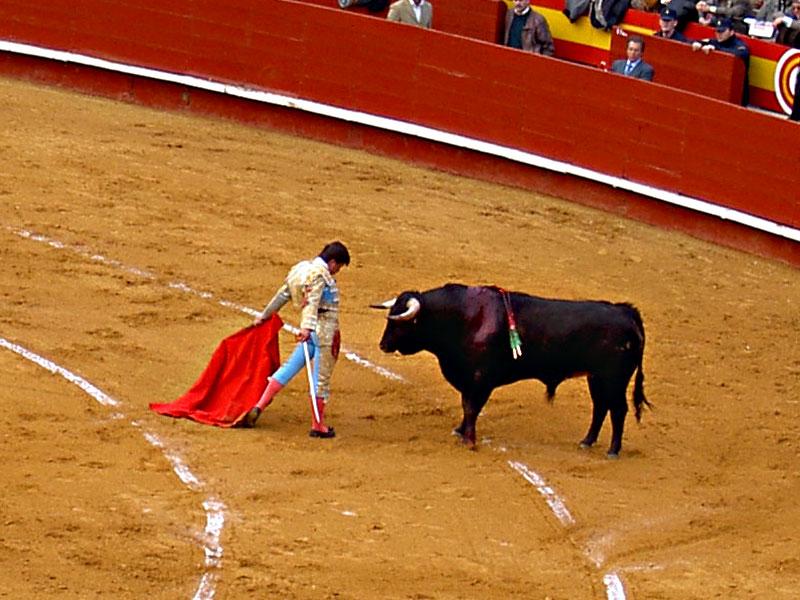
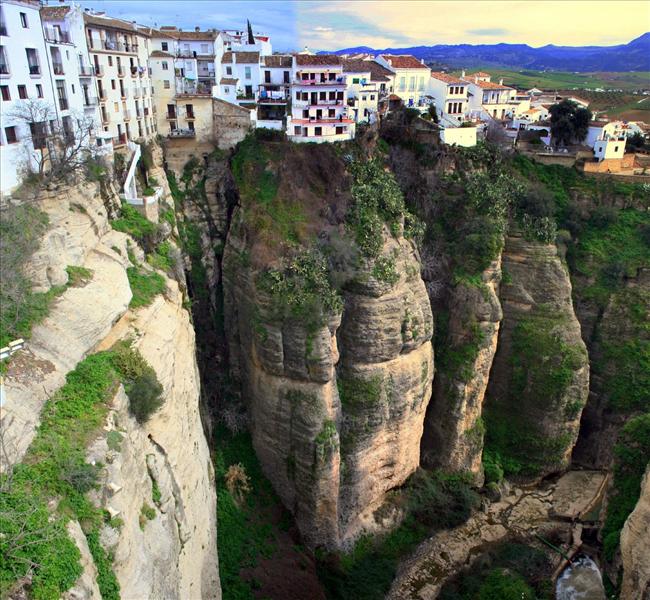
![Ronda "Nuevo" Bridge [built in 1793]](https://tcproduction.blob.core.windows.net/media/{5c6d1f59-5bc5-434a-ad91-854ebdf06d8d}.2456562549_bea0ce0b04_o.jpg)
Spain (Spanish: España) is a diverse country sharing the Iberian Peninsula with Portugal at the western end of the Mediterranean Sea. It is the country with the second-largest number of UNESCO World Heritage Sites, after Italy, and the largest number of World Heritage Cities.
Spain is considered an exotic country in Europe due to its friendly inhabitants, relaxed lifestyle, its cuisine, vibrant nightlife, and world-famous folklore and festivities. Among many places worth visiting are Spain's thriving capital Madrid, the vibrant coastal city of Barcelona, the famous "Running of the Bulls" at Pamplona, major Andalucian cities with Moorish architecture, like Seville, Granada and Córdoba, the Way of St. James and the idyllic Balearic and Canary Islands.
Understand
With great beaches, fun nightlife, many cultural regions and historic cities, Spain makes a great destination for any kind of trip. A country of large geographic and cultural diversity, Spain is a surprise to those who only know its reputation for great beach holidays. There is everything from lush meadows and snowy mountains to huge marshes and deserts in the south east.
History
Once the center of a global empire with territories in North, Central and South America, Africa i.e. Equatorial Guinea, and Asia i.e. the Philippines, contemporary Spain has overcome civil war and fascism in the 20th century to stand proud and centered in itself.
Immigration
Spain holds a historical attachment to its neighbors within the Iberian Peninsula, Andorra and Portugal, to its former colonies, to former citizens and their descendants, and to a special category of former citizens, namely Sephardic Jews.
Individuals from these categories may acquire Spanish citizenship in an accelerated fashion which may or may not require that the individuals reside in Spain, and residency requirements are as short as one to three years depending on the category. Citizens of countries in the European Union may acquire citizenship after living in Spain for five years. Citizens of any other country may acquire citizenship after residing in Spain for ten years.
The population of Spain is growing in large part due to migration from relatively poor or politically unstable areas of South America, such as Argentina, Colombia, Cuba, Ecuador, El Salvador or Peru, Europe, mostly Eastern Europe, that have a historical or linguistic attachment to Spain, Africa and Asia.
History
Once the center of a global empire with territories in North, Central and South America, Africa i.e. Equatorial Guinea, and Asia i.e. the Philippines, contemporary Spain has overcome civil war and fascism in the 20th century to stand proud and centered in itself.
Regions
Spain is divided into autonomías or autonomous regions, plus two independent cities. Some of the autonomías - notably the ones which have other official languages alongside Spanish - are regions with their own unique historical tradition. These include the Basque Country or Euskadi (Basque), Galicia (Galician), Catalonia or Catalunya, the Valencian region or País Valencià, and the Balearic Islands or Illes Balears (Catalan), but also Andalucía. Travelers to these parts of the Iberian Peninsula should respect their history and language. The Canary Islands lie off the coast of Morocco and are geographically part of Africa, as are the two cities of Ceuta and Melilla.
For ease of reference, Spain's many regions can be grouped as follows:
-
-
-
-
-
-
-
-
-
-
-
-
-
-
-
-
Cities
Spain has hundreds of interesting cities, here are nine of the most popular:
-
Madrid - The vibrant capital, with fantastic museums, great food and nightlife
-
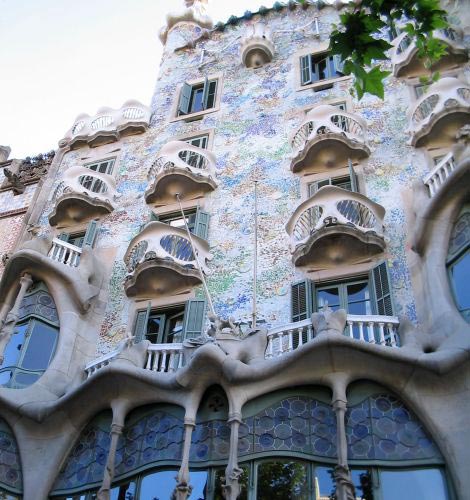
Barcelona - Spain's second city, full of modernist buildings and a vibrant cultural life, nightclubs, and beaches.
-
Bilbao - former industrial city, home to the Guggenheim Museum.
-
Cadiz - oldest city in Western Europe, celebrates a famous carnival.
-
Córdoba - The Grand Mosque ('Mezquita') of Cordoba is one of the world's finest buildings.
-
Granada - stunning city in the south, surrounded by snow capped mountains of the Sierra Nevada, home of La Alhambra.
-
Zaragoza - recently held a Expo and is the 5th largest city.
-
Seville - a beautiful, verdant city, and home to the world's third largest cathedral.
-
Valencia - paella was invented here, has a very nice beach.
Other destinations
-
Ceuta and Melilla - Spanish enclaves on the African continent.
-
El Arenosillo - rocket launch site near Mazagón in Huelva, Andalucia
-
La Rioja - Rioja wine and fossilized dinosaur tracks.
-
Rías Altas (comprising the province of Lugo plus the northern part of the province of Coruña) - beautiful beaches and food.
-
Rías Baixas (comprising the province of Pontevedra plus the southern part of the province of Coruña) - beautiful beaches and food.
-
Sitges - a seaside resort near Barcelona.
-
Costa Brava - the rugged coast.
-
Palma - On the island of Mallorca, is full of amazing beaches, and great nightlife.
-
Ibiza - Another Balearic island; one of the best places for clubbing, raving, and DJs in the entire world
Getting there
There are a number of ways to get into Spain. From neighboring European countries, a drive with the car or a train ride is feasible; visitors from further away will probably be using air travel.
By plane
Spain's national carrier is Iberia.
The busiest airports are Madrid, A Coruña, Palma de Mallorca, Malaga, Murcia, Barcelona, Jerez de la Frontera, Seville, Valencia, Bilbao, Alicante, Santiago de Compostella, Vigo and Gran Canaria. All are listed on the official airport governing body website:
Madrid and Bilbao have the most beautiful airports, designed by famous architects.
Low cost carriers operating to Spain include: ClickAir, a discount subsidiary of Iberia, operating from Barcelona, Sevilla and Valencia, Vueling , easyJet , RyanAir , Blue Air , and Jet2.com .
Warning: If you buy an e-ticket from Iberia or ClickAir over the Internet with a credit card, you may have to show the original credit card upon check-in. If you fail to do so, you will have to purchase another ticket for the same fare, and the original ticket will be refunded many weeks or even months later.
By train
Train system in Spain is modern and reliable, most of the trains are brand new and the punctuality rate is one of the highest in Europe, the only problem is that not all the populated areas have a train station; sometimes small towns don't have one, in those cases you need to take a bus. Another issue with the Spanish Rail network is that the lines are disposed in a radial way so almost all the lines head to Madrid. That's why sometimes traveling from one city to another geographically close to it might take longer by train than by bus if they are not in the same line. Always check whether the bus or the train is more convenient.
By bus
Bus travel in Spain is increasingly an attractive option for people traveling on a tight budget. Thanks largely to European Union funding, Spain's road network has vastly improved over the past twenty years, so bus journeys don't take nearly as long as they used to.
There are lots of private bus companies offering routes to all major Spanish cities. If you want to travel around Spain by bus, the best idea is to go to your local bus station (Apart from Madrid and Barcelona, most towns and cities have just one) and see what is available.
Traveling by bus in Spain is usually reliable (except on peak holiday days when roads can be very crowded and you should expect long delays on popular routes), coaches are modern and comfortable. You can expect to pay about €8 per 100km.
By boat
Regular ferry services are run by P&O from Portsmouth to Bilbao (thrice a week) and from Plymouth and Southampton to Santander (once a week). This services should be booked well in advance, provided that many english tourist tend to book them as a fast way to get to Spain by car.
Moreover, Barcelona, and to a lesser extent, Valencia, are popular boat cruise destinations. From Barcelona, regular ferry services go to Genova and to Livorno, in Italy, and to Marseille in France.
Visas
Spain is a member of the European Union and the Schengen Agreement, which governs its visa policies. No visa is required for citizens of other EU member states, and those of nations with whom the European Union has special treaties. There are no border controls between Spain and other Schengen Agreement nations, making travel less complicated.
As of May 2004 citizens of the following countries do not need a visa for entry into Spain. Note that citizens of these countries (except EU nationals) must not stay longer than three months in any 180 day period in any country covered by the Schengen Agreement and they and must not work in Spain: Andorra, Argentina, Australia, Austria, Belgium, Bermuda, Bolivia, Brazil, Brunei, Bulgaria, Canada, Chile, Costa Rica, Croatia, Cyprus, Czech Republic, Denmark, El Salvador, Estonia, Finland, France, Greece, Guatemala, Honduras, Hong Kong, Hungary, Iceland, Ireland, Israel, Italy, Japan, Latvia, Liechtenstein, Lithuania, Luxembourg, Macao, Malaysia, Malta, Mexico, Monaco, New Zealand, Nicaragua, Netherlands, Norway, Panama, Paraguay, Poland, Portugal, Romania, San Marino, Sweden, Switzerland, Singapore, Slovakia, Slovenia, Spain, South Korea, United Kingdom, United States, Uruguay, Vatican City and Venezuela.
For Latin American people, especially those from Peru, Colombia, Ecuador, Bolivia, Paraguay, and in some cases Venezuela, Chile and Argentina you need to have a hotel reservation confirmed, and international insurance for at least 30.000 EURO; if your trip is from 1-9 days you need €514, for each additional day €57 and a return air ticket.
Venezuelan credit cards are not accepted like funds for immigration due to the currency exchange control in this country.
Traveling around
By train
By bus
The easiest way to get around most parts of Spain is by bus. Most major routes are point to point, and very high frequency. There is a different operator for each route, but usually just one operator per route. At the bus station, each operator has its own ticket. The staff at any of them is usually happy to tell you who operates which route, however.
By boat
Wherever you are in Spain, from your private yacht you can enjoy gorgeous scenery and distance yourself from the inevitable crowds of tourists that flock to these destinations. May is a particularly pleasant time to charter in the regions of Costa Brava, Costa Blanca and the Balearic Islands as the weather is good and the crowds have yet to descend. The summer months of July and August are the hottest and tend to have lighter winds. There is no low season for the Canary Islands, as the weather resembles springtime all year round. If you would like to bareboat anywhere in Spain, including the Balearic or Canary Islands, a US Coast Guard License is the only acceptable certification needed by Americans to bareboat. For everyone else, a RYA Yacht Master Certification or International Certificate of Competence will normally do. Although a skipper may be required, a hostess/chef may or may not be necessary. Dining out is strong part of Spanish custom and tradition. If you are planning on docking in a port and exploring fabulous bars and restaurants a hostess/cook may just be useful for serving drinks and making beds. Extra crew can take up valuable room on a tight ship.
By car
In major cities like Barcelona and in mid-sized like San Sebastian, moving around by car is both expensive and nerve-wracking. Fines for improper parking are uncompromising (€85 and up).
Having a driving map is essential - many streets are one-way; left turns are more rare than rights (and are unpredictable).
Getting around by car makes sense if you plan to move from one city to another every other day, ideally if you don't plan to park overnight in large cities. It also doesn't hurt that the scenery is beautiful and well worth a drive.
There are two types of highway in Spain: autopistas, or motorways, and autovías, which are more akin to expressways. Most autopistas are toll roads while autovías are generally free of charge. Speed limits range from 50 km/h in towns to about 90 km/h on rural roads, 100 km/h on autovías, and 120 km/h on autopistas.
Intersections of two highways typically have a roundabout under the higher one--so you can both choose any turn and to start driving in an opposite direction there.
Green light for cars about to turn is frequently on at the same time as green light for pedestrians: every time you turn, check if the pedestrians pass you cross doesn't also have green light for them.
Between cities, drivers are required to have some rest every 2 hours they drive--there's a fine if you don't follow. It's unclear how it's enforced, however.
Filling procedure for gas stations varies from brand to brand. At Agip, you first fill the tank yourself, and then pay inside the shop. Gasoline is relatively inexpensive compared to other countries in the EU and Japan, but still more expensive than in the U.S.
By thumb
Spain isn't a good country for hitchhiking. Sometimes you can wait many hours. Try to speak with people at gas stations, parking lots etc. They are scared and suspicious, but when you show them that they shouldn't be afraid, they gladly accept you and mostly also show their generosity. In the South of Spain, in and around the Alpujarras, hitchhiking is very common and it is also very easy to get a ride. As long as you can speak a bit of spanish and don't look too dirty/frightening, you should be able to get a ride moderately easily.
Renting a car
If you plan to move around large cities or explore further afield you will find many companies that offer car hire at affordable prices because of the high competition between car rental agencies, consider renting a car with GPS navigation--it will be even easier to drive than having an automobile map.
Consider having full-coverage insurance instead of franchise: other drivers are not always careful parking near other cars, especially when parking space on a street is limited.
Spanish drivers can be unpredictable and some of the roads on the Southern area of Malaga and the Costa Del Sol are notoriously dangerous.
Therefore you will want a car with a fully comprehensive insurance package with includes a collision damage waiver (CDW) and a vehicle theft waiver, as well as liability cover. Many of the car hire companies offer an insurance option where you can choose to reduce your vehicle excess. This means that if you are in an accident you would not be financially liable for the whole excess fee.
Child seats are also available with all vehicles so that any children in your party can travel safely and in comfort.
Air conditioning is a must in the hot Spanish summer months. Nevertheless you should make sure to take water with you at all times.
If you break down while on holiday you will want a car hire company that gives you the free roadside assistance of trained mechanics. Cars often overheat in Spain while the tires are vulnerable on the hot roads.
Avis accepts payment in US dollars when you pay by a credit card. If you need to pay when you return rented car, payment is made from deposit you provided by credit card in the beginning--so you don't pay extra money upon return, waiting for weeks for deposit to be unblocked.
By bicycle
Spain is heaven for cycling, judging by how many cyclists you can see in the cities. Cycling lanes are available in mid-sized and large cities. It must be taken into account that Spain is the second most mountainous country in Europe, and the mountains and hills are from coast to coast. For example, Madrid is between 600 and 700 meters above sea, so if you travel through it by bicycle you have to be in a good shape.
Things to do
Festivals
Spain has a lot of local festivals that are worth going to.
-
Málaga's Semana Santa (Easter) - worth to see. From Palm Sunday to Easter Sunday. Lots of procession accour within that week.
-
Córdoba en Mayo (Cordoba in May) - great month to visit the Southern city
-
Las Cruces (1st week in May) - big flower-made crosses embellishing public squares in the city center, where you will also find at night music and drinking and lot of people having fun!
-
Festival de Patios - one of the most interesting cultural exhibitions, 2 weeks when some people open doors of their houses to show their old Patios full of flowers
-
Cata del Vino Montilla-Moriles - great wine tasting in a big tent in the city center during one week in May
-
Fallas - Valencia's festival in March - burning the "fallas" is a must
-
Málaga's August Fair - flamenco dancing, drinking sherry, bullfights
-
San Fermines - July in Pamplona, Navarra.
-
Fiesta de San Isidro - May 15 in Madrid - a celebration of Madrid's patron saint.
-
Holy week - best in Seville and the rest of Andalusia; also interesting in Valladolid
-
Carnival - best in Santa Cruz de Tenerife, Las Palmas de Gran Canaria and Cádiz
-
Cabalgata de los Reyes Magos (Three wise men parade) - on the eve of epiphany, 5th of January, the night before Spanish kids get their Christmas presents, it rains sweets and toys in every single town and city
-
La Tomatina - a giant tomato fight in Buñol
-
Moros y Cristianos (Moors and Christians, mostly found in Southeastern Spain during spring time) - parades and "battles" remembering the fights of medieval ages
Outdoor activities
-
Canyoning: see Spain section in the Canyoning article
-
Climbing in: Los Mallos (Aragon)
-
Whitewater sports in: Campo, Murillo de Gallego (Aragon)
Skiing in the northen region of Spain
Scuba Diving
For a treat, try Costa Brava and the world renowned Canary Islands.
Itinerary
- Via de la Plata Route Historic 800km route from Gijón to Sevilla.
Eat
The Spanish are very passionate about their food and wine and Spanish cuisine. Spanish food can be described as quite light with a lot of vegetables and a huge variety of meat and fish. The Spanish cuisine does not use many spices; it relies only on the use of high quality ingredients to give a good taste. As such, you may find Spanish food bland at times but there are usually a variety of restaurants in most cities (Italian, Chinese, American fast food) if you would like to experience a variety of flavors.
Breakfast, Lunch and Dinner times
Spaniards have a different eating timetable than many people are used to.
The key thing to remember for a traveler is:
-
breakfast (el desayuno) for most Spaniards is light and consists of just coffee and perhaps a galleta (like a graham cracker) or magdalena (sweet muffin-like bread). Later, some will go to a cafe for a pincho de tortilla midmorning, but not too close to lunchtime.
-
"el almuerzo" is a light snack eaten around 12:00. However, this could include a couple of glasses of beer and a large filled baguette.
-
lunch (la comida) starts at 13:30-14:30 (though often not until 15:00) and is typically followed by a short siesta. This is the main meal of the day with two courses (el primer plato and el segundo plato followed by dessert. La comida and siesta are usually over by 16:00 at the latest. However, in big cities there is no opportunity for a siesta.
-
dinner (la cena) starts at 20:30 or 21, with most clientèle coming after 21. It is a lighter meal than lunch. In Madrid restaurants rarely open before 22:00 and most customers do not appear before 23:00.
-
there is also an afternoon snack that some take between la comida and la cena called la merienda. It is similar to a tea time and is taken around 18 or so.
-
between the lunch and dinner times, most restaurants and cafes are closed, and it takes extra effort to find a place to eat if you missed lunch time.
Normally, restaurants in big cities don't close until midnight during the week and 2-3AM during the weekend.
Breakfast
Breakfast is eaten by most Spaniards. Traditional Spanish breakfast includes coffee or orange juice, and pastries or a small sandwich. In Madrid, it is also common to have hot chocolate with "churros" or "porras". In cafes, you can expect varieties of tortilla de patatas (see the **Spanish dishes** section), sometimes tapas (either breakfast variety or same kind as served in the evenings with alcohol).
Tapas
The entry level to Spanish food is found in bars as tapas, which are a bit like "starters" or "appetizers", but are instead considered side orders to accompany your drink. Some bars will offer a wide variety of different tapas; others specialize on a specific kind (like seafood-based). A Spanish custom is to have one tapa and one small drink at a bar, then go to the next bar and do the same. A group of two or more individuals may order two or more tapas or order raciones instead, which are a bit larger in order to share. Tourists are easily spotted when they load their plates full of tapas.
Fast food
Fast food has not yet established a strong grip on the Spaniards and you will find McDonalds and Burger King only in bigger towns in the usual places. The menu can be a surprise since it has been customized to appeal to the locals and beer, salads, yogurt primarily Danone, and wine are prominent. Pizza is increasingly popular and you will find some outlets in bigger towns but it can be their own homegrown franchise such as TelePizza.
Restaurants
Seafood: on a seacoast, fresh seafood is widely available and quite affordable. In the inner regions, frozen (and poor quality) seafood can be frequently encountered outside few highly reputed (and expensive) restaurants. In coastal areas seafood deserves some attention, especially on the north Atlantic coast.
Quality seafood in Spain comes from Spain's northwestern region of Galicia. So restaurants with the words Gallego (Galician) will generally specialize in seafood. If you are feeling adventurous, you might want to try the Galician regional specialty Pulpo a la Gallega, which is boiled octopus served with paprika, rock salt and olive oil. Another adventurous option is Sepia which is cuttlefish, a relative of squid, or the various forms of Calamares (squid) that you can find in most seafood restaurants. If that isn't your style you can always order Gambas Ajillo (garlic shrimp), Pescado Frito (fried fish), Buñuelos de Bacalao (breaded and deep fried cod) or the ever-present Paella dishes.
Meat products are usually of very good quality, because Spain has maintained quite a high percentage of free range animals.
Ordering beef steaks is highly recommended, since most comes from free range cows from the mountains north of the city.
Pork cuts which are also highly coveted are those known as Presa Iberica and Secreto Iberico, an absolute must if found in the menu of any restaurant.
Soups: choice of soups beyond gazpacho is very limited in Spanish restaurants.
Water is frequently served without a specific request, and is normally charged for--unless it's included in your menu del dia. If you would like free tap water instead of bottled water, request "agua del grifo" (water from the tap). However, not all restaurants will offer this and you may be forced to order bottled water.
Appetizers such as bread, cheese, and other items may be brought to your table even if you didn't order them. You will be charged for them. If you do not want these appetizers, politely inform the waiter that you do not want them.
Tipping is not observed in Spain so don't tip (unless there was something absolutely exceptional about the service). As a result, you may find that waiters are not as attentive or courteous as you may be used to since they don't work for tips. This is less true in major resorts and cities where tipping is common. Look around at other diners to assess if tipping is appropriate.
Tipping and VAT
No service charges are included in the bill. A little extra tip is common and you are free to increase that if you are very pleased. Obviously you don’t have to tip a lousy waiter. You would typically leave the small change after paying with a note.
VAT is-not-included is a common trick for mid-range and splurge restaurants: always check in menu whether VAT (7%, IVA in Spanish) is included in menu prices.
Menú del día
Many restaurants offer a complete lunch meal for a fixed price – "menú del día" – and this often works out as a bargain. Water or wine is commonly included in the price.
Touristy places
Typical Spanish food can be found all over the country, however top tourist destinations such as Costa Brava and Costa del Sol have turned all existing traditions upside down. Meaning that drinks are generally more expensive (about double) and quality is at its lowest. It is difficult to find proper Spanish food in the tourist centers.
However you will get Schnitzel, original English breakfast, Pizza, Donner, and frozen fish. However, if you are prepared to look a little harder, then even in the busiest tourist towns, you can find some exceptional traditional Spanish restaurants. If you are on the coast then think fish and seafood and you won't be disappointed.
Please note that Spaniards will never eat at the same places foreign tourists do.
Non-Spanish cuisine
In most cities you can also find international cuisine such as Italian, Chinese, French, Thai, Japanese, Middle Eastern, Vietnamese, Argentinian, etc. The bigger the city, the more variety you can find.
For the past decade there has been a surge in the number of Irish pubs and Japanese restaurants to be found in most cities.
Specialties to buy
-
Cheese: Spain offers a wide variety of regional cheeses.
-
Queso Manchego is the most famous one.
-
Cabrales,Tetilla,Mahon are also popular.
-
Chorizo: Spain's most popular sausage is spiced cured, made from pork, ham, salt, garlic and pepper and is produced in multitude of varieties, in different sizes, shapes, short and long, spicy, in all different shades of red, soft, air dried and hard or smoked. Frequently contains emulgators and conservatives, so check ingredients if you feel sensitive.
-
Jamón (air dried ham): Jamón Serrano (Serrano ham): Is obtained from the salt meat of the back legs of the pig and air dried. This same product is given the name of trowel or paletilla when it is obtained from the front legs. Also it receives the names of jamón Iberico (Iberian) and jamón of bellota (acorn). They are specially famous jamones that takes place in Huelva (Spain), in Guijuelo (province Salamanca), in the Pedroches (province Cordova) and in Trevélez (province of Granada). Jamón Iberico is made from free range pigs. Judging by Boqueria in Barcelona, Jamon Iberico starts at €80/kg, and Jamon Serrano is about €25/kg.
Visiting Spain without trying Jamon Iberico would be considered a crime by most Spaniards. Spaniards treat their ham very seriously and types and qualities of ham vary in a similar way to wine. Quality ham is generally expensive but has little to do with the many cheaper versions available. The diet of the pig is the most important factor in determining the quality of the ham. The least expensive ham comes from pigs fed on normal grains whereas medium grade pigs are raised on a combination of acorns and grains. The top tier pigs are fed exclusively on acorns and their hams are not considered to be the best grade without an "acorn fed" stamp. These top grade hams have a rich flavor and an oily texture but to non-connoisseurs, glossiness and the presence of white lines of fat crisscrossing a slice of ham is generally a good indicator of its quality.
- Morcilla: Black sausages made from pig blood, generally made with rice or onion. Sometimes flavoured with anise, it comes as a fresh, smoked or air dried variety.
Spanish dishes
Typical dishes are:
-
Mariscos: Shellfish. Best shellfish in the world you can eat in the province of Pontevedra.
-
Calamares en su tinta: Squid in its ink.
-
Chipirones a la plancha: Grilled little squids.
-
Caracoles: Snails in a hot sauce.
-
Pescaíto frito: Delicious fried fish that can be found mainly in southern Spain
-
Fabada asturiana: Bean stew from Asturias.
-
Gambas al ajillo: Prawns with garlic and chili. Fantastic hot stuff.
-
Gazpacho Andaluz: Cold vegetable soup. Best during the hot weather. It's like drinking a salad.
-
Merluza a la Vizcaina: The Spanish are not very fond of sauces. One of the few exceptions is merluza a la Vasca. The dish contains hake (fish of the cod family) prepared with white asparagus and green peas.
-
Aceitunas, Olivas: Olives, often served for nibbling.
-
Lentejas: A dish made from lentils with chorizo sausage and/or Serrano ham.
-
Potajes or pucheros: Garbanzo beans stew at its best
-
Paella: This is a rice dish originally from Valencia. Rice is grown locally in what look like wheat fields, and this is the variety used in paella. The original paella used chicken and rabbit, and saffron (el azafran). Nowadays varieties of paella can be found all over Spain, many containing seafood. Locals suggest to find true paella in large parties like a wedding in a village, but few restaurants still can compete with it.
-
Pimientos rellenos: Peppers stuffed with minced meat or seafood. The peppers in Spain taste different than all other peppers in Europe.
-
Potaje de espinacas y garbanzos: Chick pea stew with spinach. Typical of Seville.
-
Tortilla de patatas: Spanish egg omelet with fried potato. Probably the most popular dish in Spain. You can easily assess how good a restaurant is by having a small piece of its potato tortillas. Frequently it is made also with onion, depending on the zone or the pleasure. The potatoes must be fried in oil (preferably of olive), and they are left soaking with the scrambled egg for more than 10 minutes, although better if it is average hour so that they are soaked and they acquire the suitable consistency.
-
Patatas Bravas: Fried potatoes which have been previously boiled, served with a patented spicy sauce. They are potatoes cut in form of dices or prism, of one to two centimeters of size approximately and that they are fried in oil and accompanied by a sharp sauce that spills on potatoes using hot spices. The name of this plate comes from its sharp flavor, indicating that it has fire or temperament, recalling the first operation of I goad in which a goad nails to him so that he is brave in the bullfight.
-
Churros: A fried horn-shaped snack, sometimes referred as a Spanish doughnut. Typical for a Spanish breakfast or for tea time. Served with hot chocolate drink.
-
Tortilla de Patata— Also known as the Spanish omelette, this typical food is more like a potato frittata than an omelette. Although a humble offering, it is perhaps one of the most emblematic Spanish dishes.
-
Bocadillo de Calamares— Fried battered calamari served in a ciabatta sandwich with lemon juice.
-
Sepia con alioli— Fried cuttlefish with garlic mayonnaise. Very popular among tourists.
-
Paella Valenciana— The world renowned rice-dish from Eastern Spain.
-
Gazpacho Andaluz— Cold soup from southern Spain. Is also widely served in Madrid, although it is generally nowhere near as good as in Andalusia.
-
Empanadas Gallegas— Meat or tuna pies are also very popular in Madrid. Originally from region of Galicia.
-
Revuelto de ajetes con setas— Scrambled eggs with fresh garlic sprouts and wild mushrooms. Also commonly contains shrimps.
-
Setas al ajillo/Gambas al ajillo— Shrimps or wild mushrooms fried in garlic.
-
Boquerones en vinagre— Anchovies marinated in vinegar with garlic and parsley.
-
Ensaladilla Rusa (Russian Salad)— This potato salad dish of Russian origin, widely consumed in parts of Eastern Europe and the Middle East, is strangely enough, extremely popular in Spain.
Drink
Tea and Coffee
Spanish people are very passionate about the quality, intensity and taste of their coffee and good freshly brewed coffee is available almost everywhere.
The usual choices are solo, the milk-less espresso version; cortado, solo with a dash of milk; con leche, solo with milk added; and manchado, coffee with lots of milk (sort of like the French cafe au lait). Asking for caffee latte will likely result in less milk then you are used to--it's always OK to ask for adding extra milk.
Starbucks is the only national chain operating in Spain. Locals argue that it can't compete with small local cafes in quality of coffee and only visited by tourists. Can be found only in larger cities: Barcelona (18 outlets), Madrid (20 outlets), Sevilla (7 outlets) and Valencia (3 outlets)--as of Oct 2007. It is not present in smaller cities.
If you eat for €20 per dinner, you will never be served a good tea; expect Pompadour or Lipton. It takes some effort to find a good tea if you spend most time of the day in touristy places.
Alcohol
The drinking age in Spain is 18. People under this age are forbidden to drink and buy alcoholic drinks, although enforcement in tourist and clubbing areas is lax. Drinking in the streets has recently been banned (although it is still a common practice in most nightlife areas).
Bars
Probably one of the best places to meet people in Spain is in bars. Everyone visits them and they are always busy and sometimes bursting with people. There is no age restriction imposed to enter these premises although children and teenagers often will not be served alcoholic drinks. Age restrictions for the consumption of alcohol are clearly posted at bars but are enforced only intermittently. It is not uncommon to see an entire family at a bar.
It's important to know the difference between a pub (which closes at 3-3:30AM) and a club (which opens until 6-8AM but is usually deserted early in the night).
On weekends, the time to go out for copas (drinks) usually starts at about 11PM-1AM which is somewhat later than in North and Central Europe. Before that, people usually do any number of things, have some tapas (raciones, algo para picar), eat a "real" dinner in a restaurant, stay at home with family, or go to cultural events. If you want to go dancing you will find that most of the clubs in Madrid are relatively empty before midnight (some do not even open until 1AM) and most won't get crowded until 3AM. People usually go to pubs, then go to the clubs until 6-8AM.
For a true Spanish experience, after a night of dancing and drinking it is not unusual to have a breakfast of chocolate con churros with your friends before going home. (CcC is a small cup of thick, melted chocolate served with freshly fried sweet fritters used for dipping in the chocolate, yum)
Bars are mainly to have drink and a small tapa while socializing and decompressing from work or studies. Usually Spaniards can control their alcohol consumption better than their northern European neighbors and drunken people are rarely seen at bars or on the streets. A drink, if ordered without an accompanying tapa, is often served with a "minor" or inexpensive tapa as a courtesy.
Size and prize of tapas changes a lot throughout Spain. For instance, it's almost impossible to get free tapas in big cities like Madrid or Barcelona while you can eat for free (just paying for the drinks), with huge tapas at cities like Granada or Badajoz.
The tapa, and the related pincho, trace their existence in Spain to both acting as a cover ("Tapa") on top of a cup of wine to prevent flies from accessing it, and as a requirement of law when serving wine at an establishment during the middle ages.
Beer
The Spanish beer is not too bad and well worth a try. Most popular local brands include San Miguel, Cruzcampo, Mahou, Ambar, Estrella Galicia, Keller and many others, including local brands at most cities; import beers are also available. A great beer is 'Mezquita' (Cervezas Alhambra), try to find it! In Spain, beer is often served from a tap in 25 cl ("caña") or 33 cl ("tubo") tube glasses. Bigger servings are rare, but you can also ask for a "corto", "zurito" (round the Basque country) or simply "una cerveza" or "tanque" (south of the country) to get a half size beer, perfect to drink in one go and get quickly to the next bar while having tapas.
If you're in Zaragoza (or Aragon, in general), the Pilsner-type Ambar (5.2% alc.) and the stronger Export (double malt, 7.0% alc.) are available. Ambar 1900: Its production began in 1996. The system of fermentation to room temperature is used. Marlen is a beer of traditional manufacture using malted barley and hops.
Locals in Aragon often add lemon juice to their beer. Particularly on hot summer days people will drink a refreshing "clara" which is a light beer mixed with lemon/lemonade.
Cava
Cava is Spanish sparkling wine and was invented after a long lasting dispute with the French about the right name for the sparkling wine. The Spanish called it for a long time champan, but the French argued that champagne can be made only from grapes grown in the Champagne region in France. Nevertheless, Cava is a quite successful sparkling wine and 99% of the production comes from the area around Barcelona.
Cider
Can be found in the Basque Country, Galicia and Asturias.
Horchata
A milky non-alcoholic drink made of tigernuts and sugar. Alboraia, a small town close to Valencia, is regarded as a best place where horchata is produced.
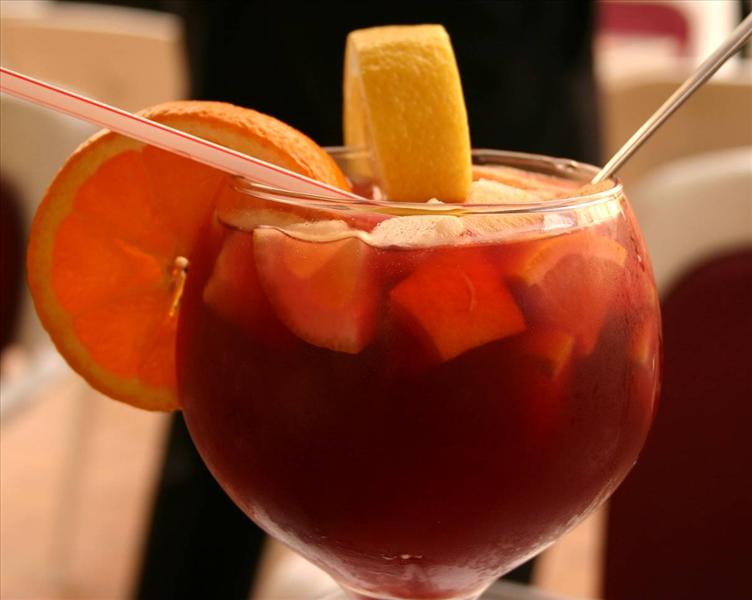
Sangria
Sangria is drink made of wine and fruits and usually is made from simple wines. You will find sangria in areas frequented by tourists. Spanish prepare sangria for fiestas and hot summer, and not every day as seen in touristic regions like Mallorca.
Sangria in restaurants aimed for foreigners are best avoided, but it is a very good drink to try if a Spaniard prepares it for a fiesta!
Sherry (Fino)
The wines around Jerez are very high in alcohol and they produce the famous sherry. If you would like to have one in a bar you have to order a fino. Manzanilla is bit salty, good as an appetizer. Amontillado and Oloroso are sweet, good after having a meal.
Wine
Spain is a country with great wine-making and drinking traditions: 22% of Europe's wine growing area is in Spain, however the production is about half of what the French produce.
Regions: The most famous wines come from Rioja region, less known but also important comes from Ribera del Duero. The latter are becoming more and more popular and are slightly more expensive than Rioja wines. White, rose and red wines are produced, but the red wines are certainly the most important ones.
Grapes: The primary red grape used is Tempranillo, the primary white grape used is Albarino, and the privary Jerez grape used is Pedro Ximenez but others can be found. The grapes used are quite delicate and thus there is a reduction in yield.
Specific names: Valdepenas is good value for money. Whites: Belondrade Y Lurton regarded as greatest white wine in Spain. Vina Sol is good as a mass product, with fruity taste.
Grades: Spanish quality wines are produced using an aging process and they have been in a oak barrel for at least one year before they can be labeled Crianza and then spend another two years in a bottle before been sold. Reservas are aged for five years and Gran Reservas are aged for 10 years.
Prices: Spain has seen a tremendous rise in wine prices over the last decade and Spanish wines are not as much of a bargain as they were a decade ago. However you will still find 5, 10 and 20 year old wines at affordable prices especially when compared with similar quality wines from Australia, Chile, France, and the US.
In a bar: For red wine in a bar, ask "un tinto por favor", for white wine "un blanco por favor", for rose: "un rosado por favor".
Wine-based drinks: Young people in Spain have developed their own way to have wine. When having botellones (big outdoor parties with drink and lots of people), most of them will be mixing some red wine with Coke and drink such mix straight from the Coke bottle. The name of this drink is calimocho or kalimotxo (in the Basque Country and Navarre) and is really very popular... But don't ask for it while in an upper class bar, or among adults, since they will most certainly not approve of the idea! As a general rule, any wine that comes in a glass bottle is considered "too good" to make kalimotxo.
Sleep
There are three different names given to hotel-like accommodation in large cities in Spain, they are Hotel, Hostal and Pension. It is important not to confuse a hostel with a hostal; a hostel offers backpacker-type accommodation with shared rooms, whereas a hostal is very similar to a guest house and is generally cheaper than a hotel.
There are many different kinds of tourist accommodations, ranging from hotels, pensions, rented villas, to camping or even monasteries.
"7% VAT is not included" is a common trick for mid-range guesthouses and hotels: always check the small print when you choose your place to stay. VAT is IVA in Spanish.
Small villages
Besides the coasts, Spain is rich in tourists-friendly inland small villages, like Alquezar: with narrow medieval streets, charming silence and isolation, still good selection of affordable restaurants and accommodation.
Casa Rural, the B&Bs of Spain
For a more homely sort of accommodation consider the Casa Rural. A Casa Rural is the rough equivalent to a Bed and Breakfast or a Gîte. Not all houses are situated in the countryside, as the name implies. Some are situated in the smaller towns, and they exist in virtually every province.
Casas Rurales, throughout Spain, vary in quality and price. In some regions, like Galicia, they are strictly controlled and inspected. Other regions are not so thorough in applying their regulations.
Some websites, such as Toprural or Planrural , charge owners for a listing. There are reviews of the houses, in several languages. Others, such as Casas rurales , are free to owners.
Hotels
Many foreign visitors to Spain stay in hotels that have been organised by the various tour operators that offer package holidays to the popular Spanish resorts on the costas and islands. However, for the independent traveller, there are many hotels all over the country in all categories and to suit every budget. In fact, due to the well developed internal and foreign tourism markets Spain may well be one of the best served European countries in terms of numbers and quality of hotels. There are many well-run Spanish hotel groups that are worth considering when deciding on a hotel to stay in Spain. One of the best-known Spanish hotel groups is Sol Melía The group operates hotels not only all over Spain but all over the world under the brands Gran Melía, Melía, ME, Innside, Tryp, Sol, Paradisus and Sol Melía Vacation Club. Another well-known Spanish hotel group Hotels Barceló .
Paradores
A Parador ("inn") is a state owned hotel in Spain (rating from 3 to 5 stars). These are a chain of hotels founded in 1928 by the Spanish King Alfonso XIII. The unique aspects of Paradores are their location and their history. Found mostly in historical buildings, such as convents, Moorish castles (like La Alhambra), or haciendas, Paradores are the exact opposite of the uncontrolled development found in coastal regions like the Costa del Sol. Hospitality has been harmoniously integrated with the restoration of castles, palaces and convents, rescuing from ruin and abandonment monuments representative of Spain's historical and cultural heritage.
For example the Parador in Santiago de Compostela is located next to the Cathedral in a former royal hospital built in the year 1499. Rooms are decorated in an old-fashioned way, but nevertheless have modern facilities. Other notable Paradores are in Arcos de la Frontera, Ronda, Santillana del Mar (Altamira cave) as well as more than 100 other destination all over Spain.
Paradores will serve breakfast (about €10) and often have very good local cuisine typical for their region (about €25).
Accommodation prices are a good value, when you consider that the hotels are often found in the heart of scenic areas, varying from €85 for a double room to €245 for a twin room (like in Granada). Two of the most beautiful paradors are in Léon and Santiago de Compostela.
There are some promotions available:
-
60+ can enjoy a discount.
-
youngsters under 30 can visit the paradors at a fixed rate of €35 per person.
-
two nights half board have a discount of 20%.
-
a dreamweek of 6 nights is cheaper.
-
5 nights at €42 per person.
The promotions do not always apply, especially in August they are not valid, and may require advance bookings.
Hostels
There are plenty of hostels in Spain, mostly in Madrid. Prices can vary from €15 to €25 per night.
Apartment Rental
Short-term, self-catering apartment rental is an option in Spain for travellers who want to stay in one place for a week or more. Accommodations range from small apartments to villas.
Buy
Money
Euro: Spain is part of the European Union and the Eurozone; as such it replaced Spanish Pesetas with the Euro (symbol: €) in 2002. A few people may still use the old national currency (166,386 pts = 1 €, 1.000 pts = 6 €) and convert into Euros later. This is much due to the huge presence of peseta, and "her" many nicknames in colloquial Spanish.
Cash euro: €500 banknotes are not accepted in many stores--always have alternative banknotes.
Other currencies: Do not expect anybody to accept other types of currency, or to be willing to exchange currency. Exceptions are shops and restaurants at airports. These will generally accept at least US Dollars at a slightly worse exchange rate.
If you wish to exchange money, you can do so at any bank (some may require that you have an account there before they will exchange your money), where you can also cash in your traveller's cheques. Currency exchanges, once a common sight, have all but disappeared since the introduction of the Euro. Again, international airports are an exception to this rule; other exception is tourist districts in the large cities (Barcelona, Madrid).
Credit cards: Credit cards are well accepted: even in a stall at La Boqueria market in Barcelona, on an average highway gas station in the middle of the country, or in small towns like Alquezar. It's more difficult to find a place where credit card is not accepted in Spain.
Most ATMs will allow you to withdraw money with your credit card, but you'll need to know your card's PIN for that. Most Spanish stores will ask for ID before accepting your credit card. Some stores may not accept a foreign driving license or ID card and you will need to show your passport. This measure is designed to help avoid credit card fraud.
Business hours
Most businesses (including most shops, but not restaurants) close in the afternoons around 13:30/14:00 and reopen for the evening around 16:30/17:00. Exceptions are large malls or major chain stores.
For most Spaniards, lunch is the main meal of the day and you will find bars and restaurants open during this time. On Saturdays, businesses often do not reopen in the evening and almost everywhere is closed on Sundays. Also, many public offices and banks do not reopen in the evenings even on weekdays, so if you have any important business to take care of, be sure to check hours of operation.
If you plan to spend whole day shopping in small shops, the following rule of thumb can work. A closed shop should remind it's also time for your own lunch. And when you finish your lunch, some shops will be likely open again.
Сlothes and shoes
Designer brands
Besides well-known mass brands which are known around the world (Zara, Mango, Bershka, Camper), Spain has many designer brands which are more hard to find outside Spain--and may be worth looking for if you shop for designer wear while travelling. Some of these brands include:
-
Custo Barcelona , Headquartered in Barcelona, has stores in Bilbao, Ibiza, La Coruna, Las Palmas de Gran Canaria, Leon, Madrid, Marbella, Palma de Mallorca, Salamanca, Tenerife.
-
Kowalski , +34 966 630 612, head office: Ctra. del Leon, km, 2; 03293 Elche, Designer shoes and sneakers (trademark Herman Monster and others) for women, men and unisex.
Department stores
- El Corte Ingles , Major national chain that can be found in nearly every city. In most cities, enjoys central location but resides in functional, uninspiring buildings. Has department for everything--but is not good enough for most purposes, except maybe for buying gourmet food and local food specialties. Still very popular with uneducated travelling shoppers. Tax refund for purchases at El Corte Ingels, unlike most other stores in Spain, can be returned only to a debit/credit card, even if you originally payed in cash.
Others
-
Casas, A chain of footwear stores that selects most popular (?) models from a dozen+ of mid-range brands.
-
Camper , Camper shoes can be seen in most cities in the country. While it may seem that they are sold everywhere, finding right model and size may be a trouble--so if you find what you need, don't postpone your purchase. Campers are sold both in standalone branded shops, and as a part of a mix with other brands in local shoe stores. Standalones generally provide wider choice of models and sizes; local stores can help if you need to hunt for a specific model and size.
-
For , Private national fashion chain featuring many premium brands. Main location is Bilbao; some stores in San Sebastian and Zaragoza.
Souvenirs
Apart from classical tourist souvenirs, here are some things that are hard to find elsewhere, or even unique.
Talk
Unsurprisingly, the official and universal language used in Spain is Spanish (español, castellano), but it's more complicated than that, as it differs in pronunciation and other details. It is part of the Romance family of languages (others include Portuguese, Galician, Catalan, Italian, Occitan, French, and Romanian) and is one of the main branches of that family. It is more properly called Castilian (castellano).
However, there are a number of languages — Catalan, Basque, Galician, Asturian, etc — spoken in various parts of Spain. Some of these languages are dominant in their respective regions, and following their legalization in the 1978 constitution, they are co-official with Castilian. Apart from Basque (whose origins are still debated) the languages of the Iberian Peninsula are part of the Romance family and are fairly easy to pick up if you know Castilian well. Learning a few words in the local languages where you are traveling will help endear you to the locals.
-
Catalan (Catalan: català, Castilian: catalán), is a distinct language similar to Castilian but more closely related to the Oc branch of the Romance Languages and is considered by many to be part of a Dialect Continuum spanning across Spain, France, and Italy and including the other Lengas d'òc such as Provençal, Beàrnais, Limousin, Auvernhat and Niçard. Various dialects are spoken in the northeastern region of Catalonia, the Balearic Islands, and Valencia (where it is often referred to as Valencià), east of Aragon, as well as neighboring Andorra and southern France. To a casual listener Catalan superficially appears to be a cross between Spanish and French, and though it does share features of both it is an independent language in it's own right.
-
Galician (Galician: galego, Castilian: gallego), very closely related to Portuguese, Galician is spoken in Galicia and the western portion of Asturias. Galician predates Portuguese and is deemed one of the four main dialects of the Galician-Portuguese family group which includes Brazilian, Southern Portuguese, Central Portuguese, and Galician.
-
Basque (Basque: euskara, Castilian: vasco), a language unrelated to Castilian (or any other known language), is spoken in the three provinces of the Basque Country, on the two adjacent provinces on the French side of the Spain-French border, and in Navarre. Basque is unrelated to any Romance language or to any branch of the Indo-European or Indo-Iranian family of languages. It currently remains unclassified and is deemed a linguistic isolate seemingly unrelated to any branch of the linguistic family tree.
-
Asturiano (Asturiano: asturianu, Castilian: asturiano, also known as bable), is spoken in the province of Asturias, where it enjoys semi-official protection. It was also spoken in rural parts of Leon, Zamora, Salamanca, in a few villages in Portugal (where it is called Mirandes) and in villages in the extreme north of Extremadura. While the constitution of Spain explicitly protects Basque, Balearic-Catalan-Valencian under the term Catalan, Galician, and Spanish, it does not explicitly protect Asturian. The province of Asturias explicitly protects it and Spain implicitly protects it by not objecting before the Supreme Court.
-
Aragonese (Aragonese: aragonés, Castilian: aragonés, also known colloquially as fabla), is spoken in the north of Aragon. It is only vaguely recognized, but not official (as of June, 2008). This language is close to Catalan (specially in Benasque) and to Castilian, with some Basque and Occitan (southern France) influences. Nowadays only a few villages near the Pyrenees use the language vigorously, while most people mix it with Castilian in their daily speech.
-
Aranese (Castilian: Aranés, Catalan/Aranese Occitan: Aranès), is spoken in the Aran Valley, and is recognized as an official language of Catalonia (not of Spain), alongside Catalan and Spanish. This language is a variety of Gascon Occitan, and as such is very closely related to Provençal, Limousin, Languedoc, and Catalan.
In addition to the native languages, English and French are commonly studied in school. If you are visiting a tourist area you will find people who are fluent in several languages. You may not be lucky elsewhere, and your best bet would be young urban people. Speak slowly, use simple words and don't hesitate to use gestures or a notebook to be understood. Chances are people will understand words more easily if you write them down.
French is the most widely understood language in the north-east of Spain, like Alquezar and Cap de Creus (at times even better than English), as the majority of travelers there come from France.
Locals will appreciate any attempts you make to speak their language. For example, "Good morning" (Buenos días) and "Thank you" (Gracias).
If you are interested in learning Spanish, there are several options available. LSI (Language Studies International) offers quality Spanish courses in Spain .
Etiquette
-
Spaniards in general are very patriotic about both their country and the region in which they live. Avoid arguments about whether people from Catalonia, Galicia or the Basque Country are Spaniards or not. Safety is generally not a concern in case you engage in an argument but you will be dragged in a long, pointless discussion, but if you are in the deep Basque Country, you may actually run into some serious problems.
-
Spaniards are generally very interested in maintaining their linguistic and cultural connections with Latin America. However, most Spaniards are also quick to point out they are Europeans, and do not understand the common North American notion that "Hispanics," including Spaniards, are somehow not white Europeans. People from other Spanish-speaking countries or backgrounds, may encounter a variety of receptions, from being embraced as cultural kin to harsh xenophobia and the ethnic slur "sudaca."
-
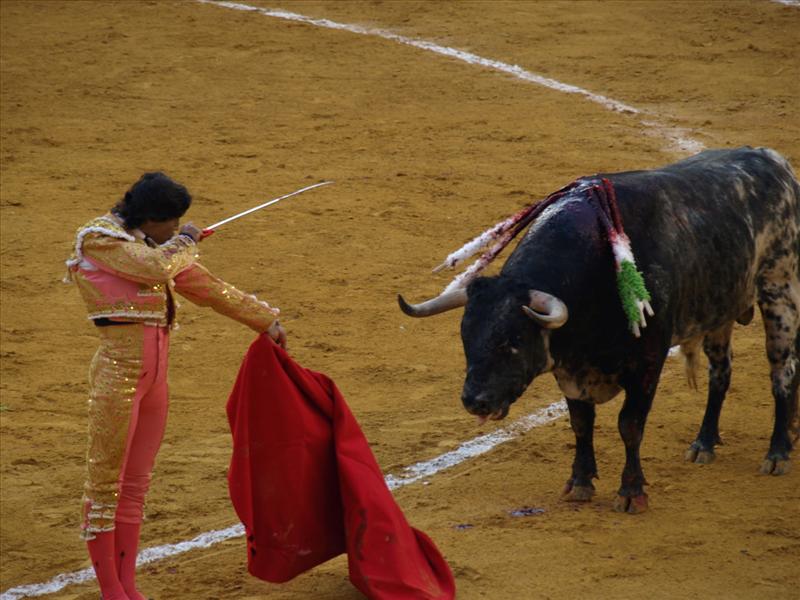
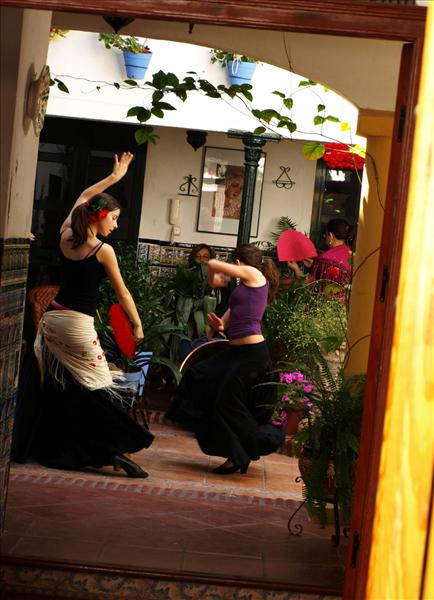
Bullfighting is seen by most Spaniards as a show directed at southerners, countryside people and foreign tourists and a huge sector of Spaniards (especially among the youth) are completely against it. Flamenco is a dance from the southern region of Andalucia, and music and folk styles in other regions of Spain (like the center or the north) are far different, as well as their regional costumes.
-
Avoid talking about their former colonial past and especially about the "Black Legend". Many Spaniards do also take pride in their history and former Imperial glories. People from Spain's former colonies (Latin America, Equatorial Guinea, the Philippines, Western Sahara and Northern Morocco) make up a majority of foreign immigrants in Spain along with the Chinese, Africans and Eastern Europeans.
-
It is customary to kiss friends, family, and acquaintances on both cheeks upon seeing each other and saying goodbye. Male-to-male kisses of this sort are limited to family members or to very close friends, otherwise a firm handshake is expected instead. So same as in France or Italy.
-
Spaniards are keen to maintain physical contact while talking, such as putting a hand on your shoulder, patting your back, etc. These should be taken as signs of friendship done among relatives, close friends and colleagues.
-
During lunch or dinner, Spaniards do not begin eating until everyone is seated and ready to eat. Likewise, they do not leave the table until everyone is finished eating. Table manners are otherwise standard and informal, although this also depends on the place you are eating. When the bill comes, it is common to pay equally, regardless of the amount or price each has consumed.
-
When Spaniards receive a gift or are offered a drink or a meal, they usually refuse for a bit, so as not to seem greedy. This sometimes sparks arguments among especially reluctant people, but it is seen as polite. Remember to offer more than once (on the third try it must be fairly clear if they will accept it or not). On the other hand, if you are interested in the offer, politely smile and decline it, saying that you don't want to be a nuisance, etc. but relent and accept when they insist.
-
When in a car, the elderly and pregnant always ride in the passenger's seat, unless they request not to.
-
Spaniards do rarely drink or eat in the street. Bars will rarely offer the option of food to take away although "tapas" are easily available. Especially unheard of is the "doggy bag". For take away food you should better try in McDonald's, Burger King, Pizza Hut or a KFC. Spaniard franchises like Rodilla, Pans&Company or Mallorca are also a good choice, though they're usually more expensive, but their food quality is much better.
-
Appearing drunk in public is generally frowned upon.
-
In Spanish beaches it is okay for women to sunbathe topless. This practice is particularly common in tourist areas. Full nudity is only allowed in "clothing-optional" or nudist beaches.
-
While Spaniards may not always be the most punctual people in the world, you should never arrive late to appointments: this will seem very bad to most people.
-
Spaniards are not as religious as the media sometimes presents them, but they are, and always have been, a mostly Catholic country (73% officially, although just 10% admit practising): respect this and avoid making any comments that could offend. In particular, religious festivals, Holy Week (Easter), and Christmas are very important to Spaniards. Tolerance to all religions should be observed, especially when being in large urban areas like Madrid, Barcelona, Valencia, Seville or Malaga (where people and temples of all beliefs can be found) or different regions in southern Spain, which may have a sizeable Muslim population (which accounts for almost a 4% of the country's population).
-
Avoid mentioning the past, such as the former fascist dictatorship of Francisco Franco, who ruled Spain from 1939 to 1975 and, specially, the Civil War of 1936-39. Many symbols, pictures, statues and monuments affiliated with the Franco regime have been outlawed and possible fines and jail time could result if you violate these laws. This was a painful past as Franco ruled Spain with an iron fist, executing many Spaniards who violated the anti-democratic laws of the regime. Avoid talking about it, especially to older Spaniards, as those times were very painful and most Spaniards preffer to forget about it. In a confusing contrast, some older Spaniards may have supportive views of Franco's ultra-nationalistic ideology so speaking disparagingly about Franco in front of them may be considered offensive, especially being you a foreigner and thus being considered an "ignorant" about Spainiard culture and histiory. Again, engaging in an argument can only lead to a long discussion and one would be best served not to bring up the topic at all.
-
Despite being a Catholic majority country, homosexuality is quite tolerated in Spain and public display of same-sex affection would not likely stir hostility. In fact, same-sex marriages are legal and recognized by the government and provide legal benefits to same-sex couples. However, a gay friendly country doesn't always necessarily mean that the Spaniards are friendly to gays, as there are always room for some criticisms depending where one travels (people in places like Madrid or Barcelona, which are 2 of the largest urban areas in Europe, will obviously have a more open view than those from rural areas). As in any other place, elderly people do usually have far more conservative points of view. Regardless, violence against gays is rarely heard of and should be safe for most gay and lesbian travelers.
Stay healthy
-
Pharmaceuticals are not sold at supermarkets, they're sold at 'farmacias' (pharmacies), identified with a green cross or a Hygeia's cup. Nearly every city and town has at least one 24 hour pharmacy; for those where it closes for night, there should be a poster on a door with an address of the nearest pharmacy, possibly in one of the nearest towns--this is required by law.
-
People from European Union and a few more European countries can freely use the public health system, if they have the appropriate intereuropean sanitary card. That card does not work in private hospitals. Agreements are established to treat people from a few American countries; see the Tourspain link below for more info.
-
However, do not hesitate to go to any healthcare facility should you be injured or seriously ill, as it would be illegal for them not to treat you, even if you are uninsured.
-
Though most foreigners tend to think Spain is a warm place, it can be terribly cold in winter, especially in the Central Region and in the North, and in some places it is also rainy in summer. Remember to travel with adequate clothes.
-
In summer, avoid direct exposure to sunlight for long periods of time to prevent sunburn and heatstroke. Drink water, walk on the shady side of street and keep a container of sun cream (suntan lotion) handy.
-
Most cities have a good water supply, especially Madrid, but you may prefer bottled water to the alkaline taste of water in the east and south.
Safety
Police
There are four kinds of police:
-
'Policía Municipal' or 'Local' (metropolitan police), In Barcelona: Guardia Urbana. Uniforms change from town to town, but they use to wear black or blue clothes with pale blue shirt and a blue cap (or white helmet) with a checkered white-and-blue strip. This kind of police keeps order and rules the traffic inside cities, and they are the best people in case you are lost and need some directions. Although you can't officially report theft to them, they will escort you to 'Policia Nacional' headquarters if required, and they will escort the suspects to be arrested also, if needed.
-
'Policía Nacional' wear dark blue clothes and blue cap (sometimes replaced by a baseball-like cap), unlike Policía Municipal, they do not have a checkered flag around their cap/helmet. Inside cities, all offenses/crimes should be reported to them, although the other police corps would help anyone who needs to report an offense.
-
'Guardia Civil' keeps the order outside cities, in the country, and regulates traffic in the roads between cities. You would probably see them guarding official buildings, or patrolling the roads. They wear plain green military-like clothes; some of them wear a strange black helmet ('tricornio') resembling a toreador cap, but most of them use green caps or white motorcycle helmets.
-
Given that Spain has a high grade of political autonomy released to its regional governments, some of them also have regional law forces, such as Policía Foral in Navarra, the Ertzaintza in the Basque Country or the Mossos d'Esquadra in Catalonia.
All kinds of police also wear high-visibility clothing ("reflective" jackets) while directing traffic, or in the road.
Theft
Spain is a safe country, but you should take some basic precautions encouraged in the entire world:
-
Try not to show expensive stuff in depressed areas (most of these ones are not touristic places, though, and you probably shouldn't get through them).
-
Thieves prefer stealth to direct confrontation so it is unlikely that you will be hurt in the process, but exercise caution all the same.
-
There have been instances where thieves on motorbikes drive by women and grab their purses, so keep a tight hold on yours even if you don't see anyone around.
-
Try not to show the money you have in your wallet or purse.
-
Always watch your bag or purse in touristic places, buses, trains and meetings. A voice message reminding that is played in most of the bus/train stations and airports.
-
Do not carry large amounts of money with you, unless needed. Use your credit card (Spain is the first country in number of cash points and most shops/restaurants accept it). Of course, use it with caution.
-
Beware of pickpockets when visiting areas with large numbers of people, like crowded buses or the Puerta del Sol(in Madrid). If you report a thief, people are generally helpful.
-
In Madrid and also in Barcelona, criminals target particularly people from the Far East (especially Japan), thinking they carry money and are easy prey.
-
Don't hesitate to report crimes to local police.
-
In general, you must bear in mind that those areas with a larger number of foreign visitors, like some crowded vacation resorts in the East Coast, are much more likely to attract thieves than places which are not so popular among tourists.
-
Avoid gypsy women offering rosemary, refuse it always; they will read your future, ask for some money, and your pocket will probably be picked. Some gypsy women also will approach you on the street repeating "Buena suerte" ("good luck") as a distraction for another gypsy woman to try to pickpocket you. Avoid them at all costs.
-
A great tourist attraction is the Flea Market (el Rastro) in Madrid on the weekends. However, as it is nearly standing room only - it is also an attraction for pickpockets. They operate in groups... be extremely cautious in these tight market type environments as it is very common to be targeted... especially if you stand out as a tourist or someone with money. Try to blend in and not stand out and you will likely not be at as much risk.
-
Women that carry purses should always put the straps across their bodies. Always hold on to the purse itself and keep it in front of your body. Keep one hand on the bottom, as pickpockets can otherwise slit the bottom without you ever knowing.
-
Never place anything on the back of a chair or on the floor next to you, keep it on your person always.
-
If you must us an ATM, do not flash the money you have just picked up.
Scams
Some people could try to take advantage of your ignorance of local customs.
-
In Spanish cities, all taxis should have a visible fare table. You shouldn't agree a fixed price to go from an airport to a city: in most cases, the taxi driver will be earning more money than without a pre-agreed tariff. Many taxi drivers will also demand a tip from foreign customers, although it is not custom in Spain to leave taxi drivers a tip. You might round up to the nearest euro when paying though.
-
In many places of Madrid, especially near Atocha station, and also in the Ramblas of Barcelona, there are people ('trileros') who play the "shell game". They will "fish" you if you play, and they will most likely pick your pocket if you stop to see other people play. Most of these scammers are foreign immigrants from Eastern Europe.
-
Before paying the bill in bars and restaurants, always check the bill and carefully scrutinize it. Poorly paid wait staff will often attempt to squeeze a few (or many) extra euros out of unsuspecting tourists by charging for things they didn´t eat (bread for example - if you didn´t eat it, you can´t be charged for it) or drink, or simply overcharging. This is true in both touristy and non-touristy areas. If you feel you´ve been overcharged, bring it their attention and/or ask to see a menu. It is also sometimes written (in English only) at the bottom of a bill that a tip is not included - remember that tipping is optional in Spain and Spanish people commonly leave loose change only (and almost never an American-style 15-20%), so don´t be fooled into leaving more than you have to.
Other things you should know
-
Spanish cities can be LOUD at night, especially on weekends.
-
All stores, hotels and restaurants should have an official complaint form, in case you need it.
-
The emergency telephone number (police, firefighters, ambulances) is 112. You may call it from any phone at no cost, in case you need to.
Drugs
In Spain possession and consumption of illegal drugs at private places is not prosecuted. Taking drugs in public and possession, for personal use, will be fined from €300 to €3000 depending of the drug and the quantity that you carry on, you will not get arrested unless you have large quantities destined for street sale.
Cope
Among Spaniards, lunch time is usually between 13 and 14:30, while dinner time is around 21. However, in special celebrations, lunch can be delayed up until 15 in some cases, while dinners can even be as late as 22. Almost all businesses close between 14:30 and 17:00, so plan your shopping and sight-seeing accordingly.
Spanish cities can be noisy in some areas. Be warned.
Some brands you may be used to in the other countries are not available in Spain: Blend-a-Med toothpaste or Dirol (Stimorol chewing gum has been available for years) Bring in enough for your whole trip if you can't live without it. But Spanish and other European brands are of good quality. Brands like Colgate and Orbit are very extended.
Contact
When using a laptop in an outdoor location, always be aware of your surroundings and the location of your belongings. Also be aware that even though it is not yet illegal to use unsecured wi-fi signals, there is work being done on the relevant laws and it may become illegal very soon.
Cheap mobile phones (less than €50) with some pre-paid minutes are sold at FNAC (plaza Callao) or any phone operator's shop (Vodafone, Movistar, Orange) and can be purchased without many formalities (ID is usually required). Topping-up is then done by buying scratch cards from the small stores "Frutos Secos," supermarkets, vending points (often found in tobacco shops) or kiosks -- recharging via the internet or via an ATM does not work with foreign credit cards.
To call home cheap you may opt to buy prepaid calling cards which are widely available in newspapers or grocery stores around the city. Simply ask for a "tarjeta telefonica".
Another convenient alternative is to use call-through services such as Chollofon or Reducitel . By simply dialing an access number before the number you wish to call you will enjoy pretty cheap international calls. For example you can call US and most European countries for only 2ct/min by dialing 901 888 020. You can use it directly from any landline or payphone. Please note that these are different companies so their prices could differ.
Work
A good way to start in Spain is to enter the tourism labourmarket:
http://www.animajobs.com Job search engine with vacancies in the touris entertainment sector. Children entertainers, sportentertainers, dancers, aerobic instructors, etc...
Contact & location
2 Reviews

I liked
Excellent guide. This the most complety guide I have never read about spain. Very close to real things and very well detailed. Congratulations!I disliked
NothingAdd your review
The photos displayed on this page are the property of one of the following authors:
grapa, [[[ PIXELECTA ]]], Epi F.Villanueva, cuky, Mishkabear, Luke Wisley, netsnake, J>Ro, Frank Kovalchek, papalars, Andrés/Andrew Larsen
Some photos courtesy of:
 ,
,  . The photos provided by Flickr, Panoramio are under the copyright of their owners.
This travel guide also includes text from Wikitravel articles, all available at  View full credits
HergaD. Guillaime, Fernando Guasch, Denis Yurkin, Chris Playll, Peter Fitzgerald, Marius Mollersen, Alan Cousteau, Russ Garrett, François Derbaix, Jim Nicholson, benjamin hoppe, Ryan Holliday, elio, Eric Polk, Justine Cogan, David, Wandering, Mike Sharp, Jani Patokallio, Chris Pohad-Thomas, Hipolito A. Gonzalez M., liamay, Rafael Ortega Diaz, Michele Ann Jenkins, Dave, Nick Roux, bruce, Todd VerBeek, Stephen Atkins, Ron, O. SC-T, Colin Jensen, David Edgar, Evan Prodromou, Andrew Haggard, Tom Holland, Daniel Levenson, Berta, Daniel Cowan, Elizabeth, Javi, Niels Elgaard Larsen, Rob Hilken, Peter Donaghy and Yann Forget, Eiland, ChubbyWimbus, Globe-trotter, Inas, Spanky003, Cacahuate, Nivaria, Tatatabot, Bluekai, Herodotus, Vidimian, Lmason, Dark Paladin X, Edmontonenthusiast, Episteme, Morph, Westmed, Pjt33, Jimby, Pashley, Emma Perez, PlavetniloWikiTravel, Jonboy, Jaywalker, WindHorse, Pjamescowie, Diegus00, Huttite, PierreAbbat, InterLangBot, Echiner, Nzpcmad, Wojsyl, Bijee, JensANDMarian, Hypatia, Nils, Sjc196, Akubra, Pstng, Dhum Dhum, Rhobite, Karen Johnson, Bfbenalover and CIAWorldFactbook2002
This travel guide also includes text from Wikipedia articles, all available at  View full credits
People who've been here (408)






















































.jpg "Adrian Ciocalau")






































































































































People who'd like to go there (198)














































































I liked
well written, concise and factualI disliked
Nothing