Prague (Czech: Praha) is the capital and largest city of the Czech Republic.
Understand
Jan Palach
A university student, Jan Palach became a Czechoslovakian martyr when he set himself ablaze in protest to the Warsaw Pact intervention against the Prague Spring reforms, which liberalised government policies and human rights restrictions. Palach died three days later from his injuries. Palach's funeral erupted into mass protests against the government. Many Czechoslovakians mourned Palach and sympathized with his ideals including Jan Zajíc, who killed himself in the same fashion as Palach to encourage his countrymen to fight the Warsaw Pact occupation of the Czechoslovakian nation. A little more than two months later, on Good Friday, Evžen Plocek also set himself ablaze in the town of Jihlava. However, Plocek's protest went largely unnoticed since his death was not reported by the media. In 1989, twenty years after Palach's death, large scale protests were held in what became known as Palach Week, a precursor to the Velvet Revolution later the same year.
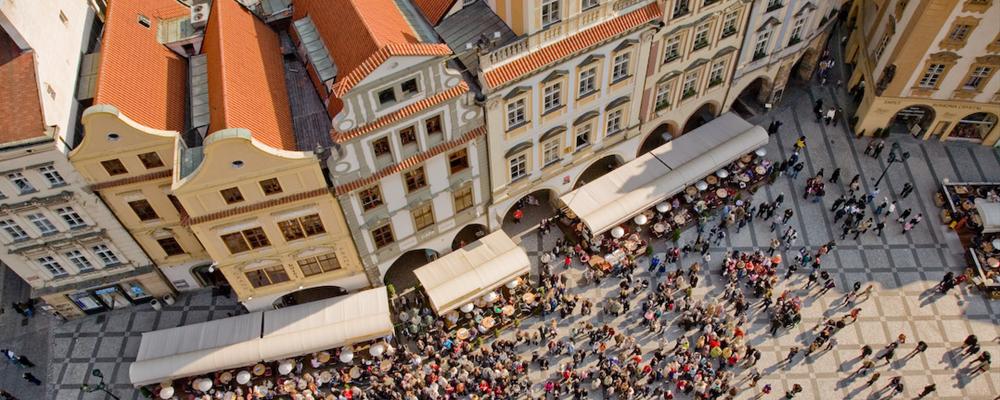
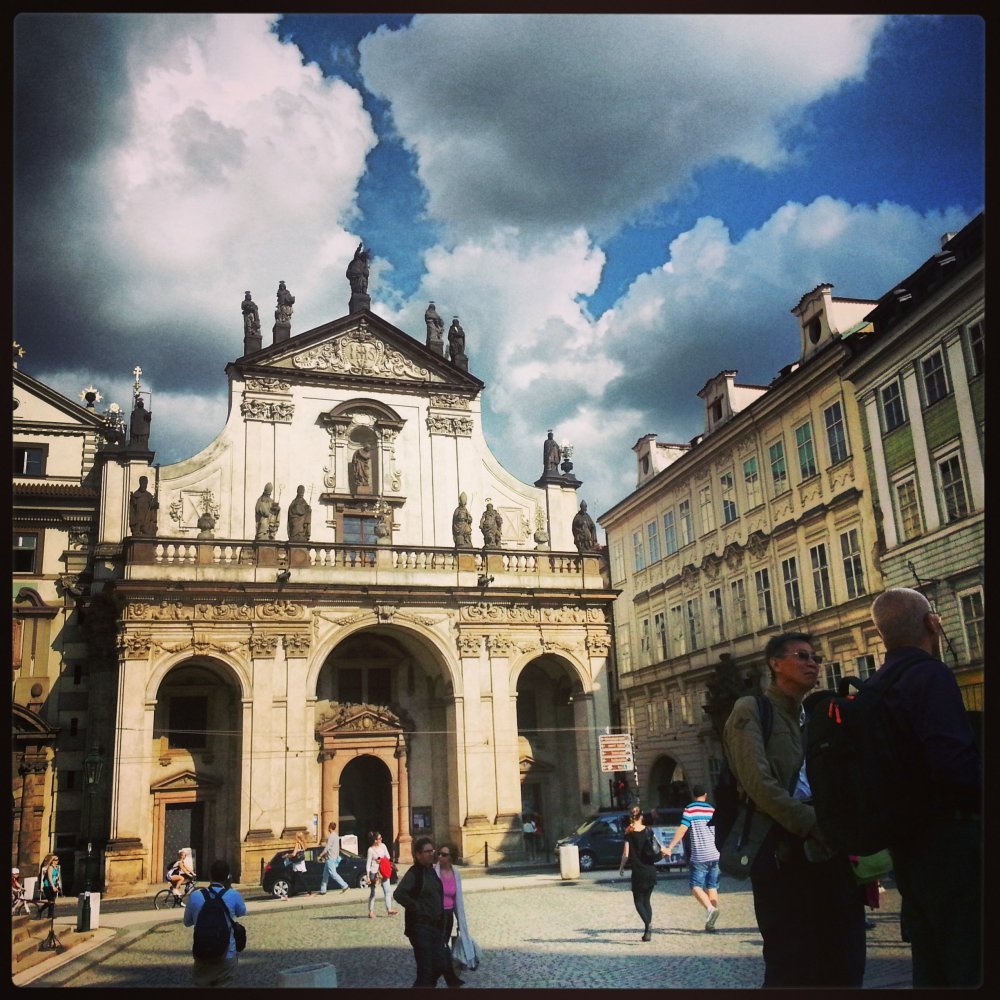
Almost undamaged by WWII, Prague's compact medieval centre remains a wonderful mixture of cobbled lanes, walled courtyards, cathedrals and countless church spires all in the shadow of her majestic 9th century castle that looks eastward as the sun sets behind her. Prague is also a modern and vibrant city full of energy, music, cultural art, fine dining and special events catering to the independent traveller's thirst for adventure.
It is regarded by many as one of Europe's most charming and beautiful cities, Prague has become the most popular travel destination in Central Europe along with Budapest and Krakow. Millions of tourists visit the city every year.
Prague was founded in the later 9th century, and soon became the seat of Bohemian kings, some of whom ruled as emperors of the Holy Roman Empire. The city thrived under the rule of Charles IV, who ordered the building of the New Town in the 14th century - many of the city's most important attractions date back to that age. The city also went under Habsburg rule and became the capital of a province of the Austro-Hungarian Empire. In 1918, after World War I, the city became the capital of Czechoslovakia. After 1989 many foreigners, especially young people, moved to Prague. In 1992, its historic centre was inscribed on the UNESCO World Heritage List. In 1993, Czechoslovakia split into two countries and Prague became capital city of the new Czech Republic.
The Vltava River runs through Prague, which is home to about 1.2 million people. The capital may be beautiful, but pollution often hovers over the city due to its location in the Vltava River basin.
Learning a little of the language may receive a smile or two (see the Czech Republic page for an introduction to basic Czech phrases).
Chaty
Many Praguers have a small cottage (which can range from a shack barely large enough for garden utensils to an elaborate, multi-story dwelling) outside the city. There they can escape for some fresh air and country pursuits such as mushroom hunting and gardening. These cottages, called chatas, are treasured both as getaways and ongoing projects. Each reflects its owners' character, as most of them were built by unorthodox methods. There were no Home Depots under communism. Chata owners used the typically Czech "it's who you know" chain of supply to scrounge materials and services. This barter system worked extremely well, and still does today. Chaty (pl. of chata) are also sometimes used as primary residences by Czechs who rent out their city-centre apartments for enormous profit to foreigners who can afford to pay inflated rent.
Local foreign language newspapers
Prague Daily Monitor (in English)
Prague Post (weekly, in English)
ABC Prague (in English)
Prague Observer (in English)
Getting there
By plane
Ruzyně International Airport, (IATA : PRG), +420 220 111 111, +420 296 661 111 . Located 20km northwest of the city centre, it generally takes about 30 minutes to reach the city centre by car. The airport is served by a number of airlines:
Wizz Air is a low cost airline with a significant base in Prague operating to European destinations including Liverpool, London, Barcelona, Milan and Paris amongst others.
Czech Airlines (ČSA) is the national carrier operating to many European and international destinations, including London, Manchester, Paris, New York and Toronto.
easyJet operates low cost services to European destinations
Ryanair low cost services to European destinations
BMIbaby low cost services from the UK only
Jet2.com low cost services from Leeds/Bradford & Edinburgh
SmartWings from Europe & Turkey
Aer Lingus from the Irish cities of Dublin & Cork
Norwegian from Scandinavia.
Delta Air Lines Atlanta and other destinations in the United States.
KLM Royal Dutch Airlines 5 direct flights per day from Amsterdam, connections via Amsterdam to many international destinations.
Getting into the city from the airport
By bus: The cheapest way to get to the city is by bus, but be sure to have some Czech Crowns ready. Buy a ticket from the kiosk in the arrivals hall or the vending machine, next to the bus stop, for 26 CZK (if you have bigger luggage with you, you have to pay 13 CZK extra). You can also buy the ticket from the driver, but it is more expensive. No machines or drivers accept foreign currencies. Take bus 119 to its terminus (Dejvická) and go downstairs to the metro. Your ticket will continue to be valid in the metro. Alternately, bus 100 takes you to subway station Zličín (metro B). Remember to validate your ticket as soon as you get on the bus. If you fail to do so and an inspector catches you, you'll be fined 700 CZK. Tickets are also available from the DPP kiosk in the arrivals area of Terminal 1. 24-hour, 3-day and 5-day tickets are also available here.
Airport Express(bus operated by Czech Railroads): These buses leave the airport every 30 minutes; the first one at 4:40AM while the last one at 9:10PM at a price of 50 CZK per person. Tickets are available from the driver. They will take you to the railway and subway station Dejvická and Masarykovo nádrazí. The last stop will be Prague's main train station (Hlavní nádrazí which is commonly abbreviated in Czech Praha hl.n). From there the bus operates back to the airport. Schedules can be found online (enter Terminal 2 and hl.n. into the search engine).
Cedaz bus: These buses operate from 5:30 a.m. to 9:30 p.m. every half hour. They will take you past the subway station Dejvická (metro A) and into the city centre to the Náměstí Republiky (metro B). Fares are 120 CZK per person. The easiest way to get to your hotel, however, is to use the company's shared-ride transfer service. They will take you direct to the door of your hotel, delivering groups of 1-4 passengers for 480 CZK or 980 CZK for 5-8 passengers. The drivers can be clearly seen straight outside the doors of the terminal building, just be sure to check that they have the correct identification.
By shuttle: Various companies run shuttle services to the hotel and back. They can be found at the airport arrival halls. They usually charge around 600 CZK for trip and in general are a bit cheaper than the taxis.
By taxi: The most comfortable method to reach the city will cost around 500 to 700 CZK with AAA. AAA has an exclusive contract with Prague airport to have a fleet of taxis waiting. For a bargain, call one of their competitors such as Profi Taxi , Taxi Praha , Halo Taxi and others or choose any cab standing on parkings or soliciting inside the terminal building, but then check the price before you enter the car.
By train
Prague has two international train stations: Hlavní Nádraží (the central station, also known as Praha hl.n.) and Praha Holešovice. Both have connections with Metro Line C.
If you arrive at Praha Holešovice and wish to continue to your destination by tram, please note that are 2 separate tram stations that bare the Nádraží Holešovice name. If you wish to travel on trams 5, 12, 15, or 54, you should walk straight out of the train station and follow the McDonald's sign (through the underpass), and the tram stop is just in front of the McDonald's. If you want trams 14, 17, or 53, then you should exit the train station heading right, and walk across the street to this tram stop.
The park in front of the main train station is a haunt for some of the city's undesirable elements and should be avoided after dark. If you do have to come through on foot, it's best to avoid coming through the park and approach from the Southeast along Washingtonova. As you get to the corner of the park there's a police station, so the likelihood of running into problems from this direction is minimalised. The station is currently undergoing a major refurbishment, alas the 70s style will be lost, but the toilets might be cleaned up once in a while.
Eurocity trains connect Prague to Berlin, Vienna and Budapest. It is a very comfortable way of travel, but not as quick as in other countries - Eurocity has average speed about 120 km/h as the Czech railway network is not suitable for higher speeds. From Berlin, a train reaches Prague in just under five hours, from Vienna in 4-4.5 hours and from Budapest in 6.5 hours. The train line from Berlin to Prague passes through the Erzgebirge mountains, and for a couple of hours the passengers are treated to a series of beautiful alpine river valleys, surrounded by rocky escarpments and mountains.
Since 2005, faster Super City Pendolino trains operate between Ostrava (3.5 hours), Olomouc (just over two hours), Vienna and Bratislava (4 hour each) and Prague (station Praha - Hlavní Nádraží). Reservation is necessary on these trains.
If you come to Prague by SC Pendolino, you can use Airport Express to Prague Airport without any additional fee. These buses operate every 30 minutes (5:15AM to 9:45PM). Without a SC Pendolino ticket, you will have to pay 45 CZK to the driver.
Train connections from western countries such as France and the United Kingdom are complicated and slow because of the layout of German railways, which lead mainly from north to south, with no direct connections from east to west. The route with the fewest connections is Prague-Berlin-Paris, but you can shave a few hours off your route if you're willing to transfer several times; eg. Prague-Nurnberg-Stuttgart-Paris can be done in 12 hours. Trains from within Germany can be best scheduled through the 'Deutsche Bahn' website . Direct trains run several times a week from Prague to the Netherlands, reaching Amsterdam in about 14 hours.
The Czech Republic is now covered by the Global Eurail pass and can be included in other Eurail passes.
By car
Prague has highway connections from five major directions. Unfortunately, the highway network in the Czech Republic is quite incomplete and some highways are old and in poor condition. Thus, the highway connection from Prague to the border of the Czech Republic is available only in two directions - southeast and southwest.
The south-western highway (D5; international E50) leads through Pilsen (Plzeň) to Germany. The D5 highway continues in Germany as A6. Riding from the state border to Prague takes about an hour and a half (160 km).
The south-eastern highway (D1) is the Czech Republic's oldest and most used highway - as such it's in a rather poor condition. It leads through Brno to Bratislava in Slovakia. It offers a good connection to Vienna, Budapest and all traffic from the east. It runs for 250km, and usually takes over two hours.
To the northwest you can take highway D8 (E55), but it is not complete to the German border. It ends now at Lovosice (about 60 km from Prague and starts again in Usti nad Labem and continues to the northern Germany via A17 (Dresden, Berlin, Leipzig).
To the northeast you can take highway R10 (E65). It is strictly speaking a motorway, not a highway, but it has four lanes and differs little from a highway. It leads from Liberec to Turnov. It isn't regarded as an important access route, as there are no major cities in this direction (Zittau in Germany, some cities in Poland), however it offers a good connection to the Czech mountains Jizerské hory and Krkonoše (Riesengebirge) with the best Czech skiing resorts.
To the east you can take the newly completed D11 (E67), which goes to Hradec Kralove. It leads to Poland.
Czech highways are under development (D8 and D11 are being extended, D3 to Ceske Budejovice and Linz is supposed to be completed in 2020) so it's hoped that things will get better. Unless there are road works, there are only seldom traffic jams on Czech highways, with the exception of D1 near Prague (and near Mirosovice (direction to Ceske Budejovice and Linz, and Brno, too)).
Prague suffers from heavy traffic and on week days the main streets are one big traffic jam. Moreover, Prague still doesn't have a complete highway outer circuit. It is a really good idea to use the P+R (park and ride) parking places, where you can park your car for a very small fee and use public transport. The P+Rs are situated near all highways and are well marked. Note that traffic wardens are rife and parking in most residential streets in and around Prague city centre (even after dark) without a valid permit will result in a parking fine. In particular, avoid blue-marked areas which are parking-restricted area if you don't want your car to get towed away within the hour.
By bus
The main bus station for international buses in Prague is Florenc, in Praha 8 (metro lines B and C). It is located east of the city centre. In June 2009 a new terminal building was opened.
Eurolines and Student Agency connect Prague to major European cities. Other, less frequently used bus stations are at Nádraží Holešovice (metro C), Dejvická (A), Zličín (B) and Černý most (B).
Traveling around
Public transportation is very convenient in most of the areas visitors are likely to frequent.
Walking
Prague is renowned as a very "walkable" city. For those who enjoy seeing the old and new city by foot, one can easily walk from Wenceslas Square to the Old Town Square, or from the Old Town to Charles Bridge and the Palace (Hrad) District. However almost all of the streets are cobbled, rendering it very difficult for disabled or elderly travellers to get around effectively. Also, pedestrians should enter crosswalks carefully in Prague, as drivers are not as likely to yield as they are in other European cities.
Remember that in the Czech Republic, it is illegal to cross at a pedestrian crossing on a red man, and if caught this incurs a fine of 1000kč.
Taxi
Try to avoid getting taxi on the street (public transportation is always the better option in Prague) and if you have to, try to negotiate the price in advance. It’s advisable to call one of the major Prague Taxi services:
Taxi Praha, +420 222 111 000 .
Profi Taxi, +420 844 700 800 .
PAT Taxi, +420 800 870 888 .
City Taxi, +420 257 257 257 .
Halo Taxi, +420 244 114 411 .
AAA Taxi, +420 222 333 222 .
Speedcars, +420 224 234 234 . This is not a taxi service, but well controlled 'individual transport service' by provider.
Deceptive taxi drivers are another trap that can badly surprise a tourist. Mostly they charge more than they should. The municipal council has been trying to solve this problem since the Prague mayor dressed up as an Italian tourist and was repeatedly overcharged. The most frequent cases of cheating happen between the railway station or airport and hotel. If you must take a taxi, and cannot call one directly or call your hotel for a referral, the best way to find a reputable one may be to look for a hotel and ask them to call a taxi.
Always insist on having the taxi-meter turned on and ask for a receipt once you leave the taxi. The receipt should have driver's name, address and tax identification number included. Even though you ask for receipt the taxi-meter could be tampered with so called "turbo", which will cause the taxi-meter price go sky high.
If you go for waving the taxi on the street make sure you stop car with logo of one of the major companies. It's not a bullet proof solution, but at least you have some chance to get some satisfaction from the taxi dispatching company.
About two years ago, an information desk was set up on most taxi stands in the city, with orientation prices to most popular destinations from that stand. But there is a mistake in the local law, which actually allows some of the taxi companies renting the taxi stands (specifically around Old Town square) to charge VERY high prices (about 99Kč/Km). There is an ongoing law suit regarding this, however the practice still hasn't stopped.
If you're not speaking Czech, then be prepared there is about 50% chance to get cheated by a taxi driver, when stopping taxi in the city center. So be always on watch as that is a standard warning in any guide book about Prague.
If you are convinced you got overcharged by the taxi driver, mark the car ID numbers (license plate, taxi license number on the car door, driver name etc.) and contact the company, which the driver is working for (if any) or police. The problem is that you have to testify against the driver, which is kind of hard when you're on the other side of the world. Try to avoid suspicious taxis and if you find even a grain of suspicion, then walk away catching another taxi.
Other alternative is to use some of the chauffeured services companies like Prague Airport Transfers s.r.o. or FEBA Trade Limousine Car Service or even cheaper but as reliable HFS s.r.o. - 123-Prague-Airport-Transfer.com .
Tram & Metro
There are three main subway lines (Czech: metro), and numerous bus and tram (streetcar) lines. The tram and bus schedules are posted on the stops, and the metro operates from very early in the morning (around 5:00AM) until approximately midnight. The schedules and connections may also be checked online from the website of Prague Public Transit. Purchase a 30-minute metro (or 5 stops only) for 18 Kc, 75-minute transfer ticket for 26 Kc, or 180 minutes for 40Kc, at any dispenser using coins (they give change), or tobacco shop. Ensure you always have some coins, because the only way to buy ticket on some stations (or at night time) is to use a ticket machine. Discounted tickets for children up to 15 years are also available.
You may purchase 24-hour, 3-day or 5-day tickets at ticket offices in some metro stations. A 24-hour ticket costs 100 Kc, and may be both cheaper and more convenient than buying separate tickets for each journey. Tickets for 3 or 5 days allow for free accompaniment of one child between the age of 6 and 14 (inclusive). The same ticket may be used on metro, tram or bus, including transfer from one to the other, during its time period. Time stamp your ticket by slipping it into one of several boxes in the tram or bus as soon as you board, stamp metro tickets before entering the stations (imitate the locals), and keep it handy until it expires.
Tickets are not checked upon boarding, but uniformed and plain-clothes ticket inspectors often make the rounds asking to see your ticket. These inspectors have mostly improved a great deal, and usually speak a fair amount of English and are fairly polite in their difficult jobs. One problem is false inspectors who most often ride the trams between "Malostranske Namesti" and Prague Castle - these deceivers can be detected by asking for the identity card which should be possessed by every inspector. An unstamped ticket is invalid, it will be confiscated, and you will incur a 700 Kc fine. Even though "riding black" seems easy in Prague, you should invest in the cheap ticket, for the simple reason that Prague's transportation works perfectly, and it functions on the honor system - help it stay that way.
Public transport continues at night. Night trams or night buses (00:00 to 5:00AM) usually come every 30 minutes. Every 15 minutes during this time, trams leave the central exchange stop of Lazarská in the centre of Prague. All night trams go through this stop. You can easily change tram lines here if not anywhere else.
Do not underestimate how close to the footpath the trams will be when they reach the stop. It's safer to take a few steps back before the tram arrives as wing mirrors could cause injury for taller people. When you use public transport in Prague, keep in mind that it is good etiquette to let elderly people and mothers sit down.
By boat
You can travel down the famous Vltava River (Moldau, in German), which inspired writers and composers such as Smetana and Dvorak.
See
Prague Castle. The biggest ancient castle in the world, according to the Guinness World Records, which rises above the city offering beautiful views of the areas below. Also on site is the St. Vitus Cathedral with its lookout tower, the Castle Picture Gallery, several palaces and museums and the beautiful Royal Garden, among other attractions. You can also watch the Presidential Guard, and the changeover of the guards on duty on the hour. The entrance for St. Vitus Cathedral is free, but the queue may be long (1 hour). A Prague castle ticket is 350 CZK and audioguide a further 350 CZK. This is a large amount for an audioguide, but it lets you skip the St. Vitus queue.
Charles Bridge— One of several bridges over the Vltava. Its construction started in the 14th Century and it is one of Prague's most beautiful attractions. Over the day it is a bustling place of trade and entertainment.
The Old Town (Staré město)— Prague's historic centre. Includes numerous historical buildings and monuments, most notably the famed Astronomical Clock (Orloj), the pure GothicTýn Church, the mural-covered Storch building, and the Jan Hus monument. Nearby, the Estate Theatre is a neoclassical theatre where Mozart's opera Don Giovanni was first performed. The old town features many historical churches (St. James Church, Church of Our Lady before Tnem among others) and some other interesting historical buildings like the Old Town Hall.
Josefov— The historical Jewish ghetto. Interesting for its well preserved historical synagogues, unique in the entire world. The Old New Synagogue (Czech: Staronová synagoga) is Europe's oldest active synagogue. It's rumoured to be the resting place of the famed Prague Golem. Another interesting synagogue is the Spanish Synagogue, a highly ornamented building of Moorish style. Other attractions are the old Jewish Cemetery, which is the oldest in Europe, and Kafka's house. The Old New Synagogue is NOT a part of the Jewish museum, so it's recommended to buy a combined pass to all Jewish attractions which costs 480 CZK.
New Town (Nové město)— The new town was constructed as an extension of the old town at the 14th Century. Nonetheless, despite its oldness, most of it was modernized. The main attraction here is the Wenceslas Square, which has many stalls, shops and restaurants. At the top of the square is the National Museum which is well worth a look (see below). Midway down this historic Boulevard, one finds trendy discos and Art Nouveau hotels, as well as quaint parks and arcades, while just off the beaten path are some wonderful panoramic views (Henry Tower), romantic restaurants, Narodni, and the dazzling, Disney-colored Jubilee Synagogue.
The Lesser Town (Malá strana)— Across the Vltava from the city centre and leading to the castle, this quarter also offers beautiful streets and churches (of which St. Nicholas Church is the most renowned). The Lennon Wall which used to be a source of irritation to the communist regime is also found here, near a Venetian-like canal with water wheel and close to the Charles Bridge.
Loreta. A beautiful Baroque convent in the Lesser Town.
Strahov Monastery. A monastery on the mountain. Worth a visit for both its picture gallery and its notable Renaissance library.
Prague Dancing House (Fred and Ginger Building)— One of the most fascinating architectural expressions of Prague. Accessible from Karlovo náměstí metro station.
Vyšehrad. A nice castle well worth a visit.
Petřínská rozhledna— A smaller version of the Eiffel Tower on the top of a hill. Climbing the tower costs 100 CZK.
Prague Giant Metronome— It is a huge monument erected in order to replace the Stalinistic monument that preceded it.
Memorial to the 1989 Velvet Revolution— A simple brass plaque at 20 Narodni. From Cafe Louvre, walk toward the river. You will enter an archway in just a few meters, look on the wall to the left.
Prague Zoo. A large zoo in Prague.
Museums:
Czech National Gallery (Národní galerie). Its most important collections are in the Sternberg Palace (up to to the Baroque), St George Convent (Czech Baroque and Mannerism) and Veletržní Palace (19th century and modern art). The first two are located near and in the castle respectively. Do not confuse them with the Castle Picture Gallery (see above) which is worth visiting on its own right.
A collection of Asian art is exhibited at the Zbraslav Castle.
Czech National Museum (Národní muzeum). An association of various museums. The main building is at the Wenceslas Square and is dedicated to natural history. Other branches include museums of the Czech composers Dvořák and Smetana, Czech Music Museum, Historical Pharmacy Museum, Prince Lobkovicz' Collection at the Prague Castle, Czech Ethnographical Museum and Naprstek Anthropological Museum.
Prague City Gallery. A museum of modern Czech arts divided between several sites most of which are in the old town. Its main building is the House of the Golden Ring at the Old Town Square featuring 20th Century Czech art in a beautiful medievil edifice. 19th Century Czech art is exhibited at the Troja Castle.
Czech Museum of Fine Arts. 20th Century Czech art and changing exhibitions.
Museum of Decorative Arts. This 17th century palazzo-style building houses examples of historical and contemporary crafts, as well as applied arts and design.
National Technical Museum (Národní technické muzeum). Amazing collection of motorcycles, cars, aircraft and commercial vehicles, plus many examples of communist-era technological engineering
Military Museum. Showcases the uniforms, artefacts and maps relating to the Czechoslovak armed forces during World Wars I and II.
Jewish Museum. This covers six separate places (four synagogues, the Old Jewish Cemetery and the Memorial Hall) but does not include the Old-New Synagogue, although entrance tickets can either include or exclude the last named. The Old-New Synagogue is expensive in relation to the museum but in view of its age, it's worth including it. The Memorial Hall is particularly moving with exhibits of the writings of children in death camps.
Mozart and Dušek Museum. Dedicated to the works of Mozart.
Prague City Museum (Muzeum hl. m. Prahy). An absolute must-see for the incredibly detailed cardboard model of nineteenth century Prague by Anton Langweil. The detail is amazing, even down to the colour of the doorways and the design of the windowsills.
Mucha Museum. A museum of the Czech artist Alfons Mucha.
Kafka Museum. There is also a permanent exhibition at Kafka's house.
The Pedagogical Comenius Museum. A museum documenting the writings of the Czech Renaissance erudite.
The Mueller Villa. A work of art of the well known Viennese architect Loos from the beginning of the 20th Century.
Jaroslav Fragner Gallery. Jaroslav Fragner Gallery is oriented in temporary architecture. You can find here profiles of influential people and groups, retrospective exhibitions, thematic exhibitions, recent movement in architecture. Gallery provides lectures, seminars and publishing, regarding central Prague the JFG became a centre for architects, professional and general public, students of architecture and construction companies.
Museum Kampa. A museum of modern Central European art.
Museum of Communism in Czechoslovakia. Interesting exhibits on how Communism changed Czechoslavakia.
There are plenty of smaller museums. Among them are the Miniature Museum at the Stahnov Monastery, Toys Museum and Musical Automata Museum at the Prague Castle, Wax Museum, Torture Museum, Postal Museum and Brewery Museum at the Old Town and the Aviation Museum at Kbely.
Sightseeing Passes
As with many major European cities, you can get a good deal by buying a tourist card. Be discerning when choosing based on your needs (for example, cards may list free entry to locations that are normally free anyway - this concerns Prague Pass). Here are your options:
Prague Card. All-top attractions inclusive tourist card with tradition since 1991, is valid for 4 days and grants free entry to over 50 top attractions in the Prague area. You will receive a book with information on all the free attractions and many discounts (Prague Walks excursions, airport transfer, shopping, Mucha and Kafka museum etc.) and a voucher for each attraction. You can only enter the attraction with a valid card AND a voucher. The card does not include public transport and a separate ticket will have to be bought. The Prague Card costs 790 Kč.
Free Attractions
Of note is that the card will grant free admission to all the Prague Castle short tour, which normally costs 250 Kč. Many of the town's museums and galleries--including all branches of the National Gallery and the National Museum--are also included, and over four days you can easily see 3 times the card's value. As such, this is an excellent choice if you're planning on visiting a lot of museums. The only major attraction that is not included is the Old New Synagogue and Jewish Museum.
With the Prague Card you can visit Prague Castle (350 CZK), Old Town, Malá Strana and Charles Bridge historical towers and other attractions, Observatory (20 CZK), small copy of Eiffel Tour (100 CZK) and Mirror Maze at Petrin Hill, Vysehrad all castle including his casemates and gallery, many New Town Museums and Galleries and several castles outside centre of Prague.
Prague Pass. Will give you free entry to various attractions in Prague within a 1 year period, various discounts, sightseeing tours and 72 hours of public transport, including metro, tram, bus, funicular, and train all for 860 Kč.
Free Attractions
There is something for everyone with Vysehrad and its casemate (catacombs) and basilica, take a boat trip through Prague on the river Vltava (Moldau), effortless up in the TV tower with the best panorama of Prague or enjoy a ride on the Petrin hill cable railway. The whole city in one hall (perfect model in 1:480 scale) - a time travel to the past in Prague’s historical most significant museum. Don't fear the sharks and marvel at the blaze of colors in the Sea World Aquarium, a magical ride at a performance of a Black-Light-Theater or let your soul swing at a concert in a church. River Navigation Museum, Army museum, Aviation museum and the UNESCO certified auto museum "PRAGA".... all for free! (Some of them however have free entry anyway !)
Also in your pack is a free map of Prague and a program guide booklet as well as a free welcome present. You will also receive discount coupons for several discounts of up to 50% for guided sightseeing- and city-walking tours, Mozart museum, galleries, concerts, internet use, computer games, real laser game or for Rent a Car (25%).
National Gallery Gift Ticket— If you are an art lover and you are staying in Prague for a longer time, a dárková vstupenka (gift ticket) for National Gallery may save you money. The ticket is valid for a year and is valid in all exhibitions (both permanent and non-permanent) of National Gallery. Number of visits is not limited. A gift ticket for one person costs 650 Kč, for two persons 1000 Kč. For 240 Kč you can have one-person ticket valid for two days in all "Old Art" exhibitions of National Gallery (Šternberk Palace, Schwarzenberg Palace, St. Anežka Convent), basic entry for these three galleries bought separately would cost you 450 Kč.
Things to do
Culture
There are many opera and Black Light Theatre companies in Prague. There are several performance groups that cater to tourists. They aren't strictly to be avoided, but common sense should tell you that the opera advertised by costumed pamphleteers is not going to be up to truly professional standards.
AghaRTA Jazz Centrum.
Black Light Theatre.
Ungelt Jazz & Blues Club.
Pipe organ music in Prague.
Prague Folklore Days.
19th International Festival of Advent and Christmas Music.
List of Concerts, Theatres, Museums, Galleries, Monasteries, Antiques, Trade Fairs, History in prague:
Heart of Europe.
River cruises
River cruises are both popular and varied, from one hour cruises to long evening cruises with dinner or music.
Cruise Prague. Offers a wide range of regular and private cruises.
EVD.
JazzBoat. Combines cruising and jazz concerts.
Sports
Prague Sports. Gives you the chance to play a range of sports from football, cricket, rugby union, and hockey in Prague. Packages can be tailor-made to include accommodation, transfers, activities etc.
Eat
Lunch is traditionally the main meal in Prague. Czech cuisine is typically based around pork or beef with starchy side dishes such as dumplings, potatoes, or fries. Fish is not as popular, though these days it is widely available. Popular Czech desserts include fruit dumplings (ovocný knedlíky), crêpes or ice cream. Most restaurants become very crowded during lunch and dinner, so consider making a reservation or eating earlier than the locals.
The tip should be about 10 to 15% - in cheaper restaurants or pubs you can get away with rounding up the bill or leaving a few extra coins. Otherwise it's customary to leave at least 20Kč-40Kč or €1-2. Taxes are always included in the price by law. Many restaurants in heavily-touristed areas (along the river, or with views near the castle) will charge a cover or "kovert" in addition to your meal charge. If this is printed in the menu, you have no recourse. But a restaurant will often add this charge to your bill in a less up-front manner, sometimes after printing in the menu that there is no cover. Anything brought to your table will have a charge associated with it (bread, ketchup, etc.) If you are presented with a hand-scrawled bill at the end of the meal, it is suggested that you take a moment to clarify the charges with your server. This sort of questioning will usually shame the server into removing anything that was incorrectly added. It should be noted that some waiters are impolite especially to people from the eastern part of Europe. Pay no attention to this, and simply find another restaurant.
If you're on the look out for fast food, you won't be able to move without tripping over street vendors serving Czech style hot dogs and mulled wine in the Old Town Square and Wenceslas Square in New Town. If you're after Western-style fast food, the major chains also have a large presence in Wenceslas Square and the area immediately around it. Most beer halls also serve light snacks or meals. Definitely try the hot dogs - they're far superior to the greasy, messy version you get in the West. Small, hollowed-out French baguettes are used for the bread, filled with mustard and ketchup, and then the frankfurter is inserted afterwards. This turns the bread into a convenient carry-case and means you don't get ketchup all over your hands. Make sure you get mustard, even if you don't normally like it - unfortunately the hot dogs are somewhat flavorless and need that extra bit of kick. Prices range from around 15 crowns for a small one to 45 crowns for the terrifying-looking 'gigant'. Note that size of hot dog relates to girth rather than length.
If you're looking for somewhere more formal, Old Town Square has several places with outside seating on the square. It's an excellent place to people watch.
Drink
Pubs (in Czech "hospoda") abound throughout Prague, and indeed are an important part of local culture. A green sign hanging outside an establishment indicates one of the country's excellent local beers is to be had inside. Most pubs serve only a small selection of beers. Locals seldom pay more than 25Kč for a half liter glass, while tourist traps often charge 50Kč or more. Both famous Czech beer brands, Pilsner Urquell and Budweiser Budvar, can be found in Prague pubs. However, if you want to drink beer made in Prague, look for Staropramen.
In Prague it is customary, especially at beer halls, to sit with a group of people if there are no free tables, so go ahead and ask if you can join. Prague has also many excellent tearooms (in Czech čajovna) which serve different kinds of teas from around the world.
Pubcrawls
Prague Pub Crawl Join together at the original Pub Crawl Bar. Guests may join any time from 9PM-10:30PM starting by exercising drinking muscles with a drink lottery and an hour-and-a-half-long open bar with all the free beer or wine you can drink, and three rounds of super shots. From Pub Crawl Bar follow your guides to a variety of bars.
Pub Crawl. Meets in front of the astronomical clock in Old Town square at 9:15PM nightly. €15 for an hour of unlimited beer, wine (if you find the pitcher) and watered-down absinthe shooters, and then takes you to a variety of bars and pubs in town and ends at a night club. It is a great way to find out what the nightlife in Prague is really like. No booking necessary, just show up thirsty! They advertise a free t-shirt, but you actually have to buy a drink for 2 euros the day after the crawl at a pub to get it.
Zizkov district's Pub Crawl. Zizkov is where locals go out. Its cheaper, and almost devoid of tourism. It meets in front of the Church at "Jiriho Z Podebrad" metro stop at 8:30PM every night, and goes to "Blind Eye" bar from 9-10PM.
Sleep
Prague has a wealth of accommodation options, many of them within walking distance of the town centre. Peak season generally runs from April to October and a major influx of visitors can be expected during New Year as well. Prices for accommodation can be up to twice as high in the peak season and reservations are advised. Otherwise, the main train station, Hlavní nádraží, has an accommodation booking service for hotels and hostels upstairs. Normally, tax and breakfast are included in the room rate.
Even during peak season, dorm rooms in hostels close to the city center can be had for around 350Kč per person per night. Prague has its share of rough and ready youth hostels with a party vibe, but there are many with a more relaxed atmosphere and some housed in beautifully restored buildings as fancy as any hotel. Many hostels also offer private rooms, with or without shared bathrooms, for much cheaper than a pension or hotel room. Around Hlavni Nadrazi, the main train station, there are many touts offering cheap accommodation. Many are Czech residents renting part of their apartment for extra cash. Prices don't vary much between them, but some may not be trustworthy so be cautious.
A fun alternative is a 'Botel'. Usually relatively well placed, with gorgeous views. Prices vary from €20 to €120 pppn.
Botel Florentina offers a view of the castle while being affordable too.
For those travelers to Prague that aren't looking to just save money, but to stay and tour the town in style, there are a few luxury hotels including one that is in the historical building from the 16th century:
Hotel u zlaté studny (At the Golden Well), +420 222 220 262, Karlova 3, Prague 1, Hotel is situated in the very centre of Prague, on the Royal Path which connects the Old Town Square with the Charles Bridge.
For those looking for something a little different, a 'botel' (boat hotel) may be an appealing option. Most are moored on the south of the river in Praha 4 and 5.
Camping: The city has numerous campsites; there is one area to the south of the river (in the city) with camping grounds on river islands. Another is in the north in 'Troja' these camping grounds are mainly small, family affairs, in the peak season they can get very crowded. From Prague centre they are accessible from tram 12 and 15; at Troja follow the signs for the 'zoo'.
Old Prague Hostel, 00420224829058, Benediktska 2, Prague 1, metro Namesti Republiky, Top located hostel in Prague. Next to Old Town Square. Common rooms, common kitchen. Free internet, breakfast.
A1 hotel & hostel, 00420284827681, Sokolovska 210, Prague 8, metro Palmovka, Friendly hostel 10 min from the centre. Common rooms, common kitchen, free internet. Don’t pay more when you don’t need to – we offer confortable accommodation for a friendly price.
Prague Square Hostels, 00420224240859, Melantrichova 10, Old Town, metro Mustek, One of the best located hostels in Prague. 200 steps from Old Town Square, Astronomical Clock. 5min walk to Charles Bridge
Sir Toby's Hostel, + 420 283 870 635, Delnicka 24, Sir Toby's is a great Prague tradition. It is a favorite of backpackers as it has a great atmosphere perfect for meeting locals and fellow travelers. Also, be sure to check out their cellar pub with regular movie screenings.
Czech Inn, +420 267 267 600, Francouzska 76, One of Europe's Famous hostels, Czech Inn is the #1 designer hostel in Prague. It is chic and stylish while still maintaining the atmosphere and budget of a hostel. They also have their own cafe which doubles as an art gallery, with regular events (including concerts, trivia night, etc) and a large selection of local beers.
Miss Sophie's, +420 296 303 530, Melounova 3, A boutique hotel and hostel located in Prague's New Town, just a stone's throw from all of the main tourist sights. Offering designer accommodation with chic, minimalist decor at reasonable prices, Miss Sophie's has dorm beds, private rooms, and apartments.
Hotel Ambassador, 420 224 193 111, Vaclavske namesti 5-7, Prague 1, Luxury hotel right on Wenceslas Square. It's one of the traditional, longest operated 5 star hotel in Prague. It's pricey but good value for money and location.
Prague Lion Hostel, 420 731 487 936, Na Zbořenci 273/6 Praha 2 - Nové Město, A great hostel with single and double rooms. Some have ensuite bathrooms, others do not. Overall, a great value for the money in New Town; more of a pension than a hostel.
Dizzy Daisy Hostel Prague, +420 776 088 311, Dittrichova 330/15, Prague2, In the centre, Praha2, Hostel offers comfortable rooms and dorms with many other services. Located next to the river bank of Weltava. In a walking distances from the old town and Charles Bridges. Feel the real atmosphere of Prague with us!
Ramada Grand Hotel Symphony, +420 221 454 111, +420 221 454 111, Václavské náměstí 41, Prague 1, Hotel is situated on *Wenceslas Square* just a few steps from the most visited cultural and historical sights. Hotel offers 98 *modern and elegant rooms* including 9 apartments and one room for a disabled guests. All rooms are *air-conditioned*. Direct public transport connections ensures maximum mobility within Prague and surrounding areas.
Ametyst Hotel Prague, +420 222921921, Jana Masaryka 11, Prague 2, metro I.P.Pavlova, metro Namesti Miru, Ametyst Hotel Prague is a favoured 4 Star Boutique Hotel and Art Gallery Hotel located in the city centre of downtown Prague renowned for its fair value for money, award winning restaurant and excellent breakfast.
The Golden Wheel**** Hotel (Centre) , +420257535490, Nerudova 28, Prague 1 - Lesser Town - Centre, Charm & Boutique Hotel - The Golden Wheel is one of the most popular hotels in Prague! The rating is up to 20th position of all 656 hotels in Prague! The hotel is located in the famous cobbled Nerudova street in the heart of the most romantic district of Prague - Mala Strana (Lesser Town) directly below the Prague Castle and just few steps from Charles Bridge. In this quarter of Prague every house has a name so “The Golden Wheel” is a historic name of building. This small hotel offers 17 elegantly and luxury furnished rooms, equipped with bathrooms with showers or bath, WC, international TV satellite channels, free internet high speed connection, WiFi, minibar and the attic rooms has air-conditioning. Each room has its own indistinguishable charm. Some rooms has ceilings with hand painted wooden beams or with Baroque vaults. Guests can enjoy an enchanting view over the Prague Castle from glass panoramatic balcony at 4th floor and the famous red roofs of Malá Strana from the upper floors, for relax hotel has private small calm, green garden with flowers. In hotel you can see old well from 14th century! Free high speed internet point with PC is ready for trvellers without own PC! Hotel make every day Daily hotel news at the breakfast time with weather forecast for today and tomorrow, tips to do in Prague, entertainment tips, ticket management. Splendid buffet breakfast with legendary Prague ham, mortadella, omelets, ham and eggs, selection of sausages, fresh fruits, light and dia breakfasts, croissants and Czech bread is made in hotel bakery. Breakfast is included in rate!
Hotel U Zlatých nůžek**** (City centre) , +420257530473, +420257530473, Na Kampě 6/494, Prague 1 - Lesser Town - just next to the Charles Bridge, The hotel is located in the heart of historical Prague 1 – Lesser Town, halfway along the royal path between Prague Castle and Old Town Square. The hotel offers accommodation in 10 spacious double rooms with extra beds on request. All rooms have satelite TV, WiFi internet, direct phone lines, a safe, a minibar and an electronic door-locking system. Bathrooms are equipped with a shower or/and bath, toilet and hair dryer. Our hotel is located 12 km from Ruzyně Airport, 4 km from train station Hlavní nádraží and 3.5 km from the Florenc bus station. We are looking forward to your visit!
Sleep
Prague has a wealth of accommodation options, many of them within walking distance of the town centre. Peak season generally runs from April to October and a major influx of visitors can be expected during New Year as well. Prices for accommodation can be up to twice as high in the peak season and reservations are advised. Otherwise, the main train station, Hlavní nádraží, has an accommodation booking service for hotels and hostels upstairs. Normally, tax and breakfast are included in the room rate.
Even during peak season, dorm rooms in hostels close to the city center can be had for around 350Kč per person per night. Prague has its share of rough and ready youth hostels with a party vibe, but there are many with a more relaxed atmosphere and some housed in beautifully restored buildings as fancy as any hotel. Many hostels also offer private rooms, with or without shared bathrooms, for much cheaper than a pension or hotel room. Around Hlavni Nadrazi, the main train station, there are many touts offering cheap accommodation. Many are Czech residents renting part of their apartment for extra cash. Prices don't vary much between them, but some may not be trustworthy so be cautious.
A fun alternative is a 'Botel'. Usually relatively well placed, with gorgeous views. Prices vary from €20 to €120 pppn.
Botel Florentina offers a view of the castle while being affordable too.
For those travelers to Prague that aren't looking to just save money, but to stay and tour the town in style, there are a few luxury hotels including one that is in the historical building from the 16th century:
Hotel u zlaté studny (At the Golden Well), +420 222 220 262, Karlova 3, Prague 1, Hotel is situated in the very centre of Prague, on the Royal Path which connects the Old Town Square with the Charles Bridge.
For those looking for something a little different, a 'botel' (boat hotel) may be an appealing option. Most are moored on the south of the river in Praha 4 and 5.
Camping: The city has numerous campsites; there is one area to the south of the river (in the city) with camping grounds on river islands. Another is in the north in 'Troja' these camping grounds are mainly small, family affairs, in the peak season they can get very crowded. From Prague centre they are accessible from tram 12 and 15; at Troja follow the signs for the 'zoo'.
Old Prague Hostel, 00420224829058, Benediktska 2, Prague 1, metro Namesti Republiky, Top located hostel in Prague. Next to Old Town Square. Common rooms, common kitchen. Free internet, breakfast.
A1 hotel & hostel, 00420284827681, Sokolovska 210, Prague 8, metro Palmovka, Friendly hostel 10 min from the centre. Common rooms, common kitchen, free internet. Don’t pay more when you don’t need to – we offer confortable accommodation for a friendly price.
Prague Square Hostels, 00420224240859, Melantrichova 10, Old Town, metro Mustek, One of the best located hostels in Prague. 200 steps from Old Town Square, Astronomical Clock. 5min walk to Charles Bridge
Sir Toby's Hostel, + 420 283 870 635, Delnicka 24, Sir Toby's is a great Prague tradition. It is a favorite of backpackers as it has a great atmosphere perfect for meeting locals and fellow travelers. Also, be sure to check out their cellar pub with regular movie screenings.
Czech Inn, +420 267 267 600, Francouzska 76, One of Europe's Famous hostels, Czech Inn is the #1 designer hostel in Prague. It is chic and stylish while still maintaining the atmosphere and budget of a hostel. They also have their own cafe which doubles as an art gallery, with regular events (including concerts, trivia night, etc) and a large selection of local beers.
Miss Sophie's, +420 296 303 530, Melounova 3, A boutique hotel and hostel located in Prague's New Town, just a stone's throw from all of the main tourist sights. Offering designer accommodation with chic, minimalist decor at reasonable prices, Miss Sophie's has dorm beds, private rooms, and apartments.
Hotel Ambassador, 420 224 193 111, Vaclavske namesti 5-7, Prague 1, Luxury hotel right on Wenceslas Square. It's one of the traditional, longest operated 5 star hotel in Prague. It's pricey but good value for money and location.
Prague Lion Hostel, 420 731 487 936, Na Zbořenci 273/6 Praha 2 - Nové Město, A great hostel with single and double rooms. Some have ensuite bathrooms, others do not. Overall, a great value for the money in New Town; more of a pension than a hostel.
Dizzy Daisy Hostel Prague, +420 776 088 311, Dittrichova 330/15, Prague2, In the centre, Praha2, Hostel offers comfortable rooms and dorms with many other services. Located next to the river bank of Weltava. In a walking distances from the old town and Charles Bridges. Feel the real atmosphere of Prague with us!
Ramada Grand Hotel Symphony, +420 221 454 111, +420 221 454 111, Václavské náměstí 41, Prague 1, Hotel is situated on *Wenceslas Square* just a few steps from the most visited cultural and historical sights. Hotel offers 98 *modern and elegant rooms* including 9 apartments and one room for a disabled guests. All rooms are *air-conditioned*. Direct public transport connections ensures maximum mobility within Prague and surrounding areas.
Ametyst Hotel Prague, +420 222921921, Jana Masaryka 11, Prague 2, metro I.P.Pavlova, metro Namesti Miru, Ametyst Hotel Prague is a favoured 4 Star Boutique Hotel and Art Gallery Hotel located in the city centre of downtown Prague renowned for its fair value for money, award winning restaurant and excellent breakfast.
The Golden Wheel**** Hotel (Centre) , +420257535490, Nerudova 28, Prague 1 - Lesser Town - Centre, Charm & Boutique Hotel - The Golden Wheel is one of the most popular hotels in Prague! The rating is up to 20th position of all 656 hotels in Prague! The hotel is located in the famous cobbled Nerudova street in the heart of the most romantic district of Prague - Mala Strana (Lesser Town) directly below the Prague Castle and just few steps from Charles Bridge. In this quarter of Prague every house has a name so “The Golden Wheel” is a historic name of building. This small hotel offers 17 elegantly and luxury furnished rooms, equipped with bathrooms with showers or bath, WC, international TV satellite channels, free internet high speed connection, WiFi, minibar and the attic rooms has air-conditioning. Each room has its own indistinguishable charm. Some rooms has ceilings with hand painted wooden beams or with Baroque vaults. Guests can enjoy an enchanting view over the Prague Castle from glass panoramatic balcony at 4th floor and the famous red roofs of Malá Strana from the upper floors, for relax hotel has private small calm, green garden with flowers. In hotel you can see old well from 14th century! Free high speed internet point with PC is ready for trvellers without own PC! Hotel make every day Daily hotel news at the breakfast time with weather forecast for today and tomorrow, tips to do in Prague, entertainment tips, ticket management. Splendid buffet breakfast with legendary Prague ham, mortadella, omelets, ham and eggs, selection of sausages, fresh fruits, light and dia breakfasts, croissants and Czech bread is made in hotel bakery. Breakfast is included in rate!
Hotel U Zlatých nůžek**** (City centre) , +420257530473, +420257530473, Na Kampě 6/494, Prague 1 - Lesser Town - just next to the Charles Bridge, The hotel is located in the heart of historical Prague 1 – Lesser Town, halfway along the royal path between Prague Castle and Old Town Square. The hotel offers accommodation in 10 spacious double rooms with extra beds on request. All rooms have satelite TV, WiFi internet, direct phone lines, a safe, a minibar and an electronic door-locking system. Bathrooms are equipped with a shower or/and bath, toilet and hair dryer. Our hotel is located 12 km from Ruzyně Airport, 4 km from train station Hlavní nádraží and 3.5 km from the Florenc bus station. We are looking forward to your visit!
Buy
The streets around Old Town are full of gift shops geared towards tourists, selling Bohemian crystal, soccer shirts and other mass-produced memorabilia. The thoroughfare between Charles Bridge and Old Town Square is particularly bad, turning off into one of the laneways you can find the exact same merchandise for half the price. If you are looking for some decent souvenirs, try to get off the beaten path. Street vendors can have some unexpected treasures and there are plenty in the Charles Bridge area. Prints of paintings and good quality photos are very popular, and a really good way to remember Prague. Don't bother buying overpriced furry hats and Matryoshka dolls, though, because they have nothing to do with Prague - they are Russian in origin, and their sellers are just trying to capitalize on unknowing tourists.
In December, the squares host Christmas Markets selling a mix of arts, craft, food, drink and Prague memorabilia. The markets are an attraction in their own right and a great place to pick up a more unique memento of the city.
There are several large shopping malls in Prague, you should take "Na Prikope" street - the 18th most expensive street in the world (measured by the price of property), with famous shopping arcades "Cerna ruze" (Black rose) and "Palac Myslbek" and many shops. If you are looking for souvenir shops, you will find them in the city's historical centre - mostly around Old Town Square, Wenceslas Square and Prague Castle.
There are many other shops offering Bohemian crystal - especially in the centre near the lower end of Wenceslas Square.
The other typical (if rather expensive) Czech goods is the garnet jewellery - typical Czech garnet stones (gathered near the town of Turnov) are dark red and nowadays are produced by a single company - Granat Turnov - and if you buy genuine traditional Czech garnet, you should get a certificate of authenticity.
"Pařížská" street goes from Old Town Square towards the river - and includes some of the most luxurious (and expensive) boutiques in Prague.
Talk
Czech and Slovak are the de-facto official languages of Prague. Both languages are very similar and mutually intelligible to a wide extent, leading foreigners to assume incorrectly that they are dialects of each other. Both are universally understood, as Czech and Slovaks have historically understood each other without the need of a translator. Russian is widely understood by people who were attending school before the Velvet Revolution in 1989, but the language is too different from Czech to be understood without study. In addition, some people may dislike to use Russian even if they know it because of the Soviet occupation of the Czechoslovakia in 1968 and the communist history in general. Most people studying after 1989 and even many older people can speak English. However, learning either Czech or Slovak (even if it's just a few phrases) will surely endear the locals.
See the Czech and Slovak phrasebook Czech phrasebook Slovak phrasebook.
Safety
Prague is a safe city by European or American standards. The risk of assault, murder, and other crimes is very low. The most common crime in Prague by far is car theft: the prevalence of car theft/vandalism pushes up the crime statistics of Prague. Statistics therefore paint Prague to be much more dangerous than it really is. If you observe basic travel safety rules (e.g. don't provoke drunken people; don't carry a wallet or purse in the back pocket of your pants; always keep an eye on your items; don't put all your money in one place; don't show your money or valuable things to anybody; don't walk alone into deserted areas if you are a woman), you should be safe in Prague.
Use of hard drugs is a criminal offense while the use of softer drugs such as marijuana or "magic" mushrooms (if fresh) is not punishable, but in fact widely tolerated. Most bars will expect you to go outside if you intend to smoke a joint. But you can be prosecuted for possessing more than the "usual amount" of soft drugs (ie. more than one joint); definition of "usual amount" depends entirely on each particular policeman, which means you want to be polite to them.
Be aware of teams of pickpockets that lurk outside metro stations, overcrowded tram wagons, Charles Bridge, Wenceslas Square and the Old Town Square. They usually work in teams of 3-5 and are looking for lost or distracted tourists. Backpacks are especially interesting to them. Many of those groups use underage children as pickpockets, because they can't be prosecuted by Czech laws.
Due to the low incidence of violent crime, the threat of pickpockets has been played up as a great problem. However, common sense and basic precautions can keep most people safe from pickpockets. If you have a camera, try not to wear it openly. Always close and secure your backpack and try to keep an eye on it. Be especially careful not to fall asleep in tram or metro. Wear your wallet in a safe place (e.g. inner pocket of your coat), never put it into your rear pocket or any other place where it can be easily stolen.
Be astute on sleeper trains, as bag robberies are on the increase between major stations. Ask for ID from anyone who asks to take your ticket or passport and lock backpacks to the luggage racks. Keep valuables on you, maintain common sense.
If you enter the metro (usually at night), you may find a team of con artists at the stations, saying they are metro clerks and after examining your ticket for some time that it's invalid so you'll have to pay a fine of 500 CZK (1000 CZK if you argue with them). So if you happen to see them, and you're sure that your ticket is valid, tell them to call the police, or call them yourself.
Be careful with taxi drivers, particularly from the train station. Taxis that are legally registered may still be mafia-run affairs that do their best to overcharge. It is illegal for a taxi driver to refuse you a receipt in Prague, so agree a price before putting yourself, or your luggage, in the taxi. The risk of over-charging is greatly overplayed, just take the usual sensible precautions of only using taxi firms affiliated with the station or your hotel, or call a reputable company and wait. Finally, if presented with a wrong bill from a taxi driver, call the police on your mobile phone. Your driver will quickly change his tune!
If you can't afford to haggle with cab drivers, you can always use public mass transit. The network is extensive and can take you almost anywhere in Prague.
Be careful with money exchanges. Exchange your money in banks and rather avoid exchange offices. Never deal with a street money-dealer: they offer better rates but frequently try to swindle you by giving you money from another country, such as Russian roubles or old Bulgarian leva. Most of the exchange offices are fair, but some, especially at the busiest tourist sites, may try to cheat customers with various tricks. One of the them is offering favourable exchange rates, but with fine print below, e.g. "if you exchange more than 1000 EUR". Another trick is putting a huge board with "we sell" exchange rates to the shop window, which makes an impression of good rates, whereas the actual rate for buying CZK is much more unfavourable. When the customer finds this out at the counter and wants to cancel the transaction, the money-dealer refuses with an excuse "I have already printed the bill", implying it is too late. The police won't help you, typically referring you to the Czech National Bank, which supervises exchange offices, to file a complaint (which does not help you either). Czech law is weak and only orders exchange offices to display the actual rates, which you might find somewhere in the office in small print. Therefore if you decide to use an exchange office always ask for the actual rate you will pay before making the transaction and before releasing any money out of your hand.
If you find yourself in emergency, dial 158 for police, 155 for ambulance or 150 for firefighters. You can also dial 112 for a general emergency call.
If you need medication at weekends or evenings, you can go to Lékárna Palackého, (Tel +420 224 946 982) the 24-hour pharmacy on Palackého 5 in the new town.
Districts
Confusingly, several incompatible district systems are used in Prague. Partially, different systems are from different historic periods, but at least three different systems are used today for different purposes. To make things even worse, a single district name can be used in all the systems, but with different meanings.
For purposes of this guide, the "old" district system is used. In this "old" system, Prague is divided into ten numbered districts: Praha 1 through to Praha 10. If you encounter a higher district number, a different system is being used. For example, Praha 13 is part of the "old" Praha 5 district. The advantage of the "old" system of ten districts is that it is used on street signs and house numbers throughout the city, so you can always easily determine the "old" system district you are located in.
Praha 1 is the oldest part of the city, the original 'Town of Prague', and has by far the densest number of attractions. Praha 2 also contains important historic areas. In this central area, the "old" district system (or any of the newer systems) is too crude to be practical, a finer division is needed. Traditional city "quarters" provide such a division. Their disadvantage is that they are somewhat incompatible with the modern district systems - although "quarters" are smaller than the "old" system districts, a single quarter can belong to two or even more districts. The advantage is that these central quarters are well known and widely used and identical with the homonymous cadastral areas shown on on street and house number signs along the "old" district designation, allowing easy orientation.
The most important quarters in the historic city centre are:
Castle (Hradčany)— The historic nexus of the city, and the highest point on the left bank. Mostly belongs to Praha 1, although a small part belongs to Praha 6.
Lesser Town (Malá strana)— The settlement around the castle; location of most governmental authorities, including Czech Parliament. Mostly belongs to Praha 1, although a very small part belongs to Praha 5.
Old Town (Staré město)— The nucleus of the right bank, the oldest part of Prague. The whole Old Town belongs to Praha 1.
Jewish Town (Josefov)— A small enclave within Old Town, the old Jewish ghetto. The whole Jewish Town belongs to Praha 1.
New Town (Nové město)— The district adjacent to Old Town, established in the 14th century. Large parts of the New Town belongs both to Praha 1 and Praha 2. A small part belongs to Praha 8.
Vysehrad (Vyšehrad)— The site of the old Vyšehrad castle south of the medieval Prague. The whole Vyšehrad belongs to Praha 2.
For the rest of the city, the "old" district system is used in this guide:
Praha 1— Almost the whole area of Praha 1 is divided between historic quarters of Castle, Lesser Town, Old Town, Jewish Town and New Town described in individual articles. A small part of Praha 1 doesn't belong to any of these quarters, but these parts are insignificant.
Praha 2— A large part of Praha 2 is divided between historic quarters of New Town and Vysehrad described in individual articles. The remaining part includes most of Vinohrady.
Praha 3— Zizkov is the name of the district referred to as Prague 3. Previously a working class suburb, Zizkov is home to many expats, short term travelers and university students; and sits on a hill on the right side of the old town. The plentiful array of intriguing and often unusual bars and restaurants, combined with a small but dedicated culture of poets, artists and musicians, gives the area its reputation for being both fun, relaxed and alternative. It is considered one of the more Bohemian districts of Prague.
Praha 4.
Praha 5.
Praha 6.
Praha 7.
Praha 8— Karlin is the small strip of land sandwiched between Zizkov and the river and bordering the old town on the west side. Karlin belongs to Prague 8 and prior to 2002, it was a rather unsavory part of the city. After the flood of 2002, Karlin was revitalised and is fast becoming a somewhat conservative, cosmopolitan, professional-class area. On the north-east side, Prague 8 balloons out and encompasses urban areas, business premises and furniture/homeware shopping districts. This is generally not regarded as a tourist area.
Praha 9.
Praha 10.
Links to the articles using the former division, until rewritten:
North - Praha 7, Praha 8 and Praha 9.
East - Praha 3, Praha 10, Praha 14 and Praha 15.
South - Praha 2, Praha 4, Praha 11 and Praha 12.
West - Praha 5, Praha 6 and Praha 13.
Money
The official currency of the Czech Republic is the Czech crown (koruna), abbreviated as Kč, with the international abbreviation CZK.
Current exchange rate can be found at official web of Czech national bank
In some cases are also Euros accepted (Hotels in the center of Prague, McDonald ect.).
Contact
Many hostels and hotels offer free internet on shared computers or over a wireless network, so ask before you shell out extra at one of Prague's many internet cafes.
There's an internet cafe at Spálená 49 (Metro B & Tram: Národní třída) which is open until midnight every day. It also has printing facilities which were invaluable after my friends recently missed a flight and needed to book another and print boarding cards.
Grial Internet Cafe, Belgická 31, Vinohrady, Prague 2, tel. +42 0222 516 033, info@grial.cz,. The nearest metro station is Náměstí Míru on the A line. Open M-F 9AM-11PM, Sa-Su 11AM-11PM. Grial Cafe serves hot and cold drinks, including alcohol, and scanning, printing and CD/DVD burning are available. Internet access is 40Kč per hour.
Internet Cafe Interlogic, Budějovická 13, Praha 4, tel. +42 0241 734 617, info@interlogic.cz . Open every day 10AM-10PM. 12Mbit/second internet connections, couches and drinks. 1Kč/min.
Blue Mail, Konviktská 8, Praha 1, (Old Town), tel. +42 0222 521 279, info@bluemail.cz . Open M-F 10AM-10PM, Sa-Su 10AM-11PM. The first five minutes is free and an hour of access will set you back 81Kč.
Get out
Buses and trains are frequent and quite inexpensive and can get you to even the smallest village.
Practically every major European city can be reached by bus or train from Prague.
For just a small selection of places off the beaten path:
Kutná Hora— A once prosperous silver mining town in the 14th and 15th centuries with the fantastic Saint Barbara church, and the Sedlec Ossuary located in the suburbs, decorated with the remains of 40,000 human skeletons who were largely plague victims.
Olomouc— 275 km from Prague, but with a good train connection, former capital of Moravia, beautiful old city, famous medieval astronomical clock.
Novosedly— Take a horseback trip through the vineyards of Moravia
Písek— Beautiful South Bohemian town with the country's oldest bridge
Vyšší Brod— Three day canoe trip from the Sumava mountains through Český Krumlov
Vysočina— Great mountain area for hiking, located halfway between Prague and Brno
Beroun— Small city located on the way to Plzeň, follow the Beroun river north to some beautiful villages
Karlštejn castle and the holy cave monastery— Hiking trip to the famous castle as well as an off the beaten track monastery
Konopiště— Archduke Franz Ferdinand's Castle located 40km south of Prague
Český Ráj— Hike through forests and valleys filled with giant sandstone columns and cliffs in this park near Jičín.
Orlik— Orlik castle about 70 km from Prague. Near the Orlik dam and Zvikov castle.
Contact & location
Be the first one to add a review
The photos displayed on this page are the property of one of the following authors:
Some photos courtesy of:
. The photos provided by Flickr are under the copyright of their owners.
This travel guide also includes text from Wikitravel articles, all available at View full credits
Stefan ErtmannMichal Blahut, Peter Fitzgerald, Niek, james blaney, Bert Peers, Ryan Holliday, D. Guillaime, Jesse Miers, dmusil@volny.cz, Dominik, Kevin, Michal Stankoviansky, Jim Nicholson, Jean-Paul, Veronika Sebestova, jaroslav pesta, Marc Heiden, Tiia Monto, Philipp Schiwek, David, David Cross, Jakub Friedl, Carson Roen, elio, d_nassau@hotmail.com, Sergey Kudryavtsev, Jack Dann, Geoffrie Kramer, Tim Hort, Martin, Rob, Tim Hort, Isaac, Jani Patokallio, Carme Pla, lou, Joonas Linkola, David Sallay, Daniel Cowan, Alan, Jordan Mills, Leni Ondrusek, Nick Roux, Michele Ann Jenkins, Evan Prodromou, Mark Jaroski, lyndsey k, Ricardo, Jan Hora, Andrew Haggard, Jeffrey Martin, Colin Jensen, Blanka Konupkova, Daniel Kavan, Josh Powell, Olli Salonen, Frederick Heald, Bill Johnson, Todd VerBeek, John Donalson, David Bjorgen, E C Tan, jan, David Sims, Aaron Burda, Niels Elgaard Larsen, Adam, Jan Słupski, Felix Gottwald, Annie, Mike Smith, Kasper Souren and Yann Forget, Flytheworld, Burmesedays, Superflush, Inas, Firipu, Cloudz679, Zahl76, Tatatabot, Tatata, Ehusman, Glavin, Morph, Twosocks, MarinaK, Stavvy, Travelbubble, Chrisboote, Cacahuate, Episteme, Chasit, Karmasdarling, Martin.letis, Ciaranc, 386-DX, TheSentinel, Jonboy, TravellerToday, Prague 360, Ailuro, Shizow, W66LinkBot, Thewayoftheduck, Los, Dbtfz, Hexagon1, Pashley, Rakkar, Mnd, Adam.j.sporka, InterLangBot, Nzpcmad, Hypatia, Msm, Hhanke, Calimehtar, Chris j wood, Snchduer, Sverdrup, Infrogmation, Nils, Techie, JaF893, TimShell, PierreAbbat, Karen Johnson and Bittergirldotcom
This travel guide also includes text from Wikipedia articles, all available at View full credits
















Prague (Czech: Praha) is the capital and largest city of the Czech Republic.
Understand
A university student, Jan Palach became a Czechoslovakian martyr when he set himself ablaze in protest to the Warsaw Pact intervention against the Prague Spring reforms, which liberalised government policies and human rights restrictions. Palach died three days later from his injuries. Palach's funeral erupted into mass protests against the government. Many Czechoslovakians mourned Palach and sympathized with his ideals including Jan Zajíc, who killed himself in the same fashion as Palach to encourage his countrymen to fight the Warsaw Pact occupation of the Czechoslovakian nation. A little more than two months later, on Good Friday, Evžen Plocek also set himself ablaze in the town of Jihlava. However, Plocek's protest went largely unnoticed since his death was not reported by the media. In 1989, twenty years after Palach's death, large scale protests were held in what became known as Palach Week, a precursor to the Velvet Revolution later the same year.
Almost undamaged by WWII, Prague's compact medieval centre remains a wonderful mixture of cobbled lanes, walled courtyards, cathedrals and countless church spires all in the shadow of her majestic 9th century castle that looks eastward as the sun sets behind her. Prague is also a modern and vibrant city full of energy, music, cultural art, fine dining and special events catering to the independent traveller's thirst for adventure.
It is regarded by many as one of Europe's most charming and beautiful cities, Prague has become the most popular travel destination in Central Europe along with Budapest and Krakow. Millions of tourists visit the city every year.
Prague was founded in the later 9th century, and soon became the seat of Bohemian kings, some of whom ruled as emperors of the Holy Roman Empire. The city thrived under the rule of Charles IV, who ordered the building of the New Town in the 14th century - many of the city's most important attractions date back to that age. The city also went under Habsburg rule and became the capital of a province of the Austro-Hungarian Empire. In 1918, after World War I, the city became the capital of Czechoslovakia. After 1989 many foreigners, especially young people, moved to Prague. In 1992, its historic centre was inscribed on the UNESCO World Heritage List. In 1993, Czechoslovakia split into two countries and Prague became capital city of the new Czech Republic.
The Vltava River runs through Prague, which is home to about 1.2 million people. The capital may be beautiful, but pollution often hovers over the city due to its location in the Vltava River basin.
Learning a little of the language may receive a smile or two (see the Czech Republic page for an introduction to basic Czech phrases).
Chaty
Many Praguers have a small cottage (which can range from a shack barely large enough for garden utensils to an elaborate, multi-story dwelling) outside the city. There they can escape for some fresh air and country pursuits such as mushroom hunting and gardening. These cottages, called chatas, are treasured both as getaways and ongoing projects. Each reflects its owners' character, as most of them were built by unorthodox methods. There were no Home Depots under communism. Chata owners used the typically Czech "it's who you know" chain of supply to scrounge materials and services. This barter system worked extremely well, and still does today. Chaty (pl. of chata) are also sometimes used as primary residences by Czechs who rent out their city-centre apartments for enormous profit to foreigners who can afford to pay inflated rent.
Local foreign language newspapers
Prague Daily Monitor (in English)
Prague Post (weekly, in English)
ABC Prague (in English)
Prague Observer (in English)
Getting there
By plane
Ruzyně International Airport, (IATA : PRG), +420 220 111 111, +420 296 661 111 . Located 20km northwest of the city centre, it generally takes about 30 minutes to reach the city centre by car. The airport is served by a number of airlines:
Wizz Air is a low cost airline with a significant base in Prague operating to European destinations including Liverpool, London, Barcelona, Milan and Paris amongst others.
Czech Airlines (ČSA) is the national carrier operating to many European and international destinations, including London, Manchester, Paris, New York and Toronto.
easyJet operates low cost services to European destinations
Ryanair low cost services to European destinations
BMIbaby low cost services from the UK only
Jet2.com low cost services from Leeds/Bradford & Edinburgh
SmartWings from Europe & Turkey
Aer Lingus from the Irish cities of Dublin & Cork
Norwegian from Scandinavia.
Delta Air Lines Atlanta and other destinations in the United States.
KLM Royal Dutch Airlines 5 direct flights per day from Amsterdam, connections via Amsterdam to many international destinations.
Getting into the city from the airport
By bus: The cheapest way to get to the city is by bus, but be sure to have some Czech Crowns ready. Buy a ticket from the kiosk in the arrivals hall or the vending machine, next to the bus stop, for 26 CZK (if you have bigger luggage with you, you have to pay 13 CZK extra). You can also buy the ticket from the driver, but it is more expensive. No machines or drivers accept foreign currencies. Take bus 119 to its terminus (Dejvická) and go downstairs to the metro. Your ticket will continue to be valid in the metro. Alternately, bus 100 takes you to subway station Zličín (metro B). Remember to validate your ticket as soon as you get on the bus. If you fail to do so and an inspector catches you, you'll be fined 700 CZK. Tickets are also available from the DPP kiosk in the arrivals area of Terminal 1. 24-hour, 3-day and 5-day tickets are also available here.
Airport Express(bus operated by Czech Railroads): These buses leave the airport every 30 minutes; the first one at 4:40AM while the last one at 9:10PM at a price of 50 CZK per person. Tickets are available from the driver. They will take you to the railway and subway station Dejvická and Masarykovo nádrazí. The last stop will be Prague's main train station (Hlavní nádrazí which is commonly abbreviated in Czech Praha hl.n). From there the bus operates back to the airport. Schedules can be found online (enter Terminal 2 and hl.n. into the search engine).
Cedaz bus: These buses operate from 5:30 a.m. to 9:30 p.m. every half hour. They will take you past the subway station Dejvická (metro A) and into the city centre to the Náměstí Republiky (metro B). Fares are 120 CZK per person. The easiest way to get to your hotel, however, is to use the company's shared-ride transfer service. They will take you direct to the door of your hotel, delivering groups of 1-4 passengers for 480 CZK or 980 CZK for 5-8 passengers. The drivers can be clearly seen straight outside the doors of the terminal building, just be sure to check that they have the correct identification.
By shuttle: Various companies run shuttle services to the hotel and back. They can be found at the airport arrival halls. They usually charge around 600 CZK for trip and in general are a bit cheaper than the taxis.
By taxi: The most comfortable method to reach the city will cost around 500 to 700 CZK with AAA. AAA has an exclusive contract with Prague airport to have a fleet of taxis waiting. For a bargain, call one of their competitors such as Profi Taxi , Taxi Praha , Halo Taxi and others or choose any cab standing on parkings or soliciting inside the terminal building, but then check the price before you enter the car.
By train
Prague has two international train stations: Hlavní Nádraží (the central station, also known as Praha hl.n.) and Praha Holešovice. Both have connections with Metro Line C.
If you arrive at Praha Holešovice and wish to continue to your destination by tram, please note that are 2 separate tram stations that bare the Nádraží Holešovice name. If you wish to travel on trams 5, 12, 15, or 54, you should walk straight out of the train station and follow the McDonald's sign (through the underpass), and the tram stop is just in front of the McDonald's. If you want trams 14, 17, or 53, then you should exit the train station heading right, and walk across the street to this tram stop.
The park in front of the main train station is a haunt for some of the city's undesirable elements and should be avoided after dark. If you do have to come through on foot, it's best to avoid coming through the park and approach from the Southeast along Washingtonova. As you get to the corner of the park there's a police station, so the likelihood of running into problems from this direction is minimalised. The station is currently undergoing a major refurbishment, alas the 70s style will be lost, but the toilets might be cleaned up once in a while.
Eurocity trains connect Prague to Berlin, Vienna and Budapest. It is a very comfortable way of travel, but not as quick as in other countries - Eurocity has average speed about 120 km/h as the Czech railway network is not suitable for higher speeds. From Berlin, a train reaches Prague in just under five hours, from Vienna in 4-4.5 hours and from Budapest in 6.5 hours. The train line from Berlin to Prague passes through the Erzgebirge mountains, and for a couple of hours the passengers are treated to a series of beautiful alpine river valleys, surrounded by rocky escarpments and mountains.
Since 2005, faster Super City Pendolino trains operate between Ostrava (3.5 hours), Olomouc (just over two hours), Vienna and Bratislava (4 hour each) and Prague (station Praha - Hlavní Nádraží). Reservation is necessary on these trains. If you come to Prague by SC Pendolino, you can use Airport Express to Prague Airport without any additional fee. These buses operate every 30 minutes (5:15AM to 9:45PM). Without a SC Pendolino ticket, you will have to pay 45 CZK to the driver.
Train connections from western countries such as France and the United Kingdom are complicated and slow because of the layout of German railways, which lead mainly from north to south, with no direct connections from east to west. The route with the fewest connections is Prague-Berlin-Paris, but you can shave a few hours off your route if you're willing to transfer several times; eg. Prague-Nurnberg-Stuttgart-Paris can be done in 12 hours. Trains from within Germany can be best scheduled through the 'Deutsche Bahn' website . Direct trains run several times a week from Prague to the Netherlands, reaching Amsterdam in about 14 hours.
The Czech Republic is now covered by the Global Eurail pass and can be included in other Eurail passes.
By car
Prague has highway connections from five major directions. Unfortunately, the highway network in the Czech Republic is quite incomplete and some highways are old and in poor condition. Thus, the highway connection from Prague to the border of the Czech Republic is available only in two directions - southeast and southwest. The south-western highway (D5; international E50) leads through Pilsen (Plzeň) to Germany. The D5 highway continues in Germany as A6. Riding from the state border to Prague takes about an hour and a half (160 km). The south-eastern highway (D1) is the Czech Republic's oldest and most used highway - as such it's in a rather poor condition. It leads through Brno to Bratislava in Slovakia. It offers a good connection to Vienna, Budapest and all traffic from the east. It runs for 250km, and usually takes over two hours. To the northwest you can take highway D8 (E55), but it is not complete to the German border. It ends now at Lovosice (about 60 km from Prague and starts again in Usti nad Labem and continues to the northern Germany via A17 (Dresden, Berlin, Leipzig). To the northeast you can take highway R10 (E65). It is strictly speaking a motorway, not a highway, but it has four lanes and differs little from a highway. It leads from Liberec to Turnov. It isn't regarded as an important access route, as there are no major cities in this direction (Zittau in Germany, some cities in Poland), however it offers a good connection to the Czech mountains Jizerské hory and Krkonoše (Riesengebirge) with the best Czech skiing resorts. To the east you can take the newly completed D11 (E67), which goes to Hradec Kralove. It leads to Poland.
Czech highways are under development (D8 and D11 are being extended, D3 to Ceske Budejovice and Linz is supposed to be completed in 2020) so it's hoped that things will get better. Unless there are road works, there are only seldom traffic jams on Czech highways, with the exception of D1 near Prague (and near Mirosovice (direction to Ceske Budejovice and Linz, and Brno, too)).
Prague suffers from heavy traffic and on week days the main streets are one big traffic jam. Moreover, Prague still doesn't have a complete highway outer circuit. It is a really good idea to use the P+R (park and ride) parking places, where you can park your car for a very small fee and use public transport. The P+Rs are situated near all highways and are well marked. Note that traffic wardens are rife and parking in most residential streets in and around Prague city centre (even after dark) without a valid permit will result in a parking fine. In particular, avoid blue-marked areas which are parking-restricted area if you don't want your car to get towed away within the hour.
By bus
The main bus station for international buses in Prague is Florenc, in Praha 8 (metro lines B and C). It is located east of the city centre. In June 2009 a new terminal building was opened.
Eurolines and Student Agency connect Prague to major European cities. Other, less frequently used bus stations are at Nádraží Holešovice (metro C), Dejvická (A), Zličín (B) and Černý most (B).
Traveling around
Public transportation is very convenient in most of the areas visitors are likely to frequent.
Walking
Prague is renowned as a very "walkable" city. For those who enjoy seeing the old and new city by foot, one can easily walk from Wenceslas Square to the Old Town Square, or from the Old Town to Charles Bridge and the Palace (Hrad) District. However almost all of the streets are cobbled, rendering it very difficult for disabled or elderly travellers to get around effectively. Also, pedestrians should enter crosswalks carefully in Prague, as drivers are not as likely to yield as they are in other European cities.
Remember that in the Czech Republic, it is illegal to cross at a pedestrian crossing on a red man, and if caught this incurs a fine of 1000kč.
Taxi
Try to avoid getting taxi on the street (public transportation is always the better option in Prague) and if you have to, try to negotiate the price in advance. It’s advisable to call one of the major Prague Taxi services:
Taxi Praha, +420 222 111 000 .
Profi Taxi, +420 844 700 800 .
PAT Taxi, +420 800 870 888 .
City Taxi, +420 257 257 257 .
Halo Taxi, +420 244 114 411 .
AAA Taxi, +420 222 333 222 .
Speedcars, +420 224 234 234 . This is not a taxi service, but well controlled 'individual transport service' by provider.
Deceptive taxi drivers are another trap that can badly surprise a tourist. Mostly they charge more than they should. The municipal council has been trying to solve this problem since the Prague mayor dressed up as an Italian tourist and was repeatedly overcharged. The most frequent cases of cheating happen between the railway station or airport and hotel. If you must take a taxi, and cannot call one directly or call your hotel for a referral, the best way to find a reputable one may be to look for a hotel and ask them to call a taxi.
Always insist on having the taxi-meter turned on and ask for a receipt once you leave the taxi. The receipt should have driver's name, address and tax identification number included. Even though you ask for receipt the taxi-meter could be tampered with so called "turbo", which will cause the taxi-meter price go sky high.
If you go for waving the taxi on the street make sure you stop car with logo of one of the major companies. It's not a bullet proof solution, but at least you have some chance to get some satisfaction from the taxi dispatching company.
About two years ago, an information desk was set up on most taxi stands in the city, with orientation prices to most popular destinations from that stand. But there is a mistake in the local law, which actually allows some of the taxi companies renting the taxi stands (specifically around Old Town square) to charge VERY high prices (about 99Kč/Km). There is an ongoing law suit regarding this, however the practice still hasn't stopped.
If you're not speaking Czech, then be prepared there is about 50% chance to get cheated by a taxi driver, when stopping taxi in the city center. So be always on watch as that is a standard warning in any guide book about Prague.
If you are convinced you got overcharged by the taxi driver, mark the car ID numbers (license plate, taxi license number on the car door, driver name etc.) and contact the company, which the driver is working for (if any) or police. The problem is that you have to testify against the driver, which is kind of hard when you're on the other side of the world. Try to avoid suspicious taxis and if you find even a grain of suspicion, then walk away catching another taxi.
Other alternative is to use some of the chauffeured services companies like Prague Airport Transfers s.r.o. or FEBA Trade Limousine Car Service or even cheaper but as reliable HFS s.r.o. - 123-Prague-Airport-Transfer.com .
Tram & Metro
There are three main subway lines (Czech: metro), and numerous bus and tram (streetcar) lines. The tram and bus schedules are posted on the stops, and the metro operates from very early in the morning (around 5:00AM) until approximately midnight. The schedules and connections may also be checked online from the website of Prague Public Transit . Purchase a 30-minute metro (or 5 stops only) for 18 Kc, 75-minute transfer ticket for 26 Kc, or 180 minutes for 40Kc, at any dispenser using coins (they give change), or tobacco shop. Ensure you always have some coins, because the only way to buy ticket on some stations (or at night time) is to use a ticket machine. Discounted tickets for children up to 15 years are also available.
You may purchase 24-hour, 3-day or 5-day tickets at ticket offices in some metro stations. A 24-hour ticket costs 100 Kc, and may be both cheaper and more convenient than buying separate tickets for each journey. Tickets for 3 or 5 days allow for free accompaniment of one child between the age of 6 and 14 (inclusive). The same ticket may be used on metro, tram or bus, including transfer from one to the other, during its time period. Time stamp your ticket by slipping it into one of several boxes in the tram or bus as soon as you board, stamp metro tickets before entering the stations (imitate the locals), and keep it handy until it expires.
Tickets are not checked upon boarding, but uniformed and plain-clothes ticket inspectors often make the rounds asking to see your ticket. These inspectors have mostly improved a great deal, and usually speak a fair amount of English and are fairly polite in their difficult jobs. One problem is false inspectors who most often ride the trams between "Malostranske Namesti" and Prague Castle - these deceivers can be detected by asking for the identity card which should be possessed by every inspector. An unstamped ticket is invalid, it will be confiscated, and you will incur a 700 Kc fine. Even though "riding black" seems easy in Prague, you should invest in the cheap ticket, for the simple reason that Prague's transportation works perfectly, and it functions on the honor system - help it stay that way.
Public transport continues at night. Night trams or night buses (00:00 to 5:00AM) usually come every 30 minutes. Every 15 minutes during this time, trams leave the central exchange stop of Lazarská in the centre of Prague. All night trams go through this stop. You can easily change tram lines here if not anywhere else.
Do not underestimate how close to the footpath the trams will be when they reach the stop. It's safer to take a few steps back before the tram arrives as wing mirrors could cause injury for taller people. When you use public transport in Prague, keep in mind that it is good etiquette to let elderly people and mothers sit down.
By boat
You can travel down the famous Vltava River (Moldau, in German), which inspired writers and composers such as Smetana and Dvorak.
See
Prague Castle . The biggest ancient castle in the world, according to the Guinness World Records, which rises above the city offering beautiful views of the areas below. Also on site is the St. Vitus Cathedral with its lookout tower, the Castle Picture Gallery , several palaces and museums and the beautiful Royal Garden, among other attractions. You can also watch the Presidential Guard, and the changeover of the guards on duty on the hour. The entrance for St. Vitus Cathedral is free, but the queue may be long (1 hour). A Prague castle ticket is 350 CZK and audioguide a further 350 CZK. This is a large amount for an audioguide, but it lets you skip the St. Vitus queue.
Charles Bridge — One of several bridges over the Vltava. Its construction started in the 14th Century and it is one of Prague's most beautiful attractions. Over the day it is a bustling place of trade and entertainment.
The Old Town (Staré město)— Prague's historic centre. Includes numerous historical buildings and monuments, most notably the famed Astronomical Clock (Orloj), the pure GothicTýn Church, the mural-covered Storch building, and the Jan Hus monument. Nearby, the Estate Theatre is a neoclassical theatre where Mozart's opera Don Giovanni was first performed. The old town features many historical churches (St. James Church, Church of Our Lady before Tnem among others) and some other interesting historical buildings like the Old Town Hall.
Josefov— The historical Jewish ghetto. Interesting for its well preserved historical synagogues, unique in the entire world. The Old New Synagogue (Czech: Staronová synagoga) is Europe's oldest active synagogue. It's rumoured to be the resting place of the famed Prague Golem. Another interesting synagogue is the Spanish Synagogue, a highly ornamented building of Moorish style. Other attractions are the old Jewish Cemetery, which is the oldest in Europe, and Kafka's house. The Old New Synagogue is NOT a part of the Jewish museum, so it's recommended to buy a combined pass to all Jewish attractions which costs 480 CZK.
New Town (Nové město)— The new town was constructed as an extension of the old town at the 14th Century. Nonetheless, despite its oldness, most of it was modernized. The main attraction here is the Wenceslas Square, which has many stalls, shops and restaurants. At the top of the square is the National Museum which is well worth a look (see below). Midway down this historic Boulevard, one finds trendy discos and Art Nouveau hotels, as well as quaint parks and arcades, while just off the beaten path are some wonderful panoramic views (Henry Tower), romantic restaurants, Narodni, and the dazzling, Disney-colored Jubilee Synagogue.
The Lesser Town (Malá strana)— Across the Vltava from the city centre and leading to the castle, this quarter also offers beautiful streets and churches (of which St. Nicholas Church is the most renowned). The Lennon Wall which used to be a source of irritation to the communist regime is also found here, near a Venetian-like canal with water wheel and close to the Charles Bridge.
Loreta . A beautiful Baroque convent in the Lesser Town.
Strahov Monastery . A monastery on the mountain. Worth a visit for both its picture gallery and its notable Renaissance library.
Prague Dancing House (Fred and Ginger Building)— One of the most fascinating architectural expressions of Prague. Accessible from Karlovo náměstí metro station.
Vyšehrad . A nice castle well worth a visit.
Petřínská rozhledna— A smaller version of the Eiffel Tower on the top of a hill. Climbing the tower costs 100 CZK.
Prague Giant Metronome— It is a huge monument erected in order to replace the Stalinistic monument that preceded it.
Memorial to the 1989 Velvet Revolution— A simple brass plaque at 20 Narodni. From Cafe Louvre, walk toward the river. You will enter an archway in just a few meters, look on the wall to the left.
Prague Zoo . A large zoo in Prague.
Museums:
A collection of Asian art is exhibited at the Zbraslav Castle.
Czech National Museum (Národní muzeum) . An association of various museums. The main building is at the Wenceslas Square and is dedicated to natural history. Other branches include museums of the Czech composers Dvořák and Smetana, Czech Music Museum, Historical Pharmacy Museum, Prince Lobkovicz' Collection at the Prague Castle, Czech Ethnographical Museum and Naprstek Anthropological Museum.
Prague City Gallery . A museum of modern Czech arts divided between several sites most of which are in the old town. Its main building is the House of the Golden Ring at the Old Town Square featuring 20th Century Czech art in a beautiful medievil edifice. 19th Century Czech art is exhibited at the Troja Castle.
Czech Museum of Fine Arts . 20th Century Czech art and changing exhibitions.
Museum of Decorative Arts . This 17th century palazzo-style building houses examples of historical and contemporary crafts, as well as applied arts and design.
National Technical Museum (Národní technické muzeum) . Amazing collection of motorcycles, cars, aircraft and commercial vehicles, plus many examples of communist-era technological engineering
Military Museum . Showcases the uniforms, artefacts and maps relating to the Czechoslovak armed forces during World Wars I and II.
Jewish Museum . This covers six separate places (four synagogues, the Old Jewish Cemetery and the Memorial Hall) but does not include the Old-New Synagogue, although entrance tickets can either include or exclude the last named. The Old-New Synagogue is expensive in relation to the museum but in view of its age, it's worth including it. The Memorial Hall is particularly moving with exhibits of the writings of children in death camps.
Mozart and Dušek Museum . Dedicated to the works of Mozart.
Prague City Museum (Muzeum hl. m. Prahy) . An absolute must-see for the incredibly detailed cardboard model of nineteenth century Prague by Anton Langweil. The detail is amazing, even down to the colour of the doorways and the design of the windowsills.
Mucha Museum . A museum of the Czech artist Alfons Mucha.
Kafka Museum . There is also a permanent exhibition at Kafka's house.
The Pedagogical Comenius Museum . A museum documenting the writings of the Czech Renaissance erudite.
The Mueller Villa . A work of art of the well known Viennese architect Loos from the beginning of the 20th Century.
Jaroslav Fragner Gallery . Jaroslav Fragner Gallery is oriented in temporary architecture. You can find here profiles of influential people and groups, retrospective exhibitions, thematic exhibitions, recent movement in architecture. Gallery provides lectures, seminars and publishing, regarding central Prague the JFG became a centre for architects, professional and general public, students of architecture and construction companies.
Museum Kampa . A museum of modern Central European art.
Museum of Communism in Czechoslovakia . Interesting exhibits on how Communism changed Czechoslavakia.
There are plenty of smaller museums. Among them are the Miniature Museum at the Stahnov Monastery, Toys Museum and Musical Automata Museum at the Prague Castle, Wax Museum, Torture Museum, Postal Museum and Brewery Museum at the Old Town and the Aviation Museum at Kbely.
Sightseeing Passes
As with many major European cities, you can get a good deal by buying a tourist card. Be discerning when choosing based on your needs (for example, cards may list free entry to locations that are normally free anyway - this concerns Prague Pass). Here are your options:
Free Attractions Of note is that the card will grant free admission to all the Prague Castle short tour, which normally costs 250 Kč. Many of the town's museums and galleries--including all branches of the National Gallery and the National Museum--are also included, and over four days you can easily see 3 times the card's value. As such, this is an excellent choice if you're planning on visiting a lot of museums. The only major attraction that is not included is the Old New Synagogue and Jewish Museum.
With the Prague Card you can visit Prague Castle (350 CZK), Old Town, Malá Strana and Charles Bridge historical towers and other attractions, Observatory (20 CZK), small copy of Eiffel Tour (100 CZK) and Mirror Maze at Petrin Hill, Vysehrad all castle including his casemates and gallery, many New Town Museums and Galleries and several castles outside centre of Prague.
Free Attractions There is something for everyone with Vysehrad and its casemate (catacombs) and basilica, take a boat trip through Prague on the river Vltava (Moldau), effortless up in the TV tower with the best panorama of Prague or enjoy a ride on the Petrin hill cable railway. The whole city in one hall (perfect model in 1:480 scale) - a time travel to the past in Prague’s historical most significant museum. Don't fear the sharks and marvel at the blaze of colors in the Sea World Aquarium, a magical ride at a performance of a Black-Light-Theater or let your soul swing at a concert in a church. River Navigation Museum, Army museum, Aviation museum and the UNESCO certified auto museum "PRAGA".... all for free! (Some of them however have free entry anyway !)
Also in your pack is a free map of Prague and a program guide booklet as well as a free welcome present. You will also receive discount coupons for several discounts of up to 50% for guided sightseeing- and city-walking tours, Mozart museum, galleries, concerts, internet use, computer games, real laser game or for Rent a Car (25%).
Things to do
Culture
There are many opera and Black Light Theatre companies in Prague. There are several performance groups that cater to tourists. They aren't strictly to be avoided, but common sense should tell you that the opera advertised by costumed pamphleteers is not going to be up to truly professional standards.
AghaRTA Jazz Centrum .
Black Light Theatre .
Ungelt Jazz & Blues Club .
Pipe organ music in Prague .
Prague Folklore Days .
19th International Festival of Advent and Christmas Music.
List of Concerts, Theatres, Museums, Galleries, Monasteries, Antiques, Trade Fairs, History in prague:
River cruises
River cruises are both popular and varied, from one hour cruises to long evening cruises with dinner or music.
Cruise Prague . Offers a wide range of regular and private cruises.
EVD .
JazzBoat . Combines cruising and jazz concerts.
Sports
Eat
Lunch is traditionally the main meal in Prague. Czech cuisine is typically based around pork or beef with starchy side dishes such as dumplings, potatoes, or fries. Fish is not as popular, though these days it is widely available. Popular Czech desserts include fruit dumplings (ovocný knedlíky), crêpes or ice cream. Most restaurants become very crowded during lunch and dinner, so consider making a reservation or eating earlier than the locals.
The tip should be about 10 to 15% - in cheaper restaurants or pubs you can get away with rounding up the bill or leaving a few extra coins. Otherwise it's customary to leave at least 20Kč-40Kč or €1-2. Taxes are always included in the price by law. Many restaurants in heavily-touristed areas (along the river, or with views near the castle) will charge a cover or "kovert" in addition to your meal charge. If this is printed in the menu, you have no recourse. But a restaurant will often add this charge to your bill in a less up-front manner, sometimes after printing in the menu that there is no cover. Anything brought to your table will have a charge associated with it (bread, ketchup, etc.) If you are presented with a hand-scrawled bill at the end of the meal, it is suggested that you take a moment to clarify the charges with your server. This sort of questioning will usually shame the server into removing anything that was incorrectly added. It should be noted that some waiters are impolite especially to people from the eastern part of Europe. Pay no attention to this, and simply find another restaurant.
If you're on the look out for fast food, you won't be able to move without tripping over street vendors serving Czech style hot dogs and mulled wine in the Old Town Square and Wenceslas Square in New Town. If you're after Western-style fast food, the major chains also have a large presence in Wenceslas Square and the area immediately around it. Most beer halls also serve light snacks or meals. Definitely try the hot dogs - they're far superior to the greasy, messy version you get in the West. Small, hollowed-out French baguettes are used for the bread, filled with mustard and ketchup, and then the frankfurter is inserted afterwards. This turns the bread into a convenient carry-case and means you don't get ketchup all over your hands. Make sure you get mustard, even if you don't normally like it - unfortunately the hot dogs are somewhat flavorless and need that extra bit of kick. Prices range from around 15 crowns for a small one to 45 crowns for the terrifying-looking 'gigant'. Note that size of hot dog relates to girth rather than length.
If you're looking for somewhere more formal, Old Town Square has several places with outside seating on the square. It's an excellent place to people watch.
Drink
Pubs (in Czech "hospoda") abound throughout Prague, and indeed are an important part of local culture. A green sign hanging outside an establishment indicates one of the country's excellent local beers is to be had inside. Most pubs serve only a small selection of beers. Locals seldom pay more than 25Kč for a half liter glass, while tourist traps often charge 50Kč or more. Both famous Czech beer brands, Pilsner Urquell and Budweiser Budvar, can be found in Prague pubs. However, if you want to drink beer made in Prague, look for Staropramen.
In Prague it is customary, especially at beer halls, to sit with a group of people if there are no free tables, so go ahead and ask if you can join. Prague has also many excellent tearooms (in Czech čajovna) which serve different kinds of teas from around the world.
Pubcrawls
Prague Pub Crawl Join together at the original Pub Crawl Bar. Guests may join any time from 9PM-10:30PM starting by exercising drinking muscles with a drink lottery and an hour-and-a-half-long open bar with all the free beer or wine you can drink, and three rounds of super shots. From Pub Crawl Bar follow your guides to a variety of bars.
Pub Crawl. Meets in front of the astronomical clock in Old Town square at 9:15PM nightly. €15 for an hour of unlimited beer, wine (if you find the pitcher) and watered-down absinthe shooters, and then takes you to a variety of bars and pubs in town and ends at a night club. It is a great way to find out what the nightlife in Prague is really like. No booking necessary, just show up thirsty! They advertise a free t-shirt, but you actually have to buy a drink for 2 euros the day after the crawl at a pub to get it.
Zizkov district's Pub Crawl. Zizkov is where locals go out. Its cheaper, and almost devoid of tourism. It meets in front of the Church at "Jiriho Z Podebrad" metro stop at 8:30PM every night, and goes to "Blind Eye" bar from 9-10PM.
Sleep
Prague has a wealth of accommodation options, many of them within walking distance of the town centre. Peak season generally runs from April to October and a major influx of visitors can be expected during New Year as well. Prices for accommodation can be up to twice as high in the peak season and reservations are advised. Otherwise, the main train station, Hlavní nádraží, has an accommodation booking service for hotels and hostels upstairs. Normally, tax and breakfast are included in the room rate.
Even during peak season, dorm rooms in hostels close to the city center can be had for around 350Kč per person per night. Prague has its share of rough and ready youth hostels with a party vibe, but there are many with a more relaxed atmosphere and some housed in beautifully restored buildings as fancy as any hotel. Many hostels also offer private rooms, with or without shared bathrooms, for much cheaper than a pension or hotel room. Around Hlavni Nadrazi, the main train station, there are many touts offering cheap accommodation. Many are Czech residents renting part of their apartment for extra cash. Prices don't vary much between them, but some may not be trustworthy so be cautious.
A fun alternative is a 'Botel'. Usually relatively well placed, with gorgeous views. Prices vary from €20 to €120 pppn. Botel Florentina offers a view of the castle while being affordable too.
For those travelers to Prague that aren't looking to just save money, but to stay and tour the town in style, there are a few luxury hotels including one that is in the historical building from the 16th century:
For those looking for something a little different, a 'botel' (boat hotel) may be an appealing option. Most are moored on the south of the river in Praha 4 and 5.
Camping: The city has numerous campsites; there is one area to the south of the river (in the city) with camping grounds on river islands. Another is in the north in 'Troja' these camping grounds are mainly small, family affairs, in the peak season they can get very crowded. From Prague centre they are accessible from tram 12 and 15; at Troja follow the signs for the 'zoo'.
Old Prague Hostel , 00420224829058, Benediktska 2, Prague 1, metro Namesti Republiky, Top located hostel in Prague. Next to Old Town Square. Common rooms, common kitchen. Free internet, breakfast.
A1 hotel & hostel , 00420284827681, Sokolovska 210, Prague 8, metro Palmovka, Friendly hostel 10 min from the centre. Common rooms, common kitchen, free internet. Don’t pay more when you don’t need to – we offer confortable accommodation for a friendly price.
Prague Square Hostels , 00420224240859, Melantrichova 10, Old Town, metro Mustek, One of the best located hostels in Prague. 200 steps from Old Town Square, Astronomical Clock. 5min walk to Charles Bridge
Sir Toby's Hostel , + 420 283 870 635, Delnicka 24, Sir Toby's is a great Prague tradition. It is a favorite of backpackers as it has a great atmosphere perfect for meeting locals and fellow travelers. Also, be sure to check out their cellar pub with regular movie screenings.
Czech Inn , +420 267 267 600, Francouzska 76, One of Europe's Famous hostels, Czech Inn is the #1 designer hostel in Prague. It is chic and stylish while still maintaining the atmosphere and budget of a hostel. They also have their own cafe which doubles as an art gallery, with regular events (including concerts, trivia night, etc) and a large selection of local beers.
Miss Sophie's , +420 296 303 530, Melounova 3, A boutique hotel and hostel located in Prague's New Town, just a stone's throw from all of the main tourist sights. Offering designer accommodation with chic, minimalist decor at reasonable prices, Miss Sophie's has dorm beds, private rooms, and apartments.
Hotel Ambassador , 420 224 193 111, Vaclavske namesti 5-7, Prague 1, Luxury hotel right on Wenceslas Square. It's one of the traditional, longest operated 5 star hotel in Prague. It's pricey but good value for money and location.
Prague Lion Hostel , 420 731 487 936, Na Zbořenci 273/6 Praha 2 - Nové Město, A great hostel with single and double rooms. Some have ensuite bathrooms, others do not. Overall, a great value for the money in New Town; more of a pension than a hostel.
Dizzy Daisy Hostel Prague , +420 776 088 311, Dittrichova 330/15, Prague2, In the centre, Praha2, Hostel offers comfortable rooms and dorms with many other services. Located next to the river bank of Weltava. In a walking distances from the old town and Charles Bridges. Feel the real atmosphere of Prague with us!
Ramada Grand Hotel Symphony , +420 221 454 111, +420 221 454 111, Václavské náměstí 41, Prague 1, Hotel is situated on *Wenceslas Square* just a few steps from the most visited cultural and historical sights. Hotel offers 98 *modern and elegant rooms* including 9 apartments and one room for a disabled guests. All rooms are *air-conditioned*. Direct public transport connections ensures maximum mobility within Prague and surrounding areas.
Ametyst Hotel Prague , +420 222921921, Jana Masaryka 11, Prague 2, metro I.P.Pavlova, metro Namesti Miru, Ametyst Hotel Prague is a favoured 4 Star Boutique Hotel and Art Gallery Hotel located in the city centre of downtown Prague renowned for its fair value for money, award winning restaurant and excellent breakfast.
The Golden Wheel**** Hotel (Centre) , +420257535490, Nerudova 28, Prague 1 - Lesser Town - Centre, Charm & Boutique Hotel - The Golden Wheel is one of the most popular hotels in Prague! The rating is up to 20th position of all 656 hotels in Prague! The hotel is located in the famous cobbled Nerudova street in the heart of the most romantic district of Prague - Mala Strana (Lesser Town) directly below the Prague Castle and just few steps from Charles Bridge. In this quarter of Prague every house has a name so “The Golden Wheel” is a historic name of building. This small hotel offers 17 elegantly and luxury furnished rooms, equipped with bathrooms with showers or bath, WC, international TV satellite channels, free internet high speed connection, WiFi, minibar and the attic rooms has air-conditioning. Each room has its own indistinguishable charm. Some rooms has ceilings with hand painted wooden beams or with Baroque vaults. Guests can enjoy an enchanting view over the Prague Castle from glass panoramatic balcony at 4th floor and the famous red roofs of Malá Strana from the upper floors, for relax hotel has private small calm, green garden with flowers. In hotel you can see old well from 14th century! Free high speed internet point with PC is ready for trvellers without own PC! Hotel make every day Daily hotel news at the breakfast time with weather forecast for today and tomorrow, tips to do in Prague, entertainment tips, ticket management. Splendid buffet breakfast with legendary Prague ham, mortadella, omelets, ham and eggs, selection of sausages, fresh fruits, light and dia breakfasts, croissants and Czech bread is made in hotel bakery. Breakfast is included in rate!
Hotel U Zlatých nůžek**** (City centre) , +420257530473, +420257530473, Na Kampě 6/494, Prague 1 - Lesser Town - just next to the Charles Bridge, The hotel is located in the heart of historical Prague 1 – Lesser Town, halfway along the royal path between Prague Castle and Old Town Square. The hotel offers accommodation in 10 spacious double rooms with extra beds on request. All rooms have satelite TV, WiFi internet, direct phone lines, a safe, a minibar and an electronic door-locking system. Bathrooms are equipped with a shower or/and bath, toilet and hair dryer. Our hotel is located 12 km from Ruzyně Airport, 4 km from train station Hlavní nádraží and 3.5 km from the Florenc bus station. We are looking forward to your visit!
Sleep
Prague has a wealth of accommodation options, many of them within walking distance of the town centre. Peak season generally runs from April to October and a major influx of visitors can be expected during New Year as well. Prices for accommodation can be up to twice as high in the peak season and reservations are advised. Otherwise, the main train station, Hlavní nádraží, has an accommodation booking service for hotels and hostels upstairs. Normally, tax and breakfast are included in the room rate.
Even during peak season, dorm rooms in hostels close to the city center can be had for around 350Kč per person per night. Prague has its share of rough and ready youth hostels with a party vibe, but there are many with a more relaxed atmosphere and some housed in beautifully restored buildings as fancy as any hotel. Many hostels also offer private rooms, with or without shared bathrooms, for much cheaper than a pension or hotel room. Around Hlavni Nadrazi, the main train station, there are many touts offering cheap accommodation. Many are Czech residents renting part of their apartment for extra cash. Prices don't vary much between them, but some may not be trustworthy so be cautious.
A fun alternative is a 'Botel'. Usually relatively well placed, with gorgeous views. Prices vary from €20 to €120 pppn. Botel Florentina offers a view of the castle while being affordable too.
For those travelers to Prague that aren't looking to just save money, but to stay and tour the town in style, there are a few luxury hotels including one that is in the historical building from the 16th century:
For those looking for something a little different, a 'botel' (boat hotel) may be an appealing option. Most are moored on the south of the river in Praha 4 and 5.
Camping: The city has numerous campsites; there is one area to the south of the river (in the city) with camping grounds on river islands. Another is in the north in 'Troja' these camping grounds are mainly small, family affairs, in the peak season they can get very crowded. From Prague centre they are accessible from tram 12 and 15; at Troja follow the signs for the 'zoo'.
Old Prague Hostel , 00420224829058, Benediktska 2, Prague 1, metro Namesti Republiky, Top located hostel in Prague. Next to Old Town Square. Common rooms, common kitchen. Free internet, breakfast.
A1 hotel & hostel , 00420284827681, Sokolovska 210, Prague 8, metro Palmovka, Friendly hostel 10 min from the centre. Common rooms, common kitchen, free internet. Don’t pay more when you don’t need to – we offer confortable accommodation for a friendly price.
Prague Square Hostels , 00420224240859, Melantrichova 10, Old Town, metro Mustek, One of the best located hostels in Prague. 200 steps from Old Town Square, Astronomical Clock. 5min walk to Charles Bridge
Sir Toby's Hostel , + 420 283 870 635, Delnicka 24, Sir Toby's is a great Prague tradition. It is a favorite of backpackers as it has a great atmosphere perfect for meeting locals and fellow travelers. Also, be sure to check out their cellar pub with regular movie screenings.
Czech Inn , +420 267 267 600, Francouzska 76, One of Europe's Famous hostels, Czech Inn is the #1 designer hostel in Prague. It is chic and stylish while still maintaining the atmosphere and budget of a hostel. They also have their own cafe which doubles as an art gallery, with regular events (including concerts, trivia night, etc) and a large selection of local beers.
Miss Sophie's , +420 296 303 530, Melounova 3, A boutique hotel and hostel located in Prague's New Town, just a stone's throw from all of the main tourist sights. Offering designer accommodation with chic, minimalist decor at reasonable prices, Miss Sophie's has dorm beds, private rooms, and apartments.
Hotel Ambassador , 420 224 193 111, Vaclavske namesti 5-7, Prague 1, Luxury hotel right on Wenceslas Square. It's one of the traditional, longest operated 5 star hotel in Prague. It's pricey but good value for money and location.
Prague Lion Hostel , 420 731 487 936, Na Zbořenci 273/6 Praha 2 - Nové Město, A great hostel with single and double rooms. Some have ensuite bathrooms, others do not. Overall, a great value for the money in New Town; more of a pension than a hostel.
Dizzy Daisy Hostel Prague , +420 776 088 311, Dittrichova 330/15, Prague2, In the centre, Praha2, Hostel offers comfortable rooms and dorms with many other services. Located next to the river bank of Weltava. In a walking distances from the old town and Charles Bridges. Feel the real atmosphere of Prague with us!
Ramada Grand Hotel Symphony , +420 221 454 111, +420 221 454 111, Václavské náměstí 41, Prague 1, Hotel is situated on *Wenceslas Square* just a few steps from the most visited cultural and historical sights. Hotel offers 98 *modern and elegant rooms* including 9 apartments and one room for a disabled guests. All rooms are *air-conditioned*. Direct public transport connections ensures maximum mobility within Prague and surrounding areas.
Ametyst Hotel Prague , +420 222921921, Jana Masaryka 11, Prague 2, metro I.P.Pavlova, metro Namesti Miru, Ametyst Hotel Prague is a favoured 4 Star Boutique Hotel and Art Gallery Hotel located in the city centre of downtown Prague renowned for its fair value for money, award winning restaurant and excellent breakfast.
The Golden Wheel**** Hotel (Centre) , +420257535490, Nerudova 28, Prague 1 - Lesser Town - Centre, Charm & Boutique Hotel - The Golden Wheel is one of the most popular hotels in Prague! The rating is up to 20th position of all 656 hotels in Prague! The hotel is located in the famous cobbled Nerudova street in the heart of the most romantic district of Prague - Mala Strana (Lesser Town) directly below the Prague Castle and just few steps from Charles Bridge. In this quarter of Prague every house has a name so “The Golden Wheel” is a historic name of building. This small hotel offers 17 elegantly and luxury furnished rooms, equipped with bathrooms with showers or bath, WC, international TV satellite channels, free internet high speed connection, WiFi, minibar and the attic rooms has air-conditioning. Each room has its own indistinguishable charm. Some rooms has ceilings with hand painted wooden beams or with Baroque vaults. Guests can enjoy an enchanting view over the Prague Castle from glass panoramatic balcony at 4th floor and the famous red roofs of Malá Strana from the upper floors, for relax hotel has private small calm, green garden with flowers. In hotel you can see old well from 14th century! Free high speed internet point with PC is ready for trvellers without own PC! Hotel make every day Daily hotel news at the breakfast time with weather forecast for today and tomorrow, tips to do in Prague, entertainment tips, ticket management. Splendid buffet breakfast with legendary Prague ham, mortadella, omelets, ham and eggs, selection of sausages, fresh fruits, light and dia breakfasts, croissants and Czech bread is made in hotel bakery. Breakfast is included in rate!
Hotel U Zlatých nůžek**** (City centre) , +420257530473, +420257530473, Na Kampě 6/494, Prague 1 - Lesser Town - just next to the Charles Bridge, The hotel is located in the heart of historical Prague 1 – Lesser Town, halfway along the royal path between Prague Castle and Old Town Square. The hotel offers accommodation in 10 spacious double rooms with extra beds on request. All rooms have satelite TV, WiFi internet, direct phone lines, a safe, a minibar and an electronic door-locking system. Bathrooms are equipped with a shower or/and bath, toilet and hair dryer. Our hotel is located 12 km from Ruzyně Airport, 4 km from train station Hlavní nádraží and 3.5 km from the Florenc bus station. We are looking forward to your visit!
Buy
The streets around Old Town are full of gift shops geared towards tourists, selling Bohemian crystal, soccer shirts and other mass-produced memorabilia. The thoroughfare between Charles Bridge and Old Town Square is particularly bad, turning off into one of the laneways you can find the exact same merchandise for half the price. If you are looking for some decent souvenirs, try to get off the beaten path. Street vendors can have some unexpected treasures and there are plenty in the Charles Bridge area. Prints of paintings and good quality photos are very popular, and a really good way to remember Prague. Don't bother buying overpriced furry hats and Matryoshka dolls, though, because they have nothing to do with Prague - they are Russian in origin, and their sellers are just trying to capitalize on unknowing tourists.
In December, the squares host Christmas Markets selling a mix of arts, craft, food, drink and Prague memorabilia. The markets are an attraction in their own right and a great place to pick up a more unique memento of the city.
There are several large shopping malls in Prague, you should take "Na Prikope" street - the 18th most expensive street in the world (measured by the price of property), with famous shopping arcades "Cerna ruze" (Black rose) and "Palac Myslbek" and many shops. If you are looking for souvenir shops, you will find them in the city's historical centre - mostly around Old Town Square, Wenceslas Square and Prague Castle. There are many other shops offering Bohemian crystal - especially in the centre near the lower end of Wenceslas Square. The other typical (if rather expensive) Czech goods is the garnet jewellery - typical Czech garnet stones (gathered near the town of Turnov) are dark red and nowadays are produced by a single company - Granat Turnov - and if you buy genuine traditional Czech garnet, you should get a certificate of authenticity. "Pařížská" street goes from Old Town Square towards the river - and includes some of the most luxurious (and expensive) boutiques in Prague.
Talk
Czech and Slovak are the de-facto official languages of Prague. Both languages are very similar and mutually intelligible to a wide extent, leading foreigners to assume incorrectly that they are dialects of each other. Both are universally understood, as Czech and Slovaks have historically understood each other without the need of a translator. Russian is widely understood by people who were attending school before the Velvet Revolution in 1989, but the language is too different from Czech to be understood without study. In addition, some people may dislike to use Russian even if they know it because of the Soviet occupation of the Czechoslovakia in 1968 and the communist history in general. Most people studying after 1989 and even many older people can speak English. However, learning either Czech or Slovak (even if it's just a few phrases) will surely endear the locals.
See the Czech and Slovak phrasebook Czech phrasebook Slovak phrasebook.
Safety
Prague is a safe city by European or American standards. The risk of assault, murder, and other crimes is very low. The most common crime in Prague by far is car theft: the prevalence of car theft/vandalism pushes up the crime statistics of Prague. Statistics therefore paint Prague to be much more dangerous than it really is. If you observe basic travel safety rules (e.g. don't provoke drunken people; don't carry a wallet or purse in the back pocket of your pants; always keep an eye on your items; don't put all your money in one place; don't show your money or valuable things to anybody; don't walk alone into deserted areas if you are a woman), you should be safe in Prague.
Use of hard drugs is a criminal offense while the use of softer drugs such as marijuana or "magic" mushrooms (if fresh) is not punishable, but in fact widely tolerated. Most bars will expect you to go outside if you intend to smoke a joint. But you can be prosecuted for possessing more than the "usual amount" of soft drugs (ie. more than one joint); definition of "usual amount" depends entirely on each particular policeman, which means you want to be polite to them.
Be aware of teams of pickpockets that lurk outside metro stations, overcrowded tram wagons, Charles Bridge, Wenceslas Square and the Old Town Square. They usually work in teams of 3-5 and are looking for lost or distracted tourists. Backpacks are especially interesting to them. Many of those groups use underage children as pickpockets, because they can't be prosecuted by Czech laws.
Due to the low incidence of violent crime, the threat of pickpockets has been played up as a great problem. However, common sense and basic precautions can keep most people safe from pickpockets. If you have a camera, try not to wear it openly. Always close and secure your backpack and try to keep an eye on it. Be especially careful not to fall asleep in tram or metro. Wear your wallet in a safe place (e.g. inner pocket of your coat), never put it into your rear pocket or any other place where it can be easily stolen.
Be astute on sleeper trains, as bag robberies are on the increase between major stations. Ask for ID from anyone who asks to take your ticket or passport and lock backpacks to the luggage racks. Keep valuables on you, maintain common sense.
If you enter the metro (usually at night), you may find a team of con artists at the stations, saying they are metro clerks and after examining your ticket for some time that it's invalid so you'll have to pay a fine of 500 CZK (1000 CZK if you argue with them). So if you happen to see them, and you're sure that your ticket is valid, tell them to call the police, or call them yourself.
Be careful with taxi drivers, particularly from the train station. Taxis that are legally registered may still be mafia-run affairs that do their best to overcharge. It is illegal for a taxi driver to refuse you a receipt in Prague, so agree a price before putting yourself, or your luggage, in the taxi. The risk of over-charging is greatly overplayed, just take the usual sensible precautions of only using taxi firms affiliated with the station or your hotel, or call a reputable company and wait. Finally, if presented with a wrong bill from a taxi driver, call the police on your mobile phone. Your driver will quickly change his tune!
If you can't afford to haggle with cab drivers, you can always use public mass transit. The network is extensive and can take you almost anywhere in Prague.
Be careful with money exchanges. Exchange your money in banks and rather avoid exchange offices. Never deal with a street money-dealer: they offer better rates but frequently try to swindle you by giving you money from another country, such as Russian roubles or old Bulgarian leva. Most of the exchange offices are fair, but some, especially at the busiest tourist sites, may try to cheat customers with various tricks. One of the them is offering favourable exchange rates, but with fine print below, e.g. "if you exchange more than 1000 EUR". Another trick is putting a huge board with "we sell" exchange rates to the shop window, which makes an impression of good rates, whereas the actual rate for buying CZK is much more unfavourable. When the customer finds this out at the counter and wants to cancel the transaction, the money-dealer refuses with an excuse "I have already printed the bill", implying it is too late. The police won't help you, typically referring you to the Czech National Bank, which supervises exchange offices, to file a complaint (which does not help you either). Czech law is weak and only orders exchange offices to display the actual rates, which you might find somewhere in the office in small print. Therefore if you decide to use an exchange office always ask for the actual rate you will pay before making the transaction and before releasing any money out of your hand.
If you find yourself in emergency, dial 158 for police, 155 for ambulance or 150 for firefighters. You can also dial 112 for a general emergency call.
If you need medication at weekends or evenings, you can go to Lékárna Palackého, (Tel +420 224 946 982) the 24-hour pharmacy on Palackého 5 in the new town.
Districts
Confusingly, several incompatible district systems are used in Prague. Partially, different systems are from different historic periods, but at least three different systems are used today for different purposes. To make things even worse, a single district name can be used in all the systems, but with different meanings.
For purposes of this guide, the "old" district system is used. In this "old" system, Prague is divided into ten numbered districts: Praha 1 through to Praha 10. If you encounter a higher district number, a different system is being used. For example, Praha 13 is part of the "old" Praha 5 district. The advantage of the "old" system of ten districts is that it is used on street signs and house numbers throughout the city, so you can always easily determine the "old" system district you are located in.
Praha 1 is the oldest part of the city, the original 'Town of Prague', and has by far the densest number of attractions. Praha 2 also contains important historic areas. In this central area, the "old" district system (or any of the newer systems) is too crude to be practical, a finer division is needed. Traditional city "quarters" provide such a division. Their disadvantage is that they are somewhat incompatible with the modern district systems - although "quarters" are smaller than the "old" system districts, a single quarter can belong to two or even more districts. The advantage is that these central quarters are well known and widely used and identical with the homonymous cadastral areas shown on on street and house number signs along the "old" district designation, allowing easy orientation.
The most important quarters in the historic city centre are:
Castle (Hradčany)— The historic nexus of the city, and the highest point on the left bank. Mostly belongs to Praha 1, although a small part belongs to Praha 6.
Lesser Town (Malá strana)— The settlement around the castle; location of most governmental authorities, including Czech Parliament. Mostly belongs to Praha 1, although a very small part belongs to Praha 5.
Old Town (Staré město)— The nucleus of the right bank, the oldest part of Prague. The whole Old Town belongs to Praha 1.
Jewish Town (Josefov)— A small enclave within Old Town, the old Jewish ghetto. The whole Jewish Town belongs to Praha 1.
New Town (Nové město)— The district adjacent to Old Town, established in the 14th century. Large parts of the New Town belongs both to Praha 1 and Praha 2. A small part belongs to Praha 8.
Vysehrad (Vyšehrad)— The site of the old Vyšehrad castle south of the medieval Prague. The whole Vyšehrad belongs to Praha 2.
For the rest of the city, the "old" district system is used in this guide:
Praha 1— Almost the whole area of Praha 1 is divided between historic quarters of Castle, Lesser Town, Old Town, Jewish Town and New Town described in individual articles. A small part of Praha 1 doesn't belong to any of these quarters, but these parts are insignificant.
Praha 2— A large part of Praha 2 is divided between historic quarters of New Town and Vysehrad described in individual articles. The remaining part includes most of Vinohrady.
Praha 3— Zizkov is the name of the district referred to as Prague 3. Previously a working class suburb, Zizkov is home to many expats, short term travelers and university students; and sits on a hill on the right side of the old town. The plentiful array of intriguing and often unusual bars and restaurants, combined with a small but dedicated culture of poets, artists and musicians, gives the area its reputation for being both fun, relaxed and alternative. It is considered one of the more Bohemian districts of Prague.
Praha 4.
Praha 5.
Praha 6.
Praha 7.
Praha 8— Karlin is the small strip of land sandwiched between Zizkov and the river and bordering the old town on the west side. Karlin belongs to Prague 8 and prior to 2002, it was a rather unsavory part of the city. After the flood of 2002, Karlin was revitalised and is fast becoming a somewhat conservative, cosmopolitan, professional-class area. On the north-east side, Prague 8 balloons out and encompasses urban areas, business premises and furniture/homeware shopping districts. This is generally not regarded as a tourist area.
Praha 9.
Praha 10.
Links to the articles using the former division, until rewritten:
North - Praha 7, Praha 8 and Praha 9.
East - Praha 3, Praha 10, Praha 14 and Praha 15.
South - Praha 2, Praha 4, Praha 11 and Praha 12.
West - Praha 5, Praha 6 and Praha 13.
Money
The official currency of the Czech Republic is the Czech crown (koruna), abbreviated as Kč, with the international abbreviation CZK. Current exchange rate can be found at official web of Czech national bank In some cases are also Euros accepted (Hotels in the center of Prague, McDonald ect.).
Contact
Many hostels and hotels offer free internet on shared computers or over a wireless network, so ask before you shell out extra at one of Prague's many internet cafes.
There's an internet cafe at Spálená 49 (Metro B & Tram: Národní třída) which is open until midnight every day. It also has printing facilities which were invaluable after my friends recently missed a flight and needed to book another and print boarding cards.
Grial Internet Cafe, Belgická 31, Vinohrady, Prague 2, tel. +42 0222 516 033, info@grial.cz,. The nearest metro station is Náměstí Míru on the A line. Open M-F 9AM-11PM, Sa-Su 11AM-11PM. Grial Cafe serves hot and cold drinks, including alcohol, and scanning, printing and CD/DVD burning are available. Internet access is 40Kč per hour.
Internet Cafe Interlogic, Budějovická 13, Praha 4, tel. +42 0241 734 617, info@interlogic.cz . Open every day 10AM-10PM. 12Mbit/second internet connections, couches and drinks. 1Kč/min.
Blue Mail, Konviktská 8, Praha 1, (Old Town), tel. +42 0222 521 279, info@bluemail.cz . Open M-F 10AM-10PM, Sa-Su 10AM-11PM. The first five minutes is free and an hour of access will set you back 81Kč.
Get out
Buses and trains are frequent and quite inexpensive and can get you to even the smallest village.
Practically every major European city can be reached by bus or train from Prague.
For just a small selection of places off the beaten path:
Kutná Hora— A once prosperous silver mining town in the 14th and 15th centuries with the fantastic Saint Barbara church, and the Sedlec Ossuary located in the suburbs, decorated with the remains of 40,000 human skeletons who were largely plague victims.
Olomouc— 275 km from Prague, but with a good train connection, former capital of Moravia, beautiful old city, famous medieval astronomical clock.
Novosedly— Take a horseback trip through the vineyards of Moravia
Písek— Beautiful South Bohemian town with the country's oldest bridge
Vyšší Brod— Three day canoe trip from the Sumava mountains through Český Krumlov
Vysočina— Great mountain area for hiking, located halfway between Prague and Brno
Beroun— Small city located on the way to Plzeň, follow the Beroun river north to some beautiful villages
Karlštejn castle and the holy cave monastery— Hiking trip to the famous castle as well as an off the beaten track monastery
Konopiště— Archduke Franz Ferdinand's Castle located 40km south of Prague
Český Ráj— Hike through forests and valleys filled with giant sandstone columns and cliffs in this park near Jičín.
Orlik— Orlik castle about 70 km from Prague. Near the Orlik dam and Zvikov castle.
Contact & location
Be the first one to add a review
The photos displayed on this page are the property of one of the following authors:
Pithawat Vachiramon, kruhme, flydime, Matteo Piotto, Vít Hassan, David Blaikie, Christopher Woo, izarbeltza, Mossaiq, Paolo Campioni, Ricardo Liberato, The Gifted Photographer
Some photos courtesy of: . The photos provided by Flickr are under the copyright of their owners.
This travel guide also includes text from Wikitravel articles, all available at View full credits
Stefan ErtmannMichal Blahut, Peter Fitzgerald, Niek, james blaney, Bert Peers, Ryan Holliday, D. Guillaime, Jesse Miers, dmusil@volny.cz, Dominik, Kevin, Michal Stankoviansky, Jim Nicholson, Jean-Paul, Veronika Sebestova, jaroslav pesta, Marc Heiden, Tiia Monto, Philipp Schiwek, David, David Cross, Jakub Friedl, Carson Roen, elio, d_nassau@hotmail.com, Sergey Kudryavtsev, Jack Dann, Geoffrie Kramer, Tim Hort, Martin, Rob, Tim Hort, Isaac, Jani Patokallio, Carme Pla, lou, Joonas Linkola, David Sallay, Daniel Cowan, Alan, Jordan Mills, Leni Ondrusek, Nick Roux, Michele Ann Jenkins, Evan Prodromou, Mark Jaroski, lyndsey k, Ricardo, Jan Hora, Andrew Haggard, Jeffrey Martin, Colin Jensen, Blanka Konupkova, Daniel Kavan, Josh Powell, Olli Salonen, Frederick Heald, Bill Johnson, Todd VerBeek, John Donalson, David Bjorgen, E C Tan, jan, David Sims, Aaron Burda, Niels Elgaard Larsen, Adam, Jan Słupski, Felix Gottwald, Annie, Mike Smith, Kasper Souren and Yann Forget, Flytheworld, Burmesedays, Superflush, Inas, Firipu, Cloudz679, Zahl76, Tatatabot, Tatata, Ehusman, Glavin, Morph, Twosocks, MarinaK, Stavvy, Travelbubble, Chrisboote, Cacahuate, Episteme, Chasit, Karmasdarling, Martin.letis, Ciaranc, 386-DX, TheSentinel, Jonboy, TravellerToday, Prague 360, Ailuro, Shizow, W66LinkBot, Thewayoftheduck, Los, Dbtfz, Hexagon1, Pashley, Rakkar, Mnd, Adam.j.sporka, InterLangBot, Nzpcmad, Hypatia, Msm, Hhanke, Calimehtar, Chris j wood, Snchduer, Sverdrup, Infrogmation, Nils, Techie, JaF893, TimShell, PierreAbbat, Karen Johnson and Bittergirldotcom
This travel guide also includes text from Wikipedia articles, all available at View full credits