Guatemala is a country in the Central America region of North America. It has borders to Mexico in the north/northwest, to Belize in the northeast, to Honduras in the southeast, to El Salvador in the south. It also has a Pacific coastline to the southwest, and a tiny piece of Caribbean coastline to the east.
Understand
Guatemala has a rich and distinctive culture from the long mix of elements from Spain and the native Maya people. This diverse history and the natural beauty of the land has created a destination rich in interesting and scenic sites. Consider reviewing also the expat site Central America Forum
When to go
It is difficult to travel in the more remote areas during the rainy season between mid-May to mid-October and into mid-November in the north.
The elaborate ceremonies in Antigua the week leading up to Easter are a highlight.
The months of March and April are very hot especially in the low lying areas such as the pacific coastal plain.
Money
The local currency is the Quetzal which is named after the national bird, which has ancient and mythic connotations even today. One US dollar is equivalent to 8.1 Quetzales. US dollars are widely accepted and can be exchanged in most small towns. ATMs can be found in the major towns but do not expect to find them in every tourist spot. It is fairly easy to find your self in a town without an ATM or a place to change money.
Do not expect to be able to easily exchange travelers checks to Guatemala. You might find a few places willing to accept checks issued by American Express but all other types are universally turned down. Amazingly even major banks in Guatemala City do not accept VISA travelers checks.
Petén: Hot jungle in the north, with most impressive ancient Maya ruins
Pacific Highlands: Hot, going down to the Pacific beaches
Administrative divisions
22 departments (departamentos, singular - departamento); Alta Verapaz, Baja Verapaz, Chimaltenango, Chiquimula, El Progreso, Escuintla, Guatemala, Huehuetenango, Izabal, Jalapa, Jutiapa, Peten, Quetzaltenango, Quiche, Retalhuleu, Sacatepequez, San Marcos, Santa Rosa, Solola, Suchitepequez, Totonicapan, Zacapa
Cities
Guatemala City – Capital and largest city with many amenities
La Antigua: Colonial Spanish capital of Central America, a World Heritage site, and the most popular among tourists
Panajachel – Gateway to Lake Atitlán, a beautiful and busy tourist area
Flores: Island city capital of Petén, good starting point to access Mayan ruins of Tikal.
Melchor de Mencos – Border city
Puerto Barrios – Caribbean seaport
Puerto San José – Pacific seaport
Quetzaltenango – Second largest city, in the western highlands
Sayaxché – River gateway in Petén
Santiago Atitlán – Small town on the southern shore of Lake Atitlán
Santa Catarina Palopo – an authentic Mayan village on the northern shore of Lake Atitlán
Other destinations
Chichicastenango: Highland Maya town famous for its traditional market
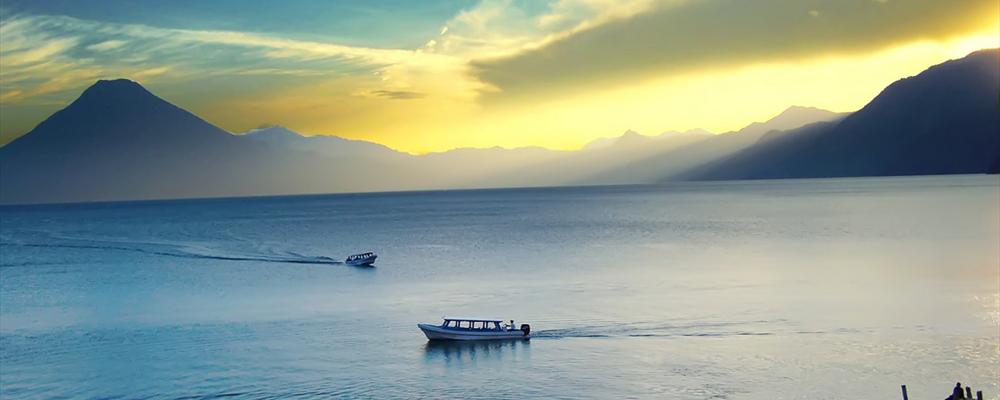
Lake Atitlán: Beautiful lake in the mountains surrounded by picturesque villages and volcanos, which is becoming more and more touristic
Panajachel, small tourist-oriented town that is good starting point for Lake Atitlán
Santiago Atitlán, small town on south side of Lake Atitlán, famous for a shrine to Maximón
Santa Cruz la Laguna, small village on north side of Lake Atitlán. If getting away from it all in magical surroundings but still being a short boat ride away from a night club is your desire then this is the place to be.
San Pedro la Laguna (also known as San Pedro de Laguna), small town on southwest side of Lake Atitlán, offering low-cost living, great views, and a modest Spanish-language training industry
Lake Izabal, in the department of Izabal
Livingston: Caribbean coast town with Garifuna culture
Monterrico: The beach closest to Guatemala City and Antigua, volcanic sand.
Rio Dulce
Lanquin: Small town located near the Grutas de Lanquin (caves) and Semuc Champey (limestone pools)
Todos Santos (Guatemala): Small village in the mountains near the Mexican border. Offers good trekking, and the local people still speak the native languages, use the traditional calendar, and native dress (men and women).
Maya ruins
Aguateca
Cancuén
Ceibal
Dos Pilas
El Mirador: Massive early Maya site, perhaps the Cradle of Maya Civilization. Still being uncovered and studied; less developed for visitors than the other largest Maya sites.
El Peru/Waká
El Zotz
Gumarcaj: Also known as Utatlán, near the city of Santa Cruz del Quiche
Iximché
Mixco Viejo
Nakbé
Nakúm
Naranjo
Piedras Negras in the jungles of north west Guatemala
Quiriguá: Impressive Classic Maya sculptures near the border of Honduras.
San Bartolo Pre-Classic Mural
Tikal: Long considered the largest of Maya ruins (although the ongoing investigations of El Mirador may challenge this claim), this huge and impressive ancient Maya site is probably worth the trip to Guatemala by itself. Stay in the park or in nearby Flores the night before in order to organise a early morning trip to Tikal, to see the sun rise over the ruins. Tours are easily organised from the surrounding areas.
Uaxactun, north of Tikal
Yaxhá
Zaculeu: Near the small city of Huehuetenango and easily visited as a half day trip from there.
Volcanoes
Volcán Tacaná (4093m)
Volcán Tajumulco (4220m)
Volcán Santa María (3772m)
Volcán Atitlán (3537m) 1
Volcán San Pedro (3450m) 1
Volcán Toliman (3158m) 1
Volcán Acatenango (3976m)
Volcán de Ipala (1650m)
Volcán de Pacaya (2500m) - this is an active volcano about 30 minutes outside of Antigua. Some days it will not be accessible as the volcano may be too active to observe safely. Bring a jacket since it will be windy and cold at the top (although the ground will feel warm) and wear long pants as the volcanic rock can easily give you a nice cut. Tour guides can be organised from Antigua. This volcano can be climbed all the way to the crater, and most of the time you get to see real lava! A great combination with the tour is going to Kawilal Spa (), which offers treatments using thermal water coming from the Pacaya Volcano.
note 1: Atitlan, San Pedro and Toliman are all on Lake Atitlán.
Getting there
By plane
Guatemala's main airport, La Aurora International Airport (GUA), is near Guatemala City. International flights arrive mostly from other Central American countries and North America. The airport is currently undergoing modernizing reconstruction. It is now a glass-and-concrete edifice with modern shops and duty-frees that you might expect in any large city. Food options are still limited, however, although construction is not complete.
Guatemala's secondary airport is situated in Flores, Petén. This small airport receives flights from a small number of close destinations including Belize, Mexico City and Guatemala City.
It is sometimes cheaper to fly into Cancun and take buses through Belize or to fly into Mexico City and then take a low-cost airlines flight on Aviacsa for around $100 USD to Tapachula which is the Mexico/Guatemala border. Now Interjet is flying for $120 from Cancun and Mexico City to Guatemala City as well. Spirit Airlines offers great ticket prices from a number of US destinations (normally connecting through Miami/Ft. Lauderdale) - recently priced at $166 one-way to Guatemala City.
The small, three-wheeled tuk-tuk is a common vehicle providing local taxi service. It can carry up to three passengers. You will need to negotiate your fare with the driver before you start, because they generally don't have meters. The tuk-tuk originates from India, and can be found in many developing countries. The name refers to the sound of the motorcycle engine powering the vehicle.
By bus
Belize: Tourist buses from Belize City to Flores or Guatemala City, A regular bus goes from Belize City to the border town of Benque Viejo, passing through San Ignacio and Xunantunich. From Benque you get a tazi to the border for around 3 belizean dollars and from there a colectivo to Flores or Guatemala. Walk across the bridge to the Colectivo van headquarters to get better deals.
El Salvador: San Salvador, Santa Ana
Honduras: Copan, San Pedro Sula, La Ceiba, Tegucigalpa
Nicaragua: Managua
Costa Rica: San José
Panama: Panama City
Mexico: Tapachula, Palenque, Chetumal, Tulum, Cancun, Mexico City
Tica Bus is a bus company that has newer buses and mainly travels between Central American countries with limited stops.
It's hard to miss the colorfully-decorated buses that crowd the streets of major cities and highways of Guatemala. These are chicken buses, or camionetas in Spanish, and are a common form of travel for Guatemalans and a travel adventure for tourists. They are much cheaper than tourist vans or taxis (example: a 10km drive from Antigua to the countryside costs Q2.75 as of December 2005). They are usually very crowded, with three people squeezed into seats designed to seat two North American children, and more people standing in the aisles. The bus itself is frequently a used North American school bus; the "Blue Bird" and "Ford" logos are clearly visible. In addition to the driver there is usually a conductor standing in the door. The conductor collects fares, and from time to time jumps out to direct the bus through a blind intersection or around a tight turn. On the highways, the chicken bus drivers are aggressive, not hesitating to overtake in the face of oncoming traffic. Riding these buses on the steep highways of the Western Highlands is especially harrowing, but may be the most quintessential Guatemalan experience there is.
Bus conductors may sometimes charge out of country tourists more than the going rate. If you look to see what other travelers are paying you can usually avoid this problem, however, they often charge you the same as everyone else. Sending a message to the Guatemala tourism department "Inguat" will let them know of this problem.
You can board a chicken bus almost anywhere along its route. If you put out your arm, it will stop. You board and find a space to sit or stand. The conductor will come back to you after the bus is underway, and collect your fare. You need to recognize where your stop is, and move to the door in time. You ask the bus to stop, more or less wherever you want to get off.
By boat
There are several ferries to and fromPuerto Barrios and Livingston, and Punta Gorda, Belize.
Traveling around
By car or bus, airplane to the Peten.
Many regular intercity buses.
Tourist Shuttles are 10 times more expensive than regular buses (including intercity buses).
Guatemala City: Try the local trolley, Chiltepe Tours (www.chiltepe.com), departing at 10:00 and 13:00 hours from hotels in zone 10, visiting the historic downtown of Guatemala City, with one stop at the National Palace, and one at Museo Popol Vuh. Duration, approximately 3 hours.
Be leery of ayudantes (the bus helpers hanging out of the front door yelling) charging foreigners extra. Listen to what others are paying and insist that you pay the same amount.
Things to do
Guatemala is rich in natural beauty and travel opportunities, it's a country that offers so much to those willing to step off the beaten track for a little while.
Antigua Guatemala is often regarded as the travellers hub, a crumbling, picture-perfect central american town ringed by volcanoes. From here you can take a hike up Volcano Pacaya, take a bus to the bustling market of Chichicastenango, or simply sip some coffee in a street-side cafe and watch the world go by.
Lake Atitlan (or Lago de Atitlán) is another frequent stop on any visitors itinerary. A volcano-rimmed lake with plenty of backpacker hostels and Mayan villages that dot the shores.
Flores in Guatemala's wild north is a tourist friendly island in the middle of Lake Petén Itzá. From here you can take a bus ride to one of best preserved Mayan ruins in the world, Tikal. Howler monkeys and dense jungle make walking around the ruins an adventure in itself.
Eat
Typical food:
Kaq Ik
Pepián
tortillas and tortillas de harina
frijoles negros - stewed black beans
caldos - beef broths
tamales — steam-cooked corn meal, with a variety of fillings, wrapped in banana leaves
eggs
rice
rice 'n beans (Garifunafood in Puerto Barrios)
tapado, ceviche and other fishmeals
churrascos
Typical breakfast:
Frijoles (black beans), eggs and bread.
And coffee of course.
The type of food really depends on how much you want to spend and what type of place you want to spend it at. You can get almost any type of food at the main tourist locations (Antigua, Guatemala City, etc.). In the aldeas (small towns) your choices will obviously be limited to what has been listed above. Guatemalan food differs from Mexican food as it is a lot less spicy, do not expect chili, fajitas or jalapenos.
Drink
Guatemalans usually dress down when they go out.
See Staying Healthy section below.
You will mostly get a tissue if you order a bottled drink to clean the bottle. If you don't get one, it's always better for you to clean the bottle.
All Coca-Cola and Pepsi type products are available plus many products from local soft drink manufacturers.
Popular Guatemalan beers are Gallo (lager, by far the most popular with Guatemalans), Victoria, Brahva (a light pilsner style), Moza (dark bock) Cabro, Monte Carlo (premium), and Dorada.
Don't be surprised if you get salt and lemon with your beer. It's a custom to put some salt on the toes of the bottle, and screw out the lemon in the beer.
Sometimes they also drink it with V8, which is a vegetable juice. Then it's called 'michelada'.
Guatemala produces a number of rums, including the superb Ron Zacapa Centenario (Aged up to 30 years).
Tequila also is a very popular drink in Guatemala.
Sleep
You will likely find cheap hotels in every town or village in Guatemala. There are also many high quality hotels for those seeking additional comfort and amenities. See the individual destination articles for hotel listings.
Buy
The national currency is Quetzal(es). The rate of change is approximately 8.22 Quetzales for 1 US Dollar and 11.63 for 1 €uro (August 2009). It is common to use dollars in tourist areas. You will most likely have difficulties in changing other currencies than US Dollars, but euros are becoming increasingly common.
It is common to bargain for most purchases in the open air market. Though you may be able to bargain in other places, be aware that chain-owned shops have fixed prices (you are no more likely to bargain in a Guatemalan Radio Shack than an American one).
These are some characteristically Guatemalan things you might consider buying here:
Ron Zacapa Centenario, Guatemalas prize-winning rum
Fabrics and traditional textiles - Traditional mayan blouses are known as huipiles (whi-peel) and skirts cortes. Be aware that these are almost always entirely handmade and prices for a high-end huipil may be as high as Q1000.
Jade - large jade factory in Antigua, very expensive though
Coffee - touted as one of the best-tasting varieties in the world
Cardamom - the largest exporter in the world, Coban in Alta Verapaz is the capital of this trade.
Talk
Spanish is the official language of Guatemala, and the most commonly spoken. Over twenty indigenous languages are still spoken throughout, but many of the Maya people have at least a working knowledge of basic Spanish as well. For the Garifuna people in Livingston, Garifuna and English are the main languages (but Spanish is spoken as well).
The most familiar form of Spanish spoken among good friends is the "tú/vos" form, but varies between regions. It is considered rude and very informal if used with someone that you do not know. As a tourist, it is safer to stick with the "usted" form. However, don't be surprised if some homestay families and some language teachers jump right into using the "tu/vos" form. If they do, you may respond in kind.
Etiquette
Address people you don't know in a formal manner (Señor, Señora, Usted), and greet people in the following way:
day - "buenos dias" "feliz dia"
night- "feliz noche" "buenas noches"
You'll encounter this in more suburban, rural areas. Native Guatemalans are raised to greet strangers formally.
Stay healthy
Only drink purified water (Agua Salvavidas).
CDC states that malaria risk exists in rural areas at altitudes lower than 1,500 meters, with no risk in Antigua or Lake Atitlán. Preventative anti-malarial medication can and should be purchased (for a low cost) ahead of visiting malaria-endemic countries. Contact your physician.
Dengue fever is endemic throughout Guatemala.
Hepatitis A&B vaccinations are recommended.
Be careful with the hygiene.
Safety
NEVER EVER take photos of children without permission. Some Guatemalans are extremely wary of this, and will assume you are a kidnapper (even if children aren't theirs). Guatemala has had many problems with children being sold or kidnapped and put up for adoption on the black market. Of course, this doesn't include a few children mixed in with many adults at a distance. This occurs mainly on the inner Guatemalan villages. In the major cities people are somewhat more open towards picture taking, but don't overdo it.
It is dangerous to travel between cities after dark. Doing so significantly increases your risk of being in a car accident or being the victim of an armed robbery.
One of the best things about Guatemala is the abundance of natural beauty and numerous treks. Some of these are notorious for robberies (ex. Volcan de Agua, trails around Lago de Atitlan, Volcan de Pacaya). Always ask around about the situation before embarking blindly. Inguat, locals, and fellow travellers are safe bets for information. Travelling in groups during daylight sometimes decreases the risk, but not always.
Traffic can be dangerous. You will encounter many 1 lane roads (1 lane each way)
and drivers are apt to swerve back and forth, avoiding potholes and bumps along the way. There are also various multiple lane highways. Traffic in Guatemala City and surrounding metropolitan areas during rush hour is very slow, but general driving everywhere is usually very fast (average speeds of up to 60 mph in some city roads).
Guatemala has one of the highest rates of violent crime in the world. Most tourists travel to Guatemala without any serious problems. Nonetheless, travelers should take some extra precautions when in Guatemala. If mugged, carjacked, or approached by armed individuals, cooperate. Do not make any sudden movements, and give them whatever belongings or money they are demanding. Tourists have been shot and killed for resisting muggers. Do not go to areas known to be hotbeds of narcotrafficking activity (ie: some parts of the Peten), and do not go to the most dangerous neighborhoods in Guatemala City (ie: zones 3, 6, 18, and 21). Be careful in Zone 1 in Guatemala City, especially after dark, and do not stay in hostels there. Using the slightly more expensive hostels in Zone 10 or Zone 13 (near the airport) is a much better idea. Do not use buses in Guatemala City, as they are frequently robbed by gangs. Instead, radio-dispatched taxis (ie: Taxi Amarillo) are a safer way to get around the city.
Although some say that travellers should always carry a bit of extra cash and be prepared to bribe a few police officers, most tourists will have no reason to give bribes to anyone. The most likely situations in which you might have to bribe police would be if you're driving a car or riding a motorcycle and are stopped for fictitious violations of traffic rules. Most European/North Americans find it immoral but its much easier to spend 50 Quetzales and avoid the headaches than to be harassed by the police. Phrases such as "I'm sorry officer. Is there any way we can resolve this right now?" work well. Do not offer bribes directly to an officer because it is illegal and you could actually end up in more trouble.
Keep any important documents or items (passports, wallets, etc.) in your front pocket or close to your person.
Check the list of recent crimes against foreigners.
Learn
Guatemala is a great place to learn Spanish. The prices are low, and Guatemalan Spanish is considered pleasing. Antigua has the highest number of Spanish schools and is also the most popular place for tourists. But if studying Spanish is your main concern, you might be better off elsewhere, because you can actually go around in Antigua for a whole day without hearing anything but English.
Because of this, many language students head towards San Pedro la Laguna, seated by Lake Atitlan, where a wide range of language schools also offer Spanish language courses (some quite inexpensive). But as in Antigua the quality of the lessons might not be up to what expect, so ask around.
Instead Try Quetzaltenango which is considered now (2005) as the educative tourist destination of Guatemala. Another option is to look among other less touristed cities and villages for other quality schools.
Work
There are various volunteering opportunities in Guatemala as well.
Proyecto Mosaico Guatemala, (PMG) will, for a fee, set you up with an organisation in Guatemala which needs a volunteer. They also can arrange a home stay, Spanish language classes, and other services.
Global Vision International (GVI), (PMG) run a number of volunteering programs around Guatemala with indigenous communities. They include home stay, Spanish language classes, and other services.
Casa Alianza Guatemala welcomes enquiries from potential volunteers who want to "help provide care and assistance to, and protect the human rights of, the children and adolescents who live on the streets of Latin America."
Some schools organise social projects as well. See, for example, the Guate Spanish school's entry under Quetzaltenango.
Entremundos is said to organize local NGOs.
CARE is said to organise volunteer projects in Guatemala .
PID (Partners In Development) is a non-profit organization that works to help the extreme poor of Guatemala. They build houses for families, provide small business loans, and offer sponsorship programs for children in need .
Contact
Guatemala's international calling code is 502. There are no area codes. Phone numbers all have eight digits. On September 18, 2004, the phone system switched from seven to eight digits, and there is a scheme for adding specific digits to the front of seven-digit numbers (WTNG.info description ).
The phone system isn't great, but it works. Tourists can call abroad from call centers, where you pay by the minute. It is also easy to purchase a calling card to use at public pay phones. The phones there do not accept money, so to use a public phone on the street you must purchase a telephone card. Typically, the cost is around 8 quetzals for a 10 min call to North America. Cell phones are quite cheap and calling to the US through one can get as low as $0.08 a min. If you are planning to stay for a while and plan to use the phone, you should consider buying a cheap prepaid phone. Wireless nation-wide internet access for laptops is also available as a service from some companies. Telefonica has good coverage with their PCMCIA EV-DO cards.
The post system is traditionally not reliable, but your post cards usually get through. A stamp for Europe is Q5. There are; however, many other alternative companies to the federal mail system that are reliable, though frequently somewhat pricey.
Internet access is widely available. Even most of the more remote areas have some type of internet access available. Many larger areas also have WiFi. All of the Camperos chicken/pizza restaurants (which are numerous) offer free WiFi, as well as many other restaurants and cafes. Some hotels may also offer computer banks with internet access. Just ask and you eventually will find some sort of free access.
Contact & location
Be the first one to add a review
The photos displayed on this page are the property of one of the following authors:
Some photos courtesy of:
. The photos provided by Flickr are under the copyright of their owners.
This travel guide also includes text from Wikitravel articles, all available at View full credits
D. GuillaimeBrad Busenius, Kieran, Jim DeLaHunt, David, Brian, Alain Berger, Todd VerBeek, Andrew Conrad, Bruno, Dwayne Shreve, René Marves, Colin Jensen, Evan Prodromou, Stephen Atkins, Ryan Holliday, dori, Tom Holland, John, Ricardo, Ian Kirk, Rob Payne, Timo Luege, Robert C. Bedoya, Karl Robert Jacobs, Michele Ann Jenkins, Kristan Bullett and Yann Forget, Lyndenc, Inas, ChubbyWimbus, Tatatabot, Duende, Huttite, Cacahuate, Infrogmation, Bnw2001, Texugo, Wendicita, MMKK, Episteme, Jake73, Interlingua, Nskinn, Jonboy, W66LinkBot, WindHorse, InterLangBot, Squeakfox, Nzpcmad, Eivind and CIAWorldFactbook2002
This travel guide also includes text from Wikipedia articles, all available at View full credits
































Guatemala is a country in the Central America region of North America. It has borders to Mexico in the north/northwest, to Belize in the northeast, to Honduras in the southeast, to El Salvador in the south. It also has a Pacific coastline to the southwest, and a tiny piece of Caribbean coastline to the east.
Understand
Guatemala has a rich and distinctive culture from the long mix of elements from Spain and the native Maya people. This diverse history and the natural beauty of the land has created a destination rich in interesting and scenic sites. Consider reviewing also the expat site Central America Forum
When to go
It is difficult to travel in the more remote areas during the rainy season between mid-May to mid-October and into mid-November in the north.
The elaborate ceremonies in Antigua the week leading up to Easter are a highlight.
The months of March and April are very hot especially in the low lying areas such as the pacific coastal plain.
Money
The local currency is the Quetzal which is named after the national bird, which has ancient and mythic connotations even today. One US dollar is equivalent to 8.1 Quetzales. US dollars are widely accepted and can be exchanged in most small towns. ATMs can be found in the major towns but do not expect to find them in every tourist spot. It is fairly easy to find your self in a town without an ATM or a place to change money.
Do not expect to be able to easily exchange travelers checks to Guatemala. You might find a few places willing to accept checks issued by American Express but all other types are universally turned down. Amazingly even major banks in Guatemala City do not accept VISA travelers checks.
Read
Newspapers and Magazines for tourists:
The Guatemala Times , English language newspaper
La Revue , English language magazines
Regions
Central Highlands: Around Guatemala City
Western Highlands: Many modern Maya towns
Caribbean Coast: Hot and steamy
Petén: Hot jungle in the north, with most impressive ancient Maya ruins
Pacific Highlands: Hot, going down to the Pacific beaches
Cities
Guatemala City – Capital and largest city with many amenities
La Antigua: Colonial Spanish capital of Central America, a World Heritage site, and the most popular among tourists
Panajachel – Gateway to Lake Atitlán, a beautiful and busy tourist area
Flores: Island city capital of Petén, good starting point to access Mayan ruins of Tikal.
Melchor de Mencos – Border city
Puerto Barrios – Caribbean seaport
Puerto San José – Pacific seaport
Quetzaltenango – Second largest city, in the western highlands
Sayaxché – River gateway in Petén
Santiago Atitlán – Small town on the southern shore of Lake Atitlán
Santa Catarina Palopo – an authentic Mayan village on the northern shore of Lake Atitlán
Other destinations
Chichicastenango: Highland Maya town famous for its traditional market
Lake Atitlán: Beautiful lake in the mountains surrounded by picturesque villages and volcanos, which is becoming more and more touristic
Panajachel, small tourist-oriented town that is good starting point for Lake Atitlán
Santiago Atitlán, small town on south side of Lake Atitlán, famous for a shrine to Maximón
Santa Cruz la Laguna, small village on north side of Lake Atitlán. If getting away from it all in magical surroundings but still being a short boat ride away from a night club is your desire then this is the place to be.
San Pedro la Laguna (also known as San Pedro de Laguna), small town on southwest side of Lake Atitlán, offering low-cost living, great views, and a modest Spanish-language training industry
Lake Izabal, in the department of Izabal
Livingston: Caribbean coast town with Garifuna culture
Monterrico: The beach closest to Guatemala City and Antigua, volcanic sand.
Rio Dulce
Lanquin: Small town located near the Grutas de Lanquin (caves) and Semuc Champey (limestone pools)
Todos Santos (Guatemala): Small village in the mountains near the Mexican border. Offers good trekking, and the local people still speak the native languages, use the traditional calendar, and native dress (men and women).
Maya ruins
Aguateca
Cancuén
Ceibal
Dos Pilas
El Mirador: Massive early Maya site, perhaps the Cradle of Maya Civilization. Still being uncovered and studied; less developed for visitors than the other largest Maya sites.
El Peru/Waká
El Zotz
Gumarcaj: Also known as Utatlán, near the city of Santa Cruz del Quiche
Iximché
Mixco Viejo
Nakbé
Nakúm
Naranjo
Piedras Negras in the jungles of north west Guatemala
Quiriguá: Impressive Classic Maya sculptures near the border of Honduras.
San Bartolo Pre-Classic Mural
Tikal: Long considered the largest of Maya ruins (although the ongoing investigations of El Mirador may challenge this claim), this huge and impressive ancient Maya site is probably worth the trip to Guatemala by itself. Stay in the park or in nearby Flores the night before in order to organise a early morning trip to Tikal, to see the sun rise over the ruins. Tours are easily organised from the surrounding areas.
Uaxactun, north of Tikal
Yaxhá
Zaculeu: Near the small city of Huehuetenango and easily visited as a half day trip from there.
Volcanoes
Volcán Tacaná (4093m)
Volcán Tajumulco (4220m)
Volcán Santa María (3772m)
Volcán Atitlán (3537m) 1
Volcán San Pedro (3450m) 1
Volcán Toliman (3158m) 1
Volcán Acatenango (3976m)
Volcán de Ipala (1650m)
Volcán de Pacaya (2500m) - this is an active volcano about 30 minutes outside of Antigua. Some days it will not be accessible as the volcano may be too active to observe safely. Bring a jacket since it will be windy and cold at the top (although the ground will feel warm) and wear long pants as the volcanic rock can easily give you a nice cut. Tour guides can be organised from Antigua. This volcano can be climbed all the way to the crater, and most of the time you get to see real lava! A great combination with the tour is going to Kawilal Spa (), which offers treatments using thermal water coming from the Pacaya Volcano.
note 1: Atitlan, San Pedro and Toliman are all on Lake Atitlán.
Getting there
By plane
Guatemala's main airport, La Aurora International Airport (GUA), is near Guatemala City. International flights arrive mostly from other Central American countries and North America. The airport is currently undergoing modernizing reconstruction. It is now a glass-and-concrete edifice with modern shops and duty-frees that you might expect in any large city. Food options are still limited, however, although construction is not complete.
Guatemala's secondary airport is situated in Flores, Petén. This small airport receives flights from a small number of close destinations including Belize, Mexico City and Guatemala City.
It is sometimes cheaper to fly into Cancun and take buses through Belize or to fly into Mexico City and then take a low-cost airlines flight on Aviacsa for around $100 USD to Tapachula which is the Mexico/Guatemala border. Now Interjet is flying for $120 from Cancun and Mexico City to Guatemala City as well. Spirit Airlines offers great ticket prices from a number of US destinations (normally connecting through Miami/Ft. Lauderdale) - recently priced at $166 one-way to Guatemala City.
By car
From Mexico, or Honduras, El Salvador, via Pan-American Highway, also possible with more difficulty from Belize.
The small, three-wheeled tuk-tuk is a common vehicle providing local taxi service. It can carry up to three passengers. You will need to negotiate your fare with the driver before you start, because they generally don't have meters. The tuk-tuk originates from India, and can be found in many developing countries. The name refers to the sound of the motorcycle engine powering the vehicle.
By bus
Belize: Tourist buses from Belize City to Flores or Guatemala City, A regular bus goes from Belize City to the border town of Benque Viejo, passing through San Ignacio and Xunantunich. From Benque you get a tazi to the border for around 3 belizean dollars and from there a colectivo to Flores or Guatemala. Walk across the bridge to the Colectivo van headquarters to get better deals.
El Salvador: San Salvador, Santa Ana
Honduras: Copan, San Pedro Sula, La Ceiba, Tegucigalpa
Nicaragua: Managua
Costa Rica: San José
Panama: Panama City
Mexico: Tapachula, Palenque, Chetumal, Tulum, Cancun, Mexico City
Tica Bus is a bus company that has newer buses and mainly travels between Central American countries with limited stops.
It's hard to miss the colorfully-decorated buses that crowd the streets of major cities and highways of Guatemala. These are chicken buses, or camionetas in Spanish, and are a common form of travel for Guatemalans and a travel adventure for tourists. They are much cheaper than tourist vans or taxis (example: a 10km drive from Antigua to the countryside costs Q2.75 as of December 2005). They are usually very crowded, with three people squeezed into seats designed to seat two North American children, and more people standing in the aisles. The bus itself is frequently a used North American school bus; the "Blue Bird" and "Ford" logos are clearly visible. In addition to the driver there is usually a conductor standing in the door. The conductor collects fares, and from time to time jumps out to direct the bus through a blind intersection or around a tight turn. On the highways, the chicken bus drivers are aggressive, not hesitating to overtake in the face of oncoming traffic. Riding these buses on the steep highways of the Western Highlands is especially harrowing, but may be the most quintessential Guatemalan experience there is.
Bus conductors may sometimes charge out of country tourists more than the going rate. If you look to see what other travelers are paying you can usually avoid this problem, however, they often charge you the same as everyone else. Sending a message to the Guatemala tourism department "Inguat" will let them know of this problem.
You can board a chicken bus almost anywhere along its route. If you put out your arm, it will stop. You board and find a space to sit or stand. The conductor will come back to you after the bus is underway, and collect your fare. You need to recognize where your stop is, and move to the door in time. You ask the bus to stop, more or less wherever you want to get off.
By boat
There are several ferries to and fromPuerto Barrios and Livingston, and Punta Gorda, Belize.
Traveling around
By car or bus, airplane to the Peten.
Many regular intercity buses.
Tourist Shuttles are 10 times more expensive than regular buses (including intercity buses).
Guatemala City: Try the local trolley, Chiltepe Tours (www.chiltepe.com), departing at 10:00 and 13:00 hours from hotels in zone 10, visiting the historic downtown of Guatemala City, with one stop at the National Palace, and one at Museo Popol Vuh. Duration, approximately 3 hours.
Be leery of ayudantes (the bus helpers hanging out of the front door yelling) charging foreigners extra. Listen to what others are paying and insist that you pay the same amount.
Things to do
Guatemala is rich in natural beauty and travel opportunities, it's a country that offers so much to those willing to step off the beaten track for a little while.
Antigua Guatemala is often regarded as the travellers hub, a crumbling, picture-perfect central american town ringed by volcanoes. From here you can take a hike up Volcano Pacaya, take a bus to the bustling market of Chichicastenango, or simply sip some coffee in a street-side cafe and watch the world go by.
Lake Atitlan (or Lago de Atitlán) is another frequent stop on any visitors itinerary. A volcano-rimmed lake with plenty of backpacker hostels and Mayan villages that dot the shores.
Flores in Guatemala's wild north is a tourist friendly island in the middle of Lake Petén Itzá. From here you can take a bus ride to one of best preserved Mayan ruins in the world, Tikal. Howler monkeys and dense jungle make walking around the ruins an adventure in itself.
Eat
Typical food:
Kaq Ik
Pepián
tortillas and tortillas de harina
frijoles negros - stewed black beans
caldos - beef broths
tamales — steam-cooked corn meal, with a variety of fillings, wrapped in banana leaves
eggs
rice
rice 'n beans (Garifunafood in Puerto Barrios)
tapado, ceviche and other fishmeals
churrascos
Typical breakfast: Frijoles (black beans), eggs and bread. And coffee of course.
The type of food really depends on how much you want to spend and what type of place you want to spend it at. You can get almost any type of food at the main tourist locations (Antigua, Guatemala City, etc.). In the aldeas (small towns) your choices will obviously be limited to what has been listed above. Guatemalan food differs from Mexican food as it is a lot less spicy, do not expect chili, fajitas or jalapenos.
Drink
Guatemalans usually dress down when they go out.
See Staying Healthy section below. You will mostly get a tissue if you order a bottled drink to clean the bottle. If you don't get one, it's always better for you to clean the bottle.
All Coca-Cola and Pepsi type products are available plus many products from local soft drink manufacturers.
Popular Guatemalan beers are Gallo (lager, by far the most popular with Guatemalans), Victoria, Brahva (a light pilsner style), Moza (dark bock) Cabro, Monte Carlo (premium), and Dorada. Don't be surprised if you get salt and lemon with your beer. It's a custom to put some salt on the toes of the bottle, and screw out the lemon in the beer. Sometimes they also drink it with V8, which is a vegetable juice. Then it's called 'michelada'.
Guatemala produces a number of rums, including the superb Ron Zacapa Centenario (Aged up to 30 years).
Tequila also is a very popular drink in Guatemala.
Sleep
You will likely find cheap hotels in every town or village in Guatemala. There are also many high quality hotels for those seeking additional comfort and amenities. See the individual destination articles for hotel listings.
Buy
The national currency is Quetzal(es). The rate of change is approximately 8.22 Quetzales for 1 US Dollar and 11.63 for 1 €uro (August 2009). It is common to use dollars in tourist areas. You will most likely have difficulties in changing other currencies than US Dollars, but euros are becoming increasingly common.
It is common to bargain for most purchases in the open air market. Though you may be able to bargain in other places, be aware that chain-owned shops have fixed prices (you are no more likely to bargain in a Guatemalan Radio Shack than an American one).
These are some characteristically Guatemalan things you might consider buying here:
Ron Zacapa Centenario, Guatemalas prize-winning rum
Fabrics and traditional textiles - Traditional mayan blouses are known as huipiles (whi-peel) and skirts cortes. Be aware that these are almost always entirely handmade and prices for a high-end huipil may be as high as Q1000.
Jade - large jade factory in Antigua, very expensive though
Coffee - touted as one of the best-tasting varieties in the world
Cardamom - the largest exporter in the world, Coban in Alta Verapaz is the capital of this trade.
Talk
Spanish is the official language of Guatemala, and the most commonly spoken. Over twenty indigenous languages are still spoken throughout, but many of the Maya people have at least a working knowledge of basic Spanish as well. For the Garifuna people in Livingston, Garifuna and English are the main languages (but Spanish is spoken as well).
The most familiar form of Spanish spoken among good friends is the "tú/vos" form, but varies between regions. It is considered rude and very informal if used with someone that you do not know. As a tourist, it is safer to stick with the "usted" form. However, don't be surprised if some homestay families and some language teachers jump right into using the "tu/vos" form. If they do, you may respond in kind.
Etiquette
Address people you don't know in a formal manner (Señor, Señora, Usted), and greet people in the following way:
day - "buenos dias" "feliz dia"
night- "feliz noche" "buenas noches" You'll encounter this in more suburban, rural areas. Native Guatemalans are raised to greet strangers formally.
Stay healthy
Only drink purified water (Agua Salvavidas).
CDC states that malaria risk exists in rural areas at altitudes lower than 1,500 meters, with no risk in Antigua or Lake Atitlán. Preventative anti-malarial medication can and should be purchased (for a low cost) ahead of visiting malaria-endemic countries. Contact your physician.
Dengue fever is endemic throughout Guatemala.
Hepatitis A&B vaccinations are recommended.
Be careful with the hygiene.
Safety
NEVER EVER take photos of children without permission. Some Guatemalans are extremely wary of this, and will assume you are a kidnapper (even if children aren't theirs). Guatemala has had many problems with children being sold or kidnapped and put up for adoption on the black market. Of course, this doesn't include a few children mixed in with many adults at a distance. This occurs mainly on the inner Guatemalan villages. In the major cities people are somewhat more open towards picture taking, but don't overdo it.
It is dangerous to travel between cities after dark. Doing so significantly increases your risk of being in a car accident or being the victim of an armed robbery.
One of the best things about Guatemala is the abundance of natural beauty and numerous treks. Some of these are notorious for robberies (ex. Volcan de Agua, trails around Lago de Atitlan, Volcan de Pacaya). Always ask around about the situation before embarking blindly. Inguat, locals, and fellow travellers are safe bets for information. Travelling in groups during daylight sometimes decreases the risk, but not always.
Traffic can be dangerous. You will encounter many 1 lane roads (1 lane each way) and drivers are apt to swerve back and forth, avoiding potholes and bumps along the way. There are also various multiple lane highways. Traffic in Guatemala City and surrounding metropolitan areas during rush hour is very slow, but general driving everywhere is usually very fast (average speeds of up to 60 mph in some city roads).
Guatemala has one of the highest rates of violent crime in the world. Most tourists travel to Guatemala without any serious problems. Nonetheless, travelers should take some extra precautions when in Guatemala. If mugged, carjacked, or approached by armed individuals, cooperate. Do not make any sudden movements, and give them whatever belongings or money they are demanding. Tourists have been shot and killed for resisting muggers. Do not go to areas known to be hotbeds of narcotrafficking activity (ie: some parts of the Peten), and do not go to the most dangerous neighborhoods in Guatemala City (ie: zones 3, 6, 18, and 21). Be careful in Zone 1 in Guatemala City, especially after dark, and do not stay in hostels there. Using the slightly more expensive hostels in Zone 10 or Zone 13 (near the airport) is a much better idea. Do not use buses in Guatemala City, as they are frequently robbed by gangs. Instead, radio-dispatched taxis (ie: Taxi Amarillo) are a safer way to get around the city.
Although some say that travellers should always carry a bit of extra cash and be prepared to bribe a few police officers, most tourists will have no reason to give bribes to anyone. The most likely situations in which you might have to bribe police would be if you're driving a car or riding a motorcycle and are stopped for fictitious violations of traffic rules. Most European/North Americans find it immoral but its much easier to spend 50 Quetzales and avoid the headaches than to be harassed by the police. Phrases such as "I'm sorry officer. Is there any way we can resolve this right now?" work well. Do not offer bribes directly to an officer because it is illegal and you could actually end up in more trouble.
Keep any important documents or items (passports, wallets, etc.) in your front pocket or close to your person.
Check the list of recent crimes against foreigners.
Learn
Guatemala is a great place to learn Spanish. The prices are low, and Guatemalan Spanish is considered pleasing. Antigua has the highest number of Spanish schools and is also the most popular place for tourists. But if studying Spanish is your main concern, you might be better off elsewhere, because you can actually go around in Antigua for a whole day without hearing anything but English.
Because of this, many language students head towards San Pedro la Laguna, seated by Lake Atitlan, where a wide range of language schools also offer Spanish language courses (some quite inexpensive). But as in Antigua the quality of the lessons might not be up to what expect, so ask around.
Instead Try Quetzaltenango which is considered now (2005) as the educative tourist destination of Guatemala. Another option is to look among other less touristed cities and villages for other quality schools.
Work
There are various volunteering opportunities in Guatemala as well.
Proyecto Mosaico Guatemala, (PMG) will, for a fee, set you up with an organisation in Guatemala which needs a volunteer. They also can arrange a home stay, Spanish language classes, and other services.
Global Vision International (GVI), (PMG) run a number of volunteering programs around Guatemala with indigenous communities. They include home stay, Spanish language classes, and other services.
Casa Alianza Guatemala welcomes enquiries from potential volunteers who want to "help provide care and assistance to, and protect the human rights of, the children and adolescents who live on the streets of Latin America."
Some schools organise social projects as well. See, for example, the Guate Spanish school's entry under Quetzaltenango.
Entremundos is said to organize local NGOs.
CARE is said to organise volunteer projects in Guatemala .
PID (Partners In Development) is a non-profit organization that works to help the extreme poor of Guatemala. They build houses for families, provide small business loans, and offer sponsorship programs for children in need .
Contact
Guatemala's international calling code is 502. There are no area codes. Phone numbers all have eight digits. On September 18, 2004, the phone system switched from seven to eight digits, and there is a scheme for adding specific digits to the front of seven-digit numbers (WTNG.info description ).
The phone system isn't great, but it works. Tourists can call abroad from call centers, where you pay by the minute. It is also easy to purchase a calling card to use at public pay phones. The phones there do not accept money, so to use a public phone on the street you must purchase a telephone card. Typically, the cost is around 8 quetzals for a 10 min call to North America. Cell phones are quite cheap and calling to the US through one can get as low as $0.08 a min. If you are planning to stay for a while and plan to use the phone, you should consider buying a cheap prepaid phone. Wireless nation-wide internet access for laptops is also available as a service from some companies. Telefonica has good coverage with their PCMCIA EV-DO cards.
The post system is traditionally not reliable, but your post cards usually get through. A stamp for Europe is Q5. There are; however, many other alternative companies to the federal mail system that are reliable, though frequently somewhat pricey.
Internet access is widely available. Even most of the more remote areas have some type of internet access available. Many larger areas also have WiFi. All of the Camperos chicken/pizza restaurants (which are numerous) offer free WiFi, as well as many other restaurants and cafes. Some hotels may also offer computer banks with internet access. Just ask and you eventually will find some sort of free access.
Contact & location
Be the first one to add a review
The photos displayed on this page are the property of one of the following authors:
Guillermo Ramírez, auntjojo, David Dennis, ~*Bomba Rosa*~, Fernando Reyes Palencia, Pati Gaitan
Some photos courtesy of: . The photos provided by Flickr are under the copyright of their owners.
This travel guide also includes text from Wikitravel articles, all available at View full credits
D. GuillaimeBrad Busenius, Kieran, Jim DeLaHunt, David, Brian, Alain Berger, Todd VerBeek, Andrew Conrad, Bruno, Dwayne Shreve, René Marves, Colin Jensen, Evan Prodromou, Stephen Atkins, Ryan Holliday, dori, Tom Holland, John, Ricardo, Ian Kirk, Rob Payne, Timo Luege, Robert C. Bedoya, Karl Robert Jacobs, Michele Ann Jenkins, Kristan Bullett and Yann Forget, Lyndenc, Inas, ChubbyWimbus, Tatatabot, Duende, Huttite, Cacahuate, Infrogmation, Bnw2001, Texugo, Wendicita, MMKK, Episteme, Jake73, Interlingua, Nskinn, Jonboy, W66LinkBot, WindHorse, InterLangBot, Squeakfox, Nzpcmad, Eivind and CIAWorldFactbook2002
This travel guide also includes text from Wikipedia articles, all available at View full credits