The Coromandel Peninsula is on the north-eastern coast of the North Island of New Zealand. Fabulous golden and white sand beaches with magnificent coastal scenery, a rugged forest cloaked interior waiting to be explored, are just some of the natural attractions that have people returning to The Coromandel time after time.
The Peninsula separates the Hauraki Gulf and coasts around Auckland from the Bay of Plenty. The Peninsula is a popular holiday destination and can get very busy during the summer months.
Local towns include Thames, Coromandel and Whitianga and Whangamata. Smaller settlements include Te Puru, Waiomu, Tapu, Colville, Whangapoua, Matarangi, Kuaotunu, Coroglen, Cooks Beach, Hahei, Hot Water Beach, Tairua and Pauanui.
Understand
Evidence of some of the earliest Polynesian settlement in New Zealand exists on the Coromandel. Historical interest points exist around every corner, telling the stories of the two great navigators Kupe and Cook and those who followed in their footsteps.
Captain Cook visited the area in 1769 and observed the transit of the planet Mercury across the face of the sun hence the names of some of the region's beaches and bays - Mercury Bay and Cook's Beach.
In the nineteenth century the peninsula teemed with human activity associated with the exploitation of timber, gold and kauri gum. Eventually the kauri and the accessible gold were exhausted and the gum market destroyed. The Coromandel lapsed into an economic and social decline that was eventually halted by the gradual growth of farming, fishing, horticulture and tourism. The land slowly "mended" and a new era of people moved into the area, one that valued the environment. Thirty four percent of the land on the peninsula is now administered by the Department of Conservation.
The Coromandel is a rich and colourful creative hub with many studios and galleries showcasing some of New Zealand's most talented artists’ work.
The Coromandel Peninsula is noted for its beautiful beaches with backdrops of lush native bush in the hills. The gateway to the Coromandel, the Kopu Bridge, is a rustic one way bridge just 110 km from Auckland. From here head north to Thames to start your trip around the Coromandel Peninsula.
Getting there
Thames, the gateway to the Coromandel, is located within an hour and a half drive of the major centres of Auckland and Hamilton and their International Airports, and yet the region is a world away from the hustle and bustle of those cities.
Intercity Coachlines operate New Zealand's national bus network with daily departures from Auckland. Tickets can be purchased online or throughout the country at numerous agents inlcuding the i-site network (tourist information centres).
Traveling around
There are a variety of ways to get around including bus, taxi and hiring your own car or bike.
Hire a yacht and sail around the Coromandel Peninsula!
Check out these Coromandel Peninsula road trip ideas from the Automobile Association .
See
Thames and the nearby Kauaeranga Valley are rich in history and tourist attractions and make a great place to start any trip to the Coromandel Peninsula.
Coromandel is a nice coastal village with many craft shops and interesting tourist attractions.
Hahei and Cathedral Cove, visit the Te Whanganui-A-Hei marine reserve .
Hot Water Beach is a beach with two hot springs emerging under the sands, meaning visitors can dig their own hot pool. A popular and busy tourist destination, visitors are advised to arrive an hour or two before low tide, when the springs emerge from the receding tide. Hot Water Beach is signposted from the road south of Whitianga.
Thames Coast, the winding coastal road from Thames north towards Coromandel is worthly of special mention also. In December the beautiful pohutakawa trees flower, and is a site to behold. This tree is affectionately known as the New Zealand Christmas tree, and several festival events in December celebrate the time.
Things to do
Its unique landscape and relaxed lifestyle make it an ideal destination for both New Zealanders and international visitors. There is plenty to do in the Coromandel and plenty to learn about.
The Coromandel is a walker's paradise with many coastal walkways and inland bush walks ranging from several hours to several days. Huge kauris that were saved from the loggers' saws still remain and can easily be viewed.
Many artists and craftspeople have made the Coromandel their home, inspired by the region's idyllic setting. Visitors can follow an arts and crafts trail from one side of the peninsula to the other following the popular Pacific Coast Highway.
Mercury Bay Art Escape Free self drive art tour of open art studios around Mercury Bay held annually over 2 long weekends in Feb /Mar. See the best in Coromandel arts & meet the artists. Art for sale, music & associated art events. Studio hours 10am-4pm
Other tourism operators have established themselves to take advantage of the clear waters and many kilometres of coastline and islands surrounding the Coromandel. Choose from the numerous water activities available - fishing, sailing, kayaking, snorkelling or swimming.
Driving Creek Railway is a tourist attraction close to Coromandel Town which began life as a back yard project for sculptor Barry Brickell, who initially created his narrow gauge railway to help extract sculpting clay from deposits on his land. Over the years it has grown into an elaborate mountain railway with spirals, tunnels, viaducts, reversing points, and a summit station called the "Eyefull Tower" with views above the forest canopy across the Coromandel. The one hour return trip is priced at NZ$20.
Eat
Local Fare
Snapper from the sea bream family is one of the most popular food fishes on the Coromandel. Try out some of the best smoked fish in the world!
Green-lipped mussels from Coromandel are the best around and are farmed commercially in the Firth of Thames and Hauraki Gulf.
Crayfish or spiny lobster are a local delicacy.
Scallops are plentiful on the Coromandel and the annual Scallop Festival in Whitianga is a must do.
Eating Out
Peppertree Restaurant & Bar (31 Kapanga Rd, Coromandel, t +64 7 866 8211) – breakfast, lunch and dinner.
Drink
Stop in at Thames and visit the historic pubs.
Buy
Thames Main Street, the shopping is excellent in the mile long Pollen Street.
Goldfields Shopping Mall, 100 Mary Street. Over 30 specialist stores and a foodcourt.
PAK’nSAVE, 100 Mary St. A great supermarket with some of New Zealand’s lowest food prices.
Thames Markets, northern end of Pollen St. There's something for everyone at the Thames Market, 9am - 12 noon each Saturday morning.
Coromandel has some great shops.
Get out
The Bay of Plenty including Tauranga and Mount Maunganui is 1hr 20min from Whangamata and 1hr 40min from Thames.
Contact & location
Be the first one to add a review
The photos displayed on this page are the property of one of the following authors:
Some photos courtesy of:
. The photos provided by Flickr are under the copyright of their owners.
This travel guide also includes text from Wikitravel articles, all available at View full credits
Kiwitraveller, D. Guillaime, Ryan Holliday, Andy Farrell, Todd VerBeek, Gareth Pearce, Ian Kirk, Derek M. Strout, Colin Jensen and Michele Ann Jenkins, New Zealand Traveller, Morph, Episteme, Jelse and Huttite
This travel guide also includes text from Wikipedia articles, all available at View full credits
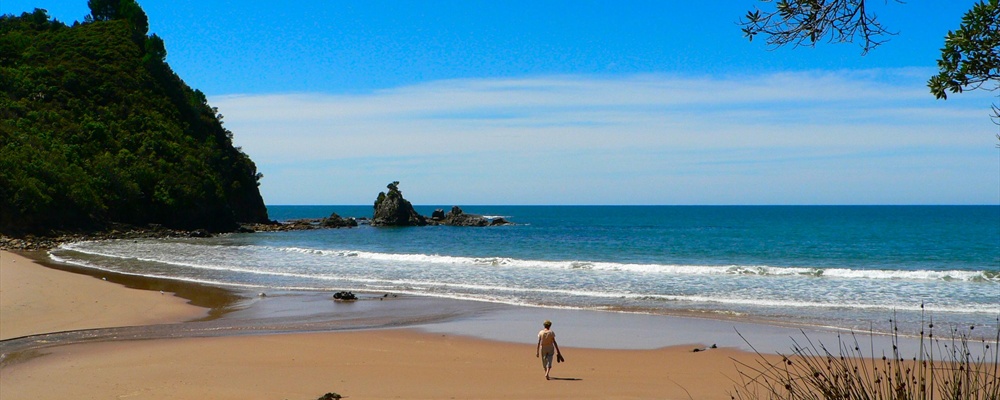
The Coromandel Peninsula is on the north-eastern coast of the North Island of New Zealand. Fabulous golden and white sand beaches with magnificent coastal scenery, a rugged forest cloaked interior waiting to be explored, are just some of the natural attractions that have people returning to The Coromandel time after time.
The Peninsula separates the Hauraki Gulf and coasts around Auckland from the Bay of Plenty. The Peninsula is a popular holiday destination and can get very busy during the summer months.
Local towns include Thames, Coromandel and Whitianga and Whangamata. Smaller settlements include Te Puru, Waiomu, Tapu, Colville, Whangapoua, Matarangi, Kuaotunu, Coroglen, Cooks Beach, Hahei, Hot Water Beach, Tairua and Pauanui.
Understand
Evidence of some of the earliest Polynesian settlement in New Zealand exists on the Coromandel. Historical interest points exist around every corner, telling the stories of the two great navigators Kupe and Cook and those who followed in their footsteps.
Captain Cook visited the area in 1769 and observed the transit of the planet Mercury across the face of the sun hence the names of some of the region's beaches and bays - Mercury Bay and Cook's Beach.
In the nineteenth century the peninsula teemed with human activity associated with the exploitation of timber, gold and kauri gum. Eventually the kauri and the accessible gold were exhausted and the gum market destroyed. The Coromandel lapsed into an economic and social decline that was eventually halted by the gradual growth of farming, fishing, horticulture and tourism. The land slowly "mended" and a new era of people moved into the area, one that valued the environment. Thirty four percent of the land on the peninsula is now administered by the Department of Conservation.
The Coromandel is a rich and colourful creative hub with many studios and galleries showcasing some of New Zealand's most talented artists’ work.
The Coromandel Peninsula is noted for its beautiful beaches with backdrops of lush native bush in the hills. The gateway to the Coromandel, the Kopu Bridge, is a rustic one way bridge just 110 km from Auckland. From here head north to Thames to start your trip around the Coromandel Peninsula.
Getting there
Thames, the gateway to the Coromandel, is located within an hour and a half drive of the major centres of Auckland and Hamilton and their International Airports, and yet the region is a world away from the hustle and bustle of those cities.
Traveling around
There are a variety of ways to get around including bus, taxi and hiring your own car or bike.
Hire a yacht and sail around the Coromandel Peninsula!
Check out these Coromandel Peninsula road trip ideas from the Automobile Association .
See
Thames and the nearby Kauaeranga Valley are rich in history and tourist attractions and make a great place to start any trip to the Coromandel Peninsula.
Coromandel is a nice coastal village with many craft shops and interesting tourist attractions.
Hahei and Cathedral Cove, visit the Te Whanganui-A-Hei marine reserve .
Hot Water Beach is a beach with two hot springs emerging under the sands, meaning visitors can dig their own hot pool. A popular and busy tourist destination, visitors are advised to arrive an hour or two before low tide, when the springs emerge from the receding tide. Hot Water Beach is signposted from the road south of Whitianga.
Thames Coast, the winding coastal road from Thames north towards Coromandel is worthly of special mention also. In December the beautiful pohutakawa trees flower, and is a site to behold. This tree is affectionately known as the New Zealand Christmas tree, and several festival events in December celebrate the time.
Things to do
Its unique landscape and relaxed lifestyle make it an ideal destination for both New Zealanders and international visitors. There is plenty to do in the Coromandel and plenty to learn about.
The Coromandel is a walker's paradise with many coastal walkways and inland bush walks ranging from several hours to several days. Huge kauris that were saved from the loggers' saws still remain and can easily be viewed.
Many artists and craftspeople have made the Coromandel their home, inspired by the region's idyllic setting. Visitors can follow an arts and crafts trail from one side of the peninsula to the other following the popular Pacific Coast Highway.
Other tourism operators have established themselves to take advantage of the clear waters and many kilometres of coastline and islands surrounding the Coromandel. Choose from the numerous water activities available - fishing, sailing, kayaking, snorkelling or swimming.
Eat
Local Fare
Snapper from the sea bream family is one of the most popular food fishes on the Coromandel. Try out some of the best smoked fish in the world!
Green-lipped mussels from Coromandel are the best around and are farmed commercially in the Firth of Thames and Hauraki Gulf.
Crayfish or spiny lobster are a local delicacy.
Scallops are plentiful on the Coromandel and the annual Scallop Festival in Whitianga is a must do.
Eating Out
Drink
Stop in at Thames and visit the historic pubs.
Buy
Thames Main Street, the shopping is excellent in the mile long Pollen Street.
Goldfields Shopping Mall, 100 Mary Street. Over 30 specialist stores and a foodcourt.
PAK’nSAVE, 100 Mary St. A great supermarket with some of New Zealand’s lowest food prices.
Thames Markets, northern end of Pollen St. There's something for everyone at the Thames Market, 9am - 12 noon each Saturday morning.
Coromandel has some great shops.
Get out
The Bay of Plenty including Tauranga and Mount Maunganui is 1hr 20min from Whangamata and 1hr 40min from Thames.
Contact & location
Be the first one to add a review
The photos displayed on this page are the property of one of the following authors:
Sandy Austin, Bill Harrison, Strange Ones, Steve & Jem Copley, Robert Young, macronix
Some photos courtesy of: . The photos provided by Flickr are under the copyright of their owners.
This travel guide also includes text from Wikitravel articles, all available at View full credits
Kiwitraveller, D. Guillaime, Ryan Holliday, Andy Farrell, Todd VerBeek, Gareth Pearce, Ian Kirk, Derek M. Strout, Colin Jensen and Michele Ann Jenkins, New Zealand Traveller, Morph, Episteme, Jelse and Huttite
This travel guide also includes text from Wikipedia articles, all available at View full credits