Chile narrowly stretches along the southern half of the west coast of South America. The bordering countries are Bolivia, and Peru in the north and over the Andes, to the east, lies Argentina. Chile has over 5,000 km (3,100 mi) of coast on the South Pacific Ocean. It also has a claim to a portion of Antarctica.
Regions
North
Central
South
Extreme South
note: Argentina and Chile's claims to Antarctica overlap. However, under the terms of the Antarctic Treaty, no country's territorial claims are exercised.
In Chile there is no restriction on religion. Nearly 70 percent of the population which is above 14 years of age are identified as Roman Catholic and nearly 15 percent as evangelical.
Various indigenous languages are spoken in Chile like Mapudungun, Quechua and Rapa Nui.
Cities
Arica
Iquique
Antofagasta
Calama
La Serena
Valparaíso
Vina del Mar
Santiago
Rancagua
Curico
Talca
Concepción
Temuco
Valdivia
Puerto Varas
Puerto Montt
Ancud
Quellón
Chaiten
Coyhaique
Punta Arenas
Chonchi
Other destinations
Not your average pool
Chile is home to the largest recreational pool in the world. Located at the San Alfonso del Mar resort in Algarrobo, you will want a sailboat to complete its 2 km length
Citizens of the following countries may be exempted from tourist visa requirements:(a) Nationals of Australia, Britain, Canada, Japan, United States, and the EU for a stay of up to 90 days (except nationals of Greece, who can stay up to 60 days).
(b) Nationals of Antigua & Barbuda, Argentina, Bahamas, Barbados, Bolivia, Brazil, Colombia, Croatia, Czech Republic, Dominican Republic, Ecuador, El Salvador, Fiji, Grenada, Guatemala, Hong Kong, Hungary, Iceland, Israel, Jamaica, Liechtenstein, Macau, Malta, Mexico, Monaco, Morocco, New Zealand, Nicaragua, Norway, Panama, Paraguay, Poland, St Kitts & Nevis, St Lucia, San Marino, Slovenia, South Africa, Surinam, Switzerland, Tonga, Tunisia, Turkey, Uruguay, Vatican City, Venezuela and Serbia & Montenegro for a stay of up to 90 days. (c) Nationals of Peru for a stay of up to 60 days.(d) Nationals of Belize, Costa Rica, Honduras, Indonesia, Malaysia and Singapore for a stay of up to 30 days.
However, citizens of four countries must pay a "reciprocity fee" of varying amounts. The fee is USD 131 for American citizens, USD 132 for Canadian citizens, USD 90 for Australian citizens, and USD 15 for Mexican citizens. This fee is equivalent to the amount that country requires for entry visas from Chilean citizens. The fee is only for tourists entering by plane, and the one-time charge is good for the life of your passport. US citizens should have cash or a credit card to pay the $131 fee. Citizens of other countries, such as the UK, do not have to pay a fee.
When entering Chile (by cruise, vehicle or plane), at customs, travelers will need to fill out a tourist card that allows them to stay for up to 90 days. Travelers will have to present the tourist card to Customs officials when leaving the country. Be aware that hotels waive Chile's 19% room tax when the guest shows this card and pays with U.S. dollars. On flights leaving Chile, there is an airport tax of US$18, or the equivalent in Chilean pesos. On domestic flights, airport tax is included in the price of the ticket. For tourism information of Chile, please visit: www.visitchile.org. For consulate information, please visit the Embassy web site: www.chile-usa.org. More info at Embassy of Chile, UK: www.echileuk.demon.co.uk/consulatevisas.htm.
From the Chile Tourism office at the Embassy of Chile in Washington DC (ofitur@embassyofchile.org)
Agriculture is very important to Chile, importation of certain perishable goods (such as poultry,vegetables,fruits,etc) can be either restricted or even prohibited.
Remember that Chile is a centralized country, so the laws stay the same regardless of region.
By plane
The most common entry point for overseas visitors is the international airport of the capital Santiago. There are airports in major towns, but Santiago offers the best connections. LAN Airlines is Chile's flagship airline.
Presently Chile is one of South America's most stable and prosperous nations and is well known for fly fishing. Various wildlife tours, cruises could be enjoyed there.
By bus
If you are already in South America, a cheaper and reliable way is to go by bus to Chile. Chile borders Argentina (daily buses from Mendoza, Bariloche and San Martin de los Andes), Peru (bus from Arequipa) and Bolivia. Buses also originate from Brazil (bus from São Paulo, on Mondays and Thursdays).
Be aware that crossing into Chile may take place at high altitude--up to 4000 m (13,000 ft). Also, the roads from Peru and Bolivia are a bit poor in quality, so be patient. During the winter season, which begins in June and ends in August, it is not uncommon for the passage from Mendoza to close for days at a time.
Travelling around
By plane
Chile has a rather good airport infrastructure. The main hub for flights in Chile is the Arturo Merino Benitez Airport in Santiago, from where several airlines serve even the remotest corners of the country. These airlines are the four chilean airlines: LAN, Sky Airline, Aerolineas del Sur and Principal Airlines (PAL), end the uruguayan PLUNA. When travelling within Chile, please consider reserving your tickets before entering the country: flight coupons are recommended and can be bought at LAN when you also purchase your flight to Chile with them; these can also be processed online. Unfortunately, the internet service of the other airlines is not as capable, yet, it is possible to use their websites to compare fares. Sky Airline and PAL have a websites where one may purchase tickets, but they are in Spanish only. Because of the shape of the country, many routes are subject to several time-consuming layovers. You might take this into account as you can have up to 4 stops en route to your destination! (e.g. for a flight from Punta Arenas to Arica: Punta Arenas (PUQ)-Puerto Montt(PMC)-Santiago(SCL)-Antofagasta(ANF)-Iquique(IQQ)-Arica(ARI)) Domestic routes are served by Airbus 319, Airbus 320 and Boeing 737-200's when flying with LAN express and Boeing 737-200's when flying Sky Airline and Aerolineas del Sur. (The Boeing 737-200s are remarkably older and noisier!)
By bus
The bus system is pretty sophisticated and provides a cheap and comfortable way to get from town to town. Keep in mind that local companies will usually stop at many stations along the way, however, you can always ask if there's a non-stop or directo service. Companies that cover almost the entire country include Turbus and Pullman (websites in Spanish only). In Santiago, you can find both terminals and more companies on Universidad de Santiago subway station.
Keep in mind that prices vary on a daily basis, so are usually more expensive on weekends and holidays tickets than on weekdays.
La Micro
Micro = transit/local buses. The word is the contraction of Microbus. Larger cities have cross-town bus routes at very affordable prices. There are no maps with all the routes, so a little bit of Spanish and the audacity to ask around can get you places effectively. Recently changed to a new more modern system in Santiago only; see the link for the finer details. To travel by "micro" in Santiago you will need to buy before a RFID travel-card called "BIP" and charge it with money. You can do so in any subway station, in most supermarkets and in some smaller stores. This card also allows you to travel by subway in Santiago. Be careful! You won't be able to travel by bus without money in your BIP card. The ticket costs almost US$0.80.
Colectivo
A mix between a micro and a taxi. These small cars have routes and get around quicker and more comfortably. Fares are similar to those on the Micro, and depend on the hour.
Metro
A metropolitan railway system operating in Santiago, Valparaiso and Concepcion. A reliable way to move around in the city. You must pay the fee only once (when you enter the system) and you can ride as much as you want. There are now more stations in Santiago because of the recent construction of two new lines. Visit the website for more information.
By car
All traffic signs are in Spanish only and their shapes and colors can be very different from the U.S. or European standards.
Car Rentals are widely available throughout most major cities, but not in smaller towns.
Usually a credit card, a valid driver's license and a passport, all three issued to the same person, are needed to rent a car.
Rental rates in Santiago are very similar to those in the U.S., but prices can be much higher in other cities.
It's a good idea to avoid rush hours, between 7 and 9 AM and between 5 and 8 PM.
There are several reversible lanes and streets in Santiago and other cities.
Parking spaces and street lanes are narrower than in the U.S., so it's a good idea to get a small vehicle.
Fuel prices are about 1.5 times higher than the average U.S. price, yet cheaper than in most Western Europe.
Several inter-city roads are tolled and don't take credit cards, so keep some Chilean money around.
Most inter-city roads connecting major cities are rather well designed, almost totally sealed, and well kept.
Several urban roads in Santiago have electronic free-flow tolls, so make sure that your car is equipped with an electronic radio-transponder, commonly called tag, since there are no toll booths at all on those roads.
Many urban streets are not in good shape, so you must drive very carefully.
All corners are supposed to have traffic signs, and in Santiago and most major cities, actually all corners are regulated by traffic signs. If there aren't any visible traffic signs, the preference belongs to the vehicle approaching from your right hand.
All traffic signals and traffic lights are mandatory all of the time, there are no after-midnight concessions, such as yielding at stop signs or red lights.
Bribes are never acceptable.
By Thumb
Hitchhiking in Chile is not difficult, given enough time and patience. It is seen as a common form of travel for tourists or young, adventurous Chileans. On large highways such as the Panamerican Highway, hitching becomes nearly impossible. Smaller, more scenic roads such as the Carretera Austral in the south, can leave you waiting for half a dozen hours in the more remote sections but the rides will generally get you a long way and are worth waiting for. If you are a tourist be sure to show it with your backpack, flags attached to your backpack, etc. The locals love chatting with foreign travelers.
Eat
Pastel de choclo: corn casserole filled with ground beef, onions, chicken, raisins, hardboiled egg, olives, and topped with sugar and butter.
Empanada de pino: a baked pie filled with ground beef, onion, raisins, a piece of boiled egg and a black olive. Watch out for the pit!
Empanada de queso: a deep-fried pastry packet filled with cheese. Found everywhere, including McDonald's.
Cazuela de vacuno: beef soup with a potato, rice, a piece of corn and a piece of squash.
Cazuela de ave (or de pollo): same as above, but with a piece of chicken.
Cazuela de pavo: same as above, but with turkey.
Porotos granados: stew made with fresh beans, squash, corn, onion and basil.
con choclo: with grains of corn.
con pilco or pirco: with corn thinly chopped.
con mazamorra: with ground corn.
con riendas: with thin sliced noodles.
Curanto: lots of seafood, beef, chicken and pork, potatoes, cheese, and potato "burguers," prepared in a hole in the ground ("en hoyo") or in a pot ("en olla"); a dish from Chiloé.
Southern sopaipillas: a fried pastry cut as 10-cm (4-in) circles, with no pumpkin in its dough (see Northern sopaipillas in the desserts section). They replace bread. They are known South of Linares.
Lomo a lo pobre: a beefsteak, fried potatoes, a fried egg (expect two in restaurants) and fried onions.
Besides typical foods, you should expect food normally found in any Western country. The normal diet includes rice, potatoes, meat and bread. Vegetables are abundant in central Chile. If you are concerned about the portions, consider that the size of the dish increases the farther south you travel.
With such an enormous coastline, you can expect fish and seafood almost everywhere. Locals used to eat bundles of raw shellfish, but visitors should be cautious of raw shellfish because of frequent outbreaks of red tides. Chile is the world's second largest producer of salmón, as well as a number of other farmed sea products, which include oysters, scallops, mussels, trout and turbot. Local fish include corvina (sea bass), congrio(conger eel), lenguado (flounder), albacora (swordfish), and yellow fin tuna.
Sandwiches
Hotdog or completo. Not similar to the American version. This one includes mayonnaise, mustard, ketchup, tomato, mashed avocado (palta), sauerkraut (chucrut) and chili (ají). These ingredients make a full sandwich, called un completo. With mayonnaise, tomato and avocado it's un italiano with the colors of the Italian flag.
Lomito. Cooked pork steaks served with anything that can go in a hotdog. Italiano is the preferred form but German purists prefer it with sauerkraut (chucrut).
Chacarero: a thin beefsteak (churrasco) with tomato, green beans, mayonnaise and green chili (ají verde).
Barros Luco: Named after President Ramón Barros Luco. Thinly-sliced beefsteak with cheese.
Choripán: Bread with "chorizo", a highly-seasoned pork sausage. Named that way because the contraction of "Pan con Chorizo" or "Chorizo con Pan".
A common combination is meat with avocado and/or mayonnaise, e.g. Ave palta mayo (chicken with avocado and mayonnaise) or Churrasco palta (thinly-sliced beefsteak with avocado). The strong presence for avocado is a Chilean standard for sandwiches that influences the fast food franchises to include it in their menus.
Desserts
Northern sopaipillas: a fried pastry cut as 10-cm (4-in) circles, which includes pumpkin in its dough, and normally is eaten with chancaca, a black treacle or molasses. It's customary to make them when it rains and it's cold outside. Sopaipillas as a dessert are only known north of San Javier. From Linares to the South, they are not dessert and pumpkin is left out, so, when it rains, Chilean Southerners must cook picarones. In Santiago, Sopaipillas can be served covered with a sweet syrup as a dessert, or with spicy yellow mustard.
Kuchen (or cújen, pronounced KOO-hen) is German for pie. In the South ask for kuchen de quesillo, a kind of cheesecake.
Strudel (pronounced ess-TROO-dayl). A kind of apple pie.
Berlín. When they translate John Kennedy's famous quote (often mistakenly thought of as a gaffe) they say it's a “jelly doughnut”. The Chilean version is a ball of dough (no hole) filled with dulce de membrillo, crema pastelera or manjar. Powder sugar is added just in case you have a sweet tooth.
Cuchuflí. Barquillo (tube of something crunchy like a cookie) filled with manjar. The name originally comes from cuchufleta wich means deceipt or trickery, as they used to be filled only at the tips of the barquillos, leaving the middle part empty.
Fruit
Central Chile is a major tempered fruit producer, you can easily get fruit for dessert, including apples, oranges, peaches, grapes, watermelons, strawberries, raspberries, chirimoyas, and several other varieties.
Tempered fruit is of very high quality and prices are usually much lower than in most of the U.S. and Western Europe, while tropical fruit is rather rare and expensive, except by bananas.
Drink
Wine: Chile produces some excellent wines, competing with France, California, Australia and New Zealand for world markets. Notable are the Cabernet Sauvignon and Carmenere in red, along with whites from the Casablanca valley.
Mote con Huesillo: A delicous summertime drink made of wheat seeds (mote) and dried peaches (huesillos) boiled, sweetened, and served cold. Typically sold on sidewalk or park stands.
Chilean Pisco: Brandy made from Muscat grapes. Popular brands are Capel, Alto del Carmen, Mistral and Campanario.**
Pisco Sour: One of Chile's most popular mixed drinks, this consists of Pisco mixed with lemon juice and sugar. It has a delicious tart sweetness.
Mango Sour: Pisco mixed with mango juice.
Piscola: Pisco mixed with Coke.
Borgoña: Red wine and strawberries.
Terremoto: ("Earthquake"): a typical Chilean drink that consists in a mix of pineapple ice cream with pipeño (like white wine).
Schop: Draught beer.
Fan-Schop: Beer mixed with orange Fanta or Orange Crush soft drink. A refreshing alternative on a hot summer day.
Beers: Cristal and Escudo are the most popular (light lagers). Royal Guard is a fair bit tastier, Kunstmann is on pair with European imported beer.
Jote*: wine and Coke.
There's a very known conflict between Chile and Peru about the origin of Pisco. Although Pisco was registered as a chilean drink for some countries in the last century, it is historically peruvian in origin for much longer. Further, chilean and peruvian drinks are not the same product, they have different manufacturing procedures, different varieties of grape and not the same taste.
Unlike other latin-american countries, in Chile it's illegal to drink in unlicensed, public areas (streets, parks, etc.) The laws also restrict vendor hours depending on the weekday (in no case after 3 AM or before 9 AM).
Sleep
Chile has many types of hotels in the cities: some of the most prevalent chains are Sheraton, Kempinsky, Ritz, Marriott, Hyatt, and Holiday Inn. Several hostels and little hotels of varying quality wait to be discovered. On the backpacker trail, a local hostel version can be found in every small city residencial.
There is also a variety of accommodations in the mountain ski centers,such as the world-class resort Portillo, 80 km (49 mi) north of Santiago; "Valle Nevado" in the mountains approximately 35 km (22 mi) away from Santiago, and the "Termas de Chillan" ski resort and hot springs, which lies about 450 km (280 mi) south of Santiago.
Etiquette
Although modern in many ways Chile remains basically traditional. You will fare better if you do not openly denigrate or flout those traditions. Ladies wear dresses or skirts of modest design, and men wear long pants, at least in the cities. People speak in conversational tones.
Unlike other countries in Latin America, the Chilean police force is admired for its honesty and competence. Report any complaints to the police the moment you receive them, including criminal activity. Bribing is not acceptable in Chile, in comparison with the rest of the Latin America, and you'll likely get arrested for it.
Do not assume that your hosts in Chile will have a low opinion of Pinochet. He still has many supporters, so be careful when raising the issue. Even if you want to talk other political subjects than Pinochet, people can get very aggressive when it comes to politics. Depending on your opinions, they can either call you "communist" or "fascist."
Chileans are very friendly people. Use your common sense to avoid danger.
Be careful: many people can speak and understand English, French, Italian or German, be polite.
Chileans hate arrogance. Be arrogant and you will have problems; be kind and everyone will try to help you.
Chileans will know that you are a foreigner no matter how good your Spanish is. Don't get upset if they call you "gringo"-- most foreigners are called that, it's not meant to be offensive.
Between 1879-1883 Chile fought a war against Peru and Bolivia about the northern part. Chile won against both countries but lost a portion of Patagonia since Argentina threatened to attack. Many years later, the Chilean people feel bitter about losing terrain in the south and proud over annexing what is today northern Chile. Still Peru and especially Bolivia claim that it belongs to them which has angered many Chileans and some express racist comments towards guest workers and illegal inmigrants from Peru and Bolivia. Ask as many questions as you want, but do not say that Peru or Bolivia has the right to the northern territory. It will make you hated amongst people and they will think that you are a "stupid foreigner" who has read what they think is foreign propaganda.
Chile's currency is the Chilean peso (CLP). Other currencies are not widely accepted, but most cities have exchange bureaux with resonable rates on euros and US dollars. The rates should be published on widely visible boards.
It's not advisable to exchange currency in the hotel or the airport as the rates are awful. Just be patient.
Never exchange money on the streets, specially if a "helper" indicates you to follow them.
The automatic teller machine (ATM) network in Chile is respectable in coverage--they're all connected to the same service and enable standard transactions.
Credit and debit cards are widely accepted in most of the independent commerce of major cities and in all chain stores, no matter where they are. You'll be asked for an ID when paying with your credit card, not so for debit cards.
When you are paying with Credit Cards, you will be asked to sign and print your ID number on the receipt, is normally used that you can add either your home ID number or your passport number.
As of September 25, 2009, US$1 = CLP 544 and €1 = CLP 799
Learn
Along with Mexico and Argentina, Chile continues to grow as a preferred destination for studies abroad. It is not uncommon to find groups of European or North American students taking interdisciplinary studies in Spanish language or latinamerican culture and history in one of its many reputed universities:
Universidad de Chile
Pontificia Universidad Católica de Chile
Universidad de Concepcion
Pontificia Universidad Católica de Valparaíso
Universidad de Santiago de Chile
Universidad Técnica Federico Santa María
Universidad de Viña del Mar - International Office
Universidad Adolfo Ibáñez
Universidad de Valparaíso
Universidad Austral de Chile
Universidad Central de Chile
Work
Foreigners need to apply for a work visa before arriving (it can be done after, but it is a lot harder to get one). Temporary permits are issued to spouses and people with a contract. Under-the-table jobs are normally not well paid, lack the mandatory health insurance and retirement plans, and are a reason to get deported.
Contact
Phone
Public phones located on streets are very likely to be tampered or vandalized, so it's better to use a phone located inside a commerce or a station.
Prepaid cards for mobile phones and landlines are sold at most newspaper kiosks, supermarkets, gas stations, pharmacies and phone dealers.
Mobile GSM networks are ubiquitous in all major cities and most of the territory of central and southern Chile.
A basic prepaid cellular phone usually costs about 15000 pesos, most frequently charged with 10000 pesos worth of prepaid minutes. No ID is required to buy a prepaid phone.
GSM SIM cards from ENTEL, Movistar or Claro are usually available for 5000 pesos, but without credit, so you'll need to buy some prepaid minutes to be able to call.
Money can be charged into a cellphone from almost any ATM, using a credit or debit card, also, one can charge money directly into the phone by using a credit card through an automated service operator, with directions in Spanish or English.
Chilean phone numbering scheme is very simple and straight.
Internet
There are cybercafes in every major and midsize city and at all tourist destinations. Some libraries are in a program called Biblioredes, with free computers and Internet (they may be very sensitive if you plug in your camera or something like that). In some remote locations, public libraries have internet satellite connections.
Also notice if there's a Wi-Fi hotspot around. They're usually in metro stations, airports, malls, cafes, public buildings and several public spaces. (Check for the ones that say "gratis"--for free.)
Contact & location
Be the first one to add a review
The photos displayed on this page are the property of one of the following authors:
Some photos courtesy of:
. The photos provided by Flickr are under the copyright of their owners.
This travel guide also includes text from Wikitravel articles, all available at View full credits
Ryan HollidayGary, Peter Fitzgerald, Yue Cheng, Jason Minamora, Kevin Gabbert, Marius Mollersen, David, Jani Patokallio, Felipe, Nick Roux, Alex Hill, Tim Sandell, Olli Salonen, Todd VerBeek, david walsh, Greg Young, robinsonsz2@yahoo.com, Evan Prodromou, Tac Tacelosky, Stephen Atkins, Isabella, jan, Scott Needham, Michele Ann Jenkins, Colin Jensen, Tom Holland, Kasper Souren, Alvaro Alegria, Ben Caesar, Jack Fleming, Guy Hodges, Jorge and Yann Forget, ChubbyWimbus, Tatatabot, Inas, AHeneen, Ypsilon, Pablo.cl, Shaund, Rodericoco, Beenthere, JuanFox, Cacahuate, Episteme, Afu, Jake73, Nogatonga, Janki, Huttite, BigHaz, InterLangBot, Nzpcmad, Bletch, Hypatia, Bijee, Chris j wood, Nils, Marijn, Dhum Dhum, Huguei and CIAWorldFactbook2002
This travel guide also includes text from Wikipedia articles, all available at View full credits



























































































Chile narrowly stretches along the southern half of the west coast of South America. The bordering countries are Bolivia, and Peru in the north and over the Andes, to the east, lies Argentina. Chile has over 5,000 km (3,100 mi) of coast on the South Pacific Ocean. It also has a claim to a portion of Antarctica.
Regions
North
Central
South
Extreme South
note: Argentina and Chile's claims to Antarctica overlap. However, under the terms of the Antarctic Treaty, no country's territorial claims are exercised.
In Chile there is no restriction on religion. Nearly 70 percent of the population which is above 14 years of age are identified as Roman Catholic and nearly 15 percent as evangelical.
Various indigenous languages are spoken in Chile like Mapudungun, Quechua and Rapa Nui.
Cities
Arica
Iquique
Antofagasta
Calama
La Serena
Valparaíso
Vina del Mar
Santiago
Rancagua
Curico
Talca
Concepción
Temuco
Valdivia
Puerto Varas
Puerto Montt
Ancud
Quellón
Chaiten
Coyhaique
Punta Arenas
Chonchi
Other destinations
Chile is home to the largest recreational pool in the world. Located at the San Alfonso del Mar resort in Algarrobo, you will want a sailboat to complete its 2 km length
General
Cochamó
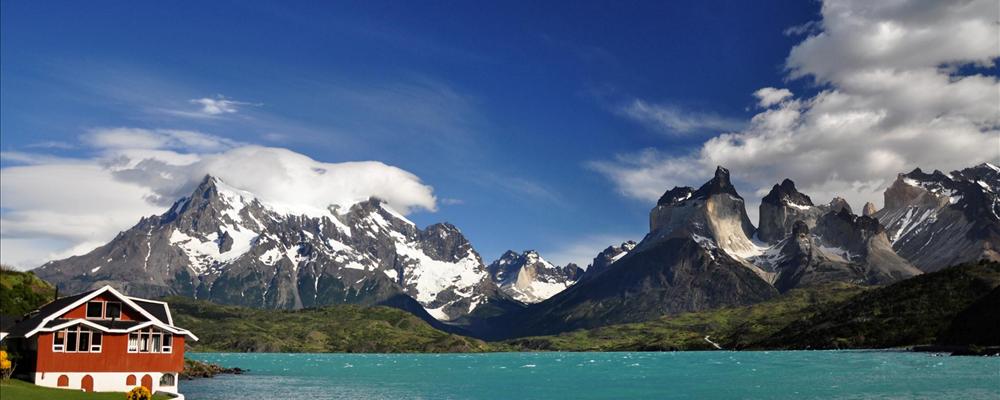
Patagonia - especially the Torres del Paine National Park
Pucón
San Pedro de Atacama
Skiing
El Colorado
Portillo
La Parva
Valle Nevado
Islands
Chiloe Island
Easter Island (Isla de Pascua)
Robinson Crusoe Island
Isla Sala y Gómez
Getting there
Citizens of the following countries may be exempted from tourist visa requirements:(a) Nationals of Australia, Britain, Canada, Japan, United States, and the EU for a stay of up to 90 days (except nationals of Greece, who can stay up to 60 days). (b) Nationals of Antigua & Barbuda, Argentina, Bahamas, Barbados, Bolivia, Brazil, Colombia, Croatia, Czech Republic, Dominican Republic, Ecuador, El Salvador, Fiji, Grenada, Guatemala, Hong Kong, Hungary, Iceland, Israel, Jamaica, Liechtenstein, Macau, Malta, Mexico, Monaco, Morocco, New Zealand, Nicaragua, Norway, Panama, Paraguay, Poland, St Kitts & Nevis, St Lucia, San Marino, Slovenia, South Africa, Surinam, Switzerland, Tonga, Tunisia, Turkey, Uruguay, Vatican City, Venezuela and Serbia & Montenegro for a stay of up to 90 days. (c) Nationals of Peru for a stay of up to 60 days.(d) Nationals of Belize, Costa Rica, Honduras, Indonesia, Malaysia and Singapore for a stay of up to 30 days.
However, citizens of four countries must pay a "reciprocity fee" of varying amounts. The fee is USD 131 for American citizens, USD 132 for Canadian citizens, USD 90 for Australian citizens, and USD 15 for Mexican citizens. This fee is equivalent to the amount that country requires for entry visas from Chilean citizens. The fee is only for tourists entering by plane, and the one-time charge is good for the life of your passport. US citizens should have cash or a credit card to pay the $131 fee. Citizens of other countries, such as the UK, do not have to pay a fee.
When entering Chile (by cruise, vehicle or plane), at customs, travelers will need to fill out a tourist card that allows them to stay for up to 90 days. Travelers will have to present the tourist card to Customs officials when leaving the country. Be aware that hotels waive Chile's 19% room tax when the guest shows this card and pays with U.S. dollars. On flights leaving Chile, there is an airport tax of US$18, or the equivalent in Chilean pesos. On domestic flights, airport tax is included in the price of the ticket. For tourism information of Chile, please visit: www.visitchile.org. For consulate information, please visit the Embassy web site: www.chile-usa.org. More info at Embassy of Chile, UK: www.echileuk.demon.co.uk/consulatevisas.htm.
From the Chile Tourism office at the Embassy of Chile in Washington DC (ofitur@embassyofchile.org)
Agriculture is very important to Chile, importation of certain perishable goods (such as poultry,vegetables,fruits,etc) can be either restricted or even prohibited.
Remember that Chile is a centralized country, so the laws stay the same regardless of region.
By plane
The most common entry point for overseas visitors is the international airport of the capital Santiago. There are airports in major towns, but Santiago offers the best connections. LAN Airlines is Chile's flagship airline.
Presently Chile is one of South America's most stable and prosperous nations and is well known for fly fishing. Various wildlife tours, cruises could be enjoyed there.
By bus
If you are already in South America, a cheaper and reliable way is to go by bus to Chile. Chile borders Argentina (daily buses from Mendoza, Bariloche and San Martin de los Andes), Peru (bus from Arequipa) and Bolivia. Buses also originate from Brazil (bus from São Paulo, on Mondays and Thursdays). Be aware that crossing into Chile may take place at high altitude--up to 4000 m (13,000 ft). Also, the roads from Peru and Bolivia are a bit poor in quality, so be patient. During the winter season, which begins in June and ends in August, it is not uncommon for the passage from Mendoza to close for days at a time.
Travelling around
By plane
Chile has a rather good airport infrastructure. The main hub for flights in Chile is the Arturo Merino Benitez Airport in Santiago, from where several airlines serve even the remotest corners of the country. These airlines are the four chilean airlines: LAN, Sky Airline, Aerolineas del Sur and Principal Airlines (PAL), end the uruguayan PLUNA. When travelling within Chile, please consider reserving your tickets before entering the country: flight coupons are recommended and can be bought at LAN when you also purchase your flight to Chile with them; these can also be processed online. Unfortunately, the internet service of the other airlines is not as capable, yet, it is possible to use their websites to compare fares. Sky Airline and PAL have a websites where one may purchase tickets, but they are in Spanish only.
Because of the shape of the country, many routes are subject to several time-consuming layovers. You might take this into account as you can have up to 4 stops en route to your destination! (e.g. for a flight from Punta Arenas to Arica: Punta Arenas (PUQ)-Puerto Montt(PMC)-Santiago(SCL)-Antofagasta(ANF)-Iquique(IQQ)-Arica(ARI)) Domestic routes are served by Airbus 319, Airbus 320 and Boeing 737-200's when flying with LAN express and Boeing 737-200's when flying Sky Airline and Aerolineas del Sur. (The Boeing 737-200s are remarkably older and noisier!)
By bus
The bus system is pretty sophisticated and provides a cheap and comfortable way to get from town to town. Keep in mind that local companies will usually stop at many stations along the way, however, you can always ask if there's a non-stop or directo service. Companies that cover almost the entire country include Turbus and Pullman (websites in Spanish only). In Santiago, you can find both terminals and more companies on Universidad de Santiago subway station.
Keep in mind that prices vary on a daily basis, so are usually more expensive on weekends and holidays tickets than on weekdays.
La Micro
Micro = transit/local buses. The word is the contraction of Microbus. Larger cities have cross-town bus routes at very affordable prices. There are no maps with all the routes, so a little bit of Spanish and the audacity to ask around can get you places effectively. Recently changed to a new more modern system in Santiago only; see the link for the finer details. To travel by "micro" in Santiago you will need to buy before a RFID travel-card called "BIP" and charge it with money. You can do so in any subway station, in most supermarkets and in some smaller stores. This card also allows you to travel by subway in Santiago. Be careful! You won't be able to travel by bus without money in your BIP card. The ticket costs almost US$0.80.
Colectivo
A mix between a micro and a taxi. These small cars have routes and get around quicker and more comfortably. Fares are similar to those on the Micro, and depend on the hour.
Metro
A metropolitan railway system operating in Santiago, Valparaiso and Concepcion. A reliable way to move around in the city. You must pay the fee only once (when you enter the system) and you can ride as much as you want. There are now more stations in Santiago because of the recent construction of two new lines. Visit the website for more information.
By car
All traffic signs are in Spanish only and their shapes and colors can be very different from the U.S. or European standards.
Car Rentals are widely available throughout most major cities, but not in smaller towns.
Usually a credit card, a valid driver's license and a passport, all three issued to the same person, are needed to rent a car.
Rental rates in Santiago are very similar to those in the U.S., but prices can be much higher in other cities.
It's a good idea to avoid rush hours, between 7 and 9 AM and between 5 and 8 PM.
There are several reversible lanes and streets in Santiago and other cities.
Parking spaces and street lanes are narrower than in the U.S., so it's a good idea to get a small vehicle.
Fuel prices are about 1.5 times higher than the average U.S. price, yet cheaper than in most Western Europe.
Several inter-city roads are tolled and don't take credit cards, so keep some Chilean money around.
Most inter-city roads connecting major cities are rather well designed, almost totally sealed, and well kept.
Several urban roads in Santiago have electronic free-flow tolls, so make sure that your car is equipped with an electronic radio-transponder, commonly called tag, since there are no toll booths at all on those roads.
Many urban streets are not in good shape, so you must drive very carefully.
All corners are supposed to have traffic signs, and in Santiago and most major cities, actually all corners are regulated by traffic signs. If there aren't any visible traffic signs, the preference belongs to the vehicle approaching from your right hand.
All traffic signals and traffic lights are mandatory all of the time, there are no after-midnight concessions, such as yielding at stop signs or red lights.
Bribes are never acceptable.
By Thumb
Hitchhiking in Chile is not difficult, given enough time and patience. It is seen as a common form of travel for tourists or young, adventurous Chileans. On large highways such as the Panamerican Highway, hitching becomes nearly impossible. Smaller, more scenic roads such as the Carretera Austral in the south, can leave you waiting for half a dozen hours in the more remote sections but the rides will generally get you a long way and are worth waiting for. If you are a tourist be sure to show it with your backpack, flags attached to your backpack, etc. The locals love chatting with foreign travelers.
Eat
Pastel de choclo: corn casserole filled with ground beef, onions, chicken, raisins, hardboiled egg, olives, and topped with sugar and butter.
Empanada de pino: a baked pie filled with ground beef, onion, raisins, a piece of boiled egg and a black olive. Watch out for the pit!
Empanada de queso: a deep-fried pastry packet filled with cheese. Found everywhere, including McDonald's.
Cazuela de vacuno: beef soup with a potato, rice, a piece of corn and a piece of squash.
Cazuela de ave (or de pollo): same as above, but with a piece of chicken.
Cazuela de pavo: same as above, but with turkey.
Porotos granados: stew made with fresh beans, squash, corn, onion and basil.
con choclo: with grains of corn.
con pilco or pirco: with corn thinly chopped.
con mazamorra: with ground corn.
con riendas: with thin sliced noodles.
Curanto: lots of seafood, beef, chicken and pork, potatoes, cheese, and potato "burguers," prepared in a hole in the ground ("en hoyo") or in a pot ("en olla"); a dish from Chiloé.
Southern sopaipillas: a fried pastry cut as 10-cm (4-in) circles, with no pumpkin in its dough (see Northern sopaipillas in the desserts section). They replace bread. They are known South of Linares.
Lomo a lo pobre: a beefsteak, fried potatoes, a fried egg (expect two in restaurants) and fried onions.
Besides typical foods, you should expect food normally found in any Western country. The normal diet includes rice, potatoes, meat and bread. Vegetables are abundant in central Chile. If you are concerned about the portions, consider that the size of the dish increases the farther south you travel.
With such an enormous coastline, you can expect fish and seafood almost everywhere. Locals used to eat bundles of raw shellfish, but visitors should be cautious of raw shellfish because of frequent outbreaks of red tides. Chile is the world's second largest producer of salmón, as well as a number of other farmed sea products, which include oysters, scallops, mussels, trout and turbot. Local fish include corvina (sea bass), congrio(conger eel), lenguado (flounder), albacora (swordfish), and yellow fin tuna.
Sandwiches
Hotdog or completo. Not similar to the American version. This one includes mayonnaise, mustard, ketchup, tomato, mashed avocado (palta), sauerkraut (chucrut) and chili (ají). These ingredients make a full sandwich, called un completo. With mayonnaise, tomato and avocado it's un italiano with the colors of the Italian flag.
Lomito. Cooked pork steaks served with anything that can go in a hotdog. Italiano is the preferred form but German purists prefer it with sauerkraut (chucrut).
Chacarero: a thin beefsteak (churrasco) with tomato, green beans, mayonnaise and green chili (ají verde).
Barros Luco: Named after President Ramón Barros Luco. Thinly-sliced beefsteak with cheese.
Choripán: Bread with "chorizo", a highly-seasoned pork sausage. Named that way because the contraction of "Pan con Chorizo" or "Chorizo con Pan".
A common combination is meat with avocado and/or mayonnaise, e.g. Ave palta mayo (chicken with avocado and mayonnaise) or Churrasco palta (thinly-sliced beefsteak with avocado). The strong presence for avocado is a Chilean standard for sandwiches that influences the fast food franchises to include it in their menus.
Desserts
Northern sopaipillas: a fried pastry cut as 10-cm (4-in) circles, which includes pumpkin in its dough, and normally is eaten with chancaca, a black treacle or molasses. It's customary to make them when it rains and it's cold outside. Sopaipillas as a dessert are only known north of San Javier. From Linares to the South, they are not dessert and pumpkin is left out, so, when it rains, Chilean Southerners must cook picarones. In Santiago, Sopaipillas can be served covered with a sweet syrup as a dessert, or with spicy yellow mustard.
Kuchen (or cújen, pronounced KOO-hen) is German for pie. In the South ask for kuchen de quesillo, a kind of cheesecake.
Strudel (pronounced ess-TROO-dayl). A kind of apple pie.
Berlín. When they translate John Kennedy's famous quote (often mistakenly thought of as a gaffe) they say it's a “jelly doughnut”. The Chilean version is a ball of dough (no hole) filled with dulce de membrillo, crema pastelera or manjar. Powder sugar is added just in case you have a sweet tooth.
Cuchuflí. Barquillo (tube of something crunchy like a cookie) filled with manjar. The name originally comes from cuchufleta wich means deceipt or trickery, as they used to be filled only at the tips of the barquillos, leaving the middle part empty.
Fruit
Central Chile is a major tempered fruit producer, you can easily get fruit for dessert, including apples, oranges, peaches, grapes, watermelons, strawberries, raspberries, chirimoyas, and several other varieties.
Tempered fruit is of very high quality and prices are usually much lower than in most of the U.S. and Western Europe, while tropical fruit is rather rare and expensive, except by bananas.
Drink
Wine: Chile produces some excellent wines, competing with France, California, Australia and New Zealand for world markets. Notable are the Cabernet Sauvignon and Carmenere in red, along with whites from the Casablanca valley.
Mote con Huesillo: A delicous summertime drink made of wheat seeds (mote) and dried peaches (huesillos) boiled, sweetened, and served cold. Typically sold on sidewalk or park stands.
Chilean Pisco: Brandy made from Muscat grapes. Popular brands are Capel, Alto del Carmen, Mistral and Campanario.**
Pisco Sour: One of Chile's most popular mixed drinks, this consists of Pisco mixed with lemon juice and sugar. It has a delicious tart sweetness.
Mango Sour: Pisco mixed with mango juice.
Piscola: Pisco mixed with Coke.
Borgoña: Red wine and strawberries.
Terremoto: ("Earthquake"): a typical Chilean drink that consists in a mix of pineapple ice cream with pipeño (like white wine).
Schop: Draught beer.
Fan-Schop: Beer mixed with orange Fanta or Orange Crush soft drink. A refreshing alternative on a hot summer day.
Beers: Cristal and Escudo are the most popular (light lagers). Royal Guard is a fair bit tastier, Kunstmann is on pair with European imported beer.
Jote*: wine and Coke.
Sleep
Chile has many types of hotels in the cities: some of the most prevalent chains are Sheraton, Kempinsky, Ritz, Marriott, Hyatt, and Holiday Inn. Several hostels and little hotels of varying quality wait to be discovered. On the backpacker trail, a local hostel version can be found in every small city residencial. There is also a variety of accommodations in the mountain ski centers,such as the world-class resort Portillo, 80 km (49 mi) north of Santiago; "Valle Nevado" in the mountains approximately 35 km (22 mi) away from Santiago, and the "Termas de Chillan" ski resort and hot springs, which lies about 450 km (280 mi) south of Santiago.
Etiquette
Although modern in many ways Chile remains basically traditional. You will fare better if you do not openly denigrate or flout those traditions. Ladies wear dresses or skirts of modest design, and men wear long pants, at least in the cities. People speak in conversational tones.
Unlike other countries in Latin America, the Chilean police force is admired for its honesty and competence. Report any complaints to the police the moment you receive them, including criminal activity. Bribing is not acceptable in Chile, in comparison with the rest of the Latin America, and you'll likely get arrested for it.
Do not assume that your hosts in Chile will have a low opinion of Pinochet. He still has many supporters, so be careful when raising the issue. Even if you want to talk other political subjects than Pinochet, people can get very aggressive when it comes to politics. Depending on your opinions, they can either call you "communist" or "fascist."
Chileans are very friendly people. Use your common sense to avoid danger.
Be careful: many people can speak and understand English, French, Italian or German, be polite.
Chileans hate arrogance. Be arrogant and you will have problems; be kind and everyone will try to help you.
Chileans will know that you are a foreigner no matter how good your Spanish is. Don't get upset if they call you "gringo"-- most foreigners are called that, it's not meant to be offensive.
Between 1879-1883 Chile fought a war against Peru and Bolivia about the northern part. Chile won against both countries but lost a portion of Patagonia since Argentina threatened to attack. Many years later, the Chilean people feel bitter about losing terrain in the south and proud over annexing what is today northern Chile. Still Peru and especially Bolivia claim that it belongs to them which has angered many Chileans and some express racist comments towards guest workers and illegal inmigrants from Peru and Bolivia. Ask as many questions as you want, but do not say that Peru or Bolivia has the right to the northern territory. It will make you hated amongst people and they will think that you are a "stupid foreigner" who has read what they think is foreign propaganda.
National Parks
Lauca
Volcán Isluga
Llullaillaco
Pan de Azúcar
Llanos de Challes
Nevado Tres Cruces
Bosque de Fray Jorge
La Campana
Archipiélago Juan Fernández
Rapa Nui
Palmas de Cocalán
Laguna del Laja
Huerquehue
Villarrica
Nahuelbuta
Tolhuaca
Conguillio
Puyehue
Vicente Pérez Rosales
Alerce Andino
Chiloe
Hornopirén
Corcovado (Chile)
Isla Guamblin
Laguna San Rafael
Queulat
Isla Magdalena
Bernardo OHiggins
Torres del Paine National Park
Pali Aike
Alberto de Agostini
Cabo de Hornos
Currency
Chile's currency is the Chilean peso (CLP). Other currencies are not widely accepted, but most cities have exchange bureaux with resonable rates on euros and US dollars. The rates should be published on widely visible boards.
It's not advisable to exchange currency in the hotel or the airport as the rates are awful. Just be patient.
Never exchange money on the streets, specially if a "helper" indicates you to follow them.
The automatic teller machine (ATM) network in Chile is respectable in coverage--they're all connected to the same service and enable standard transactions.
Credit and debit cards are widely accepted in most of the independent commerce of major cities and in all chain stores, no matter where they are. You'll be asked for an ID when paying with your credit card, not so for debit cards. When you are paying with Credit Cards, you will be asked to sign and print your ID number on the receipt, is normally used that you can add either your home ID number or your passport number.
As of September 25, 2009, US$1 = CLP 544 and €1 = CLP 799
Learn
Along with Mexico and Argentina, Chile continues to grow as a preferred destination for studies abroad. It is not uncommon to find groups of European or North American students taking interdisciplinary studies in Spanish language or latinamerican culture and history in one of its many reputed universities:
Universidad de Chile
Pontificia Universidad Católica de Chile
Universidad de Concepcion
Pontificia Universidad Católica de Valparaíso
Universidad de Santiago de Chile
Universidad Técnica Federico Santa María
Universidad de Viña del Mar - International Office
Universidad Adolfo Ibáñez
Universidad de Valparaíso
Universidad Austral de Chile
Universidad Central de Chile
Work
Foreigners need to apply for a work visa before arriving (it can be done after, but it is a lot harder to get one). Temporary permits are issued to spouses and people with a contract. Under-the-table jobs are normally not well paid, lack the mandatory health insurance and retirement plans, and are a reason to get deported.
Contact
Phone
Public phones located on streets are very likely to be tampered or vandalized, so it's better to use a phone located inside a commerce or a station.
Prepaid cards for mobile phones and landlines are sold at most newspaper kiosks, supermarkets, gas stations, pharmacies and phone dealers.
Mobile GSM networks are ubiquitous in all major cities and most of the territory of central and southern Chile.
A basic prepaid cellular phone usually costs about 15000 pesos, most frequently charged with 10000 pesos worth of prepaid minutes. No ID is required to buy a prepaid phone.
GSM SIM cards from ENTEL, Movistar or Claro are usually available for 5000 pesos, but without credit, so you'll need to buy some prepaid minutes to be able to call.
Money can be charged into a cellphone from almost any ATM, using a credit or debit card, also, one can charge money directly into the phone by using a credit card through an automated service operator, with directions in Spanish or English.
Chilean phone numbering scheme is very simple and straight.
Internet
There are cybercafes in every major and midsize city and at all tourist destinations. Some libraries are in a program called Biblioredes, with free computers and Internet (they may be very sensitive if you plug in your camera or something like that). In some remote locations, public libraries have internet satellite connections.
Also notice if there's a Wi-Fi hotspot around. They're usually in metro stations, airports, malls, cafes, public buildings and several public spaces. (Check for the ones that say "gratis"--for free.)
Contact & location
Be the first one to add a review
The photos displayed on this page are the property of one of the following authors:
ciRo, Javier Rubilar, Morado Sur, Davidlohr Bueso, Luis Fabres, Vera & Jean-Christophe, Eneas De Troya, Karyn Christner, Naturaleza, Zorka Ostojic Espinoza
Some photos courtesy of: . The photos provided by Flickr are under the copyright of their owners.
This travel guide also includes text from Wikitravel articles, all available at View full credits
Ryan HollidayGary, Peter Fitzgerald, Yue Cheng, Jason Minamora, Kevin Gabbert, Marius Mollersen, David, Jani Patokallio, Felipe, Nick Roux, Alex Hill, Tim Sandell, Olli Salonen, Todd VerBeek, david walsh, Greg Young, robinsonsz2@yahoo.com, Evan Prodromou, Tac Tacelosky, Stephen Atkins, Isabella, jan, Scott Needham, Michele Ann Jenkins, Colin Jensen, Tom Holland, Kasper Souren, Alvaro Alegria, Ben Caesar, Jack Fleming, Guy Hodges, Jorge and Yann Forget, ChubbyWimbus, Tatatabot, Inas, AHeneen, Ypsilon, Pablo.cl, Shaund, Rodericoco, Beenthere, JuanFox, Cacahuate, Episteme, Afu, Jake73, Nogatonga, Janki, Huttite, BigHaz, InterLangBot, Nzpcmad, Bletch, Hypatia, Bijee, Chris j wood, Nils, Marijn, Dhum Dhum, Huguei and CIAWorldFactbook2002
This travel guide also includes text from Wikipedia articles, all available at View full credits