Brazil (Portuguese: Brasil), , is the largest country in South America. Famous for its football (us:soccer) tradition and its annual Carnaval in Rio de Janeiro, Salvador, Recife and Olinda. It is a country of great diversity, from the bustling urban mosaic of São Paulo to the infinite cultural energy of Pernambuco and Bahia, the untouched wilderness of the Amazon rainforest and world-class landmarks such as the Iguaçu Falls, there is plenty to see and to do in Brazil.
Understand
History and Economy
Until 1500, Brazil was inhabited solely by indigenous people, mainly of the Tupi and Guarani ethnic groups. Actual settling by the Portuguese began later that century, with the extraction of valuable pau-brasil wood, from which the country draws its name. The following four centuries saw further exploitation of the country's natural riches (gold and rubber) besides the rise of an economy based on agriculture (sugar and coffee) and slave labor, millions of Africans taken to the new world in a forced diaspora. Meanwhile, extermination or Christianizing of natives kept its pace, and the 19th Century saw a second wave of European (mainly Italian and German) immigration, adding to this unique and complex set of factors that generated today's equally complex and unique Brazilian culture and society.
Following three centuries under the rule of Portugal, Brazil became an independent nation in 7 September, 1822. By far the largest and most populous country in South America, it has also overcome more than two decades (1964-1988) of military intervention in the governance of the country to pursue a democratic ruling, while facing the challenge of keeping its industrial and agricultural growth and developing its interior. Exploiting vast natural resources and a large labor pool, today Brazil is South America's leading economic power and a regional leader. Highly unequal income distribution remains a pressing problem. A consequence of this is a high crime rate, specifically in large cities.
After 20 years of democracy, the country has grown strong, and despite the social problems of the unequal income distribution, the people have remained happy and festive.
Culture
Owing to Brazil’s continental dimensions, varied geography, history and people, the country’s culture is rich and diverse. It has several regional variations, and in spite of being mostly unified by a single language, some regions are so different from each other that they could have become different countries altogether.
Music plays an important part in Brazilian identity. Styles like choro, samba and bossa nova are considered genuinely Brazilian. Caipira music is also in the roots of sertanejo (the national equivalent to country music). MPB stands for Brazilian Popular Music, which mixes several national styles under a single concept. Forró, a north-eastern happy dancing music style, has also become common nationwide. New urban styles include funk - name given to a dance music genre from Rio's favelas that mixes heavy electronic beats and often raunchy rapping - and techno-brega, a crowd-pleaser in northern states, that fuses romantic pop, dance music and caribbean rhythms.
A mixture of martial arts, dance, music and game, capoeira was brought to Brazil by African slaves. Distinguished by vivacious complicated movements and accompanying music, it can be seen and practiced in many Brazilian cities.
In the classical music, the Modern Period is particularly notable, due to the works of composers like Heitor Villa-Lobos and Camargo Guarnieri, who created a typical brazilian school, mixing elements of the traditional european classical music to the brazilian rhythms, while other composers like Cláudio Santoro followed the guidelines of the Second School of Vienna. In the Romantic Period, the greatest name was Antonio Carlos Gomes, author of some italian-styled operas with typical brazilian themes, like Il Guarany and Lo Schiavo. In the Classical Period, the most proeminent name is José Maurício Nunes Gacia, a priest who wrote both sacred and secular music and was very influenced by the viennese classical style of the 18th century and early 19th century.
Candomble and Umbanda are religions with African roots that have survived prejudice and persecution and still have a significant following in Brazil. Their places of cult are called terreiros and many are open to visit.
Indigenous traits can be found everywhere in Brazilian culture, from cuisine to vocabulary. There are still many indigenous groups and tribes living in all Brazilian regions, although many have been deeply influenced by "western" culture, and several of the country's surviving indigenous languages are in danger of disappearing completely. The traditional lifestyle and graphic expressions of the Wajãpi indigenous group from the state of Amapá were proclaimed a Masterpiece of the World's Intangible Heritage by UNESCO.
Globo, the largest national television network, also plays an important role in shaping the national identity. Nine out of ten households have a TV set, which is the most important source of information and entertainment for most Brazilians followed by the radio broadcast. TVs broadcast sports, movies, local and national news and telenovelas (Soap Operas)– 6-month-long series that have become one of the country’s main cultural exports.
People
Throughout its history, Brazil has welcomed several different peoples and practices. Brazil constitutes a melting pot of the most diverse ethnic groups thus mitigating ethnic prejudices and preventing racial conflicts (though long-lasting slavery and genocide among indigenous populations have taken their toll). Prejudice is often directed towards different social classes rather than between races. Nevertheless, race (or simply skin colour) is still a dividing factor in Brazilian society and you will notice the skin typically darkens as the social class gets lower: wealth and middle-class are mostly white; many middle-class are mixed; and the majority of poor people are black or indian. Nowadays, however, Afro-Brazilians and Amerindian populations are increasingly aware of their civil rights and of their rich cultural heritage, and social mobility is achievable through education.
In general, Brazilians are a fun-loving people. While Southerners may be somewhat colder and more reserved, from Rio upwards people usually boast a captivating attitude towards life and truly enjoy having a good time. Some may even tell you that beer, football, samba and barbecue is all they could crave for.
Friendship and hospitality are highly praised traits, and family and social connections are strongly valued. To people they have met, or at least know by name, Brazilians are usually very open, friendly and sometimes quite generous. Once introduced, until getting a good reason not to, a typical Brazilian may treat you as warmly as he would treat a best friend. Brazilians are reputedly one of the most hospitable people in the world and foreigners are usually treated with respect and often with true admiration.
Attitudes towards foreigners may also be subject to regional differences:
The state of Santa Catarina welcomes their Spanish-speaking tourists with bilingual signs and welcome committees.
In Salvador, the largest city of the Northeast, anyone talking, acting or looking like a tourist (even other Brazilians!) could be charged higher prices, such as in parking lots, in restaurants, etc.
Whereas the "Western" roots of Brazilian culture are largely European (evidenced by its colonial towns and even sporadic historic buildings between the skyscrapers...), there has been a strong tendency in the last decades to adopt a more "American way of life" which is found in urban culture and architecture, mass media, consumerism and a strongly positive feeling towards technical progress. In spite of that, Brazil is still a nation faced to the Atlantic, not to Hispanic America, and the intellectual elites are likely to look up to Europe (especially France), not the U.S., as source of inspiration. Many aspects in Brazilian society, such as the educational system, are inspired by the French, and may seem strange at first to Anglo-Saxon visitors.
Brazilians are not Hispanic.
The contrasts in this huge country equally fascinates and shocks most visitors, as well as the indifference of many locals towards the social, economic and ecological problems. Whereas an emerging elite of young, well-educated professionals indulge in amenities of modern society, child labor, illiteracy and subhuman housing conditions still exist even in regions blessed by economic growth and huge foreign investments such as Sao Paulo or Rio.
As much as Brazilians acknowledge their self-sustainability in raw materials, agriculture, and energy sources as an enormous benefit for the future, most of them agree that without huge efforts in education there will hardly be a way out of poverty and underdevelopment.
Brazil has a growing Chinese population, made up significantly of immigrants from Macau.
Climate
Brasil is a huge country with different climate zones. In the north, near the equator there is a wet and a dry season; from about Sao Paulo down to the south there is spring/summer/fall/winter.
Holidays and working hours
Carnival dates (Sat-Wed)
2009: 21-25 February
2010: 13-17 February
2011: 05-09 March
Brazil observes the following national holidays (only 13 days during all year):
New Year - 1st January
Carnival - February/March (Movable - 7 weeks before Easter, see box for precise dates. Monday and Tuesday are the actual holidays, but celebrations usually begin on Saturday and last until 12PM of Ash Wednesday, when shops and services re-open.)
Good Friday - March/April (movable) two days before Easter Sunday
Tiradentes - 21st April
Labour Day - 1st May
Corpus Christi - May/June (movable) sixty days after Easter Sunday
Independence Day - 7th September
Patroness of Brazil - 12th October
All Souls' Day (Finados) - 2nd November
Republic - 15th November
Christmas - 25th December
Working hours are usually from 8AM or 9AM to 5PM or 6PM. Banks open Monday to Friday, from 10AM to 4PM. Street shops tend to close at noon on Saturday and only re-open on Monday. Shopping malls normally open from 10AM to 10PM, Monday to Saturday, and from 3PM to 9PM on Sundays. Some malls, specially in large cities, also open on Sundays. And is also possible to find 24h stores and small markets that open even in the Sundays.
Electricity
Brazil is one of a few countries that uses both 120 and 240 volts for everyday appliances. Expect the voltage to change back and forth as you travel from one place to the next -- even within the same Brazilian state, sometimes even within the same building. There is no physical difference in the electric outlets (power mains) for the two voltages.
Electric outlets usually accept both flat (North American), and round (European) plugs. Otherwise adaptors from flat blades to round pins are easy to find in any supermarket or hardware shop. Some outlets are too narrow for the German "Schuko" plugs. The best makeshift solution is to buy a cheap T-connection and just force your "Schuco" in, -the T will break, but it will work. Very few outlets have a grounding point, and some might not accept newer North American polarized plugs, where one pin is slightly larger. Again, use the cheap T. Near the border with Argentina, you might occasionally find outlets for the Australia/New Zealand-type plug. If crossing the border, you'll probably need this adapter as well.
Frequency is 60Hz, which may disturb 50 Hz electric clocks. Blackouts are less and less frequent, but you always run a risk at peak of high season in small tourist towns.
See also: Travel topics -- Electrical systems
Climate
Brasil is a huge country with different climate zones. In the north, near the equator there is a wet and a dry season; from about Sao Paulo down to the south there is spring/summer/fall/winter.
Regions
Brazil is the fifth largest country on earth. It is divided into five regions, mainly drawn around state lines, but they also more or less follow natural, economic and cultural borderlines.
North - The Amazon, the rain forest and frontier life, with remarkable indian influence.
Northeast - Strong black culture (especially in Bahia) mingles with early Iberic folklore. This is often considered the country's most beautiful coastline, and has the sunniest and hottest climate; but it is also the country's driest and poorest region.
Central West - The Pantanal wetlands, great farms, young cities, the cerrado and the Federal District, with its outworldly modernist architecture.
Southeast - São Paulo and Rio are the largest cities of the country and its economic and industrial hub; there are also some century-old colonial towns.
South - Is a land of valleys and pampas where a strong gaucho culture (shared with Uruguay and Argentina) meets European influences. Accordingly it is experiencing much growth and tourism. It has the best standard of living in Brazil with only two large cities (Curitiba and Porto Alegre) and several mid-size cities with very low crime rates. German, Italian, Polish and Ukranian immigrants colonized the region in the mid 19th century. It is also the only region in Brazil where it snows every year, mainly in the central mountains of Santa Catarina State.
See also: List of Brazilian states
Cities
Brazil has many exciting cities, ranging from pretty colonial towns and coastal hideouts to hectic, lively metropolises; these are a few of the more prominent travel destinations:
Brasília - The capital of Brazil, and an architectural spectacle. Noteworthy buildings include a basket-shaped Cathedral, the beautiful Arches Palace (seat of the Ministry of Justice) and others.
Belém - The second largest city in the Amazon region. Religious festivals (Cirio de Nazare), traditional market (Ver-o-Peso).
Curitiba - The capital of the state of Paraná is known for its innovative urban solutions, it still keeps its traditional spirit and features of the european immigrants, mostly from Italy, Germany and slavic countries.
Florianópolis - The major city in Brazil located in an island in the Atlantic Ocean, with lakes, lagoons, amazing nature and more than 40 clean, beautiful and full of nature beaches.
Fortaleza -- A good base for exploring the beaches of the northeastern coast, including Jericoacoara. Famed for forró music and comedians.
Manaus - Located in the heart of the Amazon, is the capital of the Amazonas State and it is also the biggest city of the Amazon. At Manaus the rio Negro and Solimões meet to became the Amazonas River. The best place to go to visit the Amazon Forest. It is a gateway to the Anavilhanas and to Jaú National Park.
Porto Alegre-- a major city between Argentina and São Paulo and gateway to Brazil~s fabulous Green Canyons.
Recife - A major city in the Northeast region, originally settled by Dutch colonizers. Nicknamed "The Brazilian Venice", it is built on several islands linked by many bridges. Rich in history, art and folklore. Do not miss neighboring Olinda and Porto de Galinhas. The city is also a gateway to the amazing archipelago of Fernando de Noronha.
Rio de Janeiro - World famous, beautiful city that welcomes visitors with that big statue of an open-armed Jesus atop Corcovado Hill.
Salvador - The first capital of Brazil is home to a unique blend of indigenous, African and European cultures. Its Carnival fun is famous, and the influence of African culture and religion is remarkable.
São Paulo - Brazil's largest, richest and most cosmopolitan city, where you can find traces of most major cultures of Earth, including Italian, Japanese, German, Russian, Jamaican, Greek and Arab
Other destinations
Parque Nacional Chapada dos Veadeiros – Cerrado (tropical savanna) wildlife and stunning waterfalls.
Iguaçu Falls - The world-famous waterfalls.
Itatiaia National Park - The first Brazilian National Park, located on the Itatiaia Massif between Rio de Janeiro and Sao Paulo.
Pantanal - The world's largest wetland hosts lots of eco-tourism and vast biodiversity, including caiman, jaguar, anaconda, giant anteater, primates, giant otter, and piranha.
Getting there
Visa requirements
Brazil has a reciprocal visa policy with all countries, meaning that whenever prices and restrictions are applied to Brazilian visiting a country, Brazil adopts the same measures for that country's visitors, which means that Americans have to pay at least US$131 for a tourist visa and US$191 for a business visa. As of November 2008, citizens of Canada should expect to pay at least CDN$ 117.00 for a tourist visa not including any handling or processing fees.
Citizens from Argentina, Bolivia, Chile, Colombia, Equador, Paraguay, Peru and Uruguay may enter the country with a valid ID card and stay up to 90 days.
No visa is required for stays of up to 90 days from holders of passports from these countries, unless otherwise indicated: Andorra, Argentina, Austria, Bahamas, Barbados, Belgium, Bolivia, Bulgaria, Chile, Colombia, Costa Rica, Croatia, Czech Rep., Denmark, Ecuador, Finland, France, Germany, Greece, Guatemala, Guyana, Honduras, Hong Kong SAR passport, Hungary, Iceland, Ireland, Israel, Italy, South Korea, Liechtenstein, Luxembourg, Macau, Malaysia, Sovereign Military Order of Malta, Monaco, Morocco, Namibia, Netherlands, New Zealand, Norway, Panama, Paraguay, Peru, Philippines, Poland, Portugal, Romania, San Marino, Slovakia, Slovenia, South Africa, Spain, Suriname, Sweden, Switzerland, Thailand, Trinidad & Tobago, Tunisia, Turkey, United Kingdom (Including British National (Overseas) passport holders), Uruguay , Venezuela (60 days) and Vatican City. Note that the immigration officer has the right to restrict your visa to less than 90 days, if he deems fit. (This has been done routinely for lone male travellers arriving in Fortaleza, allegedly to combat prostitution tourism.) He will then state the number of days (e.g. 60 or 30) in pen writing inside the stamp just given in your passport; if not, it remains as 90 days. Note that even if you receive a tourist visa that is valid for a longer period of time, a tourist visa is invalid unless it has been initially used within ninety days of its issue.
Citizens from the following countries currently need a visa for Brazil: Angola, Armenia, Australia, Canada, Cape Verde, China (not including Hong Kong and Macau, see above), Cyprus, El Salvador, India, Indonesia, Iran, Jamaica, Japan, Lebanon, Mexico, Mozambique, Nicaragua, Russia, Syria, Taiwan, the United States, former Soviet countries and others not listed above (complete list - Portuguese only).
Tourist visas (including those granted on the spot in immigration control, as for most Europeans) can be extended at any office of the Policia Federal. All state capitals, and most border towns and international ports have one. Tourist visas only be extended once, for a maximum of 90 days, and under no circumstances can you be granted more than 180 days with a tourist visa for any 365-day period. You should contact the federal police about 1 week before your visa expires. The handling fee is currently R$ 67 (Oct. 2008). You may be asked for an outbound ticket (book a fully refundable one on the internet, then cancel when your visa is extended), and a proof of subsistance (for which your credit card is mostly accepted.) In order to apply for the extension, you must fill out the on the Federal Police website, which you will carry to the Banco do Brasil in order to pay the fee. Do not pay the fee until you have spoken with a federal police officer about your case. If she/he denies the extension of your visa, you must have a bank account in Brazil in order to receive a refund.
Entry vs. exit stamps
Immediately after your passport is stamped by the Brazilian Federal Police, ensure that the last number on the right-end of the stamp is a 1. A number 1 indicates that you entered the country and a number 2 indicates that you exited. Some federal police officers have mistakenly given foreigners the number 2 stamp upon entering. If you have the number 2 stamp and try to extend the visa in a city that is not your port of entry, you will be told to return to the city where you received the incorrect stamp so that it may be corrected before you can receive the extension. For example, if you enter Brazil in Porto Alegre, receive the exit stamp instead of the entrance stamp, and try to extend your visa in São Paulo, the Federal Police in São Paulo will tell you that they cannot extend your visa and that you will have to return to Porto Alegre to get an entrance stamp before your visa can be extended.
By law you are required to produce your outbound ticket upon entry, but this is only enforced in exeptional cases. Even if you are asked, you could often get away with explaining that you are taking the bus to Argentina, and couldn´t buy the ticket in, say, Europe.
If you overstay your tourist visa, you will be fined R$8.28 per day (as of October 2007), for a maximum of 100 days. This means that even if you stay illegally for 5 years, the fine will never exceed R$828. You will be made to pay this at the border crossing. As this can take time, it could be wise to do it a few days up front at a federal police office, especially if you have a domestic to international flight connection. The federal police will then give you 8 days to get out of the country. If you don´t pay your fine upon exiting, you will have to pay the next time you enter. The fact that you have been fined for overstaying in the past does not normally imply future difficulties with immigration, but you´d better keep all receipts and old passports for reference.
If you want to enter/exit the country for some reason without coming in contact with the immigration authorities, there are numerous tiny border towns that have virtually no control. You will perhaps be told by the local police (who don´t have stamps or computer registers for immigration) to contact the federal police in such and such nearby town.
When you are travelling from certain tropical regions to Brazil you need a yellow fever vaccination and the certificate showing you had this. Note that it is illegal to bring in animals, meat, dairy, seeds, plants, eggs, honey, fruit, or any kind of non-processed food without a permit. Contact (vigiagro@agricultura.gov.br) for more information.
By plane
The cheapest airfares are from February (after Carnaval) to May and from August to November. Tickets from New York, for instance, can cost as little as US$699 including taxes.
All U.S. Citizens with a passport will need to get a tourist visa from the local Brazilian Consulate (according to the reciprocity law). This can be processed by mail with an additional $20 charge; a third party can also apply for the visa for an additional fee of US$20. It can take up to 5 business days to process the visa and will cost a minimum of US$130. The visa must be used within 90 days and will be valid from six months to up to 5 years after it was used, depending on the determination of the consulate.
By far the largest international airport in Brazil is São Paulo-Guarulhos International Airport (IATA : GRU ICAO : SBGR), the hub of TAM airlines, with connections to most of the capital cities in South America and major cities in the USA such as Chicago, Miami and Houston. Besides that, it also has connections to major cities in Europe, with Seoul (by Korean Air), Tokyo (by JAL), and Dubai (by Emirates), the only connections in Asia.
The second largest airport in Brazil is Rio de Janeiro-Galeão International Airport, (IATA : GIG ICAO : SBGL) the home of Gol Transportes Aéreos, which flies to many regional destinations including Montevideo, Buenos Aires and Asuncion. United Airlines also flies to Washington D.C.
TAP Portugal is the biggest foreign airline operating in Brazil, from Lisbon and Porto, and provides extensive connection onwards to Europe and Africa. TAP serves the following cities in Brazil: Fortaleza, Natal, Recife, Salvador, Brasilia, Belo Horizonte, Rio de Janeiro and Sao Paulo.
By car
The main border crossings are at:
with Uruguay: Chuy/Chuí, Bella Unión/Barra do Quaraí, Artigas/Quaraí, Aceguá/Aceguá, Río Blanco/Jaguarão, and between Rivera/Santana do Livramento
with Argentina: Paso de los Libres/Uruguaiana, Santo Tomé/São Borja, Bernardo de Irigoyen/Dionísio Cerqueira, Tobuna/Paraíso (Santa Catarina), Comandante Andresito/Capanema, and between Puerto Iguazu/Foz do Iguaçu
with Paraguay: Ciudad del Este/Foz do Iguaçu, Salto del Guaira/Guaíra, and between Pedro Juan Caballero/Ponta Porã
with Bolivia: Puerto Suarez/Corumbá, Cobija/Brasileia/Epitaciolandia, San Matías/Cáceres and between Riberalta/Guayaramerin/Guajará-Mirim (the bridge over Mamoré river will be ready in 2007)
with Peru: Iñapari/Assis Brasil
with Colombia: Letícia/Tabatinga No road connections on either side of the border.
with Guyana: Lethem/Bonfim
In certain border towns, notably Foz do Iguaçu/Ciudad del Este/Puerto Iguazu, you do not need entry/exit stamps or other formalities for a daytrip into the neighbouring country. These same towns are good venues if you for some reason want to croos without contact with immigration authorities.
By bus
Long-distance bus service connects Brazil to its neighboring countries. The main capitals linked directly by bus are Buenos Aires, Asunción, Montevideo, Santiago de Chile, and Lima. Direct connections from the first three can also be found easily, but from Lima it might be tricky, though easily accomplished by changing at one of the others. Those typically go to São Paulo, though Pelotas has good connections too. It should be kept in mind that distances between Sāo Paulo and any foreign capitals are significant, and journeys on the road may take up to 3 days, depending on the distance and accessibility of the destination. The national land transport authority has listings on all operating international bus lines.
By boat
Amazon river boats connect northern Brazil with Peru, Venezuela and Colombia. The ride is a gruelling 12 days upriver though.
From French Guiana, you can cross the river Oyapoque, which takes about 15 minutes.
By train
Train service within Brazil is almost nonexistent. However, there are exceptions to the rule, and the most famous way to enter Brazil by train is on the Trem da Morte, or Death Train, which goes from Santa Cruz, Bolivia, to a small town just over the border from Corumbá in the State of Mato Grosso do Sul. There is still a train line from there all the way to São Paulo which at the moment is not in use, but bus connections to São Paulo via the state capital, Campo Grande, are plentiful. The journey itself is reputedly replete with robbers who might steal your backpack or its contents but security has been increased recently and the journey can be made without much difficulty. It goes through the Bolivian agricultural belt and along the journey one may see a technologically-averse religious community which resembles the American Amish in many ways.
Travelling around
By plane
Brazil Air Pass
If you intend to visit various cities within Brazil, you should consider getting a Brazil Air Pass, offered by Brazilian airline Varig. It is available to anyone who lives outside Brazil holding an international air ticket to Brazil. You can travel to 4 different cities from USD479, and each additional city in the pass will cost you USD 120. The Air Pass is valid for 21 days, starting on the day of the first flight, and can be used for flights to up to 9 cities throughout Brazil. Other air passes are also available (Mercosul, South America, All America). TAM also offers air passes.
Air service covers most of Brazil. Note that many flights make many stops en route, particularly in hubs as Sao Paulo or Brasilia. Most all airports with regular passenger traffic are operated by the federal Infraero.. They have a very convenient website, with an English version. It lists all the airlines operating at each airport, and also has updated flight schedules.
The Brazilian airline scene completely changed at least twice over the last 10 years or so. The largest carriers are now TAM and Gol. The traditional Varig is now just another brand of Gol. Others include, WebJet , TAF , Oceanair and Azul. Portuguese TAP has a few domestic code shares with TAM. There are also a number of regional companies, such as NHT(Rio Grande do Sul and Santa Catarina). Price differences, at least if a ticket is purchased on the internet well in advance, are so small that it´s rather meaningless to call any of these "low cost".
Booking online for domestic flights can be frustrating for non-Brazilian citizens. Often, you will be asked for your CPF national identity number while paying by credit card. Of course, as a foreigner, you don't have one. Some airlines such as GOL will accept American Express cards (but not VISA or Master Card) without a CPF. One trick that often will work is to visit one of the airlines' foreign websites (such as Gol´s in Argentina) If all else fails, try calling or e-mailing the airline and ask how to proceed. Most flights can also be found on international ticket offices such as ebookers, edreams etc. to the same price (or lower) than the Brazilian sites, and are ofcourse purchased without CPF.
Be aware that many domestic flights have so many stops that some, inluding yours, may be missing from the listings in the airports. Double check your flight number and confirm with ground staff.
Certain domestic flights in Brazil are considered "international," giving flyers a chance to purchase items at a "duty free" store in the airport. (There may be passengers on board from other South American countries who have not yet cleared customs.) Also, you must go through immigrations and customs again upon arrival, even though you never left Brazil. Ignore what the Brazilians do, if you're not a resident. On domestic flights, do NOT fill out a new immigration form, but show the carbon copy of the one completed upon arriving internationally (with their passport and visa stamp).
By car
Brazil has the largest road network in Latin America with over 1.6 million kilometres. A car is a good idea if you want to explore scenic areas, e.g. the historic cities of Minas Gerais, the Rio-Santos highway, or the beaches in North-East Brazil. There are the usual car rental companies at the airports.
Many roads are in good condition, especially in the east and south of the country and along the coast. In other areas and outside the metropolitan regions there are also gravel and dirt roads for which an off-road vehicle can be strongly recommended. This especially applies to the Amazon area where many roads are difficult or not at all passable during the rainy season from November to March. This is why it is advisable to travel with a good map and to be well informed about distances, road conditions and the estimated travel time. Road maps of the brand Guia 4 Rodas (can be bought from most newstands in Brazil) provide not only maps and distances but also information about current conditions of the roads. On the web, the site of cochera andina publishes useful information on almost 300 routes in the country. In theory, the driving rules of Brazil resemble those of Western Europe or North American. In practice, driving in Brazil can be quite scary if you are used to European (even Mediterranean) or North American road culture, due to widespread violations of driving rules, and the toleration thereof.
Distances kept to other vehicles are kept at a bare minimum, overtaking whenever close to possible, and changing lanes without much of a prior signal. Many large cities also suffer from hold-ups when you wait at a red light in the night. Even if there is no risk of robbery, many drivers (including of city buses) run red lights or stop signs at night when they do not see incoming traffic from the cross street. Drivers also indulge in "creative" methods of saving time, such as using the reverse direction lanes. In rural areas, many domestic animals are left at the roadside, and they sometimes wanders into the traffic. Pedestrians take enormous chances crossing the road, since many drivers do not bother to slow down if they see pedestrians crossing. The quality of the paving is very varied, and the presence of enormous potholes is something that strongly discorages night-driving. Also consider the risk of highway hold-ups after dark, not to mention truck drivers on amfetamine (to keep awake for days in a row).
In Brazil cars are driven on the right hand side of the road.
A flashing left signal means that the car ahead is warning you not to pass, for some reason. If the car ahead of you wants to show you that it is safe to pass it will flash the right signal. The right signal is the same signal to indicate that you're going to stop on the side of the road, so it means you're going to slow down. On the other hand the left signal is the same signal to indicate you're going to pass the car ahead, meaning you're going to speed up.
Flashing, twinkling headlights from the cars coming on the opposite side of the road means caution on the road ahead. Most of the time, it indicates that there are animals, cops or speed radar ahead.
Keep the doors locked when driving, especially in the larger cities, as robberies at stop signs and red lights are quite common in some areas. You'll make it much easier for the robber if he can simply open up the door and sit down. Be equally careful with keeping your windows wide open, as someone might put their hands inside your car and steal a wallet, for instance. Leave your handbags and valuables out of sight.
By bicycle
In smaller cities and towns the bicycle is a common means of transport. This does not mean that cyclists are usually respected by cars, trucks, or bus drivers. But you may find good roads with little traffic outside the cities. It is also easy to get a lift by a pickup or to have the bike transported by a long-distance bus.
Cycling path are virtually non-existent in cities, except along certain beachfronts, such as Rio de Janeiro and Recife.
There are a bicyclers groups around the country, e.g Sampa Bikers in Sao Paulo which meets weekly.
By train
Brazil's railway system was mostly wrecked during the military regimes. Today there are few passenger lines left:
The Serra Verde Express from Curitiba to Paranaguá. This scenic 150 km long railroad links the capital of Paraná to the coastal cities of Morretes and Paranaguá, through the beautiful Serra do Mar mountains covered with mata atlântica forest. The trip takes about 3 hours and has bilingual guides. Trains leave daily at 08:15 and prices start from about R$ 50 (round-trip) - see Curitiba for more information.
From São João del Rei to Tiradentes - This 35-minute trip on a steam train is almost like time travel. The train operates Fri-Sun, with departures from São João at 10:00 and 15:00 and 13:00 and 17:00 from Tiradentes. The round trip costs R$ 16.
From Belo Horizonte to Vitória - Daily trains operated by Companhia Vale do Rio Doce leave Belo Horizonte at 07:30 and Vitória at 07:00. Travel time is about twelve and a half hours. Tickets are sold at the train stations and a single 2nd class fare costs about R$ 25. Seats are limited and it is not possible to reserve, so it is advisable to buy in advance.
From São Luis to Parauapebas - interesting because part of it passes through the Amazon rainforest.
From Macapá to Serra do Navio
By bus
Long-distance buses are a convenient, economical, and sometimes (usually if you buy the most expensive ticket), rather comfortable way to travel between regions. The bus terminal (rodoviária) in cities play a role akin to train stations in many countries. You should check travel distance and time while traveling within Brazil, going from Rio de Janeiro to the south region could take more than 24 hours, so it may worth going by plane if you can afford it.
Brazil has a very good long distance bus network. Basically, any city of more than 100.000 people will have direct lines to the nearest few state capitals, and also to other large cities within the same range. Pretty much every and any little settlement has public transport of some kind (a lorry, perhaps) to the nearest real bus station. Mostly you have to go to the bus station to buy a ticket, although some of the large companies now have internet sales. In a few cities you can also buy a ticket on the phone and have it delivered to your hotel for an extra charge of some 3-5 reais. Some companies have also adopted the airlines´ genius policy of pricing: In a few cases buying early can save you more than 50%. The facility of flagging a bus and hopping on (if there are no available seats you will have to stand, still paying full price) is widespread in the country. This is less likely to work along a few routes where armed robberies have happened frequently, such as those leading to the border with Paraguay and to Foz do Iguaçu.
Most major bus companies make reservations and sell tickets by Internet but you must pick-up your ticket your ticket with some time in advance. There is no one bus company that serves the whole country. Therefore you need to identify the company that connect two cities in particular bu calling the bus station of one city. ANTT, the national authority for land transportation, has a search engine (in Portuguese) for all available domestic bus lines.
Bus services are often sold in three classes: Regular, Executive and First-Class (Leito, in Portuguese). Regular may or may not have air conditioning. For long distances or overnight travels, Executive offers more space and a folding board to support your legs. First-Class has even more space and only three seats per row, making enough space to sleep comfortably.
All travels with more than 4 hours are covered by buses with bathrooms and the buses stop for food/bathrooms at least once every 4 hours of travel.
Be aware that some big cities like São Paulo and Rio have more than one bus station, each one covering certain cities around. It is good to check in advance to which bus station you are going.
Brazilian bus stations, known as rodoviária or terminal rodoviário, tend to be located away from city centers. They are often in pretty sketchy areas, so if you travel at night be prepared to take a taxi to/from the station. There will also be local bus lines.
Even if you have a valid ticket bought from elsewhere, some Brazilian bus stations may also require a boarding card. This can be obtained from the bus company, often for a supplement fee. If you buy a ticket in the departure bus station you will also be given this boarding card.
Rodoviárias include many services, including fast-food restaurants, cafés, Internet cafés, toilets and left luggage. As a general rule, the larger the city, the more expensive the services (e.g. leaving a suitcase as left luggage in a smaller city may cost 1 R$, but in Recife in might cost you 5 R$).
When buying tickets, as well as when boarding the bus, you may be asked for proof of ID. Brazilian federal law requires this for interstate transportation. Not all conductors know how to read foreign passports, so be prepared to show them that the name of the passport truly is the same as the name on the ticket.
By boat
In the Amazon region as well as on the coast west of Sao Luis, boat travel is often the only way to get around.
Inside cities
Most cities have extensive bus services. Multiple companies may serve a single city. There is almost never a map of the bus lines, and often bus stops are unmarked. Be prepared for confusion and wasted time.
Bus have a board behind the windshield that advertises the main destinations they serve. You may have to ask the locals for information, but they may not know bus lines except the ones they usually take.
In most cities you have to wave to stop the bus when you want to take it. This in itself
would no pose a problem, however, in big cities there may be dozens of bus lines stopping
at a given bus stop and bus stops are not designed to accommodate so many vehicles.
Frequently one cannot observe the oncoming buses due to other buses blocking the view.
Bus drivers are reluctant to slow down for a bus stop if they are not sure someone will
take their bus, so it is common to miss your bus because you could not see it coming to
wave on time or the driver did not see you waving in between buses already at the stop.
Some people go into the middle of a busy street to wait for their bus to make
sure they see it and the driver sees them. In some places, like Manaus,
drivers even tend to ignore stop requests (both to get on and to get off) if it is not too easy to
navigate to the bus stop.
Most city buses have both a driver and a conductor. The conductor sits behind a till next to a turnstile. You have to pay the conductor, the price of the bus is usually advertised on the windshield. The turnstiles are narrow, and very inconvenient if one carries any kind of load (try balancing a heavy backpack over the turnstile while the bus is running). Larger buses often have a front section, before the turnstile, meant in priority for the elderly, handicapped and pregnant women - you can use it but you still have to pay! Typical prices are around R$ 2,00.
You can try asking the conductor to warn you when the bus is close to your destination. Depending on whether he or she understands you and feels like helping you, you may get help.
In addition to large city buses, there are often minibuses or minivans (alternativo). You pay the driver when exiting.
See
Morro de São Paulo
Things to do
Carnival in Brazil
Eat
Cuisine
Brazil's cuisine is as varied as its geography and culture. On the other hand, some may find it an unrefined melange, and everyday fare can be bland and monotonous. While there are some quite unique dishes of regional origin, many dishes were brought by overseas immigrants and have been adapted to local tastes through the generations. In Brazil, Italian and Chinese food can often be as baffling as Amazonian fare.
Brazil's national dish is feijoada, a hearty stew made of black beans, pork (ears, knuckles, chops, sausage) and beef (usually dried). It's served with rice, garnished with collard greens and sliced oranges. It's not served every restaurant; the ones that do typically offer it on Wednesdays and Saturdays. A typical mistake made by tourists is to eat too much feijoada upon first encounter. This is a heavy dish, -even Brazilians usually eat it parsimoniously.
The standard Brazilian set lunch is called Prato Feito, with its siblings Comercial and Executivo. Rice and brown beans in sauce, with a small steak. Sometimes farofa, spaghetti and vegetables will come along. Beef may be substituted for chicken, fish or others.
Excellent seafood can be found in coastal towns, especially in the North East.
Brazilian snacks, lanches(sandwiches) and salgadinhos(most anything else), include a wide variety of pastries. Look for coxinha (deep-fried, batter-coated, chicken), empada (a tiny pie, somewhat similar to empanadas: try out the palmito - heart of palm variety), and pastel (fried turnovers). Another common snack is a misto quente, a pressed,toasted ham-and-cheese sandwich. Pão-de-queijo, a roll made of manioc flour and cheese, is very popular - pão-de-queijo and a cup of fresh Brazilian coffee is a classic combination.
Regional cuisines
Southern - Churrasco is Brazilian barbecue, and is usually served "Rodizio" ou "espeto corrido" (all-you-can-eat). Waiters carry huge cuts of meat on steel spits from table to table, and carve off slices onto your plate (use the tongs to grab the meat slice and don't touch the knife edge with your silverware to avoid dulling the edge). Traditionally, you are given a small wooden block colored green on one side and red on the other. When you're ready to eat, put the green side up. When you're too stuffed to even tell the waiter you've had enough, put the red side up... Rodizio places have a buffet for non meaty items; beware that in some places, the desserts are not considered part of the main buffet and are charged as a supplement. Most churrasco restaurants (churrascarias) also serve other types of food, so it is safe to go there with a friend that is not really fond of meat. Whereas the churrascarias are usually fairly expensive places (for Brazilian standards) in the North and Central areas of the country, they tend to be much cheaper in the South, where they are frequented even by the less affluent.
Mineiro is the "miner's" cuisine of Minas Gerais, based on pork and beans, with some vegetables. Dishes from Goiás are similar, but use some different ingredients such as pequi and guariroba. Minas Gerais cuisine if not seen as particularly tasty, has a "homely" feel that is much cherished.
The food of Bahia, on the northeast coast has its roots across the Atlantic in West Africa. Coconut, dende palm oil, and seafood are the prime ingredients. Tip: hot ("quente") means lots of pepper, cold ("frio") means less or no pepper at all. If you don't dare to eat it hot you should try acarajé (prawn-filled roasties) and vatapá (drinkable black beans soup).
Espírito Santo and Bahia have two different versions of moqueca, a delightful tomato-based seafood stew prepared in a special type of clay pot.
Amazon cuisine draws from the food of the indigenous inhabitants, including various exotic fish and vegetables. There is also a stupendous variety of tropical fruits.
Ceará's food in the coastline has a great sort of seafood, is known to have the country's best crab. It's so popular that literally every weekend thousands of people go to Praia do Futuro in Fortaleza to eat fried fish and crabs (usually followed by cold beer).
Brazilian cuisine also has a lot of imports:
Pizza is quite popular in Brazil. In Sāo Paulo, travellers will find the highest rate of pizza parlours per inhabitant in the country. The variety of flavours is extremely vast, with some restaurants offering more than 50 types of pizza. It is worth noting the difference between the European "mozzarella" and the Brazilian "mussarela". They differ in flavor, appearance and origin but buffalo mozzarella ("mussarela de búfala") is also often available. The Brazilian "mussarela", which tops most pizzas, is yellow in color and has a stronger taste. In some restaurants, particularly in the South, pizza has no tomato sauce. Other dishes of Italian origin, such as macarrão (macaroni), lasanha and others are also very popular.
Middle-eastern and Arab (actually Lebanese) food is widely available. Most options offer high quality and a big variety. Some types of middle-eastern food, such as quibe and esfiha have been adapted and are available at snack stands and fast food joints nation-wide.
São Paulo's Japanese restaurants serve up lots of tempura, sushi and sashimi. The variety is good and mostly the prices are very attractive when compared to Europe, USA and Japan. Most Japanese restaurants also offer the rodizio or buffet deal, with the same quality as if you ordered from the menu. Sometimes, however, it can be quite a departure from the real thing. The same can be said of Chinese food, again with some variations from the traditional. Cheese-filled spring rolls, anyone?
Restaurants
Most restaurants will add a 10% service charge on the bill, and this is all the tip a Brazilian will ever pay. It is also what most waiters survive on, however it is not mandatory and you may ignore it. In some tourist areas you might be tried for extra tip. Just remember that you will look like a complete sucker if you exagerate.
There are two types of self-service restaurants (sometimes both options are available in one place): all-you-can-eat buffets with barbecue served at the tables (called "rodízio"), or a price per weight ("por quilo"), very common during lunchtime throughout Brazil. Load up at the buffet and get your plate on the scales before eating any. In the South there's also the Italian "galeto", where you're served different types of pasta, salads, soups and meat (mostly chicken) at your table.
Customers are allowed by law to visit the kitchen and see how the food is being handled.
Some Brazilian restaurants serve only meals for two. The size of the portions might not say in the menu, -ask the waiter. Most restaurants of this category allow for a "half-serving" of such plates (meia-porção), at 60-70% of the price.
Fast food is also very popular, and the local takes on hamburgers and hot-dogs ("cachorro-quente", translated literally) are well worth trying. Brazilian sandwiches come in many varieties, with ingredients like mayonnaise, bacon, ham, cheese, lettuce, tomato, corn, peas, raisins, french fries, ketchup, eggs, pickles, etc. Brave eaters may want to try the traditional complete hot dog (just ask for a completo), which, aside from the bun and the sausage, will include everything on display.
Large chains: The fast-food chain Bob's is found nationwide and has been around in the country for almost as long as McDonald's. There is also a national Arab fast-food chain called Habib's. Recent additions, though not as widespread, are Burger King and Subway. Pizza Hut is rare.
Drink
Liquor
Brazil's national booze is cachaça (cah-shah-sah, also known as aguardente ("burning water") and pinga), a 40% sugar-cane liquor known to knock the unwary out quite quickly. It can be tried in virtually every bar in the country. Famous producing regions include Minas Gerais, where there are tours of distilleries, and the city of Paraty. Pirassununga is home to Caninha 51, Brazil's best-selling brand. Outside Fortaleza there is a cachaça museum (Museu da Cachaça) where you can learn about the history of the Ypioca brand.
Drinking cachaça straight, or stirring in only a dollop of honey or a bit of lime juice, is a common habit on the Northeast region of the country. Çafé Pingado' is coffee with some cachaça in it.
The strength of cachaça can be hidden in cocktails like the famous caipirinha, where it is mixed with sugar, lime juice and ice. Using vodka instead of cachaça is nicknamed caipiroska or caipivodka; with white rum, it's a caipiríssima.
Another interesting concoction is called capeta ("devil"), made with cachaça, condensed milk, cinnamon, guarana powder (a mild stimulant), and other ingredients, varying by region.
If you enjoy fine brandy or grappa, try an aged cachaça. Deep and complex, this golden-coloured spirit is nothing like the ubiquitous clear liquor more commonly seen.
While imported alcohol is very expensive, many international brands are produced under license in Brazil, making them widely available, and fairly cheap. You can buy booze in the tax-free after landing at brazilian airports, but it is more expensive than buying it outside the airports.
Beer
Beer in Brazil has a respectable history because of the German immigrants. Most Brazilian beer brands tend to be less thick and bitter than actual German, Danish or English beer. More than 90% of all beer consumed in Brazil is Pilsner, and it is usually drunk very cold (at a temperature below 0ºC). The most popular domestic brands are Brahma, Antarctica, Bavaria, and Skol. Traditional brands include Bohemia, Caracu and Itaipava. Other international brands available are Carlsberg, Stella Artois, Guinness, Miller, Budweiser and others. There are two ways of drinking beer in bars: draft or bottled beer. Draft lager beer is called chope or chopp ('SHOH-pee'), and is commonly served with one inch of foam, but you can make a complaint to the bartender if the foam is consistently thicker than that. In bars, the waiter will usually collect the empty glasses and bottles on a table and replace them with full ones, until you ask him to stop, in a "tap" charging system. In the case of bottled beer, bottles (600ml) are shared among everyone in the table and poured in small glasses, rather than drunk straight from the bottle. Brazilians like their beer nearly ice-cold - hence, to keep the temperature down, bottles of beer are often kept in an insulated polystyrene container on the table.
Wine
Rio Grande do Sul is the leading wine production region. There are a number of wine-producing farms that are open to visitors and wine tasting, and wine cellars selling wine and fermented grape juice. One of these farms open to visitors is Salton Winery, located in the city of Bento Gonçalves (Rua Mário Salton, 300, Distrito de Tuiuty, CEP 95700-000. Bento Gonçalves, Rio Grande do Sul. Tel: +55(54) 2105-1000).
The Sao Francisco Valley, along the border of the states of Pernambuco and Bahia, is the country's newest wine-producing region. Brazilian wines are usually fresher, fruitier and less alcoholic than, for instance, French wines. Popular brands like Sangue de Boi, Canção and Santa Felicidade and others with prices below R$ 6.00 are usually seen as rubbish.
In Minas Gerais, look for licor de jabuticaba (jabuticaba liquor) or vinho de jabuticaba (jabuticaba wine), an exquisite purple-black beverage with a sweet taste. Jabuticaba is the name of a small grape-like black fruit native to Brazil.
Coffee and tea
Brazil is known world-wide for its high-quality strong coffee. Café is so popular that it can name meals (just like rice does in China, Japan and Korea): breakfast in Brazil is called café da manhã (morning coffee), while café com pão (coffee with bread) or café da tarde (afternoon coffee) means a light afternoon meal. Cafezinho (small coffee) is a small cup of strong, sweetened coffee usually served after meals in restaurants (sometimes for free, just ask politely). Bottled filtered coffee is being replaced by stronger espresso cups in more upscale restaurants.
Chá, or tea in Portuguese, is most commonly found in its Assam version (orange, light coloured). Some more specialised tea shops and cafés will have Earl Gray and green tea available as well.
Mate is an infusion similar to tea that is very high in caffeine content. A toasted version, often served chilled, is consumed all around the country, while Chimarrão (incidentally called mate in neighbouring Spanish-speaking countries) is the hot, bitter equivalent that can be found in the south and is highly appreciated by the gaúchos (Rio Grande do Sul dwellers). Tererê is a cold version of Chimarrão, common in Mato Grosso do Sul and Mato Grosso state.
Soft drinks
Nothing beats coconut water (água de côco) on a hot day.(Stress the first o, otherwise it will come out as "poo"! (cocô) ). It is mostly sold as côco gelado in the coconut itself, drunk with a straw. Ask the machete-wielding vendors to cut the coconut in half so that you can eat the flesh after drinking the water.
If you want a Coke in Brazil, ask for coca or coca-cola, as "cola" means "glue", in Portuguese.
Guaraná; is a carbonated soft drink made from the guaraná berry, native to the Amazon area. The major brands are Antarctica and Kuat, the latter owned by Coke. Pureza is a lesser known guaraná soft drink specially popular in Santa Catarina.
Fruit juices
Fruit juices are very popular in Brazil. Some cities, notably Rio de Janeiro has fruit juice bars at nearly every corner. *Açai (a fruit from the Amazon) is delicious and nutritious(rich in antioxidants). Traditionally used blended in combination with guarana (a stimulant)powder,and a raw quail egg and sometimes a banana to re-energize from late-night partying It is served cold and has a consistency of soft ice.
Maracuja (passion fruit)(careful during an active day- this has a relaxant effect)
Caju (cashew fruit) and
Manga (mango) are also great juice experiences.
Brazilians have great taste when it comes to mixing juices.
Sleep
High season in Brazil follows the school holidays calendar, December and January (summer) being the busiest months. New Year, Carnival (moveable between February and March, see Understand above) and Holy week are the peak periods, and prices can skyrocket, especially in coastal cities like Rio and Salvador. Also, during those holidays, many hotels restrict bookings to a 3 or 4-day minimum and charge in advance.
Hotels are plentiful in just about all areas of Brazil and can range from luxury beach resorts to very modest and inexpensive choices. The Brazilian tourism regulation board imposes specific minimum attributes for each type of facility, but as the 1-5 star rating is no longer enforced, check in advance if your hotel provides the kind of services you expect.
Pousada means guesthouse (the local equivalent of a French auberge or a British boarding house), and are usually simpler than hotels, and will offer less services (room service, laundry etc.). Pousadas are even more widespread than hotels.
In wilderness areas like the Pantanal, travelers usually stay in fazendas, which are ranches with guest facilities. In small towns of Minas Gerais people are fond of hotéis-fazenda (farm hotels) where you can swim, ride, walk, play football, and camp as well as sleep in picturesque barracks.
Also there is great fun in going on a boat hotel which will take you to inaccessible places on the rivers and lakes for great fishing trips or for simply relaxing and watching and photographing the wildlife which is very abundant in the Pantanal. The boats are large, safe, and comfortable with air-conditioned rooms (very necessary). Several small aluminum boats with outboard motor, carried by the boat hotel, driven by experienced fisher/guide will take 2 or 3 tourists to the best "points".
Motel is the local term for a "sex hotel". There's no social stigma per se in staying in one, but the room service and rates are geared to adults staying for a few hours with utmost discretion and privacy.
Youth hostels (albergues da juventude) are becoming increasingly common.
Buy
Brazil's unit of currency is the Real (pronounced 'hay-AHL'), plural Reais ('hay-EYES'), abbreviated BRL, or just R$. One real is divided into 100 centavos. As an example of how prices are written, R$1,50 means one real and fifty centavos.
Foreign currency such as US Dollars or Euros can be exchanged major airports and luxury hotels (bad rates), exchange bureaux and major branches of Banco do Brasil (no other banks). The latter allegedly has the best rates, but you need your passport and your immigration form.
Look for an ATM with your credit/debit card logo on it. Large branches of Banco do Brasil usually has one, and most all Bradesco, Citibank, BankBoston and HSBC machines will work. Banco 24 Horas (not a bank) operates a network of ATMs which accept foreign
cards, however, additional fees are levied for the use of these machines.
Withdrawal limits are mostly R$ 600 (Bradesco) or R$ 1000 (BB, HSBC), per transaction, and in any case R$ 1000 per day. The latter can be circumvented by several consecutive withdrawals, choosing different "accounts", i.e. "credit card", "checking", "savings". Note that most ATMs will only give you R$ 100 after 10 PM.
In smaller towns, it is possible that there is not a single ATM that accepts foreign cards. You should therefore always carry sufficient cash.
Wiring money to Brazil seems to be difficult without a brazilian bank account (you may receive Western Union transfers and pick it up at a Banco do Brasil branch in most cities. Check the Western Union web page for details).
Travellers' cheques can be hard to cash outside major airports.
A majority of Brazilian shops now accept major credit cards. Beware, however, that frequently you can find places that sport the VISA or MasterCard logos, but they accept only Brazilian-issued credit cards. This is especially true for smaller companies or places where there are fewer foreign tourists. As noteworthy example is the GOL airline where payments with foreign cards are not accepted (except American Express).
Coins are R$0.05 (copper and silver), R$0.10 (bronze and silver), R$0.25 (bronze and silver), R$0.50 (silver) and R$1 (silver with a golden border). Bills come in the following denominations: R$1 (green, being phased out), R$2 (blue), R$5 (purple), R$10 (red and plastic red/blue), R$20 (yellow) R$ 50 (orange) and $100 (blue).
Exchange rates
The Real is a free-floating currency and has become stronger in the past few years. Especially for Americans, prices (based on exchange rates) have increased quite a bit. However, since the recent worldwide economic downturn of late 2008, the Real isn't quite as strong as it was. As of March 2009, R$1 is worth about:
US$0.42
CAD$0.539
€0.331
£0.297
¥41.22
There are many federal regulations for dealings with foreign currency and many exchange offices operate in a shady area. In addition, exchange offices are
almost impossible to find outside of big cities. Currency other than USD and EUR is hard to exchange and the rates are ridiculous. If you would like to exchange cash at a bank, be prepared to pay a hefty comission. E.g., Banco do Brasil collects US$15 for each transaction (regardless of amount).
The Real is almost impossible to get rid of once you leave the continent.
Shopping
It's not a bad idea to pack light and acquire a Brazilian wardrobe within a couple of days of arrival. It will make you less obvious as a tourist, and give you months of satisfied gloating back home about the great bargains you got whenever you are complimented on your clothing. Brazilians have their own sense of style and that make tourists - especially those in Hawaiian shirts or sandals + socks - stand out in the crowd. Have some fun shopping, and blend in. Another good reason for buying clothes and shoes in Brazil is that the quality is usually good and the prices often cheap. However, this does not apply to any foreign brand as imports are burdened by high import taxes - therefore, do not expect to find any good prices on brands like Diesel, Levi's, Tommy Hilfiger, etc. To figure your Brazilian trousers size, measure your waist in centimeters, divide by 2, and round up to the next even number.
Store windows will often display a price followed by "X 5" or "X 10", etc. This is an installment-sale price. The price displayed is the per-installment price, so that, "R$50 X 10", for example, means 10 payments (typically monthly) of R$50 each. The actual price is almost always lower if you pay in cash.
Make sure any appliances you buy are either dual voltage or the same as in your home country. Brazil is 60Hz, so don't buy electric clocks or non-battery operated motorized items if you live in Europe or Australia. The voltage, however, varies by state (see Electricity below).
Brazilian-made appliances and electronics are usually expensive or of poor quality. All Electronics are extremely expensive compared to European or US prices.
Brazil uses a hybrid video system called "PAL-M." It is NOT at all compatible with the PAL system of Europe and Australia. Television began in black and white using the NTSC system of the USA and Canada, then years later, using PAL for its analogue colour -- making a totally unique system. Nowadays, most new TV sets are NTSC compatible. However, the newly-introduced digital TV standard is not compatible with that of most other countries. Digital video appliances such as DVD players are also compatible with NTSC (all digital colour is the same worldwide), but make sure the DVD region code(s), if any, match your home country (Brazil is part of Region 4). Prices for imported electronic goods can be quite expensive due to high import tax, and the range of domestic electronic gadgets is not very wide. Also, be aware that the term "DVD" in Brazil is both an abbreviation for the disc itself and for its player, so be specific to avoid confusion.
Talk
The official language of Brazil is Portuguese, spoken by the entire population (except for a few, very remotely located tribes). Indeed, Brazil has had immigrants from all parts of the world for centuries, whose descendants now speak Portuguese as their mothertongue.
Brazilian Portuguese has a number of pronunciation differences with that spoken in Portugal (and within, between the regions there are some accent and slang differences), but speakers of either can understand each other. However, European Portuguese (Luso) is more difficult for Brazilians to understand than the reverse, as many Brazilian television programs are shown in Portugal. Note that a few words can have a totally different meaning in Brazil and Portugal, usually slang words. An example of this is "Rapariga" which in Portugal means young girl, and in Brazil means prostitute.
English is not widely spoken except in some touristy areas. Don't expect bus or taxi drivers to understand English, so it may be a good idea to write down the address you are heading to before getting the cab. In most big and luxurious hotels, it is very likely that the taxi fleet will speak some English.
Spanish speakers are usually able to get by in Brazil, especially towards the south. While written Portuguese can be quite similar to Spanish, spoken Portuguese may be much harder to understand. Compare the number 20 which is veinte (BAYN-teh) in Spanish to vinte (VEEN-chee) in Brazilian Portuguese. Even more different is gente (people), pronounced "HEN-teh" in Spanish and "ZHEN-chee" in Brazilian Portuguese. Letters CH, D, G, J, R, RR, and T are particularly difficult for those who know some Spanish, and that's without even considering the vowels. Spanish speakers (European or Latin American) usually find European Portuguese slighty easier to pronounce than the Brazilian one.
Body language
Brazilians use a lot of body gestures in informal communication, and the meaning of certain words or expressions may be influenced by them.
The thumbs up gesture is used everywhere and all the time in Brazil.
The OK gesture (thumb and finger in a circle), on the other hand, may have obscene connotations in Brazil. Avoid it if you can, people may laugh at you, or be offended (usually if they are drunk). Use thumbs up instead.
A circular movement of the forefinger about the ear means you are crazy!, the same as in English.
Stroking your two biggest fingers with your thumb (possibly ironically stating that something takes a long time) is a way of saying that something is expensive (same as French).
Clicking your middle finger with your thumb multiple times means a long time.
Joining your thumb and middle finger and snapping your index finger upon them means fast (not in whole country).
Stroking your lips with your index finger and snapping it means delicious, grabbing your earlobe with your index and thumb means the same (not in all country).
Making a fist with your thumb between the index and middle finger is the sign of good luck (not in whole country).
Touching the palm with the thumb and making a circular movement with the hand means I am being robbed! (sometimes meaning that some price is too high) (not in whole country).
The Hush gesture is considered extremely impolite, just about the same as shouting "shut up!" to someone.
An informal way to get someone's attention (similar to a whistle in other cultures) is a hissing sound: "pssiu!" It is not perceived as unpolite, but gets really, really, REALLY annoying if repeated too often. They also call cats with a similar sound, rather than the kiss noise others (the French again) produce.
Etiquette
Brazilians tend to be very open and talk freely about their problems, especially about political corruption and other problems. But don't imitate them, as they are likely to feel offended if you criticize their country or customs. In some small towns, local politics can be a sensitive issue and you should be careful when talking about it. Be polite, as always.
Be aware that racism is a very serious offense in Brazil. According to the Brazilian constitution of 1988, racism is a crime for which bail is not available, and must be met with imprisonment. This is taken very seriously.
Remember that Portuguese is not Spanish and Brazilians (as well as other Portuguese speakers) will appreciate if you know that. Both languages can be mutually intelligible to a wide extent, but they differ considerably in phonetics, vocabulary and grammar . Outside the major cities, it is not a good idea to mix Portuguese with Spanish, don't expect people to understand what you're saying if you (intentionally or unintentionally) insert Spanish words into Portuguese sentences.
Social Etiquette
Cheek-kissing is very common in Brazil, among women and between women and men. When two women, or opposite sexes first meet, it is not uncommon to kiss. Two men will shake hands. Kissing is suitable for informal ocasions, used to introduce yourself or being acquainted, specially to young people. Hand shaking it is more appropriate for formal ocasions or between women and men when is not intended any form of intimacy. Trying to shake hands when offered a kiss will be considered odd, but never rude. However, to refuse clearly a kiss is a disdain instance.
When people first meet, they will kiss one (eg: São Paulo), two (eg: Rio de Janeiro) or three times (eg: Florianópolis), depending where you are, alternating right and left cheeks. Observe that while doing this you should not kiss on the cheeks (like in Russia) but actually beside it in the air, placing your lips on a strangers cheek will be perceived as odd.
Almost everyone can dance and Brazilians are usually at ease with their own bodies. While talking, they may stand closer to each other than the regular American or Northern European, and also tend to touch each other more, e.g. on the shoulder or arm.
Brazilian like to drink, especially (very) cold beer (in pubs and in hot weather) and wine (in restaurants or in the winter). However to get drunk, even in a pub, is considered very unsuitable unless you are with very good friends and everybody is as drunk as you. People go to pubs to talk and tell jokes, not essentially to drink.
Stay healthy
Food from street and beach vendors has a bad hygienic reputation in Brazil. The later in the day, the worse it gets. Bottled and canned drinks are safe, although some people will insist on using a straw to avoid contact with the exterior of the container.
Bear in mind the heat and humidity when storing foodstuff.
Tap water varies from place to place, (from contaminated, saline or soaked with chlorine to plain drinkable) and Brazilians themselves usually prefer to have it filtered.
In airports, bus stations, as well as many of the cheaper hotels, it is common to find drinking fountains (bebedouro). In hostel kitchens, look for the tap with the cylindrical filter attached. In more expensive hotels, there is often no publicly accessible fountain, and bedrooms contain minibars — selling you mineral water at inflated prices.
Vaccination against yellow fever and taking anti-malaria medication may be necessary if you are traveling to central-western (Mato Grosso) or northern (Amazon) regions. If you're arriving from Peru, Colombia or Bolivia, proof of yellow fever vaccination is required before you enter Brazil. Some countries, such as Australia and South Africa, will require evidence of yellow fever vaccination before allowing you enter the country if you have been in any part of Brazil within the previous week. Check the requirements of any country you will travel to from Brazil.
Public hospitals tend to be crowded and not too good. Most cities of at least 60,000 inhabitants have good private healthcare.
Dentists abound and are cheaper than North America and Western Europe. However, the quality of their work is not always consistent, so ask a local for advice.
The emergency number is 190, but you must speak Portuguese.
Beware that air conditioning in airports, intercity buses etc. is often quite strong. Carry a long-sleeved garment for air-conditioned places.
Safety
One of the unfortunate sides of travel in Brazil is the endemic violent street crime. Brazil's large cities, especially of the north, northeast and southeast states, are notorious for attacks (against foreigners and locals alike). However, taking extra precautions and using common sense to keep yourself safe while travelling in Brazil will allow you to enjoy your stay without any incidents, like millions of visitors do every year.
By law, everyone must carry a photo ID at all times. For a foreigner, this means your passport. However, the police will mostly be pragmatic and accept a plastified color photocopy.
Also see: Travel topics; Stay safe.
Learn
Some basic words and phrases
Oi: Hi
Bom dia: good morning
Boa tarde: good afternoon
Boa noite: good evening/night
E ai?: What's up?
Tchau: bye (like the italian ciao)
Como Vai?: How are you? (formal)
Tudo bom?: How are you?
Tudo bem?: How are you?
Obrigado(m) or obrigada (f): thank you
Quanto custa?: How much does it cost?
Desculpe: Sorry
A conta, por favor: The bill, please.
Não falo português: I don't speak Portuguese
Legal (LE-GOW): Cool (could be illegal, indeed
Portuguese courses for foreigners are not widespread outside the big cities. A good alternative is to befriend language students and exchange lessons.
If you come to Brazil with some initial notions of Portuguese, you will see that people will treat you much better and you will get by much easier.
Language schools have Portuguese courses from 2 weeks up:
If you are moving to Brazil to find work, or are thinking it will be easy to find a job, you may want to think again.
If you are a native English speaker, you may be able to find an English-teaching part-time job; but don't expect that to save your holidays. The pay will be under-the-table without contract. There is also a growing demand for Spanish language classes, especially in the major cities. In both cases, it's always much more lucrative to find work privately rather than through schools. This can be done by advertising in newspapers or weeklies or by putting up signs on the notice boards at universities.
Refer to the Ministery of Labour webiste for more detailed information.
Gringoes.com is the main online community of expat's living and working in Brazil.
Contact
By phone
Brazil has international telephone code 55 and two-digit area codes, and phone numbers are eight digits long. Some areas used seven digits until 2006, meaning you might still find some old phone numbers which won't work unless you add another digit. (Mostly, try adding 2 or 3).
Eight-digit numbers beginning with digits 2 to 5 are land lines, while eight-digit numbers beginning with digits 6 to 9 are mobile phones.
All cities use the following emergency numbers:
190 - Police
192 - Ambulance
193 - Firefighters
To dial to another area code or to another country, you must chose a carrier using a two-digit carrier code. Which carriers are available depends on the area you are dialing from and on the area you are dialing to. Carriers 21 (Embratel) and 23 (Intelig) are available in all areas.
The international phone number format for calls from other countries to Brazil is +55-(area code)-(phone number)
In Brazil:
To dial to another area code: 0-(carrier code)-(area code)-(phone number)
To dial to another country: 00-(carrier code)-(country code)-(area code)-(phone number)
Local collect call: 90-90-(phone number)
Collect call to another area code: 90-(carrier code)-(area code)-(phone number)
International Collect Call: 000111 or through Embratel at 0800-703-2111
Public payphones use disposable prepaid cards, which come with 20, 40, 60 or 75 credits. The discount for buying cards with larger denominations is marginal. Phone booths are nearly everywhere, and all cards can be used in all booths, regardless of the owner phone company. Cards can be bought from many small shops, and almost all news agents sell them. The Farmácia Pague Menos sells them at official (phone company) price, somewhat cheaper. Calls to cell phones (even local) will use up your credits very quickly (nearly as expensive as international calls). Calling the USA costs about one real per minute.
Mobile phones
Brazil has 4 main mobile operators: VIVO operates CDMA (being phased out?) and GSM, -OI, TIM and CLARO are GSM only. Coverage is still growing, but GSM roaming should be available in most any populated corner of the country.
Pay-as-you-go (pré-pago) SIM cards for GSM phones are available from a range of news stand and small shops. Vivo uses 850/1900MHz, while other companies uses 900/1800 MHz frequencies. 3G/HSDPA is found on big cities, mainly on the southeast states and capitals. Some states use 850MHz but others use 2100MHz for 3G/HSDPA. If you need to unlock a phone from a specific operator, this can be done for R$ 5-10 in any phone shop.
So far, only mobiles by TIM are able to send text messages to cell phones abroad.
By net
Internet cafes (Lan houses) are increasingly common, and even small towns often have at least one spot with more or less decent connections.
An increasing number of hotels, airports and shopping malls also offer hotspots for Wi-Fi with your laptop computer.
For general tips on internet while travelling, see our travel topic: Internet access
By mail
The Brazilian Correio is fairly reliable and post offices are literally everywhere. Be sure to use PRIORITÁRIO (priority mail) or foreign letters and postcards will take a VERY long time to arrive. Rates are similar to first-class overseas airmail elsewhere. If mailing postcards, beware of the HUGE postage stamps which could cover your writing. Make it clear you want small stamps (selos pequenos) for postcards, not souvenirs for a stamp collection.
Contact & location
Be the first one to add a review
The photos displayed on this page are the property of one of the following authors:
Some photos courtesy of:
. The photos provided by Flickr are under the copyright of their owners.
This travel guide also includes text from Wikitravel articles, all available at View full credits
InasAntonio Avelar, Marius Mollersen, Marc Heiden, Peter Fitzgerald, Stefan Ertmann, jan, Joe DeRose, cz, paul Perkins, Ricardo, Guilherme Gama, donald ponder, Otto Kakko, Philipp Sch., Antonio Olmedo, Andre Giovanardi, David, Fábio Soldá Barbosa Araujo, Andrew Haggard, Mairabc, Guo Yifan, Marcel, Stephen Atkins, Tom Holland, Boris, Todd VerBeek, Ryan Holliday, Regis Giampersa, Kasper Souren, Paul N. Richter, Evan Prodromou, Ian Kirk, Gabriel Gaspar, Iuriatan Felipe Muniz, Emily, Joyce Copstein Wainberg, Stavro Prodromou, Colin Jensen, Paulino Michelazzo and Yann Forget, ChubbyWimbus, Texugo, MMKK, Tatatabot, Janki, AHeneen, Dark Paladin X, Bmhcmc, Morph, Submarine, Jake73, Pryde 01, Gringo-Rio, Sevenlee, Episteme, Curupira, Groklem, PierreAbbat, InterLangBot, Hypatia, Nzpcmad, Bluetrumpet, Norgaard, Ricardo padilha, Nils, Dhum Dhum and CIAWorldFactbook2002
This travel guide also includes text from Wikipedia articles, all available at View full credits
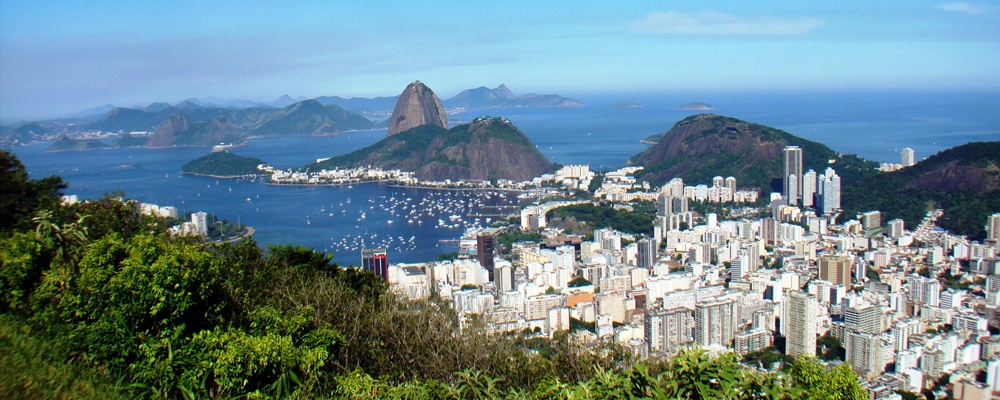














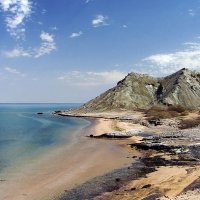














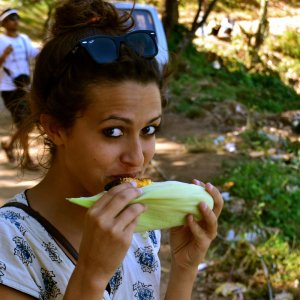












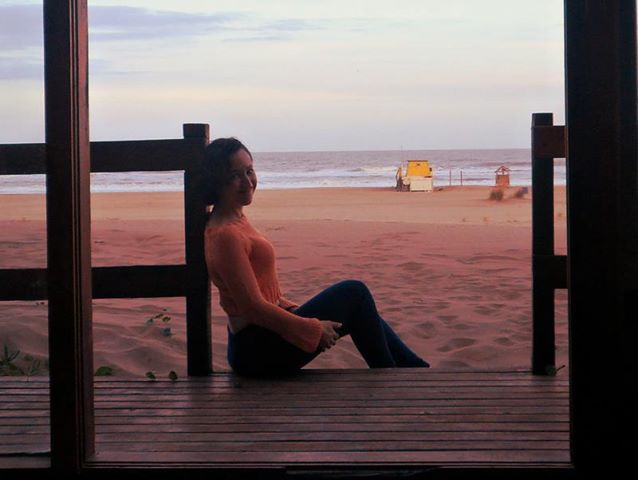


















































































































































Brazil (Portuguese: Brasil), , is the largest country in South America. Famous for its football (us:soccer) tradition and its annual Carnaval in Rio de Janeiro, Salvador, Recife and Olinda. It is a country of great diversity, from the bustling urban mosaic of São Paulo to the infinite cultural energy of Pernambuco and Bahia, the untouched wilderness of the Amazon rainforest and world-class landmarks such as the Iguaçu Falls, there is plenty to see and to do in Brazil.
Understand
History and Economy
Until 1500, Brazil was inhabited solely by indigenous people, mainly of the Tupi and Guarani ethnic groups. Actual settling by the Portuguese began later that century, with the extraction of valuable pau-brasil wood, from which the country draws its name. The following four centuries saw further exploitation of the country's natural riches (gold and rubber) besides the rise of an economy based on agriculture (sugar and coffee) and slave labor, millions of Africans taken to the new world in a forced diaspora. Meanwhile, extermination or Christianizing of natives kept its pace, and the 19th Century saw a second wave of European (mainly Italian and German) immigration, adding to this unique and complex set of factors that generated today's equally complex and unique Brazilian culture and society.
Following three centuries under the rule of Portugal, Brazil became an independent nation in 7 September, 1822. By far the largest and most populous country in South America, it has also overcome more than two decades (1964-1988) of military intervention in the governance of the country to pursue a democratic ruling, while facing the challenge of keeping its industrial and agricultural growth and developing its interior. Exploiting vast natural resources and a large labor pool, today Brazil is South America's leading economic power and a regional leader. Highly unequal income distribution remains a pressing problem. A consequence of this is a high crime rate, specifically in large cities.
After 20 years of democracy, the country has grown strong, and despite the social problems of the unequal income distribution, the people have remained happy and festive.
Culture
Owing to Brazil’s continental dimensions, varied geography, history and people, the country’s culture is rich and diverse. It has several regional variations, and in spite of being mostly unified by a single language, some regions are so different from each other that they could have become different countries altogether.
Music plays an important part in Brazilian identity. Styles like choro, samba and bossa nova are considered genuinely Brazilian. Caipira music is also in the roots of sertanejo (the national equivalent to country music). MPB stands for Brazilian Popular Music, which mixes several national styles under a single concept. Forró, a north-eastern happy dancing music style, has also become common nationwide. New urban styles include funk - name given to a dance music genre from Rio's favelas that mixes heavy electronic beats and often raunchy rapping - and techno-brega, a crowd-pleaser in northern states, that fuses romantic pop, dance music and caribbean rhythms.
A mixture of martial arts, dance, music and game, capoeira was brought to Brazil by African slaves. Distinguished by vivacious complicated movements and accompanying music, it can be seen and practiced in many Brazilian cities.
In the classical music, the Modern Period is particularly notable, due to the works of composers like Heitor Villa-Lobos and Camargo Guarnieri, who created a typical brazilian school, mixing elements of the traditional european classical music to the brazilian rhythms, while other composers like Cláudio Santoro followed the guidelines of the Second School of Vienna. In the Romantic Period, the greatest name was Antonio Carlos Gomes, author of some italian-styled operas with typical brazilian themes, like Il Guarany and Lo Schiavo. In the Classical Period, the most proeminent name is José Maurício Nunes Gacia, a priest who wrote both sacred and secular music and was very influenced by the viennese classical style of the 18th century and early 19th century.
Candomble and Umbanda are religions with African roots that have survived prejudice and persecution and still have a significant following in Brazil. Their places of cult are called terreiros and many are open to visit.
Indigenous traits can be found everywhere in Brazilian culture, from cuisine to vocabulary. There are still many indigenous groups and tribes living in all Brazilian regions, although many have been deeply influenced by "western" culture, and several of the country's surviving indigenous languages are in danger of disappearing completely. The traditional lifestyle and graphic expressions of the Wajãpi indigenous group from the state of Amapá were proclaimed a Masterpiece of the World's Intangible Heritage by UNESCO.
Globo, the largest national television network, also plays an important role in shaping the national identity. Nine out of ten households have a TV set, which is the most important source of information and entertainment for most Brazilians followed by the radio broadcast. TVs broadcast sports, movies, local and national news and telenovelas (Soap Operas)– 6-month-long series that have become one of the country’s main cultural exports.
People
Throughout its history, Brazil has welcomed several different peoples and practices. Brazil constitutes a melting pot of the most diverse ethnic groups thus mitigating ethnic prejudices and preventing racial conflicts (though long-lasting slavery and genocide among indigenous populations have taken their toll). Prejudice is often directed towards different social classes rather than between races. Nevertheless, race (or simply skin colour) is still a dividing factor in Brazilian society and you will notice the skin typically darkens as the social class gets lower: wealth and middle-class are mostly white; many middle-class are mixed; and the majority of poor people are black or indian. Nowadays, however, Afro-Brazilians and Amerindian populations are increasingly aware of their civil rights and of their rich cultural heritage, and social mobility is achievable through education.
In general, Brazilians are a fun-loving people. While Southerners may be somewhat colder and more reserved, from Rio upwards people usually boast a captivating attitude towards life and truly enjoy having a good time. Some may even tell you that beer, football, samba and barbecue is all they could crave for.
Friendship and hospitality are highly praised traits, and family and social connections are strongly valued. To people they have met, or at least know by name, Brazilians are usually very open, friendly and sometimes quite generous. Once introduced, until getting a good reason not to, a typical Brazilian may treat you as warmly as he would treat a best friend. Brazilians are reputedly one of the most hospitable people in the world and foreigners are usually treated with respect and often with true admiration.
Attitudes towards foreigners may also be subject to regional differences:
The state of Santa Catarina welcomes their Spanish-speaking tourists with bilingual signs and welcome committees.
In Salvador, the largest city of the Northeast, anyone talking, acting or looking like a tourist (even other Brazilians!) could be charged higher prices, such as in parking lots, in restaurants, etc.
Whereas the "Western" roots of Brazilian culture are largely European (evidenced by its colonial towns and even sporadic historic buildings between the skyscrapers...), there has been a strong tendency in the last decades to adopt a more "American way of life" which is found in urban culture and architecture, mass media, consumerism and a strongly positive feeling towards technical progress. In spite of that, Brazil is still a nation faced to the Atlantic, not to Hispanic America, and the intellectual elites are likely to look up to Europe (especially France), not the U.S., as source of inspiration. Many aspects in Brazilian society, such as the educational system, are inspired by the French, and may seem strange at first to Anglo-Saxon visitors.
Brazilians are not Hispanic.
The contrasts in this huge country equally fascinates and shocks most visitors, as well as the indifference of many locals towards the social, economic and ecological problems. Whereas an emerging elite of young, well-educated professionals indulge in amenities of modern society, child labor, illiteracy and subhuman housing conditions still exist even in regions blessed by economic growth and huge foreign investments such as Sao Paulo or Rio.
As much as Brazilians acknowledge their self-sustainability in raw materials, agriculture, and energy sources as an enormous benefit for the future, most of them agree that without huge efforts in education there will hardly be a way out of poverty and underdevelopment.
Brazil has a growing Chinese population, made up significantly of immigrants from Macau.
Climate
Brasil is a huge country with different climate zones. In the north, near the equator there is a wet and a dry season; from about Sao Paulo down to the south there is spring/summer/fall/winter.
Holidays and working hours
2009: 21-25 February
2010: 13-17 February
2011: 05-09 March
Brazil observes the following national holidays (only 13 days during all year):
New Year - 1st January
Carnival - February/March (Movable - 7 weeks before Easter, see box for precise dates. Monday and Tuesday are the actual holidays, but celebrations usually begin on Saturday and last until 12PM of Ash Wednesday, when shops and services re-open.)
Good Friday - March/April (movable) two days before Easter Sunday
Tiradentes - 21st April
Labour Day - 1st May
Corpus Christi - May/June (movable) sixty days after Easter Sunday
Independence Day - 7th September
Patroness of Brazil - 12th October
All Souls' Day (Finados) - 2nd November
Republic - 15th November
Christmas - 25th December
Working hours are usually from 8AM or 9AM to 5PM or 6PM. Banks open Monday to Friday, from 10AM to 4PM. Street shops tend to close at noon on Saturday and only re-open on Monday. Shopping malls normally open from 10AM to 10PM, Monday to Saturday, and from 3PM to 9PM on Sundays. Some malls, specially in large cities, also open on Sundays. And is also possible to find 24h stores and small markets that open even in the Sundays.
Electricity
Brazil is one of a few countries that uses both 120 and 240 volts for everyday appliances. Expect the voltage to change back and forth as you travel from one place to the next -- even within the same Brazilian state, sometimes even within the same building. There is no physical difference in the electric outlets (power mains) for the two voltages.
Electric outlets usually accept both flat (North American), and round (European) plugs. Otherwise adaptors from flat blades to round pins are easy to find in any supermarket or hardware shop. Some outlets are too narrow for the German "Schuko" plugs. The best makeshift solution is to buy a cheap T-connection and just force your "Schuco" in, -the T will break, but it will work. Very few outlets have a grounding point, and some might not accept newer North American polarized plugs, where one pin is slightly larger. Again, use the cheap T. Near the border with Argentina, you might occasionally find outlets for the Australia/New Zealand-type plug. If crossing the border, you'll probably need this adapter as well.
Frequency is 60Hz, which may disturb 50 Hz electric clocks. Blackouts are less and less frequent, but you always run a risk at peak of high season in small tourist towns.
See also: Travel topics -- Electrical systems
Climate
Brasil is a huge country with different climate zones. In the north, near the equator there is a wet and a dry season; from about Sao Paulo down to the south there is spring/summer/fall/winter.
Regions
Brazil is the fifth largest country on earth. It is divided into five regions, mainly drawn around state lines, but they also more or less follow natural, economic and cultural borderlines.
See also: List of Brazilian states
Cities
Brazil has many exciting cities, ranging from pretty colonial towns and coastal hideouts to hectic, lively metropolises; these are a few of the more prominent travel destinations:
Brasília - The capital of Brazil, and an architectural spectacle. Noteworthy buildings include a basket-shaped Cathedral, the beautiful Arches Palace (seat of the Ministry of Justice) and others.
Belém - The second largest city in the Amazon region. Religious festivals (Cirio de Nazare), traditional market (Ver-o-Peso).
Curitiba - The capital of the state of Paraná is known for its innovative urban solutions, it still keeps its traditional spirit and features of the european immigrants, mostly from Italy, Germany and slavic countries.
Florianópolis - The major city in Brazil located in an island in the Atlantic Ocean, with lakes, lagoons, amazing nature and more than 40 clean, beautiful and full of nature beaches.
Fortaleza -- A good base for exploring the beaches of the northeastern coast, including Jericoacoara. Famed for forró music and comedians.
Manaus - Located in the heart of the Amazon, is the capital of the Amazonas State and it is also the biggest city of the Amazon. At Manaus the rio Negro and Solimões meet to became the Amazonas River. The best place to go to visit the Amazon Forest. It is a gateway to the Anavilhanas and to Jaú National Park.
Porto Alegre-- a major city between Argentina and São Paulo and gateway to Brazil~s fabulous Green Canyons.
Recife - A major city in the Northeast region, originally settled by Dutch colonizers. Nicknamed "The Brazilian Venice", it is built on several islands linked by many bridges. Rich in history, art and folklore. Do not miss neighboring Olinda and Porto de Galinhas. The city is also a gateway to the amazing archipelago of Fernando de Noronha.
Rio de Janeiro - World famous, beautiful city that welcomes visitors with that big statue of an open-armed Jesus atop Corcovado Hill.
Salvador - The first capital of Brazil is home to a unique blend of indigenous, African and European cultures. Its Carnival fun is famous, and the influence of African culture and religion is remarkable.
São Paulo - Brazil's largest, richest and most cosmopolitan city, where you can find traces of most major cultures of Earth, including Italian, Japanese, German, Russian, Jamaican, Greek and Arab
Other destinations
Parque Nacional Chapada dos Veadeiros – Cerrado (tropical savanna) wildlife and stunning waterfalls.
Iguaçu Falls - The world-famous waterfalls.
Itatiaia National Park - The first Brazilian National Park, located on the Itatiaia Massif between Rio de Janeiro and Sao Paulo.
Pantanal - The world's largest wetland hosts lots of eco-tourism and vast biodiversity, including caiman, jaguar, anaconda, giant anteater, primates, giant otter, and piranha.
Getting there
Visa requirements
Brazil has a reciprocal visa policy with all countries, meaning that whenever prices and restrictions are applied to Brazilian visiting a country, Brazil adopts the same measures for that country's visitors, which means that Americans have to pay at least US$131 for a tourist visa and US$191 for a business visa. As of November 2008, citizens of Canada should expect to pay at least CDN$ 117.00 for a tourist visa not including any handling or processing fees.
Citizens from Argentina, Bolivia, Chile, Colombia, Equador, Paraguay, Peru and Uruguay may enter the country with a valid ID card and stay up to 90 days.
No visa is required for stays of up to 90 days from holders of passports from these countries, unless otherwise indicated: Andorra, Argentina, Austria, Bahamas, Barbados, Belgium, Bolivia, Bulgaria, Chile, Colombia, Costa Rica, Croatia, Czech Rep., Denmark, Ecuador, Finland, France, Germany, Greece, Guatemala, Guyana, Honduras, Hong Kong SAR passport, Hungary, Iceland, Ireland, Israel, Italy, South Korea, Liechtenstein, Luxembourg, Macau, Malaysia, Sovereign Military Order of Malta, Monaco, Morocco, Namibia, Netherlands, New Zealand, Norway, Panama, Paraguay, Peru, Philippines, Poland, Portugal, Romania, San Marino, Slovakia, Slovenia, South Africa, Spain, Suriname, Sweden, Switzerland, Thailand, Trinidad & Tobago, Tunisia, Turkey, United Kingdom (Including British National (Overseas) passport holders), Uruguay , Venezuela (60 days) and Vatican City. Note that the immigration officer has the right to restrict your visa to less than 90 days, if he deems fit. (This has been done routinely for lone male travellers arriving in Fortaleza, allegedly to combat prostitution tourism.) He will then state the number of days (e.g. 60 or 30) in pen writing inside the stamp just given in your passport; if not, it remains as 90 days. Note that even if you receive a tourist visa that is valid for a longer period of time, a tourist visa is invalid unless it has been initially used within ninety days of its issue.
Citizens from the following countries currently need a visa for Brazil: Angola, Armenia, Australia, Canada, Cape Verde, China (not including Hong Kong and Macau, see above), Cyprus, El Salvador, India, Indonesia, Iran, Jamaica, Japan, Lebanon, Mexico, Mozambique, Nicaragua, Russia, Syria, Taiwan, the United States, former Soviet countries and others not listed above (complete list - Portuguese only).
Tourist visas (including those granted on the spot in immigration control, as for most Europeans) can be extended at any office of the Policia Federal. All state capitals, and most border towns and international ports have one. Tourist visas only be extended once, for a maximum of 90 days, and under no circumstances can you be granted more than 180 days with a tourist visa for any 365-day period. You should contact the federal police about 1 week before your visa expires. The handling fee is currently R$ 67 (Oct. 2008). You may be asked for an outbound ticket (book a fully refundable one on the internet, then cancel when your visa is extended), and a proof of subsistance (for which your credit card is mostly accepted.) In order to apply for the extension, you must fill out the on the Federal Police website, which you will carry to the Banco do Brasil in order to pay the fee. Do not pay the fee until you have spoken with a federal police officer about your case. If she/he denies the extension of your visa, you must have a bank account in Brazil in order to receive a refund.
Immediately after your passport is stamped by the Brazilian Federal Police, ensure that the last number on the right-end of the stamp is a 1. A number 1 indicates that you entered the country and a number 2 indicates that you exited. Some federal police officers have mistakenly given foreigners the number 2 stamp upon entering. If you have the number 2 stamp and try to extend the visa in a city that is not your port of entry, you will be told to return to the city where you received the incorrect stamp so that it may be corrected before you can receive the extension. For example, if you enter Brazil in Porto Alegre, receive the exit stamp instead of the entrance stamp, and try to extend your visa in São Paulo, the Federal Police in São Paulo will tell you that they cannot extend your visa and that you will have to return to Porto Alegre to get an entrance stamp before your visa can be extended.
By law you are required to produce your outbound ticket upon entry, but this is only enforced in exeptional cases. Even if you are asked, you could often get away with explaining that you are taking the bus to Argentina, and couldn´t buy the ticket in, say, Europe.
If you overstay your tourist visa, you will be fined R$8.28 per day (as of October 2007), for a maximum of 100 days. This means that even if you stay illegally for 5 years, the fine will never exceed R$828. You will be made to pay this at the border crossing. As this can take time, it could be wise to do it a few days up front at a federal police office, especially if you have a domestic to international flight connection. The federal police will then give you 8 days to get out of the country. If you don´t pay your fine upon exiting, you will have to pay the next time you enter. The fact that you have been fined for overstaying in the past does not normally imply future difficulties with immigration, but you´d better keep all receipts and old passports for reference.
If you want to enter/exit the country for some reason without coming in contact with the immigration authorities, there are numerous tiny border towns that have virtually no control. You will perhaps be told by the local police (who don´t have stamps or computer registers for immigration) to contact the federal police in such and such nearby town.
When you are travelling from certain tropical regions to Brazil you need a yellow fever vaccination and the certificate showing you had this. Note that it is illegal to bring in animals, meat, dairy, seeds, plants, eggs, honey, fruit, or any kind of non-processed food without a permit. Contact (vigiagro@agricultura.gov.br) for more information.
By plane
The cheapest airfares are from February (after Carnaval) to May and from August to November. Tickets from New York, for instance, can cost as little as US$699 including taxes.
All U.S. Citizens with a passport will need to get a tourist visa from the local Brazilian Consulate (according to the reciprocity law). This can be processed by mail with an additional $20 charge; a third party can also apply for the visa for an additional fee of US$20. It can take up to 5 business days to process the visa and will cost a minimum of US$130. The visa must be used within 90 days and will be valid from six months to up to 5 years after it was used, depending on the determination of the consulate.
By far the largest international airport in Brazil is São Paulo-Guarulhos International Airport (IATA : GRU ICAO : SBGR), the hub of TAM airlines , with connections to most of the capital cities in South America and major cities in the USA such as Chicago, Miami and Houston. Besides that, it also has connections to major cities in Europe, with Seoul (by Korean Air), Tokyo (by JAL), and Dubai (by Emirates), the only connections in Asia.
The second largest airport in Brazil is Rio de Janeiro-Galeão International Airport, (IATA : GIG ICAO : SBGL) the home of Gol Transportes Aéreos , which flies to many regional destinations including Montevideo, Buenos Aires and Asuncion. United Airlines also flies to Washington D.C.
TAP Portugal is the biggest foreign airline operating in Brazil, from Lisbon and Porto, and provides extensive connection onwards to Europe and Africa. TAP serves the following cities in Brazil: Fortaleza, Natal, Recife, Salvador, Brasilia, Belo Horizonte, Rio de Janeiro and Sao Paulo.
By car
The main border crossings are at:
with Uruguay: Chuy/Chuí, Bella Unión/Barra do Quaraí, Artigas/Quaraí, Aceguá/Aceguá, Río Blanco/Jaguarão, and between Rivera/Santana do Livramento
with Argentina: Paso de los Libres/Uruguaiana, Santo Tomé/São Borja, Bernardo de Irigoyen/Dionísio Cerqueira, Tobuna/Paraíso (Santa Catarina), Comandante Andresito/Capanema, and between Puerto Iguazu/Foz do Iguaçu
with Paraguay: Ciudad del Este/Foz do Iguaçu, Salto del Guaira/Guaíra, and between Pedro Juan Caballero/Ponta Porã
with Bolivia: Puerto Suarez/Corumbá, Cobija/Brasileia/Epitaciolandia, San Matías/Cáceres and between Riberalta/Guayaramerin/Guajará-Mirim (the bridge over Mamoré river will be ready in 2007)
with Peru: Iñapari/Assis Brasil
with Colombia: Letícia/Tabatinga No road connections on either side of the border.
with Guyana: Lethem/Bonfim
In certain border towns, notably Foz do Iguaçu/Ciudad del Este/Puerto Iguazu, you do not need entry/exit stamps or other formalities for a daytrip into the neighbouring country. These same towns are good venues if you for some reason want to croos without contact with immigration authorities.
By bus
Long-distance bus service connects Brazil to its neighboring countries. The main capitals linked directly by bus are Buenos Aires, Asunción, Montevideo, Santiago de Chile, and Lima. Direct connections from the first three can also be found easily, but from Lima it might be tricky, though easily accomplished by changing at one of the others. Those typically go to São Paulo, though Pelotas has good connections too. It should be kept in mind that distances between Sāo Paulo and any foreign capitals are significant, and journeys on the road may take up to 3 days, depending on the distance and accessibility of the destination. The national land transport authority has listings on all operating international bus lines.
By boat
Amazon river boats connect northern Brazil with Peru, Venezuela and Colombia. The ride is a gruelling 12 days upriver though. From French Guiana, you can cross the river Oyapoque, which takes about 15 minutes.
By train
Train service within Brazil is almost nonexistent. However, there are exceptions to the rule, and the most famous way to enter Brazil by train is on the Trem da Morte, or Death Train, which goes from Santa Cruz, Bolivia, to a small town just over the border from Corumbá in the State of Mato Grosso do Sul. There is still a train line from there all the way to São Paulo which at the moment is not in use, but bus connections to São Paulo via the state capital, Campo Grande, are plentiful. The journey itself is reputedly replete with robbers who might steal your backpack or its contents but security has been increased recently and the journey can be made without much difficulty. It goes through the Bolivian agricultural belt and along the journey one may see a technologically-averse religious community which resembles the American Amish in many ways.
Travelling around
By plane
If you intend to visit various cities within Brazil, you should consider getting a Brazil Air Pass, offered by Brazilian airline Varig. It is available to anyone who lives outside Brazil holding an international air ticket to Brazil. You can travel to 4 different cities from USD479, and each additional city in the pass will cost you USD 120. The Air Pass is valid for 21 days, starting on the day of the first flight, and can be used for flights to up to 9 cities throughout Brazil. Other air passes are also available (Mercosul, South America, All America). TAM also offers air passes.
Air service covers most of Brazil. Note that many flights make many stops en route, particularly in hubs as Sao Paulo or Brasilia. Most all airports with regular passenger traffic are operated by the federal Infraero.. They have a very convenient website, with an English version. It lists all the airlines operating at each airport, and also has updated flight schedules.
The Brazilian airline scene completely changed at least twice over the last 10 years or so. The largest carriers are now TAM and Gol. The traditional Varig is now just another brand of Gol. Others include, WebJet , TAF , Oceanair and Azul. Portuguese TAP has a few domestic code shares with TAM. There are also a number of regional companies, such as NHT(Rio Grande do Sul and Santa Catarina). Price differences, at least if a ticket is purchased on the internet well in advance, are so small that it´s rather meaningless to call any of these "low cost".
Booking online for domestic flights can be frustrating for non-Brazilian citizens. Often, you will be asked for your CPF national identity number while paying by credit card. Of course, as a foreigner, you don't have one. Some airlines such as GOL will accept American Express cards (but not VISA or Master Card) without a CPF. One trick that often will work is to visit one of the airlines' foreign websites (such as Gol´s in Argentina) If all else fails, try calling or e-mailing the airline and ask how to proceed. Most flights can also be found on international ticket offices such as ebookers, edreams etc. to the same price (or lower) than the Brazilian sites, and are ofcourse purchased without CPF.
Be aware that many domestic flights have so many stops that some, inluding yours, may be missing from the listings in the airports. Double check your flight number and confirm with ground staff.
Certain domestic flights in Brazil are considered "international," giving flyers a chance to purchase items at a "duty free" store in the airport. (There may be passengers on board from other South American countries who have not yet cleared customs.) Also, you must go through immigrations and customs again upon arrival, even though you never left Brazil. Ignore what the Brazilians do, if you're not a resident. On domestic flights, do NOT fill out a new immigration form, but show the carbon copy of the one completed upon arriving internationally (with their passport and visa stamp).
By car
Brazil has the largest road network in Latin America with over 1.6 million kilometres. A car is a good idea if you want to explore scenic areas, e.g. the historic cities of Minas Gerais, the Rio-Santos highway, or the beaches in North-East Brazil. There are the usual car rental companies at the airports.
Many roads are in good condition, especially in the east and south of the country and along the coast. In other areas and outside the metropolitan regions there are also gravel and dirt roads for which an off-road vehicle can be strongly recommended. This especially applies to the Amazon area where many roads are difficult or not at all passable during the rainy season from November to March. This is why it is advisable to travel with a good map and to be well informed about distances, road conditions and the estimated travel time. Road maps of the brand Guia 4 Rodas (can be bought from most newstands in Brazil) provide not only maps and distances but also information about current conditions of the roads. On the web, the site of cochera andina publishes useful information on almost 300 routes in the country. In theory, the driving rules of Brazil resemble those of Western Europe or North American. In practice, driving in Brazil can be quite scary if you are used to European (even Mediterranean) or North American road culture, due to widespread violations of driving rules, and the toleration thereof.
Distances kept to other vehicles are kept at a bare minimum, overtaking whenever close to possible, and changing lanes without much of a prior signal. Many large cities also suffer from hold-ups when you wait at a red light in the night. Even if there is no risk of robbery, many drivers (including of city buses) run red lights or stop signs at night when they do not see incoming traffic from the cross street. Drivers also indulge in "creative" methods of saving time, such as using the reverse direction lanes. In rural areas, many domestic animals are left at the roadside, and they sometimes wanders into the traffic. Pedestrians take enormous chances crossing the road, since many drivers do not bother to slow down if they see pedestrians crossing. The quality of the paving is very varied, and the presence of enormous potholes is something that strongly discorages night-driving. Also consider the risk of highway hold-ups after dark, not to mention truck drivers on amfetamine (to keep awake for days in a row).
In Brazil cars are driven on the right hand side of the road.
A flashing left signal means that the car ahead is warning you not to pass, for some reason. If the car ahead of you wants to show you that it is safe to pass it will flash the right signal. The right signal is the same signal to indicate that you're going to stop on the side of the road, so it means you're going to slow down. On the other hand the left signal is the same signal to indicate you're going to pass the car ahead, meaning you're going to speed up.
Flashing, twinkling headlights from the cars coming on the opposite side of the road means caution on the road ahead. Most of the time, it indicates that there are animals, cops or speed radar ahead.
Keep the doors locked when driving, especially in the larger cities, as robberies at stop signs and red lights are quite common in some areas. You'll make it much easier for the robber if he can simply open up the door and sit down. Be equally careful with keeping your windows wide open, as someone might put their hands inside your car and steal a wallet, for instance. Leave your handbags and valuables out of sight.
By bicycle
In smaller cities and towns the bicycle is a common means of transport. This does not mean that cyclists are usually respected by cars, trucks, or bus drivers. But you may find good roads with little traffic outside the cities. It is also easy to get a lift by a pickup or to have the bike transported by a long-distance bus. Cycling path are virtually non-existent in cities, except along certain beachfronts, such as Rio de Janeiro and Recife.
There are a bicyclers groups around the country, e.g Sampa Bikers in Sao Paulo which meets weekly.
By train
Brazil's railway system was mostly wrecked during the military regimes. Today there are few passenger lines left:
The Serra Verde Express from Curitiba to Paranaguá. This scenic 150 km long railroad links the capital of Paraná to the coastal cities of Morretes and Paranaguá, through the beautiful Serra do Mar mountains covered with mata atlântica forest. The trip takes about 3 hours and has bilingual guides. Trains leave daily at 08:15 and prices start from about R$ 50 (round-trip) - see Curitiba for more information.
From São João del Rei to Tiradentes - This 35-minute trip on a steam train is almost like time travel. The train operates Fri-Sun, with departures from São João at 10:00 and 15:00 and 13:00 and 17:00 from Tiradentes. The round trip costs R$ 16.
From Belo Horizonte to Vitória - Daily trains operated by Companhia Vale do Rio Doce leave Belo Horizonte at 07:30 and Vitória at 07:00. Travel time is about twelve and a half hours. Tickets are sold at the train stations and a single 2nd class fare costs about R$ 25. Seats are limited and it is not possible to reserve, so it is advisable to buy in advance.
From São Luis to Parauapebas - interesting because part of it passes through the Amazon rainforest.
From Macapá to Serra do Navio
By bus
Long-distance buses are a convenient, economical, and sometimes (usually if you buy the most expensive ticket), rather comfortable way to travel between regions. The bus terminal (rodoviária) in cities play a role akin to train stations in many countries. You should check travel distance and time while traveling within Brazil, going from Rio de Janeiro to the south region could take more than 24 hours, so it may worth going by plane if you can afford it.
Brazil has a very good long distance bus network. Basically, any city of more than 100.000 people will have direct lines to the nearest few state capitals, and also to other large cities within the same range. Pretty much every and any little settlement has public transport of some kind (a lorry, perhaps) to the nearest real bus station. Mostly you have to go to the bus station to buy a ticket, although some of the large companies now have internet sales. In a few cities you can also buy a ticket on the phone and have it delivered to your hotel for an extra charge of some 3-5 reais. Some companies have also adopted the airlines´ genius policy of pricing: In a few cases buying early can save you more than 50%. The facility of flagging a bus and hopping on (if there are no available seats you will have to stand, still paying full price) is widespread in the country. This is less likely to work along a few routes where armed robberies have happened frequently, such as those leading to the border with Paraguay and to Foz do Iguaçu.
Most major bus companies make reservations and sell tickets by Internet but you must pick-up your ticket your ticket with some time in advance. There is no one bus company that serves the whole country. Therefore you need to identify the company that connect two cities in particular bu calling the bus station of one city. ANTT, the national authority for land transportation, has a search engine (in Portuguese) for all available domestic bus lines.
Bus services are often sold in three classes: Regular, Executive and First-Class (Leito, in Portuguese). Regular may or may not have air conditioning. For long distances or overnight travels, Executive offers more space and a folding board to support your legs. First-Class has even more space and only three seats per row, making enough space to sleep comfortably.
All travels with more than 4 hours are covered by buses with bathrooms and the buses stop for food/bathrooms at least once every 4 hours of travel.
Be aware that some big cities like São Paulo and Rio have more than one bus station, each one covering certain cities around. It is good to check in advance to which bus station you are going.
Brazilian bus stations, known as rodoviária or terminal rodoviário, tend to be located away from city centers. They are often in pretty sketchy areas, so if you travel at night be prepared to take a taxi to/from the station. There will also be local bus lines.
Even if you have a valid ticket bought from elsewhere, some Brazilian bus stations may also require a boarding card. This can be obtained from the bus company, often for a supplement fee. If you buy a ticket in the departure bus station you will also be given this boarding card.
Rodoviárias include many services, including fast-food restaurants, cafés, Internet cafés, toilets and left luggage. As a general rule, the larger the city, the more expensive the services (e.g. leaving a suitcase as left luggage in a smaller city may cost 1 R$, but in Recife in might cost you 5 R$).
When buying tickets, as well as when boarding the bus, you may be asked for proof of ID. Brazilian federal law requires this for interstate transportation. Not all conductors know how to read foreign passports, so be prepared to show them that the name of the passport truly is the same as the name on the ticket.
By boat
In the Amazon region as well as on the coast west of Sao Luis, boat travel is often the only way to get around.
Inside cities
Most cities have extensive bus services. Multiple companies may serve a single city. There is almost never a map of the bus lines, and often bus stops are unmarked. Be prepared for confusion and wasted time.
Bus have a board behind the windshield that advertises the main destinations they serve. You may have to ask the locals for information, but they may not know bus lines except the ones they usually take.
In most cities you have to wave to stop the bus when you want to take it. This in itself would no pose a problem, however, in big cities there may be dozens of bus lines stopping at a given bus stop and bus stops are not designed to accommodate so many vehicles. Frequently one cannot observe the oncoming buses due to other buses blocking the view. Bus drivers are reluctant to slow down for a bus stop if they are not sure someone will take their bus, so it is common to miss your bus because you could not see it coming to wave on time or the driver did not see you waving in between buses already at the stop. Some people go into the middle of a busy street to wait for their bus to make sure they see it and the driver sees them. In some places, like Manaus, drivers even tend to ignore stop requests (both to get on and to get off) if it is not too easy to navigate to the bus stop.
Most city buses have both a driver and a conductor. The conductor sits behind a till next to a turnstile. You have to pay the conductor, the price of the bus is usually advertised on the windshield. The turnstiles are narrow, and very inconvenient if one carries any kind of load (try balancing a heavy backpack over the turnstile while the bus is running). Larger buses often have a front section, before the turnstile, meant in priority for the elderly, handicapped and pregnant women - you can use it but you still have to pay! Typical prices are around R$ 2,00.
You can try asking the conductor to warn you when the bus is close to your destination. Depending on whether he or she understands you and feels like helping you, you may get help.
In addition to large city buses, there are often minibuses or minivans (alternativo). You pay the driver when exiting.
See
Morro de São Paulo
Things to do
Carnival in Brazil
Eat
Cuisine
Brazil's cuisine is as varied as its geography and culture. On the other hand, some may find it an unrefined melange, and everyday fare can be bland and monotonous. While there are some quite unique dishes of regional origin, many dishes were brought by overseas immigrants and have been adapted to local tastes through the generations. In Brazil, Italian and Chinese food can often be as baffling as Amazonian fare.
Brazil's national dish is feijoada, a hearty stew made of black beans, pork (ears, knuckles, chops, sausage) and beef (usually dried). It's served with rice, garnished with collard greens and sliced oranges. It's not served every restaurant; the ones that do typically offer it on Wednesdays and Saturdays. A typical mistake made by tourists is to eat too much feijoada upon first encounter. This is a heavy dish, -even Brazilians usually eat it parsimoniously.
The standard Brazilian set lunch is called Prato Feito, with its siblings Comercial and Executivo. Rice and brown beans in sauce, with a small steak. Sometimes farofa, spaghetti and vegetables will come along. Beef may be substituted for chicken, fish or others.
Excellent seafood can be found in coastal towns, especially in the North East.
Brazilian snacks, lanches(sandwiches) and salgadinhos(most anything else), include a wide variety of pastries. Look for coxinha (deep-fried, batter-coated, chicken), empada (a tiny pie, somewhat similar to empanadas: try out the palmito - heart of palm variety), and pastel (fried turnovers). Another common snack is a misto quente, a pressed,toasted ham-and-cheese sandwich. Pão-de-queijo, a roll made of manioc flour and cheese, is very popular - pão-de-queijo and a cup of fresh Brazilian coffee is a classic combination.
Regional cuisines
Southern - Churrasco is Brazilian barbecue, and is usually served "Rodizio" ou "espeto corrido" (all-you-can-eat). Waiters carry huge cuts of meat on steel spits from table to table, and carve off slices onto your plate (use the tongs to grab the meat slice and don't touch the knife edge with your silverware to avoid dulling the edge). Traditionally, you are given a small wooden block colored green on one side and red on the other. When you're ready to eat, put the green side up. When you're too stuffed to even tell the waiter you've had enough, put the red side up... Rodizio places have a buffet for non meaty items; beware that in some places, the desserts are not considered part of the main buffet and are charged as a supplement. Most churrasco restaurants (churrascarias) also serve other types of food, so it is safe to go there with a friend that is not really fond of meat. Whereas the churrascarias are usually fairly expensive places (for Brazilian standards) in the North and Central areas of the country, they tend to be much cheaper in the South, where they are frequented even by the less affluent.
Mineiro is the "miner's" cuisine of Minas Gerais, based on pork and beans, with some vegetables. Dishes from Goiás are similar, but use some different ingredients such as pequi and guariroba. Minas Gerais cuisine if not seen as particularly tasty, has a "homely" feel that is much cherished.
The food of Bahia, on the northeast coast has its roots across the Atlantic in West Africa. Coconut, dende palm oil, and seafood are the prime ingredients. Tip: hot ("quente") means lots of pepper, cold ("frio") means less or no pepper at all. If you don't dare to eat it hot you should try acarajé (prawn-filled roasties) and vatapá (drinkable black beans soup).
Espírito Santo and Bahia have two different versions of moqueca, a delightful tomato-based seafood stew prepared in a special type of clay pot.
Amazon cuisine draws from the food of the indigenous inhabitants, including various exotic fish and vegetables. There is also a stupendous variety of tropical fruits.
Ceará's food in the coastline has a great sort of seafood, is known to have the country's best crab. It's so popular that literally every weekend thousands of people go to Praia do Futuro in Fortaleza to eat fried fish and crabs (usually followed by cold beer).
Brazilian cuisine also has a lot of imports:
Pizza is quite popular in Brazil. In Sāo Paulo, travellers will find the highest rate of pizza parlours per inhabitant in the country. The variety of flavours is extremely vast, with some restaurants offering more than 50 types of pizza. It is worth noting the difference between the European "mozzarella" and the Brazilian "mussarela". They differ in flavor, appearance and origin but buffalo mozzarella ("mussarela de búfala") is also often available. The Brazilian "mussarela", which tops most pizzas, is yellow in color and has a stronger taste. In some restaurants, particularly in the South, pizza has no tomato sauce. Other dishes of Italian origin, such as macarrão (macaroni), lasanha and others are also very popular.
Middle-eastern and Arab (actually Lebanese) food is widely available. Most options offer high quality and a big variety. Some types of middle-eastern food, such as quibe and esfiha have been adapted and are available at snack stands and fast food joints nation-wide.
São Paulo's Japanese restaurants serve up lots of tempura, sushi and sashimi. The variety is good and mostly the prices are very attractive when compared to Europe, USA and Japan. Most Japanese restaurants also offer the rodizio or buffet deal, with the same quality as if you ordered from the menu. Sometimes, however, it can be quite a departure from the real thing. The same can be said of Chinese food, again with some variations from the traditional. Cheese-filled spring rolls, anyone?
Restaurants
Most restaurants will add a 10% service charge on the bill, and this is all the tip a Brazilian will ever pay. It is also what most waiters survive on, however it is not mandatory and you may ignore it. In some tourist areas you might be tried for extra tip. Just remember that you will look like a complete sucker if you exagerate.
There are two types of self-service restaurants (sometimes both options are available in one place): all-you-can-eat buffets with barbecue served at the tables (called "rodízio"), or a price per weight ("por quilo"), very common during lunchtime throughout Brazil. Load up at the buffet and get your plate on the scales before eating any. In the South there's also the Italian "galeto", where you're served different types of pasta, salads, soups and meat (mostly chicken) at your table.
Customers are allowed by law to visit the kitchen and see how the food is being handled.
Some Brazilian restaurants serve only meals for two. The size of the portions might not say in the menu, -ask the waiter. Most restaurants of this category allow for a "half-serving" of such plates (meia-porção), at 60-70% of the price.
Fast food is also very popular, and the local takes on hamburgers and hot-dogs ("cachorro-quente", translated literally) are well worth trying. Brazilian sandwiches come in many varieties, with ingredients like mayonnaise, bacon, ham, cheese, lettuce, tomato, corn, peas, raisins, french fries, ketchup, eggs, pickles, etc. Brave eaters may want to try the traditional complete hot dog (just ask for a completo), which, aside from the bun and the sausage, will include everything on display.
Large chains: The fast-food chain Bob's is found nationwide and has been around in the country for almost as long as McDonald's. There is also a national Arab fast-food chain called Habib's. Recent additions, though not as widespread, are Burger King and Subway. Pizza Hut is rare.
Drink
Liquor
Brazil's national booze is cachaça (cah-shah-sah, also known as aguardente ("burning water") and pinga), a 40% sugar-cane liquor known to knock the unwary out quite quickly. It can be tried in virtually every bar in the country. Famous producing regions include Minas Gerais, where there are tours of distilleries, and the city of Paraty. Pirassununga is home to Caninha 51, Brazil's best-selling brand. Outside Fortaleza there is a cachaça museum (Museu da Cachaça) where you can learn about the history of the Ypioca brand.
Drinking cachaça straight, or stirring in only a dollop of honey or a bit of lime juice, is a common habit on the Northeast region of the country. Çafé Pingado' is coffee with some cachaça in it.
The strength of cachaça can be hidden in cocktails like the famous caipirinha, where it is mixed with sugar, lime juice and ice. Using vodka instead of cachaça is nicknamed caipiroska or caipivodka; with white rum, it's a caipiríssima.
Another interesting concoction is called capeta ("devil"), made with cachaça, condensed milk, cinnamon, guarana powder (a mild stimulant), and other ingredients, varying by region.
If you enjoy fine brandy or grappa, try an aged cachaça. Deep and complex, this golden-coloured spirit is nothing like the ubiquitous clear liquor more commonly seen.
While imported alcohol is very expensive, many international brands are produced under license in Brazil, making them widely available, and fairly cheap. You can buy booze in the tax-free after landing at brazilian airports, but it is more expensive than buying it outside the airports.
Beer
Beer in Brazil has a respectable history because of the German immigrants. Most Brazilian beer brands tend to be less thick and bitter than actual German, Danish or English beer. More than 90% of all beer consumed in Brazil is Pilsner, and it is usually drunk very cold (at a temperature below 0ºC). The most popular domestic brands are Brahma, Antarctica, Bavaria, and Skol. Traditional brands include Bohemia, Caracu and Itaipava. Other international brands available are Carlsberg, Stella Artois, Guinness, Miller, Budweiser and others. There are two ways of drinking beer in bars: draft or bottled beer. Draft lager beer is called chope or chopp ('SHOH-pee'), and is commonly served with one inch of foam, but you can make a complaint to the bartender if the foam is consistently thicker than that. In bars, the waiter will usually collect the empty glasses and bottles on a table and replace them with full ones, until you ask him to stop, in a "tap" charging system. In the case of bottled beer, bottles (600ml) are shared among everyone in the table and poured in small glasses, rather than drunk straight from the bottle. Brazilians like their beer nearly ice-cold - hence, to keep the temperature down, bottles of beer are often kept in an insulated polystyrene container on the table.
Wine
The Sao Francisco Valley, along the border of the states of Pernambuco and Bahia, is the country's newest wine-producing region. Brazilian wines are usually fresher, fruitier and less alcoholic than, for instance, French wines. Popular brands like Sangue de Boi, Canção and Santa Felicidade and others with prices below R$ 6.00 are usually seen as rubbish.
Coffee and tea
Brazil is known world-wide for its high-quality strong coffee. Café is so popular that it can name meals (just like rice does in China, Japan and Korea): breakfast in Brazil is called café da manhã (morning coffee), while café com pão (coffee with bread) or café da tarde (afternoon coffee) means a light afternoon meal. Cafezinho (small coffee) is a small cup of strong, sweetened coffee usually served after meals in restaurants (sometimes for free, just ask politely). Bottled filtered coffee is being replaced by stronger espresso cups in more upscale restaurants.
Chá, or tea in Portuguese, is most commonly found in its Assam version (orange, light coloured). Some more specialised tea shops and cafés will have Earl Gray and green tea available as well.
Mate is an infusion similar to tea that is very high in caffeine content. A toasted version, often served chilled, is consumed all around the country, while Chimarrão (incidentally called mate in neighbouring Spanish-speaking countries) is the hot, bitter equivalent that can be found in the south and is highly appreciated by the gaúchos (Rio Grande do Sul dwellers). Tererê is a cold version of Chimarrão, common in Mato Grosso do Sul and Mato Grosso state.
Soft drinks
Nothing beats coconut water (água de côco) on a hot day.(Stress the first o, otherwise it will come out as "poo"! (cocô) ). It is mostly sold as côco gelado in the coconut itself, drunk with a straw. Ask the machete-wielding vendors to cut the coconut in half so that you can eat the flesh after drinking the water.
If you want a Coke in Brazil, ask for coca or coca-cola, as "cola" means "glue", in Portuguese.
Guaraná; is a carbonated soft drink made from the guaraná berry, native to the Amazon area. The major brands are Antarctica and Kuat, the latter owned by Coke. Pureza is a lesser known guaraná soft drink specially popular in Santa Catarina.
Fruit juices
Fruit juices are very popular in Brazil. Some cities, notably Rio de Janeiro has fruit juice bars at nearly every corner. *Açai (a fruit from the Amazon) is delicious and nutritious(rich in antioxidants). Traditionally used blended in combination with guarana (a stimulant)powder,and a raw quail egg and sometimes a banana to re-energize from late-night partying It is served cold and has a consistency of soft ice.
Maracuja (passion fruit)(careful during an active day- this has a relaxant effect)
Caju (cashew fruit) and
Manga (mango) are also great juice experiences. Brazilians have great taste when it comes to mixing juices.
Sleep
High season in Brazil follows the school holidays calendar, December and January (summer) being the busiest months. New Year, Carnival (moveable between February and March, see Understand above) and Holy week are the peak periods, and prices can skyrocket, especially in coastal cities like Rio and Salvador. Also, during those holidays, many hotels restrict bookings to a 3 or 4-day minimum and charge in advance.
Hotels are plentiful in just about all areas of Brazil and can range from luxury beach resorts to very modest and inexpensive choices. The Brazilian tourism regulation board imposes specific minimum attributes for each type of facility, but as the 1-5 star rating is no longer enforced, check in advance if your hotel provides the kind of services you expect.
Pousada means guesthouse (the local equivalent of a French auberge or a British boarding house), and are usually simpler than hotels, and will offer less services (room service, laundry etc.). Pousadas are even more widespread than hotels.
In wilderness areas like the Pantanal, travelers usually stay in fazendas, which are ranches with guest facilities. In small towns of Minas Gerais people are fond of hotéis-fazenda (farm hotels) where you can swim, ride, walk, play football, and camp as well as sleep in picturesque barracks.
Also there is great fun in going on a boat hotel which will take you to inaccessible places on the rivers and lakes for great fishing trips or for simply relaxing and watching and photographing the wildlife which is very abundant in the Pantanal. The boats are large, safe, and comfortable with air-conditioned rooms (very necessary). Several small aluminum boats with outboard motor, carried by the boat hotel, driven by experienced fisher/guide will take 2 or 3 tourists to the best "points".
Motel is the local term for a "sex hotel". There's no social stigma per se in staying in one, but the room service and rates are geared to adults staying for a few hours with utmost discretion and privacy.
Youth hostels (albergues da juventude) are becoming increasingly common.
Buy
Brazil's unit of currency is the Real (pronounced 'hay-AHL'), plural Reais ('hay-EYES'), abbreviated BRL, or just R$. One real is divided into 100 centavos. As an example of how prices are written, R$1,50 means one real and fifty centavos.
Foreign currency such as US Dollars or Euros can be exchanged major airports and luxury hotels (bad rates), exchange bureaux and major branches of Banco do Brasil (no other banks). The latter allegedly has the best rates, but you need your passport and your immigration form.
Look for an ATM with your credit/debit card logo on it. Large branches of Banco do Brasil usually has one, and most all Bradesco, Citibank, BankBoston and HSBC machines will work. Banco 24 Horas (not a bank) operates a network of ATMs which accept foreign cards, however, additional fees are levied for the use of these machines. Withdrawal limits are mostly R$ 600 (Bradesco) or R$ 1000 (BB, HSBC), per transaction, and in any case R$ 1000 per day. The latter can be circumvented by several consecutive withdrawals, choosing different "accounts", i.e. "credit card", "checking", "savings". Note that most ATMs will only give you R$ 100 after 10 PM.
In smaller towns, it is possible that there is not a single ATM that accepts foreign cards. You should therefore always carry sufficient cash.
Wiring money to Brazil seems to be difficult without a brazilian bank account (you may receive Western Union transfers and pick it up at a Banco do Brasil branch in most cities. Check the Western Union web page for details).
Travellers' cheques can be hard to cash outside major airports.
A majority of Brazilian shops now accept major credit cards. Beware, however, that frequently you can find places that sport the VISA or MasterCard logos, but they accept only Brazilian-issued credit cards. This is especially true for smaller companies or places where there are fewer foreign tourists. As noteworthy example is the GOL airline where payments with foreign cards are not accepted (except American Express).
Coins are R$0.05 (copper and silver), R$0.10 (bronze and silver), R$0.25 (bronze and silver), R$0.50 (silver) and R$1 (silver with a golden border). Bills come in the following denominations: R$1 (green, being phased out), R$2 (blue), R$5 (purple), R$10 (red and plastic red/blue), R$20 (yellow) R$ 50 (orange) and $100 (blue).
Exchange rates
The Real is a free-floating currency and has become stronger in the past few years. Especially for Americans, prices (based on exchange rates) have increased quite a bit. However, since the recent worldwide economic downturn of late 2008, the Real isn't quite as strong as it was. As of March 2009, R$1 is worth about:
US$0.42
CAD$0.539
€0.331
£0.297
¥41.22
There are many federal regulations for dealings with foreign currency and many exchange offices operate in a shady area. In addition, exchange offices are almost impossible to find outside of big cities. Currency other than USD and EUR is hard to exchange and the rates are ridiculous. If you would like to exchange cash at a bank, be prepared to pay a hefty comission. E.g., Banco do Brasil collects US$15 for each transaction (regardless of amount).
The Real is almost impossible to get rid of once you leave the continent.
Shopping
It's not a bad idea to pack light and acquire a Brazilian wardrobe within a couple of days of arrival. It will make you less obvious as a tourist, and give you months of satisfied gloating back home about the great bargains you got whenever you are complimented on your clothing. Brazilians have their own sense of style and that make tourists - especially those in Hawaiian shirts or sandals + socks - stand out in the crowd. Have some fun shopping, and blend in. Another good reason for buying clothes and shoes in Brazil is that the quality is usually good and the prices often cheap. However, this does not apply to any foreign brand as imports are burdened by high import taxes - therefore, do not expect to find any good prices on brands like Diesel, Levi's, Tommy Hilfiger, etc. To figure your Brazilian trousers size, measure your waist in centimeters, divide by 2, and round up to the next even number.
Store windows will often display a price followed by "X 5" or "X 10", etc. This is an installment-sale price. The price displayed is the per-installment price, so that, "R$50 X 10", for example, means 10 payments (typically monthly) of R$50 each. The actual price is almost always lower if you pay in cash.
Make sure any appliances you buy are either dual voltage or the same as in your home country. Brazil is 60Hz, so don't buy electric clocks or non-battery operated motorized items if you live in Europe or Australia. The voltage, however, varies by state (see Electricity below).
Brazilian-made appliances and electronics are usually expensive or of poor quality. All Electronics are extremely expensive compared to European or US prices.
Brazil uses a hybrid video system called "PAL-M." It is NOT at all compatible with the PAL system of Europe and Australia. Television began in black and white using the NTSC system of the USA and Canada, then years later, using PAL for its analogue colour -- making a totally unique system. Nowadays, most new TV sets are NTSC compatible. However, the newly-introduced digital TV standard is not compatible with that of most other countries. Digital video appliances such as DVD players are also compatible with NTSC (all digital colour is the same worldwide), but make sure the DVD region code(s), if any, match your home country (Brazil is part of Region 4). Prices for imported electronic goods can be quite expensive due to high import tax, and the range of domestic electronic gadgets is not very wide. Also, be aware that the term "DVD" in Brazil is both an abbreviation for the disc itself and for its player, so be specific to avoid confusion.
Talk
The official language of Brazil is Portuguese, spoken by the entire population (except for a few, very remotely located tribes). Indeed, Brazil has had immigrants from all parts of the world for centuries, whose descendants now speak Portuguese as their mothertongue.
Brazilian Portuguese has a number of pronunciation differences with that spoken in Portugal (and within, between the regions there are some accent and slang differences), but speakers of either can understand each other. However, European Portuguese (Luso) is more difficult for Brazilians to understand than the reverse, as many Brazilian television programs are shown in Portugal. Note that a few words can have a totally different meaning in Brazil and Portugal, usually slang words. An example of this is "Rapariga" which in Portugal means young girl, and in Brazil means prostitute.
English is not widely spoken except in some touristy areas. Don't expect bus or taxi drivers to understand English, so it may be a good idea to write down the address you are heading to before getting the cab. In most big and luxurious hotels, it is very likely that the taxi fleet will speak some English.
Spanish speakers are usually able to get by in Brazil, especially towards the south. While written Portuguese can be quite similar to Spanish, spoken Portuguese may be much harder to understand. Compare the number 20 which is veinte (BAYN-teh) in Spanish to vinte (VEEN-chee) in Brazilian Portuguese. Even more different is gente (people), pronounced "HEN-teh" in Spanish and "ZHEN-chee" in Brazilian Portuguese. Letters CH, D, G, J, R, RR, and T are particularly difficult for those who know some Spanish, and that's without even considering the vowels. Spanish speakers (European or Latin American) usually find European Portuguese slighty easier to pronounce than the Brazilian one.
Body language
Brazilians use a lot of body gestures in informal communication, and the meaning of certain words or expressions may be influenced by them.
The thumbs up gesture is used everywhere and all the time in Brazil.
The OK gesture (thumb and finger in a circle), on the other hand, may have obscene connotations in Brazil. Avoid it if you can, people may laugh at you, or be offended (usually if they are drunk). Use thumbs up instead.
A circular movement of the forefinger about the ear means you are crazy!, the same as in English.
Stroking your two biggest fingers with your thumb (possibly ironically stating that something takes a long time) is a way of saying that something is expensive (same as French).
Clicking your middle finger with your thumb multiple times means a long time.
Joining your thumb and middle finger and snapping your index finger upon them means fast (not in whole country).
Stroking your lips with your index finger and snapping it means delicious, grabbing your earlobe with your index and thumb means the same (not in all country).
Making a fist with your thumb between the index and middle finger is the sign of good luck (not in whole country).
Touching the palm with the thumb and making a circular movement with the hand means I am being robbed! (sometimes meaning that some price is too high) (not in whole country).
The Hush gesture is considered extremely impolite, just about the same as shouting "shut up!" to someone.
An informal way to get someone's attention (similar to a whistle in other cultures) is a hissing sound: "pssiu!" It is not perceived as unpolite, but gets really, really, REALLY annoying if repeated too often. They also call cats with a similar sound, rather than the kiss noise others (the French again) produce.
Etiquette
Brazilians tend to be very open and talk freely about their problems, especially about political corruption and other problems. But don't imitate them, as they are likely to feel offended if you criticize their country or customs. In some small towns, local politics can be a sensitive issue and you should be careful when talking about it. Be polite, as always.
Be aware that racism is a very serious offense in Brazil. According to the Brazilian constitution of 1988, racism is a crime for which bail is not available, and must be met with imprisonment. This is taken very seriously.
Remember that Portuguese is not Spanish and Brazilians (as well as other Portuguese speakers) will appreciate if you know that. Both languages can be mutually intelligible to a wide extent, but they differ considerably in phonetics, vocabulary and grammar . Outside the major cities, it is not a good idea to mix Portuguese with Spanish, don't expect people to understand what you're saying if you (intentionally or unintentionally) insert Spanish words into Portuguese sentences.
Social Etiquette
Cheek-kissing is very common in Brazil, among women and between women and men. When two women, or opposite sexes first meet, it is not uncommon to kiss. Two men will shake hands. Kissing is suitable for informal ocasions, used to introduce yourself or being acquainted, specially to young people. Hand shaking it is more appropriate for formal ocasions or between women and men when is not intended any form of intimacy. Trying to shake hands when offered a kiss will be considered odd, but never rude. However, to refuse clearly a kiss is a disdain instance. When people first meet, they will kiss one (eg: São Paulo), two (eg: Rio de Janeiro) or three times (eg: Florianópolis), depending where you are, alternating right and left cheeks. Observe that while doing this you should not kiss on the cheeks (like in Russia) but actually beside it in the air, placing your lips on a strangers cheek will be perceived as odd.
Almost everyone can dance and Brazilians are usually at ease with their own bodies. While talking, they may stand closer to each other than the regular American or Northern European, and also tend to touch each other more, e.g. on the shoulder or arm.
Brazilian like to drink, especially (very) cold beer (in pubs and in hot weather) and wine (in restaurants or in the winter). However to get drunk, even in a pub, is considered very unsuitable unless you are with very good friends and everybody is as drunk as you. People go to pubs to talk and tell jokes, not essentially to drink.
Stay healthy
Food from street and beach vendors has a bad hygienic reputation in Brazil. The later in the day, the worse it gets. Bottled and canned drinks are safe, although some people will insist on using a straw to avoid contact with the exterior of the container.
Bear in mind the heat and humidity when storing foodstuff.
Tap water varies from place to place, (from contaminated, saline or soaked with chlorine to plain drinkable) and Brazilians themselves usually prefer to have it filtered.
In airports, bus stations, as well as many of the cheaper hotels, it is common to find drinking fountains (bebedouro). In hostel kitchens, look for the tap with the cylindrical filter attached. In more expensive hotels, there is often no publicly accessible fountain, and bedrooms contain minibars — selling you mineral water at inflated prices.
Vaccination against yellow fever and taking anti-malaria medication may be necessary if you are traveling to central-western (Mato Grosso) or northern (Amazon) regions. If you're arriving from Peru, Colombia or Bolivia, proof of yellow fever vaccination is required before you enter Brazil. Some countries, such as Australia and South Africa, will require evidence of yellow fever vaccination before allowing you enter the country if you have been in any part of Brazil within the previous week. Check the requirements of any country you will travel to from Brazil.
Public hospitals tend to be crowded and not too good. Most cities of at least 60,000 inhabitants have good private healthcare.
Dentists abound and are cheaper than North America and Western Europe. However, the quality of their work is not always consistent, so ask a local for advice.
The emergency number is 190, but you must speak Portuguese.
Beware that air conditioning in airports, intercity buses etc. is often quite strong. Carry a long-sleeved garment for air-conditioned places.
Safety
One of the unfortunate sides of travel in Brazil is the endemic violent street crime. Brazil's large cities, especially of the north, northeast and southeast states, are notorious for attacks (against foreigners and locals alike). However, taking extra precautions and using common sense to keep yourself safe while travelling in Brazil will allow you to enjoy your stay without any incidents, like millions of visitors do every year.
By law, everyone must carry a photo ID at all times. For a foreigner, this means your passport. However, the police will mostly be pragmatic and accept a plastified color photocopy.
Also see: Travel topics; Stay safe.
Learn
Oi: Hi
Bom dia: good morning
Boa tarde: good afternoon
Boa noite: good evening/night
E ai?: What's up?
Tchau: bye (like the italian ciao)
Como Vai?: How are you? (formal)
Tudo bom?: How are you?
Tudo bem?: How are you?
Obrigado(m) or obrigada (f): thank you
Quanto custa?: How much does it cost?
Desculpe: Sorry
A conta, por favor: The bill, please.
Não falo português: I don't speak Portuguese
Legal (LE-GOW): Cool (could be illegal, indeed
Portuguese courses for foreigners are not widespread outside the big cities. A good alternative is to befriend language students and exchange lessons.
If you come to Brazil with some initial notions of Portuguese, you will see that people will treat you much better and you will get by much easier.
Language schools have Portuguese courses from 2 weeks up:
Salvador
São Paulo
Rio de Janeiro
Belo Horizonte
Porto Alegre
Work
If you are moving to Brazil to find work, or are thinking it will be easy to find a job, you may want to think again.
If you are a native English speaker, you may be able to find an English-teaching part-time job; but don't expect that to save your holidays. The pay will be under-the-table without contract. There is also a growing demand for Spanish language classes, especially in the major cities. In both cases, it's always much more lucrative to find work privately rather than through schools. This can be done by advertising in newspapers or weeklies or by putting up signs on the notice boards at universities.
Refer to the Ministery of Labour webiste for more detailed information.
Gringoes.com is the main online community of expat's living and working in Brazil.
Contact
By phone
Brazil has international telephone code 55 and two-digit area codes, and phone numbers are eight digits long. Some areas used seven digits until 2006, meaning you might still find some old phone numbers which won't work unless you add another digit. (Mostly, try adding 2 or 3).
Eight-digit numbers beginning with digits 2 to 5 are land lines, while eight-digit numbers beginning with digits 6 to 9 are mobile phones.
All cities use the following emergency numbers:
190 - Police
192 - Ambulance
193 - Firefighters
To dial to another area code or to another country, you must chose a carrier using a two-digit carrier code. Which carriers are available depends on the area you are dialing from and on the area you are dialing to. Carriers 21 (Embratel) and 23 (Intelig) are available in all areas.
The international phone number format for calls from other countries to Brazil is +55-(area code)-(phone number)
In Brazil:
To dial to another area code: 0-(carrier code)-(area code)-(phone number)
To dial to another country: 00-(carrier code)-(country code)-(area code)-(phone number)
Local collect call: 90-90-(phone number)
Collect call to another area code: 90-(carrier code)-(area code)-(phone number)
International Collect Call: 000111 or through Embratel at 0800-703-2111
Public payphones use disposable prepaid cards, which come with 20, 40, 60 or 75 credits. The discount for buying cards with larger denominations is marginal. Phone booths are nearly everywhere, and all cards can be used in all booths, regardless of the owner phone company. Cards can be bought from many small shops, and almost all news agents sell them. The Farmácia Pague Menos sells them at official (phone company) price, somewhat cheaper. Calls to cell phones (even local) will use up your credits very quickly (nearly as expensive as international calls). Calling the USA costs about one real per minute.
Mobile phones
Brazil has 4 main mobile operators: VIVO operates CDMA (being phased out?) and GSM, -OI, TIM and CLARO are GSM only. Coverage is still growing, but GSM roaming should be available in most any populated corner of the country.
Pay-as-you-go (pré-pago) SIM cards for GSM phones are available from a range of news stand and small shops. Vivo uses 850/1900MHz, while other companies uses 900/1800 MHz frequencies. 3G/HSDPA is found on big cities, mainly on the southeast states and capitals. Some states use 850MHz but others use 2100MHz for 3G/HSDPA. If you need to unlock a phone from a specific operator, this can be done for R$ 5-10 in any phone shop.
So far, only mobiles by TIM are able to send text messages to cell phones abroad.
By net
Internet cafes (Lan houses) are increasingly common, and even small towns often have at least one spot with more or less decent connections.
An increasing number of hotels, airports and shopping malls also offer hotspots for Wi-Fi with your laptop computer.
For general tips on internet while travelling, see our travel topic: Internet access
By mail
The Brazilian Correio is fairly reliable and post offices are literally everywhere. Be sure to use PRIORITÁRIO (priority mail) or foreign letters and postcards will take a VERY long time to arrive. Rates are similar to first-class overseas airmail elsewhere. If mailing postcards, beware of the HUGE postage stamps which could cover your writing. Make it clear you want small stamps (selos pequenos) for postcards, not souvenirs for a stamp collection.
Contact & location
Be the first one to add a review
The photos displayed on this page are the property of one of the following authors:
Rodrigo Soldon, LASZLO ILYES, travlinman43, SantaRosa OLD SKOOL, Ville Miettinen, Team at Carnaval.com Studios, Eduardo Marquetti, Felipe de Moura Vieira, Daniel Gomes, Jairo
Some photos courtesy of: . The photos provided by Flickr are under the copyright of their owners.
This travel guide also includes text from Wikitravel articles, all available at View full credits
InasAntonio Avelar, Marius Mollersen, Marc Heiden, Peter Fitzgerald, Stefan Ertmann, jan, Joe DeRose, cz, paul Perkins, Ricardo, Guilherme Gama, donald ponder, Otto Kakko, Philipp Sch., Antonio Olmedo, Andre Giovanardi, David, Fábio Soldá Barbosa Araujo, Andrew Haggard, Mairabc, Guo Yifan, Marcel, Stephen Atkins, Tom Holland, Boris, Todd VerBeek, Ryan Holliday, Regis Giampersa, Kasper Souren, Paul N. Richter, Evan Prodromou, Ian Kirk, Gabriel Gaspar, Iuriatan Felipe Muniz, Emily, Joyce Copstein Wainberg, Stavro Prodromou, Colin Jensen, Paulino Michelazzo and Yann Forget, ChubbyWimbus, Texugo, MMKK, Tatatabot, Janki, AHeneen, Dark Paladin X, Bmhcmc, Morph, Submarine, Jake73, Pryde 01, Gringo-Rio, Sevenlee, Episteme, Curupira, Groklem, PierreAbbat, InterLangBot, Hypatia, Nzpcmad, Bluetrumpet, Norgaard, Ricardo padilha, Nils, Dhum Dhum and CIAWorldFactbook2002
This travel guide also includes text from Wikipedia articles, all available at View full credits