Berlin is the capital city of Germany and one of the 16 states (Länder) of the Federal Republic of Germany. Berlin is the largest city in Germany and has a population of 4.5 million within its metropolitan area and 3.4 million from 190 countries within the city limits. Berlin is best known for its historical associations as the German capital, for its internationality and tolerance, for its lively nightlife, for its many cafes, clubs, and bars, for its street art, and for its numerous museums, palaces, and other sites of historic interest. Berlin's architecture is quite varied. Although badly damaged in the final years of World War II and broken apart during the Cold War, Berlin has reconstructed itself greatly, especially with the reunification push after the fall of the Berlin Wall in 1989. It is now possible to see representatives of many different historic periods in a short time within the city center, from a few surviving medieval buildings near Alexanderplatz, to the ultramodern glass and steel structures in Potsdamer Platz. Because of its tumultuous history, Berlin remains a city with many distinctive neighborhoods.
Understand
History
The foundation of Berlin was very multicultural. The surrounding area was populated by Germanic Swabian and Burgundian tribes, as well as Slavic Wends in pre-Christian times, and the Wends have stuck around. Their modern descendants are the Sorbian Slavic-language minority who live in villages southeast of Berlin near the Spree River.
In the beginning of the 13th century, two towns (Berlin and Cölln) developed on each side of the river Spree (today the Nikolaiviertel and the quarter next to it beyond the river). As the population grew, the towns merged and Berlin became a center for commerce and agriculture. This area stayed small (about 10,000 inhabitants) up to the late 17th century, because of the 30 years' war in the beginning of the 17th century, which led to death of about half of the population.
Since the the late 17th century, when large numbers of French Huguenots fled religious persecution, Berlin has welcomed religious, economic and other asylum seekers. 1701 Berlin became the capital of Prussia and in 1710 Berlin and surrounding former autonomous cities were merged to a bigger Berlin.
In 1871 Berlin became the capital of the new founded German Reich and a few years later, it became a city with more than one million inhabitants because of the immensely growing industry.
Shortly after the first World War, in 1920, the last of the annexations of surrounding cities of Berlin led to the foundation of the Berlin as we know it now. After the coming into power of the National Socialists, Berlin became the capital of the so called Third Reich and the domicile and office of Hitler (though the triumph of Hitler and his companions started in the south of Germany).
WW II led to destruction of most of central Berlin, thus many of the buildings which we see nowadays are reconstructed or planned and built after the war, which led to a very fragmented cityscape in most parts of the inner town. Berlin was divided into four sectors (West Berlin into the French, American and British sector, East Berlin belonged to the USSR). In 1949 the GDR was founded with East Berlin as its capital - West Berlin belonged to West Germany (with Bonn as the capital) and was an exclave (political island) in East Germany. Because of the growing tensions between West Germany and the GDR, the latter built a wall between the countries and around West Berlin, so the division was complete.
In 1989 the German revolution took place -subsequently leading to the fall of the Berlin Wall- and in 1990 West and East Germany were merged officially together with Berlin becoming the capital of reunified Germany.
After WW II and the building of the wall, large numbers of immigrants from Turkey were invited to West Berlin to work in the growing industry sector; in East Berlin the jobs were done mostly by Vietnamese immigrants. But also people from other communist countries, including the former Yugoslavia, not to mention Soviet soldiers who refused to return home, have helped to make Berlin more multicultural than ever.
Berlin is also a youth-oriented city. Before German unification, West Berliners were exempt from the West German civil/military service requirement. Social activists, pacifists and anarchists of all moved to Berlin for that reason alone. Musicians and artists were given state subsidies. It was easy to stay out all night thanks to liberal bar licensing laws, and staying at university for years without ever getting a degree was a great way to kill time. In contrast with most of Germany, Prenzlauer Berg is said to have the highest per-capita birth rate in Europe (in fact it just seems so because of the high percentage of young women in the district).
After the fall of the wall, Berlin - especially the former East - has evolved into a cultural mecca. Artists and other creative souls flocked to the city in swarms after reunification, primarily due to the extremely low cost of living in the East. Despite the increased prices and gentrification as a result, Berlin has become a center for art, design, multimedia, electronic music, and fashion among other things. The particularly high number of students and young people in the city has only helped this cause. Just stroll down a street in Prenzlauer Berg, Friedrichshain, or Mitte to get a glimpse of the new East Berlin.
Some famous artists of the region and their best-known works include Lucas Cranach the Elder, Lucas Cranach the Younger, Johann Gottfried Schadow, Marlene Dietrich (The Blue Angel), Leni Riefenstahl (Triumph of the Will), Bertolt Brecht (Threepenny Opera), Käthe Kollwitz, Kurt Tucholsky, Thomas and Heinrich Mann, Walter Gropius, Paul Klee, Friedrich Wilhelm Murnau (Nosferatu), Fritz Lang (Metropolis), Volker Schlöndorff, Wim Wenders (Wings of Desire (German: Der Himmel über Berlin)), Blixa Bargeld/Einstürzende Neubauten, Christopher Isherwood, Gunter Grass (The Tin Drum), members of the Bauhaus architectural movement and many more.
Talk
German is of course the main language in Berlin but you can easily find information in English and sometimes in French. Due to the football World Cup in 2006 all public transportation staff got language training and should be able to help you in English (although possibly with a strong German accent). If you seem to be lost or hesitating in a public transport station a member of staff could come to your assistance but don't count on that. You can easily approach a group of (preferably young) bystanders and ask for advice in English, but try to speak slowly and with a kind of British English accent, which is taught at schools in Germany. People will generally be quite helpful, but do not completely rely on this, as even Berliners often do not know all the exact details about their own city's geography, or even on transport schedules, and rather rely on their talent to somehow improvise or even ask fellow Berliners for the way once they do not find the address they want to reach.
Most people under 40 in Berlin are able to speak English with varying degrees of fluency, but it might not be as widely spoken as you might expect, so a few key German phrases are worth having, especially in the suburbs and less touristy places. Basic French and Russian is partly spoken because French in West Berlin and Russian in East Berlin were taught in schools.
There are some words in Berlin that differ from regular German, especially in the former East Berlin. Here, the language preserved a certain level of dialect.
Schrippe: Roll.
Stulle: Sandwich.
Broiler: grilled chicken.
People
Berlin is a relatively young city by European standards, dating to the thirteenth century, and it has always had a reputation as a place filled with people from elsewhere. Someone who has lived in Berlin for ten years will see themselves as a "true Berliner," looking down on the person who has been there for only five. It may seem tough to find someone born and raised here! This is part of Berlin's charm: it never gets stuck in a rut.
A certain uneasy detente still exists between some former residents of East and West Berlin (and Germany). Wessi evolved as a derogatory nickname for a West German; its corollary is Ossi. The implication here is that after reunification, the West Germans automatically assumed the way they do things is the right way, and the way the Easterners should start doing it, too. Westerners got a reputation for being arrogant. They saw the Easterners as stubborn Communist holdouts interested only in a handout from the "rich West." Consider a shirt for sale in a shop inside the Alexanderplatz Deutsche Bahn station: Gott, schütze mich vor Sturm und Wind/und Wessies die im Osten sind ("God, protect me from the storm and wind, and Wessies who are in the East"). Another such stereotype is reflected by the short poem: Der Ossi ist schlau und stellt sich dumm, beim Wessi ist es andersrum ("The Ossi is sly and pretends to be simple-minded, and with the Wessi, it relates the other way around"). However, most of the younger generation do not share such biases.
Economy
One of the most important "products" produced in Berlin by both academic and company-sponsored institutes is research. That research is exported around the world. German labor is highly efficient but comes at high cost. Strong trade unions, the end of West Berlin's pre-reunification subsidies and Germany's dense regulatory environment forced industry to concentrate on high quality and expensive products.
Students, housewives and self-employed people are not included in Berlin's official unemployment rate, currently standing at 14 percent.
Orientation
Berlin is - at least in many parts - a beautiful city, so allow enough time to get to see the sights. A good map, such as the Rough Guide Berlin map, is highly recommended. While the public transport system is superb, it can be confusing to visitors, due to a lack of directional signs in some of the larger stations, so a good transit map is also essential. Be sure to note the final station/stop of the S-bahn or U-bahn, since that is usually the way direction of travel is indicated. Roads into Berlin can also be confusing, so study your route and drive carefully. Signs point to city boroughs or districts rather than indicating compass directions, so it's a good idea to get to know where the various boroughs or districts lie in relation to each other. This also applies to cyclists.
Berlin's Tourist Information Office is an excellent resource for finding out more about Berlin, providing a wealth of practical information and useful links.
Getting there
As the city was divided into two during the Cold War, many major parts of Berlin's infrastructure — such as airports — were built on both the east and west side. After the demolition of the Wall, the challenge has been to merge these formerly independent systems into one that serves all people in the metropolitan Berlin area.
By plane
Berlin has two airports :
Tegel International Airport (ICAO : EDDT, IATA : TXL) located in the north-west of the city it's the main airport for flag carriers (Lufthansa, BA, Air France-KLM, Delta etc) and hub for domestic flights as well. The original airport was designed as a hexagon but today two other terminals try to handle the flights of Air Berlin (most flights in Terminal C) and other budget carriers (mostly in terminal D). All flag carrier flights leave from the main terminal building A (Terminal B nowadays contains just the bus gates of Terminal A for Non-Schengen flights), and is also where all airlines lounges are.
Buses from Tegel International Airport operate to S+U Alexanderplatz, Hauptbahnhof (bus TXL), and S+U Zoologischer Garten (buses X9 and 109) for the standard ticket fare. Caution! Do not take any train to the "Tegel railway (S-Bahn) station", which is not connected to the airport, but rather to the suburban village called Tegel. It is not possible to walk or to otherwise get easily to the airport from that station. The nearest train stations are Jakob-Kaiser Platz on the U-Bahn line U7, which is 5 minutes from the airport with bus X9/109, and Kurt-Schumacher Platz on the U6, 10 minutes from the airport with bus 128. Tegel International Airport does not have any railway station. Any indication to a Tegel railway station refers to the remote S-Bahn station, even if railway staff at stations in other cities might tell otherwise.
Schönefeld (ICAO : EDDB, IATA : SXF) The former East Berlin airport southeast of the city center is the base for most low-cost airlines (e.g. easyJet, Ryanair and Germanwings) and charter flights in addition to traffic from Eastern Europe
The airport is served by the S-Bahn and regional trains. Normally The S-bahn trains will take you to the center of Berlin but right now (Oct. 2009), renovations to the Ostktreuz train station have stopped this service and you need to go by S-bahn to Ostkreuz and change there. There are also less regular but faster regional trains that cost the same and stop at these major train stations too. In S-Bahn and regional trains between the airport (zone C) and the city (zone A,B), the public transport ticket (zones A,B,C for €2.80) can be used. Stamp the ticket to validate it before boarding.
The construction of the new Berlin Brandenburg Airport (German: Flughafen Berlin Brandenburg), (IATA : BER), has started at Schönefeld and the airport is scheduled for opening on 31 October 2011. After the opening all air traffic in the Berlin-Brandenburg region will be bundled at BER while the Tegel airport is going to be closed down.
There are numerous direct flight connections between Berlin and major German & European cities. For historical reasons intercontinental direct flights to Berlin were limited. The German flag carrier Lufthansa will mostly fly to its major hub airports Frankfurt and Munich and offer connecting flights to Berlin on a near hourly basis.
The international flights to Berlin are:
Delta and Continental Airlines have daily nonstop flights to Berlin from New York
Hainan Airlines flies (in code-share with Air Berlin) to Beijing
Air Berlin flies thrice weekly to Bangkok.
By bus
Berlin is serviced from over 350 destinations in Europe. Due to a German law supporting the German national railway there is only one bus corporation connecting Berlin with these destinations. Long distance buses arrive at Zentraler Omnibusbahnhof (Central Bus Terminal) in Charlottenburg. From there take the S-Bahn (station Messe Nord) or bus into town.
By train
Berlin is served by ICE, InterCity and EuroCity trains by the national German train corporation Deutsche Bahn (DB) which offers connections between Berlin and other German and major European cities. If you arrive in Berlin on a national (non-regional) DB trip, you are entitled to use your ticket in the whole local transport to your final destination within the city (Zone A).
Several night trains from/to Amsterdam, Paris, Zurich, Vienna and Budapest (special offer for 29 euros in one direction) travel every day. They are popular with backpackers so reservations are recommended. Long-haul trains to Eastern European cities (Warsaw, Kaliningrad and Moscow) mostly use the Bahnhof Lichtenberg in Eastern Berlin. Make sure you have a reservation because these lines are also very popular.
Some private train companies such as Veolia offer connections to smaller cities in Eastern Germany.
Stations
During the times of its division, Berlin had two main train stations: Zoologischer Garten (colloquial nameBahnhof Zoo) in the West, and Ostbahnhof in the East. The new 'Hauptbahnhof' may be titled 'Lehrter Bahnhof' on older maps & is situated between the S-Bahn stations Friedrichstrasse and Bellevue.
The new building for the central station Hauptbahnhof was opened in May 2006 and together with Südkreuz (southern cross) and Ostbahnhof (eastern station) - plus minor Gesundbrunnen in the north and Spandau in the north west - form the backbone of all connections. All are connected to either S- or U-Bahn (and in the future, both). All trains travel through central station and a second major hub (depending on the destination you travel to or arrive from). Trains in the regional area (Berlin and Brandenburg) mostly use these stations. Regional trains stop at several stations within Berlin.
By car
All main roads and motorways join the Berliner Ring, or the A10, from which you can access the inner city. The city motorway is usually very crowded during rush hour.
As of January 1, 2008, Berlin requires all cars to have a "Low Emissions" sticker in order to enter the city center (Low Emision Zone, "Umweltzone"). Information on obtaining a sticker (which must be done at least several weeks in advance) is available here .
Traveling around
Berlin is a huge city. You can make use of the excellent bus, tram, train and underground services to get around. Taxi services are also easy to use and a bit less expensive than in many other big Central European cities. You can hail a cab (the yellow light on the top shows the cab is available), or find a taxi rank (Taxistand). Taxi drivers are in general able to speak English. If you ask for a short trip (Kurzstrecke), as long as it's under 2km and before the taxi driver starts the meter running, the trip normally is cheaper, €4. This only applies if you flag the taxi down on the street, not if you get in at a taxi rank.
Check the Berlin route planner (in English) to get excellent maps and schedules for the U-Bahn, buses, S-Bahn and trams, or to print your personal journey planner. The route planer can also calculate the fastest door-to-door connection for you destination for any given day and hour. The Berliner Verkehrsbetriebe (BVG) have a detailed fare list on their web site .
If you don't know how to get somewhere, or how to get home at night, call +49 30 19449, the Customer Service of the BVG. There are also facilities in most U-Bahn and some S-Bahn stations to contact the Customer Service directly. In 2005 the BVG introduced Metro lines (buses and tram) that run 24 hours a day, seven days a week. All lines are marked with a big orange plate and a white M.
It's also worth noting that the house numbers do not necessarily run in one direction (up or down). On a lot of streets, the numbers ascend on one side and descend on the other. Especially on long streets check the numbering scheme first: you can find the name of the street and the numbers on that block at nearly every street corner.
Different to what is usual in some English-speaking countries, Germans usually add the word for "street", "square", "park", etc. when they mention the name of a locality. Thus, they would not simply refer to "Kurfürsten" when talking about Kurfürstenstraße (Kurfürsten street), as this could also mean "Kurfürstendamm", which is a different road at a different place. "Schloss", which simply means "palace", could refer to any of the palaces in Berlin, as well as to one of the two roads called "Schlossstraße", a shopping centre called "Das Schloss", or the "Schlossplatz" in the Mitte district.
Public transport ticketing
Berlin uses a zone system, but you are unlikely to need to go beyond zone A & B, except on trips to Potsdam or to the Schönefeld Airport (SXF). This is a very large area. The public transport system (U, S-Bahn, bus, tram) uses a common ticket.
Standard tickets (€ 2.10 for A & B) are valid for any travel within two hours of validation, in a single direction, within the appropriate fare zones. There is no limit to transfers. For a single journey you can buy a cheap Kurzstrecke for €1.30, but this is only valid for 3 stops on the U-Bahn or S-Bahn (six stops by bus or tram); no transfers are permitted.
Several options are available for unlimited travel. Prices listed here are only for zones A and B, prices for A, B, and C cost marginally more. Check the machines for the actual prices:
A Tageskarte (day card) (€ 6.10).
Quadruple card "4 Fahrten Karte" (4 single trips bought at once for a reduced price) €8
The Berlin CityTourCard: ticket valid for all public transport services in Berlin, Potsdam and the surrounding area and a discount card for many tourist attractions; available in four version: 48 hrs, tariff zone AB € 15.50 or tariff zone ABC € 17.50 / 72 hrs, tariff zone AB € 20.50 or tariff zone ABC € 23.00; a folded leaflet with inner city map and an overview of the S-Bahn and U-Bahn railway networks of Berlin is included; buy the CityTourCard at any ticket counters, ticket machines of the BVG and S-Bahn Berlin, hotels in Berlin, at the Berlin airports or at the main station (Hauptbahnhof Berlin) or online.
The Berlin CityTourCard Museumsinsel: valid for 72 hours in the tariff zone AB plus free admission to all museums on the Museumsinsel of Berlin (Old National Gallery, Old Museum, Bode Museum, New Museum (closed until autumn 2009) and Pergamon Museum); it costs € 29.90; a folded leaflet with inner city map and an overview of the S-Bahn and U-Bahn railway networks of Berlin is included; buy the CityTourCard Museumsinsel in hotels, at the main station (Hauptbahnhof), Tegel airport and Schoenefeld airport, Zoologischer Garten, Alexanderplatz and Friedrichstraße or online
The Berlin WelcomeCard (€ 16/21 for 2/3 days); discounts at many of Berlin's tourist attractions. Do check if it is suitable for your purposes.
Weekly passes (€ 26,20).
Small group ticket (€ 15.90) for up to five persons. If you are traveling more than two trips a day, this ticket is cost-effective for three persons and above.
Purchasing tickets:
All tickets are available at vending machines at U- and S-Bahn platforms. English and other European languages are available. Payment is mostly by local bank cards and coins, and banknotes. If you need assistance most larger stations have staffed ticket counters where you can ask questions and buy tickets. Buses will accept cash, and make change for tickets. Hotels may sell tickets as well.
In some places like Zoologischer Garten and Eberswalder Straße, people will try to sell used tickets to you. Be aware that you can go only one direction with a single-journey ticket (check the validation stamp and be careful as this could also be a pickpocket trick). Don't pay more than half the price.
Validating tickets:
You need to validate your ticket using the machines on the U- and S-bahn platforms or in the bus. The machines are yellow/white in the U-Bahn and the bus, and red on S-Bahn platforms. Validation simply means the machine prints a time stamp onto the ticket. Once validated, a ticket which is still valid will not have to be re-validated before each single trip. Whilst it might be tempting to try to avoid buying a ticket, be advised that plain-clothed inspectors do patrol the trains and that there is a €40 fine if you are caught with an unvalidated ticket. If caught attempt to show a state/provincial id if you are from outside the EU. This will make it less likely that your ticket will ever be mailed to you.
By train
Berlin has an amazingly efficient S-Bahn, trains run roughly every 10 minutes during daytime, every 5 minutes during rush-hour and every 20 minutes during the night and on weekends. Most S-Bahn lines run on an east-west route between Ostkreuz and Westkreuz via the stops Warschauer Straße, Ostbahnhof, Jannowitzbrücke, Alexanderplatz, Hackescher Markt, Friedrichstraße, Hauptbahnhof, Bellevue, Tiergarten, Zoologischer Garten, Savignyplatz and Charlottenburg. Other lines run along a circle track around the city, most notably the S 8 and the S 41, S 42, S 45, S 46 lines.
By underground
The Berlin U-Bahn (subway/metro) is something to behold; it is so charmingly precise! There are no turnstiles to limit access, so it is technically possible to ride without a ticket, but if caught by a ticket checker you will be fined €40 so it is probably not worth the risk. All U-Bahn stations now have electronic signs that give the time of the next train, and its direction based on sensors along the lines.
Detailed maps can be found in every U-Bahn station and on the trains. Don't be confused by the alternative tram maps. U-Bahn stations can be seen from far by their big, friendly blue U signs. Together with the S-Bahn (which is administered by Deutsche Bahn and mostly runs aboveground), the U-Bahn provides a transportation network throughout greater Berlin that is extremely efficient and fast. On weekend (Friday to Sunday), as well as during the Christmas and New Year holidays, all U-Bahn and S-Bahn lines (except line U4) run all night, so returning from late night outings is easy, especially given the average start time of most 'parties' in Berlin (11PM to 1AM). During the week there is no U-Bahn or S-Bahn service from appr. 1AM to 4:30AM, but metro trams/buses and special Night Buses (parallel to the U-Bahn line) run every half an hour from 12:30AM to 4:30AM.
By tram
The trams are mostly found in East Berlin, as in the West the tram lines were removed to facilitate more vehicular traffic. If you don't have a ticket already, you can buy one inside the tram.
Two types of tram service are available. Metrotrams frequent more often as well as by night. Tram routes not so identified stop more frequently and may even include picturesque single-track rides through forested areas far east of the Mitte district.
By bus
Although buses are the slowest form of public transport, the yellow double-decker buses are part of Berlin's transit landscape and they will take you to almost anywhere in Berlin. Besides the normal metro buses, there are also express buses (indicated by an X), but these don't halt at every stop.
The most famous bus line, especially for tourists, is bus route 100, which leaves from Zoo Station ("Berlin Zoologischer Garten") or - if you want to go the other way round - Alexanderplatz. This crosses most of historic Berlin, including many of the sites listed here. For the price of a city bus ticket or daily pass, it's possible to see many of the landmarks of Berlin from one of these yellow double-decker buses. Sit up top as it's easier to see the Bundestag, as well as the many historic buildings on Unter den Linden. If you're lucky, you'll get the legendary bus-driver who delivers a commentary (in Berlin-accented German) on the trip. Line 200 takes nearly the same route, but it goes through the modern quarters around Potsdamer Platz. Either ride is a must for any visitor to Berlin.
By bicycle
Cycling is another great way to tour Berlin .
Berlin has few steep hills and offers many bicycle paths (Radwege) throughout the city (although not all are very smooth). These include "860 km of completely separate bike paths, 60 km of bike lanes on streets, 50 km of bike lanes on sidewalks, 100 km of mixed-use pedestrian-bike paths, and 70 km of combined bus-bike lanes on streets (City of Berlin, 2007)" (Pucher & Buehler, 2007 ). Bicycles are a very popular method of transportation among Berlin residents, and there is almost always a certain level of bicycle traffic. Bicycle rentals are available in the city, although the prices vary (usually from €7.50 per day). In addition, the Deutsche Bahn (DB) placed many public bicycles throughout the city in 2003. These can be unlocked by calling a number on the bicycle with a cellphone, after registering with the service. Seeing Berlin by bicycle is unquestionably a great way to acquaint the traveler with the big tourist sites, and the little sprees and side streets as well. Although it's good to carry your own map, you can also always check your location at any U-Bahn station and many Bus Stations. You can create your own bicycling maps online, optimized by less busy routes or fewer traffic lights or your favorite paving . If you are not familiar with searching your own way through the city or you want more explanation of the sights you visit, you can get guided bike tours (with bike included) on Berlin Bike .
See
History
Berlin does not attempt to hide the less savory parts of its history: a visit to the Topography of Terror (Mitte), for example, provides interesting but sobering insights into the activities of the Gestapo in Berlin during the Nazi years (1933-1945). Many of the walking tours also discuss scenes both of Nazi activity and of Cold War tension and terror.
Memorial to the Murdered Jews of Europe.
Opened in the spring of 2005, this gigantic abstract artwork covering an entire block near the Brandenburg Gate, including an underground museum with extensive details on the Holocaust and the people who died during it. The blocks start out at ground level on the outer edges of the memorial, and then grow taller towards the middle, where the ground also slopes downwards. 3.5 million visitors in the first year make it one of the most visited memorials in Berlin - and it's worth it, as it's one of the most impressive memorials in Berlin.
Berlin Wall— A large stretch of intact Wall can be found to the east of the city center along the River Spree in Mühlenstraße near the Oberbaumbrücke.
Known as the East Side Gallery, it is a section of the wall that is preserved as a gallery. This can be easily reached from Ostbahnhof or Warschauer Straße. It has many beautiful murals, politically motivated and otherwise. Another place to try is near the Martin-Gropius-Bau museum, currently under reconstruction. Two small pieces are also in Potsdamer Platz and in its neighbourhood at the corner between Ebertstraße and Bellevuestraße).
Berlin Wall Memorial (Gedenkstätte Berliner Mauer). (U-Bahn Bernauer Straße U8 or S-Bahn Nordbahnhof S1, 2, or 25, follow the signs in the stations - wall is Mauer in German). Often missed by tourists but an absolute must for anyone interested in this part of the city's history. It's a memorial to those who died crossing so you won't, fortunately, get the tackiness of the Checkpoint Charlie area; instead you will be left with a haunting feeling of what life with the wall may have been really like. The monument itself is a gigantic wasted opportunity, blank and featureless. The inscription on the outside, declaring it a monument to the victims of the "communist reign of violence", has sparked emotional debates and angered many local residents. The documentation center across the street on Bernauer Straße is excellent although most of the documentation is in German. The viewing platform gives you a tiny hint of the true scale of the Wall and how terrifying the "no man's land" between the two sections of walls must have been. When the documentation center is closed, both walls can be visited. There is some space between the concrete plates which allow you to look at the area between the walls. There are also several small holes.
The Memorial is on Bernauer Straße which itself is a street with a great deal of Wall history: the first recorded Wall-related death of the notorious Peter Fechter was here, as was one of the famous tunnels and the famous photograph of the GDR border guard leaping over the barbed wire. Various monuments can be found along the entire length of the street, documenting nearby escape attempts and tunnels; captions are in German, English, French, and Russian. The Memorial itself is a complete section of 4th generation wall - both inside and outside sections, and you can peer through from the east side to see the remains of the electric fence and anti-tank devices in the death strip. It really helps you understand what an incredible feat it was to get from one side to the other -- and why so many died doing it.
Checkpoint Charlie— Checkpoint Charlie, a crossing point between East and West Berlin during the Cold War, is no more.
Formerly, it was the only border crossing between East and West Berlin that permitted foreigners passage. Residents of East and West Berlin were not allowed to use it. This contributed to Checkpoint Charlie's mythological status as a meeting place for spies and other shady individuals. Now the remains of the Berlin Wall have been moved to permit building, including construction of the American Business Center and other institutions not given to flights of John Le Carré-inspired fancy.
At the intersection of Zimmerstraße and Friedrichstraße is the famous "You Are Leaving the American Sector" sign. The actual guardhouse from Checkpoint Charlie is now housed at the Allied Museum on Clayallee. For a more interesting exhibit go to the Haus am Checkpoint Charlie. This is a private museum with kitschy memorabilia from the Wall as well as the devices GDR residents used to escape the East (including a tiny submarine!).
Checkpoint Charlie gained its name from the phonetic alphabet; checkpoints "Alpha" and "Bravo" were at the autobahn checkpoints Helmstedt and Dreilinden respectively. Checkpoint Charlie's atmosphere was not improved at all on 27 October 1961 when the two Cold War superpowers chose to face each other down for a day. Soviet and American tanks stood approximately 200 meters apart, making an already tense situation worse.
Tempelhof airport was used in the Berlin Airlift (Berliner Luftbrücke) in 1948-49; in 1951 a monument was added to commemorate the airlifts over the Berlin Blockade. The airport was featured in movies like Billy Wilder's "One Two Three". The terminal building is still fascinating; the halls and neighbouring buildings, intended to become the gateway to Europe, are still known as the largest built entities worldwide, and was described by British architect Sir Norman Foster as "the mother of all airports".
Museums
Berlin has a vast array of museums. Most museums charge admission for people 16 years of age or older - usually €6 to €8 (a day ticket with which one can also visit the other state museums is the only thing available and doesn't count for special exhibitions) for the big museums. Discounts (usually 50%) are available for students and disabled people with identification. However, the state-run museums grant free entrance four hours before closing every Thursday. A nice offer for museum addicts is the three day pass 'Museumspass' SchauLUST-MuseenBERLIN for €19 (reduced €9.50), which grants entrance to all the normal exhibitions of the approximately 70 state-run museums and public foundations. Most museums are closed on Mondays; notable exceptions include the Altes Museum and the Deutsches Historisches Museum, which are open daily. Museumsportal Berlin, a collective web initiative, offers easy access to information on all museums, memorials, castles and collections and on current and upcoming exhibitions.
A short list of important museums (for a more detailed list check the district articles) are:
Museumsinsel. Literally "Museum Island", this area is best known for the vast Pergamon-Museum, which houses an extensive collection of ancient Greek, ancient Middle-Eastern and Islamic art and architecture. Other museums which belong to the Museum Island are the Altes Museum (with the Egyptian and the antique collection), the Alte Nationalgalerie (with mainly German paintings of the 19th century) and the reopened Bode-Museum with its fantastically presented sculpture collection and Byzantine art. The recently reopened Neues Museum houses the Egyptian collection, Neaderthal and other pre-historic archeological finds, and some of the treasures unearthed at Troy. This is the only museum on Museums Insel that requires a timed entry ticket. It's best to get a timed ticket online ahead of time as time slots fill up quickly.
Deutsches Historisches Museum, Unter den Linden 2, Tel. +49 30 203040 . German historical museum covering everything from pre-history right up to the present day. One can spend many, many hours here!
Jüdisches Museum, Lindenstraße 9-14, Tel. +49 30 25993 300 . 10AM-8PM. Jewish Museum. Learn about the history of Jews in Germany. Permanent exhibition on two millennia of German-Jewish history, changing exhibitions and impressive modern architecture by Libeskind. There is a small unrelated Jewish Museum at the Oranienburger Straße Synagogue.
Gemäldegalerie, Matthäikirchplatz, Tel. +49 30 266 2951 . At the Kulturforum. Thousands of European paintings from the 13th to the 18th century. Works from Dürer, Raffael, Tizian, Caravaggio, Rembrandt and Rubens.
Neue Nationalgalerie, Potsdamer Straße 50, Tel. +49 30 266 2951 At the Kulturforum. Art from the 20th Century. This museum often houses temporary exhibitions during which the permanent collection is usually not on display. (As of December, 2009, the permanent collection is closed while the building undergoes repairs.)
Museum für Naturkunde. Near the main railway station. Natural science museum with a big collection of dinosaur skeletons, fossils and minerals. Reopened after restoration in late 2007.
Mauermuseum at Checkpoint Charlie. This museum is situated at the most famous historical checkpoint between the two Berlins.
Museum of European Cultures. The biggest of its sort in Europe. At the museum district of Dahlem.
Ethnological Museum. Again one of the world's most comprehensive museums. At the museum district of Dahlem. Well worth a visit for its splendid collection of Pre-Columbian archaeology! It now includes the:
Topography of Terror. This open-air museum documents the terror applied by the Nazi regime. It consists of excavated prison cells located directly under a remaining stretch of the Berlin Wall.
DDR MuseumKarl-Liebknecht-Straße 1, 10178 Berlin. This small museum just over the river from the Berliner Dom. Really interesting with all the displays in German and English, it gives a good insight into life in the former GDR.
Musikinstrumenten-MuseumTiergartenstraße 1 (am Kulturforum), 10785 Berlin. This museum is part of the Staatliches Institu für Musikforschung PK and has an amazingly wide range of historic and unusual instruments on display.
Berliner Medizinhistorisches Museum der Charité Charitéplatz 1, 10117 Berlin. Interesting exhibition charting the development of European hospitals from the 14th Century to the present day.
Ramones Museum Berlin. The Ramones Museum Berlin pays tribute to the Punk band The Ramones. It displays more than 300 unique and original Ramones memorabilia.
The "Berlinische Galerie" is the city museum for modern art, architecture, and design. The museum is just around the corner from the Jewish Museum at Alte Jakobstraße 124-128.
Story of Berlin Kurfürstendamm 207-208i, close to the Uhlandstraße metro, the last stop on the U1. Museum in the centre of a mall. In addition to the history (including the World Wars), culture, transportation, architecture and an exhibit of life in the city since medieval times, it is unique to feature an authentic cold-war era bunker. The 20 minute tour is included in the cost of the entrance ticket, and is at the top of each hour, alternating in German and English.
Private art galleries
As Berlin is a city of art, it is quite easy to find an art gallery on your way. They provide a nice opportunity to have a look at modern artists' work in a not-so-crowded environment for free.
Some gallery streets with more than about a dozen galleries are Auguststraße, Linienstraße, Torstraße, Brunnenstraße (all Mitte, north of S-Bahn station Oranienburger Straße), Zimmerstraße (Kreuzberg, U-Bahn station Kochstraße) and Fasanenstraße (Charlottenburg). A directory listing of all Berlin's art galleries can be found on The Art of Berlin: Complete Berlin Art Gallery Directory
Art Center Berlin Friedrichstraße, Friedrichstraße 134, Tel. +49 30 27879020. Four floors of exhibitions with a relatively good variety of genres and artists. A very nice oasis of calm from the busy Friedrichstraße.
Galerie Eigen & Art, Auguststraße 26, Tel. +49 30 280 6605 . One of the most famous German art galleries, home to the Neue Leipziger Schule (Neo Rauch et al.)
loop -- raum fur aktuelle kunst, Jägerstrasse 5, 10117. Known for being the "incubator" of future famous Berlin artists. Primarily featuring sculpture video, and painting.
Churches
There are some historically interesting and architecturally remarkable churches which are the following:
Berliner Dom— The biggest and most impressive church in Berlin, built at the turn of the century (19th/20th) as an expression of imperial power. Located next to the museum island. Entrance is €5, and you can climb on top of the dome for a beautiful view over the Berlin center.
The Twintowers of the Deutscher Dom (German Cathedral) and the Französischer Dom (French Cathedral) face each other at the Gendarmenmarkt in Central Berlin, flanking the Konzerthaus.
Kaiser Wilhelm Gedächtniskirche— Highly symbolic church, dating back to 1891-95, with two modern buildings designed by Egon Eiermann in 1961, a hexagonal bell tower and an octagonal worship hall, aside the ruins from World War II.
Marienkirche— Located near Alexanderplatz, this is not only the highest church tower in Berlin (90 m), but also one of the oldest churches left in the historical center of Berlin (which is totally torn down in this area). Entrance is free and inside are many treasures from the old days.
Nikolaikirche— The oldest church in Berlin, dating back to the beginning of 13th century (at least the stones next to the ground). Does not serve as a church. Changing exhibitions inside, entrance free.
St. Hedwigs Kathedrale— Domed Church located at Bebelplatz/Unter den Linden, the oldest (mid 18th century) and one of the biggest Catholic churches in Berlin, interior was redesigned in a modern style in the 1950s - but still many treasure chambers in the basement.
Friedrichswerdersche Kirche— Nice church located near Unter den Linden/Museum Island, finished in 1830 by Schinkel - English Neogothic style. Nice exhibition inside (neoclassical statues and an exhibition about Schinkel's life and work upstairs), entry is free.
Landmarks with observation decks
While Berlin has relatively few high-rise buildings, there are several monuments with observation decks. Probably the most famous of all is the TV Tower near Alexanderplatz, the tallest tower in Germany and second largest in Europe, which has a rotating café at the top spinning 360 degrees in just 30 minutes! 40 seconds is all it takes to reach the top by lift. But there are also other great observation desks, the main ones are listed below (for others have a look in the district pages).
Bundestag— The German Parliament building, near the Brandenburg gate, was renovated by Sir Norman Foster and reopened in 1999 with a spectacular new glass dome, which offers a great view of Berlin. Be prepared for long lines (sometimes 1 hour) and an extensive security check. Free entrance is through the West portal. The Bundestag is open from 8AM-midnight, daily, however the last entrance is at 10PM. Visitors may pre-book free tours of the building, avoid standing in line for the dome, and enter with confirmed reservation at scheduled times through the north portal.
Berliner Funkturm— 150 meter high lattice tower with open-air observation deck 124 meters above ground. Only observation tower on insulators! Located in the Western fair district, out of city center.
Berliner Fernsehturm, Alexanderplatz . The TV tower is Germany's tallest construction: 368 meters high. Observation deck 204 meters above ground. Costs €10,50 as of March 2010. Be wary of the weather changing; the fog can come in during the rather long queues and you may not be able to see anything at the top. There is a restaurant and a bar in the observation deck. You need to buy tickets from the ticket office, then join a separate queue to get into the tower.
Siegessäule (Victory Column), Tiergarten. An old (1865-1873), 60 meter high monument with panoramic views of the very center of the city. Unfortunately there is no elevator, so be prepared for 285 steps. The statue of Victoria on the top is the place where the angels congregate in the famous film "Der Himmel über Berlin" by Wim Wenders. It has also become something of a symbol for the annual Love Parade techno music festival.
Kollhoff Tower, Potsdamer Platz . The fastest elevator in Europe takes you approximately 100 meters high.
Europa Center, Zoologischer Garten,. Shopping center with a panorama floor at the 20th floor (90 meters). In Budapester Straße, overlooking Kaiser-Wilhelm-Memorial Church. Entrance is €4 or €2 if you show a receipt from one of the restaurants in the Europa Center.
Europe Centre-Berlin Window— 100 meter high building in Berlin City West with a breathtaking 360 degrees view over the capital. An elevator takes you to the 20th floor.Upstairs you can have a drink if you'd like. 4,50 EUR for adults, 3 EUR for seniors, students and groups.Daily 10AM-6PM. Tauentziestrasse 11, next to Saturn Market(enter on the first floor)
Zoo
Berlin has two zoos and an aquarium. The Berlin Zoo in the west is the historic zoo that has been a listed company since its foundation. It's an oasis in the city and very popular with families and schools.
Berlin Zoo. The largest range of species in the world. The zoo lies directly in the heart of the City West (opposite Bahnhof Zoo at Hardenbergplatz) and is especially famous for its panda bears and Knut, the polar bear cub born in captivity in late 2006. The Elephant Gate (Budapester Straße) is the second entrance next to the Aquarium and a traditional photo stop for most visitors because of the architecture.
Aquarium. Part of the Berlin Zoo, located at Budapester Straße in an historic building. Still the largest aquarium in Germany and a host to an amazing variety of fish, crocodiles etc. One of the best places on a rainy day with children.
Tierpark Berlin. Located in Friedrichsfelde, the Tierpark is more spacious than the historic Berlin Zoo and has been open for some 50 years. The compound also comprises a small château with its adjacent park.
Things to do
Explore
Go on a Tour of Berlin - the Mitte and surrounding districts are sufficiently compact to allow a number of excellent walking tours through its history-filled streets. You'll see amazing things you would otherwise miss. Details are usually available from the reception desks of hostels and hotels.
Ticket B City – Tours by architects in Berlin, Showing the city of Berlin on hand-picked architectural routes. Led by selected architects in German, English, French, Italien or Spanish. Anything is possible - tours from the water, on land or in a helicopter. They arrange your special tour on contemporary architecture in Berlin with many exclusive visits to the interiors of buildings and unforgettable experiences.
Alternative Berlin, English tour starting at 11.00AM each morning at Alexander Platz TV tower in front of Starbucks coffee. This tour uses Berlin's transit system to cover a massive amount of territory and focuses on the underground sites and sounds of Berlin, including art & graffiti culture, technological wonders, and landmarks of rock & electronic music.
The Berlin Experts, Offers daily in-depth walking tours of Berlin's architecture, history, and culture. All tours include some history as well as other tidbits of trivia not commonly known. Especially popular is the Deconstruction/Construction Tour which provides an offbeat perspective of contemporary Berlin. They also offer special tours for cruise ship passengers.
Stern und Kreisschiffahrt, By far the biggest boat company in Berlin. They offer tours on most lakes.
Admission Free Berlin, . Website giving a daily overview about free sights, parties and cultural events in Berlin.
Recreation
Pick up a copy of Exberliner, the monthly English-language paper for Berlin to find out what's on, when and where. It provides high quality journalism and up-to-date listings. If you understand German, the activity planners for the city, zitty and tip, are available at every kiosk. Be prepared to choose among a huge amount of options.
Parks
Berlin has many great parks which are very popular in the summer. Green Berlin operates some of them.
Tiergarten is Berlin's largest park and hosts the Love Parade in July. In the summer and on weekends you will see loads of families with their barbecues.
Viktoriapark (Kreuzberg) offers superb panoramic views across south Berlin. National monument by Schinkel on top of it.
Schlosspark Charlottenburg is inside the area of the Charlottenburg Palace , but the green area of the park is free, so you can go there to have a walk even if you are not interested in the palace. It covers a large area and you can get in from the entrance just near the "New Pavillon" (Neuer Pavillon a.k.a. Schinkelpavillon) placed on the right of Luisenplatz. The nearest station is Sophie-Charlotte Platz on the U2.
World's Garden (Gärten der Welt) in Marzahn. Inside you can find a large, well-established Chinese garden, a Korean garden, a small Bali's Garden/Glasshouse, an Oriental Garden with nice fountains and a cloister and a Japanese garden which is a project by the city partnership of Berlin and Tokyo. Open daily from 9AM-4PM, in April and October until 6PM, from May-September until 8PM. Best time for a visit is in spring or summer. Entrance is 3 €. To get there, take the S7 until "Marzahn" station and continue with bus 195 until Eisenacher Straße.
Lakes, Beaches
Wannsee is called Berlin's "bath tub". The Strandbad Wannsee is the most famous bathing area for locals. Take the S-Bahn lines S1 or S7 to the station Nikolassee and follow the crowd!
Müggelsee in the south east of Berlin is a popular swimming spot.
Festivals
Berlin Film Festival, The city's largest cultural event and an important fixture in the global film industry's calendar (up there with Cannes). 250,000 tickets sold, 400 different films screened and a host of associated parties and events every year. In contrast to e.g. Cannes, all screenings at the Berlinale are open to the public. Tickets are inexpensive and relatively easy to get for the
Lange Nacht der Museen, +49 30 90 26 99 444, A large cultural event in January and August with museums open until 2AM and extra events around the city.
Fête de la Musique, All kinds of music around the city on this day coordinating with a similar day in several French cities.
Oberbaumbrücke Festival, In August (check the exact dates), just under the Oberbaumbrücke, artists are selling their works, amateur tango dancers are giving public performances and you can contribute to a collaborative painting on a very long canvas spread on the street along the festival.
Parades
Christopher Street Day - as the Germans name their gay prides - is a well-known annual political demonstration for the rights of the gay culture organized in all major German cities. Even if you are indifferent about the issue, the Christopher Street Day is usually a worthwhile sight as many participants show up in wild costumes.
Fuckparade in August. The Fuckparade (Hateparade in the early days) started as an antiparade or demonstration against the commercialized Love Parade, and was first on the same date as the Love Parade but later the date was shifted. The Fuckparade is a political demonstration, with political speeches at the beginning and the end and the parade with music between. The general motto of the Fuckparade is "against the destruction of the club scene". The music is quite different than at the Love Parade: mostly independent/alternative/extreme electronic music.
Hanf Parade in August. The Hanfparade is the biggest European political demonstration for the legalization of hemp for use in agriculture and as a stimulant.
Karneval in late February or early March. As a lot of people in Berlin originally came from the southern or western area of Germany where Fasching, Fastnacht or Karneval is celebrated, a carnival parade was also established in Berlin. It grew bigger and bigger (about 500.000 to 1 million people watching), but the costumes and cars are rather boring and the people are not as dressed up as in the "original" big carnival parades (Cologne, Mainz, Düsseldorf). Since 2007 the traditional route across Kurfürstendamm was chosen.
Karneval der Kulturen in May or June (on Whit Sunday). The idea of the "Carnival of Cultures" is a parade of the various ethnic groups of the city showing traditional music, costumes and dances. Other more modern, alternative and political groups also participate. Similar events are also held in Hamburg and Frankfurt.
Theatre, Opera, Concerts, Cinema
Berlin has a lot of theater houses, cinemas, concerts and other cultural events going on all the time. The most important ones are listed here.
Theater
Deutsches Theater. Classical theater with impressive line up of actors and directors.
Volksbühne am Rosa Luxemburg Platz. Sometimes controversial, modern theater.
Schaubühne am Lehniner Platz. Modern theater.
Theater am Kurfürstendamm. Popular theater with tv celebrities in modern plays.
Theater des Westens. A historic theater in the former West Berlin, only musicals today.
Friedrichstadtpalast. Cabaret shows and revues with actresses from the former East German ballet.
Berliner Ensemble. Contemporary theater.
English Theater Berlin Theater that features all plays/music theater in English
Opera
Komische Oper. Modern operas.
Deutsche Oper. Classic opera house of West Berlin.
Staatsoper Unter den Linden. The impressive building and royal history make the building alone worth a visit.
Neuköllner Oper. Voted several times best off-opera house and known for its modern and contemporary pieces. Mostly in German as usually relating to developments in Germany. Very creative and innovative.
Cinema
There are about a hundred cinemas in Berlin, although most of them are only showing movies dubbed in German, without subtitles. Listed below are some of the more important cinemas also showing movies in the original language (look for the OmU - "original with subtitles" - notation). Most movies which are dubbed in German are released a bit later in Germany. Tickets are normally €5 to €7. Monday to Wednesday are special cinema days with reduced admission.
CineStar. The "CineStar Original" cinema located inside the Sony Center at the Potsdamer-Platz shows only movies in original version (e.g. in English, without subtitles).
Babylon Kreuzberg. Also non-mainstream movies in this small cinema built in the 1950s.
Central. Repertory cinema located in an ex-squat near Hackesche Höfe.
Eiszeit.
Filmtheater Hackesche Höfe. Located on the 4th floor of the Hackesche Höfe. Very broad range of movies.
Neue Kant Kinos. One of the few old cinemas (founded 1912) left in Berlin's western city. Mostly non-mainstream European movies.
Concert Houses
Philharmonie. Berlin Philharmonic orchestra is one of the best in the world. Famous building and outstanding musicians make a reservation essential. Cheaper tickets are usually available 2-4 hours before the concert if not sold out.
Konzerthaus at Gendarmenmarkt.
Sport
In Berlin you can do virtually all sports
The most popular sport is soccer, which is played all over the city. The Berlin FA lists all the clubs. Not to be missed is the Olympic Stadium, which hosted the 2006 world cup final. Hertha BSC Berlin , Berlin´s highest professional football team, plays there during the Bundesliga season in spring, fall and winter.
Basketball: Alba Berlin , known as The Albatross are consistently the best basketball team in Germany, and one of the best in Europe. With fans crazier than most in the NBA, Albatross games at the o2 World arena are an exciting way to take in the world's second greatest game.
Public swimming pools can be found around the city. Check out BBB for pool listings and opening times.
Sailing on one of the many lakes is also popular. You can find sailing clubs and most universities have ships as well.
Golf is popular as well. You can find golf clubs all around Berlin, although for non-members Motzen has one of the best.
Ice hockey: The Berlin Eisbären (Polar Bears) play this fast, exciting and very physical sport during the winter. The excitement is heightened by the singing and chanting of the crowds, who are fueled by the copious quantities of wurst and beer available.
American Football: After the closing of NFL Europe and the related end of Berlin Thunder (triple winner of the World Bowl), the Berlin Adler (Eagles) are Berlin´s No. 1 team playing in German Football League.
Australian Football: The Berlin Crocodiles host regular matches in the summer.
Spa
Spas are very trendy.
Day Spa. In Riverside hotel next to the Friedrichstadtpalast.
Club Oasis Fitness Centre & Spa, +49 30 2553 1234, +49 30 2553 1234, Grand Hyatt Berlin Hotel, Marlene-Dietrich-Platz 2
Adlon Day Spa One of the best spa's in town right next to the Brandenburg Gate in the Hotel Adlon
Eat
Ich bin ein Berliner
Everywhere in Germany outside Berlin, jelly doughnuts are known as Berliner, but in Berlin, they're called Pfannkuchen. This in turn means "pancake" everywhere else, so if you want a pancake in Berlin, you have to ask for Eierkuchen. Confused yet?
A staple in Berlin is currywurst. It's a bratwurst covered in ketchup and curry powder. You can find them all over Berlin by street vendors. It's a must try when in Berlin. Two renowned Currywurst stands are "Konnopke's Imbiss" below Eberswalder Strasse U-Bahn station on line 2 and "Curry 36" opposite the Mehringdamm U-Bahn station in Kreuzberg (only two stops south of Checkpoint Charlie). Both of these offer far friendlier service than many of Berlin's more upmarket eateries.
Eating out in Berlin is incredibly inexpensive compared to any other Western European capital or other German cities. The city is multicultural and many cultures' cuisine is represented here somewhere, although it is often modified to suit German tastes. Vegetarians can eat quite well with a little bit of research and menu modification even if Berlin seems like a carnivore heaven with all the sausage stands. Many kebab restaurants have a good selection of roasted vegetables and salads. Falafels are also tasty and suitable for vegetarians.
All prices must include VAT by law. Only upmarket restaurants may ask for a further service surcharge. Note that it is best to ask if credit cards are accepted before you sit down -- it's not that common to accept credit cards and cash is usually preferred. Most likely to be accepted are Visa and Mastercard; all other cards will only be accepted in some upmarket restaurants.
One of the main tourist areas for eating out is Hackescher Markt / Oranienburger Straße. This area has dramatically changed during the years: once full of squats and not-entirely-legal bars and restaurants, it had some real character. It is rapidly being developed and corporatized, and even the most famous squat - the former Jewish-owned proto-shopping mall "Tacheles" - has had a bit of a facelift. There are still some gems in the side streets, though, The "Assel" (Woodlouse) on Oranienburger Straße, furnished with DDR-era furniture, is still relatively authentic and worth a visit, especially on a warm summer night. Oranienburger Straße is also an area where prostitutes line up at night, but don't be put off by this. The area is actually very safe since several administrative and religious buildings are located here.
For cheap and good food (especially from Turkey and the Middle East) you should try Kreuzberg and Neukölln with their abundance of Indian, pizza and Döner Kebap restaurants. (Berlin was the birthplace of the Döner Kebab about 30 years ago.) Prices start from 1,50 € for a kebab or Turkish pizza (different from the original Italian recipe and ingredients). If you are looking for a quick meal you could try getting off at Görlitzer Bahnhof or Schlesisches Tor on the U1 line - the area is filled with inexpensive, quality restaurants.
Kastanienallee is a good choice too - but again not what it used to be since the developers moved in (much less exploited than Hackescher Markt, though). It's a popular area with artists and students and has a certain Bohemian charm. Try Imbiss W, at the corner of Zionskirchstraße and Kastanienallee, where they serve superb Indian fusion food, mostly vegetarian, at the hands of artist-chef Gordon W. Further. Up the street is the Prater Garten, Berlin's oldest beer garden and an excellent place in the summer.
Waiters and tipping
The custom in Germany is to tell the waiter how much you’re paying (including the tip) when you receive the bill — don’t leave the money on the table. If there is confusion with the tip, remember to ask for your change, Wechselgeld (money back).
Add a 5-10% tip (or round up to the next Euro) to the bill if you are satisfied with the service, but remember that even if waiters don't get paid much anywhere, in Western Europe they are not dependent on tips to make a living as they are in the U.S., and it is possible to live on one's hourly wage. If the service has been very good and friendly feel free to tip more (especially when they help you with the language!).
Restaurants
All restaurant recommendation are in the corresponding borough articles of
*Kreuzberg & Friedrichshain*— Young and independent student area with a big Turkish community in Kreuzberg.
*City West* Heart of West Berlin with good quality restaurants.
*Mitte* Political and new center of East Berlin with upmarket restaurants.
*Schöneberg* City slickers and street cafe atmosphere.
*Prenzlauerberg* Buzzing Prenzlberg and its lively student scene.
Breakfast
It is very common to go out for breakfast or brunch (long breakfast and lunch, all you can eat buffet, usually from 10AM to 4PM, for €4 to €12 - sometimes including coffee, tea or juice). Here are some special tips (especially see the district pages of City West & East Central):
For children
Charlottchen, Droysenstraße 1, tel +49 30 324 47 17. Buffet breakfast and institution for parents and prepared for children of all ages, indoor play room!
Strandbad Mitte, Kleine Hamburger Straße 16, tel+49 30 24 62 89 63. Playground next to the restaurant and good breakfast.
Buffet breakfast (brunch)
City Guesthouse Pension Berlin, Gleimstraße 24, tel +49 30 4480792 . Breakfast buffet, daily 8AM to 11AM, price per person 05,00€
Cafe Sarotti-Höfe, Mehringdamm 57, tel +49 30 60 03 16 80. Located in a former chocolate factory with buffet for €6! U6/U7, Mehringdamm.
Operncafé, Unter den Linden 5, tel +49 30 20 26 83. On Sundays, they have a nice jazz brunch with live music in an intimate atmosphere (reservation strongly recommended), all other days, a standard buffet applies. Bahnhof Friedrichstraße.
Telecafé, Panoramastraße 1a, tel +49 30 242 33 33. Enjoy breakfast in front of a city view right at the top of the Fernsehturm.
Dachgartenrestaurant Käfer, Platz der Republik 1, tel+49 30 22 62 99 0. Breakfast from 9-10:30AM at the top of the Germany's parliament.
Oderberger Straße, street in Prenzlauer Berg with a large variety of breakfast cafés.
Upper-class
Café im Literaturhaus, Fasanenstraße 23, tel +49 30 882 54 14. Classical style, waiters in livreé.
Desbrosses, Potsdamer Platz 3, Tel. +49 30 337 77 64 00. The Ritz Carlton imported a whole French brasserie which freshly bakes bread.
Drink
At Warschauer Straße (which you can reach via S-Bahn and U-Bahn station Warschauer Straße) and more specifically Simon-Dach-Straße and around Boxhagener Platz you can find a wide variety of bars. It is common for locals to meet at Warschauer to go to a bar there.
Die Legende von Paula und Ben, Gneisenaustrasse 58, U7 Südstern, Small and cosy bar with a large choice of cocktails, spirits and wine. For those who are hungry this place serves tapas and for those who want to smoke some cigars.
Cafe Einstein is one particular example of a home grown coffee chain which has nice staff, great coffee and is fairly priced. In particular, the Einstein on Unter den Linden is as far from "junk coffee" as it's possible to be.
Brauhaus (brewpubs) brew and sell their own beer on the premises. There is usually a public viewing area onto the brewery. Try Gaffel Haus , Brauhaus Georgbraeu , Brauhaus Mitte and Brauhaus Lemke .
There are lots of Irish bars all over the city, as there are in all European cities. If you like off-the-shelf Irish bars or watching football in English then you won't be disappointed, but in a city with new cool bars opening pretty much daily and a huge range from which to choose, you'll find that these cater mostly to the Irish construction workers and Germans attracted by Irish music, which is often played in them. The Irish pub in the Europa Center at Tauentzienstraße is famous. Located in the basement of a skyscraper, you will find a big Irish pub and a rowdy crowd on the weekend. It also claims to have the longest bar in all of Berlin!
If you want to get some tap water in a bar ask for "Leitungswasser" (if you just say "water" (Wasser), you will receive mineral water.) This is common if you drink coffee. They should not charge you for it but you should order another drink as well.
Bars
Berliners love to drink cocktails, and it's a main socializing point for young people. Many people like to meet their friends in a cocktail bar before clubbing. Prenzlauer Berg (Around U-Bahnhof Eberswalder Str., Helmholtzplatz, Oderberger Straße & Kastanienallee), Kreuzberg (Bergmannstraße, Oranienstraße and the area around Görlitzer Park and U-Bahnhof Schlesisches Tor), Schöneberg (Goltzstraße, Nollendorfplatz, Motzstraße for gays), and Friedrichshain (Simon-Dach-Straße and around Boxhagener Platz) are the main areas. There aren't as many illegal bars as there was in the '90s but bars open and close faster than you can keep up - check out the bar and cocktail guides in the bi-weekly magazines Tip or Zitty. For recommended bars, have a look at the district pages.
Clubs
For more clubs, have a look at the district pages.
The club scene in Berlin is one of the biggest and most progressive in Europe. Even though there are some 200 clubs in the city, it's sometimes difficult to find the right club for you since the best ones are a bit off the beaten track and most bouncers will keep bigger tourist groups (especially males) out. Entrance is cheap compared to other big European cities, normally from 5 to €10 (usually no drink included).
The main clubbing districts are in the east: Mitte (especially north of Hackescher Markt and - a bit hidden - around Alexanderplatz), Friedrichshain-Kreuzberg (around Schlesisches Tor) and Prenzlauer Berg (around station Eberswalder Str.). Some mainstream clubs are located in Charlottenburg and at Potsdamer Platz. Electro and techno are still the biggest in Berlin, with lots of progressive DJs and live acts around. But there are also many clubs playing '60s beat, alternative rock and of course mainstream music. Clubbing days are Thursday, Friday and especially Saturday, but some clubs are open every day of the week. Partying in Berlin starts around midnight (weekends) and peaks around 2AM or 3AM in the normal clubs, a bit later in many electro/techno clubs. Berlin is famous for its long and decadent after hours, going on until Monday evening.
Stylish
40 Seconds, 030 890 642 41, 030 890 642 41, Potsdamer Strasse 58, Named for the amount of time it takes the elevator to reach the dance floor, this posh club has three roof terraces, a dinner area, and an amazing view of the city. Features mainstream R'n'B and house music. Come here in the summer when it's warm.
Felix, Behrenstraße 72, tel +49 (0)30 20946329 . Stylish club and restaurant on the back side of the Hotel Adlon. It is known for the very popular Thursday afterwork party of the working rich and its weekend upstyle crowd.
Week-End, Am Alexanderplatz 5 (the building with the Sharp sign on top) . Located in the 12th floor of a GDR office building. Amazing views over the city in classical club style for young people. Parties till the dawn. Recently complemented by the new afterhours club 15th Floor in the same building, as well as a roof bar. Electro, techno and house.
Kreuzberg-Friedrichshain
Watergate, Falckensteinstraße 49 (U Schlesisches Tor / S Warschauer Straße), . Great electronic/drum'n'bass club with two floors directly at the Spree River - great panoramic view. Open Wednesday (only one floor), Friday, Saturday. Tough door policy.
Maria am Ostbahnhof, Stralauer Platz 34/35 (next to Schillingbrücke) . Cool location with lots of progressive live sets and concerts (mainly electro/techno, but also independent/alternative Pop/Rock concerts).
Berghain/Panorama Bar, Am Wriezener Bahnhof (S Ostbahhof), . A huge techno club with a gay majority (Berghain) in an old power generation plant. Be prepared for a tough door policy. Not for teenagers, no cameras allowed (mobile phones with a camera are now allowed, but holders are expressly warned not to use them). Open Saturdays; Panorama Bar (mainly straight crowd) upstairs additionally on Fridays. Parties until Sunday afternoon. Music is extremely loud, for sensitive people, it is recommended not to stay on the dance floor for too long. However, as the sound system is technically high advanced, it is even possible to talk and be understood on the dancefloor.
Mitte
Tresor, Köpenicker Str. 59-73 . Perhaps THE Berlin techno club. The old venue was closed in 2005 but Tresor reopened in May 2007 in an old power plant in the southeast of Berlin-Mitte.
Kaffee Burger/Russendisko, Torstraße 60, tel +49 30 280 464 95. Bar and club with GDR living room atmosphere. Russendisko is performed every second Saturday by author Wladimir Kaminer. Sometimes live music (Neo-Polka).
White Trash Fast Food, Schönhauser Allee 6-7, tel+49 30 50 34 86 68, . Chinese decoration in the location of an ex big Irish pub makes you feel like you're in a Tarantino movie. Alternative concerts, cowboy hats, beards and '60s to '70s style - if those are your things then you have a new home. It also has a restaurant with great burgers and self-brewed beer.
KitKatClub, now in the Sage Club, Köpenicker Str. 76, . A very famous address, a unique clubbing concept mixing techno/electro/trance music with sexual freedom. Be careful and open-minded, and respect the strict dress code. Nonstop party from Saturday night to Sunday evening. The owner of the KitKatClub (Simon Thaur) is also famous for his extreme-fetish porno movies.
Sleep
After the end of the Cold War, Berlin witnessed a construction boom of hotels and offices. The boom led to a significant oversupply of hotels which resulted in comparatively cheap prices even in the 5 star category. (Off-season prices of €110 per night are seen). Especially for a short visit, it may be best to stay at a place in Berlin-Mitte (around Friedrichstraße example), as most of the main sights are located there. Due to its history most hotels in Berlin are still located in the City West(i.e. Charlottenburg-Wilmersdorf). You won't find any hotels located directly at the new main train station but they plan to build some in the near future.
Cheapest are youth hostels (called Jugendherbergen, only for members) and hostels (similar to youth hostels, but for everyone, mostly backpackers stay here, usually also in one till 32-bed rooms). You will also find bed and breakfast offers (often private) and boarding houses (Pension, more familiar and smaller then hotels).
Check the district pages for individual accommodation listings. Popular hotel districts include:
Mitte
Charlottenburg-Wilmersdorf
Prenzlauer Berg
Friedrichshain-Kreuzberg
Buy
Due to federal liberalization, shopping hours are theoretically unlimited. Nevertheless, many of the smaller shops still close at 8PM Most of the bigger stores and nearly all of the malls are open additionally until 9 or 10PM from Thursday to Saturday. Sunday opening is still limited to about a dozen weekends per year, although some supermarkets located at train stations (Hauptbahnhof, Bahnhof Zoologischer Garten, Friedrichstraße, Innsbrucker Platz and Ostbahnhof) are open also on Sundays. Many bakeries and small food stores (called Spätkauf) are open late at night and on Sundays in busier neighborhoods (especially Prenzlauer Berg, Kreuzberg and Friedrichshain). Stores inside the Hauptbahnhof central station have long working hours (usually until about 10 or 11PM), also on Sundays.
The main shopping areas are:
Ku'Damm and its extension, Tauentzienstraße remain the main shopping streets even now that the Wall has come down. KaDeWe (Kaufhaus Des Westens) at Wittenbergplatz is a must visit just for the vast food department on the 6th floor. It's reputedly the biggest department store in Continental Europe and still has an old world charm, with very helpful and friendly staff.
Friedrichstraße is the upmarket shopping street in former East Berlin with Galeries Lafayettes and the other Quartiers (204 to 207) as main areas to be impressed with wealthy shoppers.
The renovated Galeria Kaufhof department store at Alexanderplatz is also worth a visit.
The main shopping area for the alternative, but still wealthy crowd is north of Hackescher Markt, especially around the Hackesche Höfe.
For some more affordable but still very fashionable shopping there is Prenzlauer Berg, Kreuzberg and Friedrichshain with a lot of young designers opening shops, but also lots of record stores and design shops. Constant change makes it hard to recommend a place, but the area around station Eberswalder Straße in Prenzlauer Berg, around Bergmannstraße and Oranienstraße in Kreuzberg and around Boxhagener Platz in Friedrichshain are always great when it comes to shopping.
For cheap books, a nice choice is Jokers Restseller in Friedrichstraße 148 (tel +49 30 20 45 84 23) where there is a wide variety of secondhand books. For souvenirs, have a look just in front of the Kaiser Wilhelm Gedächtniskirche; these shops sell almost the same items as others, but are cheaper, but not all the staff speaks English. You can also get cheap postcards there (from €0.30 while the average price for normal postcard is €0.50-0.80). For collectible stamps go to Goethe Straße 2 (Ernst Reuter Platz, U2), where you can find a Philatelic Post Office from the Deutsche Post. They generally speak English. For alternative souvenirs (design, fashion and small stuff from Berlin designers and artists), go to ausberlin near Alexanderplatz; it's a bit hidden at the other side of Kaufhof at the Karl-Liebknecht-Straße.
Flea markets
You can find dozens of flea markets with different themes in Berlin (mostly on weekends), but worth checking out is the big one at Straße des 17. Juni:
Straße des 17. Juni, between Ernst-Reuter-Haus and S-Bahn: Tiergarten.
Mauerpark, on Sundays, next to Friedrich-Ludwig-Jahn Sportpark in Prenzlauer Berg (U-Bahn: Eberswalder Straße).
Arkonaplatz, on Sundays, close to Mauerpark, so it can be combined with it.
Safety
Berlin is a safe place but it has some not-so-well maintained areas, too. No specific rules apply with the exception of public transportation and tourist areas where pickpockets are a problem. Watch your bags during rush hours and at larger train stations.
The police in Berlin are competent and not corrupt therefore if you try to bribe them you are likely to spend a night behind bars to check your background. They are generally helpful to tourists. Most of the officers are able to speak English, so don't hesitate to approach them if you are frightened or lost. The nationwide emergency number is 112 for medical emergencies and fires, while the police emergency number is 110.
Since the 1980s there have been localized riots on Labour Day (1st May). In general they take place in Kreuzberg around Oranienstraße/Mariannenplatz. Nowadays they usually start the night before May 1st, especially in the Mauerpark (Prenzlauer Berg), at Boxhagener Platz and in Rigaer Str. (Friedrichshain) and start again in the evening of May 1st in Kreuzberg and in the mentioned areas. The violent riots have become rather small since 2005 due to the engagement of the citizens who celebrate the Labour Day with a nice "myfest" in Kreuzberg and well-planned police efforts. It is still better to stay out of these areas after 8PM until sunrise. Vehicles should not be parked in these area as this is asking for damage!
Racially-motivated violence is rare but the risk is higher on the outskirts of East Berlin. It is recommended for non-Caucasian tourists to be attentive in areas such as Lichtenberg, Hellersdorf, Marzahn, Treptow and Köpenick in the evening/night especially if alone.
In the bordering neighbourhood of the districts Neukölln & Kreuzberg (between Hermannplatz, Schönleinstrasse until Kottbusser Tor) and Wedding (Alt-Moabit & Märkisches Viertel) the risk of falling victim to robberies and assaults is slightly higher. Tourists should visit these areas with some caution during the night as a mixture of drunken party people & poor neighbourhoods might lead to trouble.
Although harmless, gypsy panhandlers have recently started to beg at local tourist spots such as Pariser Platz next to the Brandenburg Gate, Alexanderplatz and the Museuminsel. They are usually women accompanied by their daughters who ask if you speak English and explain that they are from Bosnia and trying to raise money to fly home. The story is not true so don't give money, which would encourage further exploitation of the women and their kids. If you feel scared don't hesitate to contact the police as they will help.
Prostitution
Prostitution is a legal business in Germany. Berlin has no major red-light district though some big brothels were built (biggest is Artemis). Berlin has no "Sperrbezirk" (restricted areas for prostitutes) therefore the "apartments" or brothels are spread through out the whole city. The Oranienburger Straße in Mitte is infamous for its prostitutes at night. These women are a tourist attraction and the ladies focus only on tourists to request exorbitant prices.
The proximity to Eastern Europe, relaxed visa rules and the illegal community increases the number of prostitutes. Advertisements are in the tabloids and especially the internet. Human trafficking and illegal immigration is a problem therefore police raids do take place and close down illegal places. Brothels & prostitutes must be registered like normal businesses otherwise it's tax evasion. In general the police officers are not interested in the clients (if you stay calm and especially don't try to argue) but you must have a photo ID (passport copy is fine) with you. Otherwise you might spend a night at the police station until your ID is checked.
Districts
In Berlin there is more than one downtown area. Berlin has many boroughs (Bezirke), and each borough is composed of several localities (Kieze) — each of these boroughs and localities have their unique style. Some boroughs of Berlin, as noted below, are more worthy of a visitor's attention than others. Originally Berlin was officially divided into 23 boroughs, and these boroughs are still used in Wikitravel as they remain foremost in popular conceptions of the city and are generally of a good practical size and cultural division for visitors as well. Since January 2001, the boroughs have officially been reduced from 23 till 12 for administrative efficiency. The boroughs can roughly be grouped into six districts:
Mitte - The historical center of Berlin, the nucleus of the former East Berlin, and the emerging city center. Cafes, restaurants, museums, galleries and clubs are abundant throughout the district, along with many sites of historic interest.
City West - Ku'Damm (short for Kurfürstendamm) is, along with Tauentzienstraße, one of the main shopping streets in former West Berlin, especially for luxury goods. Many great restaurants and hotels are here and also on the side roads. The district also contains the Schloss Charlottenburg, Tiergarten and the Olympic Stadium. Schöneberg is generally a cozy area for ageing hippies, young families and homosexuals.
East Central - Associated with the left wing youth culture, artists and Turkish immigrants, this district is somewhat noisier than most, packed with lots of cafes, bars, clubs and trendy shops, but also with some museums in Kreuzberg near the border to Mitte. These districts are undergoing gentrification as they are popular with students, artists and media professionals alike.
North - Spandau and Reinickendorf are beautiful old towns which feel much more spacious than the inner city. Pankow was once synonymous with the East German government, and the villas the SED leaders inhabited still exist.
East - The museum at the site of the 1945 surrender to the Soviet army is of interest, as well as the former Stasi prison, an essential visit for anyone interested in East German history. Marzahn-Hellersdorf has a not entirely deserved reputation for being a vast collection of dull highrise apartment blocks, as it contains the Erholungspark Marzahn, a large park where various ethnic styles of garden design are explored.
South - South is a mixed bag of different boroughs. Zehlendorf is one of the greenest and wealthiest districts in Berlin, while Neukölln is one of the poorest of the city. Köpenick's swaths of forest around Berlin's largest lake, Müggelsee and the nice old town of Köpenick itself beg to be discovered on bikes and using the S-Bahn.
Learn
Berlin has three major universities:
Freie Universität, +49 (0/30) 838-1, Habelschwerdter Allee 45, Founded after World War II in West Berlin and today the city's largest university by number of students, the Freie Universität has an impressive range of faculties and outstanding professors.
Humboldt Universität, +49 (0/30) 2093 - 0, Unter den Linden 6, The oldest university in Berlin with an impressive record of alumni and professors – Albert Einstein, G.W.F. Hegel, Karl Marx and Friedrich Engels, to name but a few. During the Cold War it was the main university in East Berlin and after reunification there have been efforts to reinstate its former glory.
Technische Universität, +49 (0/30) 314-0, Straße des 17. Juni 135, Technical university founded in West Berlin after World War II with a good reputation for its research.
There are several smaller universities and colleges in Berlin but the current restructure of the university makes it difficult to give an overview. The responsible senator of the City of Berlin has a good overview page.
Work
The current economic climate is deteriorating but it is not impossible to find work in Berlin. A sound level of German improves your chances as only few multinational companies are present in Berlin. Any kind of skills (especially language) that separates you from the masses will definitely improve your chances for a job.
If you have an academic background then teaching English (Spanish, French & Latin are good, too) or private tutoring (e.g. math) for pupils is always a possibility as Berlin is a young city and education is in strong demand. Otherwise working in a bar might be an option but it'll be tough, because wages are low and big tips are uncommon. Chances are much better when big trade fairs (e.g. "Grüne Woche" or ITB) or conventions take place so apply at temp & trade fair agencies. The hospitality industry and call centers are constantly hiring but wages are very low unless you can offer special skills (such as exotic languages) or background.
Berlin has a growing media, modeling and TV/movie industry. For daily soaps, telenovelas and movies most companies look for people with something specific. Apply at the bigger casting and acting agencies.
For English-language jobs, if might be worth checking out the classified ads of this monthly magazine for English-speakers, Exberliner.
Contact
You can find internet cafes and telephone shops all around Berlin. Do a bit of research with the telephone shops because most have a focus region in the world. Many bars, restaurants and cafes offer free wi-fi for their guests.
The mobile network (3G/GPRS/GSM) covers the whole city. If you are coming from a non-GSM standard country (eg.the United States) check your mobile phone for GSM compatibility.
A free wireless network covers parts of Berlin, but requires special software on your computer. More information including maps of Berlin with coverage is available online, .
Potsdam is the capital of the surrounding federal state of Brandenburg, not far southwest of Berlin, and makes a perfect day trip. Especially the park of Sanssouci, a world heritage site with its great famous palaces, is worth a visit. You can get there with the S-Bahn S7 or Regional-Bahn RE1 to the station Potsdam Hauptbahnhof or Park Sanssouci (fare zone C). It takes about half an hour from Berlin Hauptbahnhof or Friedrichstraße.
Sachsenhausen is in outer Oranienburg, a quiet suburb housing the remains of one of the Nazi concentration camps on German soil. There's also a small palace in the center of Oranienburg.
The Müritz lake region to the north is a national park with a few hundred lakes.
To the south, Dresden is 2.5 hrs & Leipzig is about one hour by train.
The beautiful Baltic seashore (e.g. Usedom) is near enough for a day trip by train.
The Spreewald is a protected UNESCO biosphere reserve. It includes low-lying areas in which the river Spree meanders in thousands of small waterways through meadows and forests. It is a beautiful, unique landscape about one hour south of Berlin and well worth a day trip or a weekend trip to relax from the buzzing city life.
Frankfurt an der Oder on the Polish border is within easy reach.
Lutherstadt Wittenberg is about 1.5 hours south of Berlin. Schlosskirche was the church where Martin Luther hung his Theses. Across the street from there is a visitor's center with great information. Great city to tour and one can easily explore on foot.
The Raststaette Grunewald at the S-Bahn station Nikolassee is a good spot for hitching if you're heading south or west.
The Polish border is just some 90km to the east of Berlin, therefore it might be interesting to do a trip to:
Szczecin (Stettin) in Poland is about two and a half hours by train.
Some photos courtesy of:
, . The photos provided by Flickr, Panoramio are under the copyright of their owners.
This travel guide also includes text from Wikitravel articles, all available at View full credits
Globe-trotter, jan, Claus Hansen, Niels Elgaard Larsen, Peter Fitzgerald, D. Guillaime, Jesse Miers, Stefan Ertmann, matthew field, Jani Patokallio, Jim Nicholson, Matthias Spielkamp, Andrew Haggard, Ryan Holliday, Berlin Traveler, James Yolkowski, Mark Sheffield, Alex, Mark McLaughlin, David, Leah Penn, erik borowitz, Robert Breitner-Czuma, Joe, Kaci, Fernando, Anthony D'abo, Carson Roen, Sergey Kudryavtsev, Stephan Schmidt, Chuck Smith, Miles Pateman, Wandering, Torsten Regener, Christian Fernandez, Joonas Linkola, Eugene Ras, Tyschenko Denis Ivanowitch, Tom, smallfee@hotmail.com, Thomas Waltz, S.-A.L., Mike Sharp, Tim Sandell, Svenno, Klaus, Denis Yurkin, Frederick Heald, Torsten Spies, Harry Wood, Jose M. Duarte, Roberto, Todd VerBeek, Sascha Claus, Scott Robinson, Michele Ann Jenkins, w0414269, Phil Herring, Colin Jensen, Rolf Palmberg, Finn Årup Nielsen, Raf, Eva A, simon.farine@gmail.com, Evan Prodromou, Lyndon J B Nixon, Ian Kirk, Mike Smith, Thomas Hirsch, Mo, Yann Forget and Kasper Souren, Doopie, Pikay, Roundtheworld, Extrabatteries, Superflush, Inas, Tatatabot, Spar1124, Mornow, Adhilt, Pas, Vkw, Episteme, MarinaK, Akampfer, Rifleman 82, Gary Cziko, Shizow, DorganBot, Minime, Jonboy, Ailuro, Beraboo, Shalom Alechem, WindHorse, Thenothing, Brendio, Ae-a, Pjamescowie, Kwertii, Ahoerstemeier, LeahRoisin, Hypatia, Hedavid, JensANDMarian, Chris j wood, Nils, Sverdrup, Nzpcmad, Nikai, PierreAbbat, Caffeine, Buschaot, Asb, TriBble and Bittergirldotcom
This travel guide also includes text from Wikipedia articles, all available at View full credits
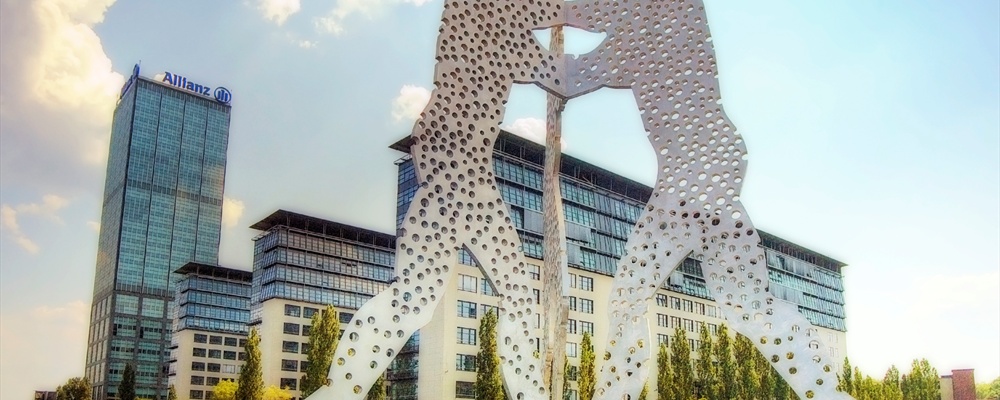





Berlin is the capital city of Germany and one of the 16 states (Länder) of the Federal Republic of Germany. Berlin is the largest city in Germany and has a population of 4.5 million within its metropolitan area and 3.4 million from 190 countries within the city limits. Berlin is best known for its historical associations as the German capital, for its internationality and tolerance, for its lively nightlife, for its many cafes, clubs, and bars, for its street art, and for its numerous museums, palaces, and other sites of historic interest. Berlin's architecture is quite varied. Although badly damaged in the final years of World War II and broken apart during the Cold War, Berlin has reconstructed itself greatly, especially with the reunification push after the fall of the Berlin Wall in 1989. It is now possible to see representatives of many different historic periods in a short time within the city center, from a few surviving medieval buildings near Alexanderplatz, to the ultramodern glass and steel structures in Potsdamer Platz. Because of its tumultuous history, Berlin remains a city with many distinctive neighborhoods.
Understand
History
The foundation of Berlin was very multicultural. The surrounding area was populated by Germanic Swabian and Burgundian tribes, as well as Slavic Wends in pre-Christian times, and the Wends have stuck around. Their modern descendants are the Sorbian Slavic-language minority who live in villages southeast of Berlin near the Spree River.
In the beginning of the 13th century, two towns (Berlin and Cölln) developed on each side of the river Spree (today the Nikolaiviertel and the quarter next to it beyond the river). As the population grew, the towns merged and Berlin became a center for commerce and agriculture. This area stayed small (about 10,000 inhabitants) up to the late 17th century, because of the 30 years' war in the beginning of the 17th century, which led to death of about half of the population.
Since the the late 17th century, when large numbers of French Huguenots fled religious persecution, Berlin has welcomed religious, economic and other asylum seekers. 1701 Berlin became the capital of Prussia and in 1710 Berlin and surrounding former autonomous cities were merged to a bigger Berlin. In 1871 Berlin became the capital of the new founded German Reich and a few years later, it became a city with more than one million inhabitants because of the immensely growing industry. Shortly after the first World War, in 1920, the last of the annexations of surrounding cities of Berlin led to the foundation of the Berlin as we know it now. After the coming into power of the National Socialists, Berlin became the capital of the so called Third Reich and the domicile and office of Hitler (though the triumph of Hitler and his companions started in the south of Germany).
WW II led to destruction of most of central Berlin, thus many of the buildings which we see nowadays are reconstructed or planned and built after the war, which led to a very fragmented cityscape in most parts of the inner town. Berlin was divided into four sectors (West Berlin into the French, American and British sector, East Berlin belonged to the USSR). In 1949 the GDR was founded with East Berlin as its capital - West Berlin belonged to West Germany (with Bonn as the capital) and was an exclave (political island) in East Germany. Because of the growing tensions between West Germany and the GDR, the latter built a wall between the countries and around West Berlin, so the division was complete.
In 1989 the German revolution took place -subsequently leading to the fall of the Berlin Wall- and in 1990 West and East Germany were merged officially together with Berlin becoming the capital of reunified Germany.
After WW II and the building of the wall, large numbers of immigrants from Turkey were invited to West Berlin to work in the growing industry sector; in East Berlin the jobs were done mostly by Vietnamese immigrants. But also people from other communist countries, including the former Yugoslavia, not to mention Soviet soldiers who refused to return home, have helped to make Berlin more multicultural than ever.
Berlin is also a youth-oriented city. Before German unification, West Berliners were exempt from the West German civil/military service requirement. Social activists, pacifists and anarchists of all moved to Berlin for that reason alone. Musicians and artists were given state subsidies. It was easy to stay out all night thanks to liberal bar licensing laws, and staying at university for years without ever getting a degree was a great way to kill time. In contrast with most of Germany, Prenzlauer Berg is said to have the highest per-capita birth rate in Europe (in fact it just seems so because of the high percentage of young women in the district).
After the fall of the wall, Berlin - especially the former East - has evolved into a cultural mecca. Artists and other creative souls flocked to the city in swarms after reunification, primarily due to the extremely low cost of living in the East. Despite the increased prices and gentrification as a result, Berlin has become a center for art, design, multimedia, electronic music, and fashion among other things. The particularly high number of students and young people in the city has only helped this cause. Just stroll down a street in Prenzlauer Berg, Friedrichshain, or Mitte to get a glimpse of the new East Berlin.
Some famous artists of the region and their best-known works include Lucas Cranach the Elder, Lucas Cranach the Younger, Johann Gottfried Schadow, Marlene Dietrich (The Blue Angel), Leni Riefenstahl (Triumph of the Will), Bertolt Brecht (Threepenny Opera), Käthe Kollwitz, Kurt Tucholsky, Thomas and Heinrich Mann, Walter Gropius, Paul Klee, Friedrich Wilhelm Murnau (Nosferatu), Fritz Lang (Metropolis), Volker Schlöndorff, Wim Wenders (Wings of Desire (German: Der Himmel über Berlin)), Blixa Bargeld/Einstürzende Neubauten, Christopher Isherwood, Gunter Grass (The Tin Drum), members of the Bauhaus architectural movement and many more.
Talk
German is of course the main language in Berlin but you can easily find information in English and sometimes in French. Due to the football World Cup in 2006 all public transportation staff got language training and should be able to help you in English (although possibly with a strong German accent). If you seem to be lost or hesitating in a public transport station a member of staff could come to your assistance but don't count on that. You can easily approach a group of (preferably young) bystanders and ask for advice in English, but try to speak slowly and with a kind of British English accent, which is taught at schools in Germany. People will generally be quite helpful, but do not completely rely on this, as even Berliners often do not know all the exact details about their own city's geography, or even on transport schedules, and rather rely on their talent to somehow improvise or even ask fellow Berliners for the way once they do not find the address they want to reach.
Most people under 40 in Berlin are able to speak English with varying degrees of fluency, but it might not be as widely spoken as you might expect, so a few key German phrases are worth having, especially in the suburbs and less touristy places. Basic French and Russian is partly spoken because French in West Berlin and Russian in East Berlin were taught in schools.
There are some words in Berlin that differ from regular German, especially in the former East Berlin. Here, the language preserved a certain level of dialect.
Schrippe: Roll.
Stulle: Sandwich.
Broiler: grilled chicken.
People
Berlin is a relatively young city by European standards, dating to the thirteenth century, and it has always had a reputation as a place filled with people from elsewhere. Someone who has lived in Berlin for ten years will see themselves as a "true Berliner," looking down on the person who has been there for only five. It may seem tough to find someone born and raised here! This is part of Berlin's charm: it never gets stuck in a rut.
A certain uneasy detente still exists between some former residents of East and West Berlin (and Germany). Wessi evolved as a derogatory nickname for a West German; its corollary is Ossi. The implication here is that after reunification, the West Germans automatically assumed the way they do things is the right way, and the way the Easterners should start doing it, too. Westerners got a reputation for being arrogant. They saw the Easterners as stubborn Communist holdouts interested only in a handout from the "rich West." Consider a shirt for sale in a shop inside the Alexanderplatz Deutsche Bahn station: Gott, schütze mich vor Sturm und Wind/und Wessies die im Osten sind ("God, protect me from the storm and wind, and Wessies who are in the East"). Another such stereotype is reflected by the short poem: Der Ossi ist schlau und stellt sich dumm, beim Wessi ist es andersrum ("The Ossi is sly and pretends to be simple-minded, and with the Wessi, it relates the other way around"). However, most of the younger generation do not share such biases.
Economy
One of the most important "products" produced in Berlin by both academic and company-sponsored institutes is research. That research is exported around the world. German labor is highly efficient but comes at high cost. Strong trade unions, the end of West Berlin's pre-reunification subsidies and Germany's dense regulatory environment forced industry to concentrate on high quality and expensive products. Students, housewives and self-employed people are not included in Berlin's official unemployment rate, currently standing at 14 percent.
Orientation
Berlin is - at least in many parts - a beautiful city, so allow enough time to get to see the sights. A good map, such as the Rough Guide Berlin map, is highly recommended. While the public transport system is superb, it can be confusing to visitors, due to a lack of directional signs in some of the larger stations, so a good transit map is also essential. Be sure to note the final station/stop of the S-bahn or U-bahn, since that is usually the way direction of travel is indicated. Roads into Berlin can also be confusing, so study your route and drive carefully. Signs point to city boroughs or districts rather than indicating compass directions, so it's a good idea to get to know where the various boroughs or districts lie in relation to each other. This also applies to cyclists.
Berlin's Tourist Information Office is an excellent resource for finding out more about Berlin, providing a wealth of practical information and useful links.
Getting there
As the city was divided into two during the Cold War, many major parts of Berlin's infrastructure — such as airports — were built on both the east and west side. After the demolition of the Wall, the challenge has been to merge these formerly independent systems into one that serves all people in the metropolitan Berlin area.
By plane
Berlin has two airports :
Buses from Tegel International Airport operate to S+U Alexanderplatz, Hauptbahnhof (bus TXL), and S+U Zoologischer Garten (buses X9 and 109) for the standard ticket fare. Caution! Do not take any train to the "Tegel railway (S-Bahn) station", which is not connected to the airport, but rather to the suburban village called Tegel. It is not possible to walk or to otherwise get easily to the airport from that station. The nearest train stations are Jakob-Kaiser Platz on the U-Bahn line U7, which is 5 minutes from the airport with bus X9/109, and Kurt-Schumacher Platz on the U6, 10 minutes from the airport with bus 128. Tegel International Airport does not have any railway station. Any indication to a Tegel railway station refers to the remote S-Bahn station, even if railway staff at stations in other cities might tell otherwise.
The airport is served by the S-Bahn and regional trains. Normally The S-bahn trains will take you to the center of Berlin but right now (Oct. 2009), renovations to the Ostktreuz train station have stopped this service and you need to go by S-bahn to Ostkreuz and change there. There are also less regular but faster regional trains that cost the same and stop at these major train stations too. In S-Bahn and regional trains between the airport (zone C) and the city (zone A,B), the public transport ticket (zones A,B,C for €2.80) can be used. Stamp the ticket to validate it before boarding.
There are numerous direct flight connections between Berlin and major German & European cities. For historical reasons intercontinental direct flights to Berlin were limited. The German flag carrier Lufthansa will mostly fly to its major hub airports Frankfurt and Munich and offer connecting flights to Berlin on a near hourly basis.
The international flights to Berlin are:
Delta and Continental Airlines have daily nonstop flights to Berlin from New York
Qatar Airways flies daily to Doha
Hainan Airlines flies (in code-share with Air Berlin) to Beijing
Air Berlin flies thrice weekly to Bangkok.
By bus
Berlin is serviced from over 350 destinations in Europe. Due to a German law supporting the German national railway there is only one bus corporation connecting Berlin with these destinations. Long distance buses arrive at Zentraler Omnibusbahnhof (Central Bus Terminal) in Charlottenburg. From there take the S-Bahn (station Messe Nord) or bus into town.
By train
Berlin is served by ICE, InterCity and EuroCity trains by the national German train corporation Deutsche Bahn (DB) which offers connections between Berlin and other German and major European cities. If you arrive in Berlin on a national (non-regional) DB trip, you are entitled to use your ticket in the whole local transport to your final destination within the city (Zone A).
Several night trains from/to Amsterdam, Paris, Zurich, Vienna and Budapest (special offer for 29 euros in one direction) travel every day. They are popular with backpackers so reservations are recommended. Long-haul trains to Eastern European cities (Warsaw, Kaliningrad and Moscow) mostly use the Bahnhof Lichtenberg in Eastern Berlin. Make sure you have a reservation because these lines are also very popular.
Some private train companies such as Veolia offer connections to smaller cities in Eastern Germany.
Stations
During the times of its division, Berlin had two main train stations: Zoologischer Garten (colloquial nameBahnhof Zoo) in the West, and Ostbahnhof in the East. The new 'Hauptbahnhof' may be titled 'Lehrter Bahnhof' on older maps & is situated between the S-Bahn stations Friedrichstrasse and Bellevue.
The new building for the central station Hauptbahnhof was opened in May 2006 and together with Südkreuz (southern cross) and Ostbahnhof (eastern station) - plus minor Gesundbrunnen in the north and Spandau in the north west - form the backbone of all connections. All are connected to either S- or U-Bahn (and in the future, both). All trains travel through central station and a second major hub (depending on the destination you travel to or arrive from). Trains in the regional area (Berlin and Brandenburg) mostly use these stations. Regional trains stop at several stations within Berlin.
By car
All main roads and motorways join the Berliner Ring, or the A10, from which you can access the inner city. The city motorway is usually very crowded during rush hour.
As of January 1, 2008, Berlin requires all cars to have a "Low Emissions" sticker in order to enter the city center (Low Emision Zone, "Umweltzone"). Information on obtaining a sticker (which must be done at least several weeks in advance) is available here .
Traveling around
Berlin is a huge city. You can make use of the excellent bus, tram, train and underground services to get around. Taxi services are also easy to use and a bit less expensive than in many other big Central European cities. You can hail a cab (the yellow light on the top shows the cab is available), or find a taxi rank (Taxistand). Taxi drivers are in general able to speak English. If you ask for a short trip (Kurzstrecke), as long as it's under 2km and before the taxi driver starts the meter running, the trip normally is cheaper, €4. This only applies if you flag the taxi down on the street, not if you get in at a taxi rank.
Check the Berlin route planner (in English) to get excellent maps and schedules for the U-Bahn, buses, S-Bahn and trams, or to print your personal journey planner. The route planer can also calculate the fastest door-to-door connection for you destination for any given day and hour. The Berliner Verkehrsbetriebe (BVG) have a detailed fare list on their web site .
If you don't know how to get somewhere, or how to get home at night, call +49 30 19449, the Customer Service of the BVG. There are also facilities in most U-Bahn and some S-Bahn stations to contact the Customer Service directly. In 2005 the BVG introduced Metro lines (buses and tram) that run 24 hours a day, seven days a week. All lines are marked with a big orange plate and a white M.
It's also worth noting that the house numbers do not necessarily run in one direction (up or down). On a lot of streets, the numbers ascend on one side and descend on the other. Especially on long streets check the numbering scheme first: you can find the name of the street and the numbers on that block at nearly every street corner.
Different to what is usual in some English-speaking countries, Germans usually add the word for "street", "square", "park", etc. when they mention the name of a locality. Thus, they would not simply refer to "Kurfürsten" when talking about Kurfürstenstraße (Kurfürsten street), as this could also mean "Kurfürstendamm", which is a different road at a different place. "Schloss", which simply means "palace", could refer to any of the palaces in Berlin, as well as to one of the two roads called "Schlossstraße", a shopping centre called "Das Schloss", or the "Schlossplatz" in the Mitte district.
Public transport ticketing
Berlin uses a zone system, but you are unlikely to need to go beyond zone A & B, except on trips to Potsdam or to the Schönefeld Airport (SXF). This is a very large area. The public transport system (U, S-Bahn, bus, tram) uses a common ticket.
Standard tickets (€ 2.10 for A & B) are valid for any travel within two hours of validation, in a single direction, within the appropriate fare zones. There is no limit to transfers. For a single journey you can buy a cheap Kurzstrecke for €1.30, but this is only valid for 3 stops on the U-Bahn or S-Bahn (six stops by bus or tram); no transfers are permitted.
Several options are available for unlimited travel. Prices listed here are only for zones A and B, prices for A, B, and C cost marginally more. Check the machines for the actual prices:
A Tageskarte (day card) (€ 6.10).
Quadruple card "4 Fahrten Karte" (4 single trips bought at once for a reduced price) €8
The Berlin CityTourCard : ticket valid for all public transport services in Berlin, Potsdam and the surrounding area and a discount card for many tourist attractions; available in four version: 48 hrs, tariff zone AB € 15.50 or tariff zone ABC € 17.50 / 72 hrs, tariff zone AB € 20.50 or tariff zone ABC € 23.00; a folded leaflet with inner city map and an overview of the S-Bahn and U-Bahn railway networks of Berlin is included; buy the CityTourCard at any ticket counters, ticket machines of the BVG and S-Bahn Berlin, hotels in Berlin, at the Berlin airports or at the main station (Hauptbahnhof Berlin) or online.
The Berlin CityTourCard Museumsinsel : valid for 72 hours in the tariff zone AB plus free admission to all museums on the Museumsinsel of Berlin (Old National Gallery, Old Museum, Bode Museum, New Museum (closed until autumn 2009) and Pergamon Museum); it costs € 29.90; a folded leaflet with inner city map and an overview of the S-Bahn and U-Bahn railway networks of Berlin is included; buy the CityTourCard Museumsinsel in hotels, at the main station (Hauptbahnhof), Tegel airport and Schoenefeld airport, Zoologischer Garten, Alexanderplatz and Friedrichstraße or online
The Berlin WelcomeCard (€ 16/21 for 2/3 days); discounts at many of Berlin's tourist attractions. Do check if it is suitable for your purposes.
Weekly passes (€ 26,20).
Small group ticket (€ 15.90) for up to five persons. If you are traveling more than two trips a day, this ticket is cost-effective for three persons and above.
Purchasing tickets:
All tickets are available at vending machines at U- and S-Bahn platforms. English and other European languages are available. Payment is mostly by local bank cards and coins, and banknotes. If you need assistance most larger stations have staffed ticket counters where you can ask questions and buy tickets. Buses will accept cash, and make change for tickets. Hotels may sell tickets as well.
In some places like Zoologischer Garten and Eberswalder Straße, people will try to sell used tickets to you. Be aware that you can go only one direction with a single-journey ticket (check the validation stamp and be careful as this could also be a pickpocket trick). Don't pay more than half the price.
Validating tickets:
You need to validate your ticket using the machines on the U- and S-bahn platforms or in the bus. The machines are yellow/white in the U-Bahn and the bus, and red on S-Bahn platforms. Validation simply means the machine prints a time stamp onto the ticket. Once validated, a ticket which is still valid will not have to be re-validated before each single trip. Whilst it might be tempting to try to avoid buying a ticket, be advised that plain-clothed inspectors do patrol the trains and that there is a €40 fine if you are caught with an unvalidated ticket. If caught attempt to show a state/provincial id if you are from outside the EU. This will make it less likely that your ticket will ever be mailed to you.
By train
Berlin has an amazingly efficient S-Bahn , trains run roughly every 10 minutes during daytime, every 5 minutes during rush-hour and every 20 minutes during the night and on weekends. Most S-Bahn lines run on an east-west route between Ostkreuz and Westkreuz via the stops Warschauer Straße, Ostbahnhof, Jannowitzbrücke, Alexanderplatz, Hackescher Markt, Friedrichstraße, Hauptbahnhof, Bellevue, Tiergarten, Zoologischer Garten, Savignyplatz and Charlottenburg. Other lines run along a circle track around the city, most notably the S 8 and the S 41, S 42, S 45, S 46 lines.
By underground
The Berlin U-Bahn (subway/metro) is something to behold; it is so charmingly precise! There are no turnstiles to limit access, so it is technically possible to ride without a ticket, but if caught by a ticket checker you will be fined €40 so it is probably not worth the risk. All U-Bahn stations now have electronic signs that give the time of the next train, and its direction based on sensors along the lines.
Detailed maps can be found in every U-Bahn station and on the trains. Don't be confused by the alternative tram maps. U-Bahn stations can be seen from far by their big, friendly blue U signs. Together with the S-Bahn (which is administered by Deutsche Bahn and mostly runs aboveground), the U-Bahn provides a transportation network throughout greater Berlin that is extremely efficient and fast. On weekend (Friday to Sunday), as well as during the Christmas and New Year holidays, all U-Bahn and S-Bahn lines (except line U4) run all night, so returning from late night outings is easy, especially given the average start time of most 'parties' in Berlin (11PM to 1AM). During the week there is no U-Bahn or S-Bahn service from appr. 1AM to 4:30AM, but metro trams/buses and special Night Buses (parallel to the U-Bahn line) run every half an hour from 12:30AM to 4:30AM.
By tram
The trams are mostly found in East Berlin, as in the West the tram lines were removed to facilitate more vehicular traffic. If you don't have a ticket already, you can buy one inside the tram.
Two types of tram service are available. Metrotrams frequent more often as well as by night. Tram routes not so identified stop more frequently and may even include picturesque single-track rides through forested areas far east of the Mitte district.
By bus
Although buses are the slowest form of public transport, the yellow double-decker buses are part of Berlin's transit landscape and they will take you to almost anywhere in Berlin. Besides the normal metro buses, there are also express buses (indicated by an X), but these don't halt at every stop.
The most famous bus line, especially for tourists, is bus route 100, which leaves from Zoo Station ("Berlin Zoologischer Garten") or - if you want to go the other way round - Alexanderplatz. This crosses most of historic Berlin, including many of the sites listed here. For the price of a city bus ticket or daily pass, it's possible to see many of the landmarks of Berlin from one of these yellow double-decker buses. Sit up top as it's easier to see the Bundestag, as well as the many historic buildings on Unter den Linden. If you're lucky, you'll get the legendary bus-driver who delivers a commentary (in Berlin-accented German) on the trip. Line 200 takes nearly the same route, but it goes through the modern quarters around Potsdamer Platz. Either ride is a must for any visitor to Berlin.
By bicycle
Cycling is another great way to tour Berlin .
Berlin has few steep hills and offers many bicycle paths (Radwege) throughout the city (although not all are very smooth). These include "860 km of completely separate bike paths, 60 km of bike lanes on streets, 50 km of bike lanes on sidewalks, 100 km of mixed-use pedestrian-bike paths, and 70 km of combined bus-bike lanes on streets (City of Berlin, 2007)" (Pucher & Buehler, 2007 ). Bicycles are a very popular method of transportation among Berlin residents, and there is almost always a certain level of bicycle traffic. Bicycle rentals are available in the city, although the prices vary (usually from €7.50 per day). In addition, the Deutsche Bahn (DB) placed many public bicycles throughout the city in 2003. These can be unlocked by calling a number on the bicycle with a cellphone, after registering with the service. Seeing Berlin by bicycle is unquestionably a great way to acquaint the traveler with the big tourist sites, and the little sprees and side streets as well. Although it's good to carry your own map, you can also always check your location at any U-Bahn station and many Bus Stations. You can create your own bicycling maps online, optimized by less busy routes or fewer traffic lights or your favorite paving . If you are not familiar with searching your own way through the city or you want more explanation of the sights you visit, you can get guided bike tours (with bike included) on Berlin Bike .
See
History
Berlin does not attempt to hide the less savory parts of its history: a visit to the Topography of Terror (Mitte), for example, provides interesting but sobering insights into the activities of the Gestapo in Berlin during the Nazi years (1933-1945). Many of the walking tours also discuss scenes both of Nazi activity and of Cold War tension and terror.
Opened in the spring of 2005, this gigantic abstract artwork covering an entire block near the Brandenburg Gate, including an underground museum with extensive details on the Holocaust and the people who died during it. The blocks start out at ground level on the outer edges of the memorial, and then grow taller towards the middle, where the ground also slopes downwards. 3.5 million visitors in the first year make it one of the most visited memorials in Berlin - and it's worth it, as it's one of the most impressive memorials in Berlin.
Known as the East Side Gallery , it is a section of the wall that is preserved as a gallery. This can be easily reached from Ostbahnhof or Warschauer Straße. It has many beautiful murals, politically motivated and otherwise. Another place to try is near the Martin-Gropius-Bau museum, currently under reconstruction. Two small pieces are also in Potsdamer Platz and in its neighbourhood at the corner between Ebertstraße and Bellevuestraße).
The Memorial is on Bernauer Straße which itself is a street with a great deal of Wall history: the first recorded Wall-related death of the notorious Peter Fechter was here, as was one of the famous tunnels and the famous photograph of the GDR border guard leaping over the barbed wire. Various monuments can be found along the entire length of the street, documenting nearby escape attempts and tunnels; captions are in German, English, French, and Russian. The Memorial itself is a complete section of 4th generation wall - both inside and outside sections, and you can peer through from the east side to see the remains of the electric fence and anti-tank devices in the death strip. It really helps you understand what an incredible feat it was to get from one side to the other -- and why so many died doing it.
Formerly, it was the only border crossing between East and West Berlin that permitted foreigners passage. Residents of East and West Berlin were not allowed to use it. This contributed to Checkpoint Charlie's mythological status as a meeting place for spies and other shady individuals. Now the remains of the Berlin Wall have been moved to permit building, including construction of the American Business Center and other institutions not given to flights of John Le Carré-inspired fancy.
At the intersection of Zimmerstraße and Friedrichstraße is the famous "You Are Leaving the American Sector" sign. The actual guardhouse from Checkpoint Charlie is now housed at the Allied Museum on Clayallee. For a more interesting exhibit go to the Haus am Checkpoint Charlie. This is a private museum with kitschy memorabilia from the Wall as well as the devices GDR residents used to escape the East (including a tiny submarine!).
Checkpoint Charlie gained its name from the phonetic alphabet; checkpoints "Alpha" and "Bravo" were at the autobahn checkpoints Helmstedt and Dreilinden respectively. Checkpoint Charlie's atmosphere was not improved at all on 27 October 1961 when the two Cold War superpowers chose to face each other down for a day. Soviet and American tanks stood approximately 200 meters apart, making an already tense situation worse.
Museums
Berlin has a vast array of museums. Most museums charge admission for people 16 years of age or older - usually €6 to €8 (a day ticket with which one can also visit the other state museums is the only thing available and doesn't count for special exhibitions) for the big museums. Discounts (usually 50%) are available for students and disabled people with identification. However, the state-run museums grant free entrance four hours before closing every Thursday. A nice offer for museum addicts is the three day pass 'Museumspass' SchauLUST-MuseenBERLIN for €19 (reduced €9.50), which grants entrance to all the normal exhibitions of the approximately 70 state-run museums and public foundations. Most museums are closed on Mondays; notable exceptions include the Altes Museum and the Deutsches Historisches Museum, which are open daily. Museumsportal Berlin , a collective web initiative, offers easy access to information on all museums, memorials, castles and collections and on current and upcoming exhibitions.
A short list of important museums (for a more detailed list check the district articles) are:
Museumsinsel . Literally "Museum Island", this area is best known for the vast Pergamon-Museum, which houses an extensive collection of ancient Greek, ancient Middle-Eastern and Islamic art and architecture. Other museums which belong to the Museum Island are the Altes Museum (with the Egyptian and the antique collection), the Alte Nationalgalerie (with mainly German paintings of the 19th century) and the reopened Bode-Museum with its fantastically presented sculpture collection and Byzantine art. The recently reopened Neues Museum houses the Egyptian collection, Neaderthal and other pre-historic archeological finds, and some of the treasures unearthed at Troy. This is the only museum on Museums Insel that requires a timed entry ticket. It's best to get a timed ticket online ahead of time as time slots fill up quickly.
Deutsches Historisches Museum, Unter den Linden 2, Tel. +49 30 203040 . German historical museum covering everything from pre-history right up to the present day. One can spend many, many hours here!
Jüdisches Museum, Lindenstraße 9-14, Tel. +49 30 25993 300 . 10AM-8PM. Jewish Museum. Learn about the history of Jews in Germany. Permanent exhibition on two millennia of German-Jewish history, changing exhibitions and impressive modern architecture by Libeskind. There is a small unrelated Jewish Museum at the Oranienburger Straße Synagogue.
Gemäldegalerie, Matthäikirchplatz, Tel. +49 30 266 2951 . At the Kulturforum. Thousands of European paintings from the 13th to the 18th century. Works from Dürer, Raffael, Tizian, Caravaggio, Rembrandt and Rubens.
Neue Nationalgalerie, Potsdamer Straße 50, Tel. +49 30 266 2951 At the Kulturforum. Art from the 20th Century. This museum often houses temporary exhibitions during which the permanent collection is usually not on display. (As of December, 2009, the permanent collection is closed while the building undergoes repairs.)
Museum für Naturkunde . Near the main railway station. Natural science museum with a big collection of dinosaur skeletons, fossils and minerals. Reopened after restoration in late 2007.
Mauermuseum at Checkpoint Charlie . This museum is situated at the most famous historical checkpoint between the two Berlins.
Museum of European Cultures . The biggest of its sort in Europe. At the museum district of Dahlem.
Ethnological Museum . Again one of the world's most comprehensive museums. At the museum district of Dahlem. Well worth a visit for its splendid collection of Pre-Columbian archaeology! It now includes the:
Topography of Terror . This open-air museum documents the terror applied by the Nazi regime. It consists of excavated prison cells located directly under a remaining stretch of the Berlin Wall.
DDR Museum Karl-Liebknecht-Straße 1, 10178 Berlin. This small museum just over the river from the Berliner Dom. Really interesting with all the displays in German and English, it gives a good insight into life in the former GDR.
Musikinstrumenten-MuseumTiergartenstraße 1 (am Kulturforum), 10785 Berlin. This museum is part of the Staatliches Institu für Musikforschung PK and has an amazingly wide range of historic and unusual instruments on display.
Berliner Medizinhistorisches Museum der Charité Charitéplatz 1, 10117 Berlin. Interesting exhibition charting the development of European hospitals from the 14th Century to the present day.
Ramones Museum Berlin . The Ramones Museum Berlin pays tribute to the Punk band The Ramones. It displays more than 300 unique and original Ramones memorabilia.
The "Berlinische Galerie" is the city museum for modern art, architecture, and design. The museum is just around the corner from the Jewish Museum at Alte Jakobstraße 124-128.
Story of Berlin Kurfürstendamm 207-208i, close to the Uhlandstraße metro, the last stop on the U1. Museum in the centre of a mall. In addition to the history (including the World Wars), culture, transportation, architecture and an exhibit of life in the city since medieval times, it is unique to feature an authentic cold-war era bunker. The 20 minute tour is included in the cost of the entrance ticket, and is at the top of each hour, alternating in German and English.
Private art galleries
As Berlin is a city of art, it is quite easy to find an art gallery on your way. They provide a nice opportunity to have a look at modern artists' work in a not-so-crowded environment for free. Some gallery streets with more than about a dozen galleries are Auguststraße, Linienstraße, Torstraße, Brunnenstraße (all Mitte, north of S-Bahn station Oranienburger Straße), Zimmerstraße (Kreuzberg, U-Bahn station Kochstraße) and Fasanenstraße (Charlottenburg). A directory listing of all Berlin's art galleries can be found on The Art of Berlin: Complete Berlin Art Gallery Directory
Art Center Berlin Friedrichstraße , Friedrichstraße 134, Tel. +49 30 27879020. Four floors of exhibitions with a relatively good variety of genres and artists. A very nice oasis of calm from the busy Friedrichstraße.
Galerie Eigen & Art, Auguststraße 26, Tel. +49 30 280 6605 . One of the most famous German art galleries, home to the Neue Leipziger Schule (Neo Rauch et al.)
loop -- raum fur aktuelle kunst , Jägerstrasse 5, 10117. Known for being the "incubator" of future famous Berlin artists. Primarily featuring sculpture video, and painting.
Churches
There are some historically interesting and architecturally remarkable churches which are the following:
Berliner Dom— The biggest and most impressive church in Berlin, built at the turn of the century (19th/20th) as an expression of imperial power. Located next to the museum island. Entrance is €5, and you can climb on top of the dome for a beautiful view over the Berlin center.
The Twintowers of the Deutscher Dom (German Cathedral) and the Französischer Dom (French Cathedral) face each other at the Gendarmenmarkt in Central Berlin, flanking the Konzerthaus.
Kaiser Wilhelm Gedächtniskirche— Highly symbolic church, dating back to 1891-95, with two modern buildings designed by Egon Eiermann in 1961, a hexagonal bell tower and an octagonal worship hall, aside the ruins from World War II.
Marienkirche— Located near Alexanderplatz, this is not only the highest church tower in Berlin (90 m), but also one of the oldest churches left in the historical center of Berlin (which is totally torn down in this area). Entrance is free and inside are many treasures from the old days.
Nikolaikirche— The oldest church in Berlin, dating back to the beginning of 13th century (at least the stones next to the ground). Does not serve as a church. Changing exhibitions inside, entrance free.
St. Hedwigs Kathedrale— Domed Church located at Bebelplatz/Unter den Linden, the oldest (mid 18th century) and one of the biggest Catholic churches in Berlin, interior was redesigned in a modern style in the 1950s - but still many treasure chambers in the basement.
Friedrichswerdersche Kirche— Nice church located near Unter den Linden/Museum Island, finished in 1830 by Schinkel - English Neogothic style. Nice exhibition inside (neoclassical statues and an exhibition about Schinkel's life and work upstairs), entry is free.
Landmarks with observation decks
While Berlin has relatively few high-rise buildings, there are several monuments with observation decks. Probably the most famous of all is the TV Tower near Alexanderplatz, the tallest tower in Germany and second largest in Europe, which has a rotating café at the top spinning 360 degrees in just 30 minutes! 40 seconds is all it takes to reach the top by lift. But there are also other great observation desks, the main ones are listed below (for others have a look in the district pages).
Bundestag— The German Parliament building, near the Brandenburg gate, was renovated by Sir Norman Foster and reopened in 1999 with a spectacular new glass dome, which offers a great view of Berlin. Be prepared for long lines (sometimes 1 hour) and an extensive security check. Free entrance is through the West portal. The Bundestag is open from 8AM-midnight, daily, however the last entrance is at 10PM. Visitors may pre-book free tours of the building, avoid standing in line for the dome, and enter with confirmed reservation at scheduled times through the north portal.
Berliner Funkturm— 150 meter high lattice tower with open-air observation deck 124 meters above ground. Only observation tower on insulators! Located in the Western fair district, out of city center.
Berliner Fernsehturm, Alexanderplatz . The TV tower is Germany's tallest construction: 368 meters high. Observation deck 204 meters above ground. Costs €10,50 as of March 2010. Be wary of the weather changing; the fog can come in during the rather long queues and you may not be able to see anything at the top. There is a restaurant and a bar in the observation deck. You need to buy tickets from the ticket office, then join a separate queue to get into the tower.
Siegessäule (Victory Column), Tiergarten. An old (1865-1873), 60 meter high monument with panoramic views of the very center of the city. Unfortunately there is no elevator, so be prepared for 285 steps. The statue of Victoria on the top is the place where the angels congregate in the famous film "Der Himmel über Berlin" by Wim Wenders. It has also become something of a symbol for the annual Love Parade techno music festival.
Kollhoff Tower, Potsdamer Platz . The fastest elevator in Europe takes you approximately 100 meters high.
Europa Center, Zoologischer Garten,. Shopping center with a panorama floor at the 20th floor (90 meters). In Budapester Straße, overlooking Kaiser-Wilhelm-Memorial Church. Entrance is €4 or €2 if you show a receipt from one of the restaurants in the Europa Center.
Europe Centre-Berlin Window— 100 meter high building in Berlin City West with a breathtaking 360 degrees view over the capital. An elevator takes you to the 20th floor.Upstairs you can have a drink if you'd like. 4,50 EUR for adults, 3 EUR for seniors, students and groups.Daily 10AM-6PM. Tauentziestrasse 11, next to Saturn Market(enter on the first floor)
Zoo
Berlin has two zoos and an aquarium. The Berlin Zoo in the west is the historic zoo that has been a listed company since its foundation. It's an oasis in the city and very popular with families and schools.
Berlin Zoo . The largest range of species in the world. The zoo lies directly in the heart of the City West (opposite Bahnhof Zoo at Hardenbergplatz) and is especially famous for its panda bears and Knut, the polar bear cub born in captivity in late 2006. The Elephant Gate (Budapester Straße) is the second entrance next to the Aquarium and a traditional photo stop for most visitors because of the architecture.
Aquarium . Part of the Berlin Zoo, located at Budapester Straße in an historic building. Still the largest aquarium in Germany and a host to an amazing variety of fish, crocodiles etc. One of the best places on a rainy day with children.
Tierpark Berlin . Located in Friedrichsfelde, the Tierpark is more spacious than the historic Berlin Zoo and has been open for some 50 years. The compound also comprises a small château with its adjacent park.
Things to do
Explore
Go on a Tour of Berlin - the Mitte and surrounding districts are sufficiently compact to allow a number of excellent walking tours through its history-filled streets. You'll see amazing things you would otherwise miss. Details are usually available from the reception desks of hostels and hotels.
Ticket B City – Tours by architects in Berlin , Showing the city of Berlin on hand-picked architectural routes. Led by selected architects in German, English, French, Italien or Spanish. Anything is possible - tours from the water, on land or in a helicopter. They arrange your special tour on contemporary architecture in Berlin with many exclusive visits to the interiors of buildings and unforgettable experiences.
Alternative Berlin , English tour starting at 11.00AM each morning at Alexander Platz TV tower in front of Starbucks coffee. This tour uses Berlin's transit system to cover a massive amount of territory and focuses on the underground sites and sounds of Berlin, including art & graffiti culture, technological wonders, and landmarks of rock & electronic music.
The Berlin Experts , Offers daily in-depth walking tours of Berlin's architecture, history, and culture. All tours include some history as well as other tidbits of trivia not commonly known. Especially popular is the Deconstruction/Construction Tour which provides an offbeat perspective of contemporary Berlin. They also offer special tours for cruise ship passengers.
Stern und Kreisschiffahrt , By far the biggest boat company in Berlin. They offer tours on most lakes.
Admission Free Berlin, . Website giving a daily overview about free sights, parties and cultural events in Berlin.
Recreation
Pick up a copy of Exberliner , the monthly English-language paper for Berlin to find out what's on, when and where. It provides high quality journalism and up-to-date listings. If you understand German, the activity planners for the city, zitty and tip , are available at every kiosk. Be prepared to choose among a huge amount of options.
Parks Berlin has many great parks which are very popular in the summer. Green Berlin operates some of them.
Tiergarten is Berlin's largest park and hosts the Love Parade in July. In the summer and on weekends you will see loads of families with their barbecues.
Viktoriapark (Kreuzberg) offers superb panoramic views across south Berlin. National monument by Schinkel on top of it.
Schlosspark Charlottenburg is inside the area of the Charlottenburg Palace , but the green area of the park is free, so you can go there to have a walk even if you are not interested in the palace. It covers a large area and you can get in from the entrance just near the "New Pavillon" (Neuer Pavillon a.k.a. Schinkelpavillon) placed on the right of Luisenplatz. The nearest station is Sophie-Charlotte Platz on the U2.
World's Garden (Gärten der Welt) in Marzahn. Inside you can find a large, well-established Chinese garden, a Korean garden, a small Bali's Garden/Glasshouse, an Oriental Garden with nice fountains and a cloister and a Japanese garden which is a project by the city partnership of Berlin and Tokyo. Open daily from 9AM-4PM, in April and October until 6PM, from May-September until 8PM. Best time for a visit is in spring or summer. Entrance is 3 €. To get there, take the S7 until "Marzahn" station and continue with bus 195 until Eisenacher Straße.
Lakes, Beaches
Wannsee is called Berlin's "bath tub". The Strandbad Wannsee is the most famous bathing area for locals. Take the S-Bahn lines S1 or S7 to the station Nikolassee and follow the crowd!
Müggelsee in the south east of Berlin is a popular swimming spot.
Festivals
Berlin Film Festival , The city's largest cultural event and an important fixture in the global film industry's calendar (up there with Cannes). 250,000 tickets sold, 400 different films screened and a host of associated parties and events every year. In contrast to e.g. Cannes, all screenings at the Berlinale are open to the public. Tickets are inexpensive and relatively easy to get for the
Lange Nacht der Museen , +49 30 90 26 99 444, A large cultural event in January and August with museums open until 2AM and extra events around the city.
Fête de la Musique , All kinds of music around the city on this day coordinating with a similar day in several French cities.
Oberbaumbrücke Festival, In August (check the exact dates), just under the Oberbaumbrücke, artists are selling their works, amateur tango dancers are giving public performances and you can contribute to a collaborative painting on a very long canvas spread on the street along the festival.
Parades
Christopher Street Day - as the Germans name their gay prides - is a well-known annual political demonstration for the rights of the gay culture organized in all major German cities. Even if you are indifferent about the issue, the Christopher Street Day is usually a worthwhile sight as many participants show up in wild costumes.
Fuckparade in August. The Fuckparade (Hateparade in the early days) started as an antiparade or demonstration against the commercialized Love Parade, and was first on the same date as the Love Parade but later the date was shifted. The Fuckparade is a political demonstration, with political speeches at the beginning and the end and the parade with music between. The general motto of the Fuckparade is "against the destruction of the club scene". The music is quite different than at the Love Parade: mostly independent/alternative/extreme electronic music.
Hanf Parade in August. The Hanfparade is the biggest European political demonstration for the legalization of hemp for use in agriculture and as a stimulant.
Karneval in late February or early March. As a lot of people in Berlin originally came from the southern or western area of Germany where Fasching, Fastnacht or Karneval is celebrated, a carnival parade was also established in Berlin. It grew bigger and bigger (about 500.000 to 1 million people watching), but the costumes and cars are rather boring and the people are not as dressed up as in the "original" big carnival parades (Cologne, Mainz, Düsseldorf). Since 2007 the traditional route across Kurfürstendamm was chosen.
Karneval der Kulturen in May or June (on Whit Sunday). The idea of the "Carnival of Cultures" is a parade of the various ethnic groups of the city showing traditional music, costumes and dances. Other more modern, alternative and political groups also participate. Similar events are also held in Hamburg and Frankfurt.
Theatre, Opera, Concerts, Cinema
Berlin has a lot of theater houses, cinemas, concerts and other cultural events going on all the time. The most important ones are listed here.
Theater
Deutsches Theater. Classical theater with impressive line up of actors and directors.
Volksbühne am Rosa Luxemburg Platz. Sometimes controversial, modern theater.
Schaubühne am Lehniner Platz . Modern theater.
Theater am Kurfürstendamm . Popular theater with tv celebrities in modern plays.
Theater des Westens . A historic theater in the former West Berlin, only musicals today.
Friedrichstadtpalast . Cabaret shows and revues with actresses from the former East German ballet.
Berliner Ensemble . Contemporary theater.
English Theater Berlin Theater that features all plays/music theater in English
Opera
Komische Oper . Modern operas.
Deutsche Oper . Classic opera house of West Berlin.
Staatsoper Unter den Linden . The impressive building and royal history make the building alone worth a visit.
Neuköllner Oper . Voted several times best off-opera house and known for its modern and contemporary pieces. Mostly in German as usually relating to developments in Germany. Very creative and innovative.
Cinema
There are about a hundred cinemas in Berlin, although most of them are only showing movies dubbed in German, without subtitles. Listed below are some of the more important cinemas also showing movies in the original language (look for the OmU - "original with subtitles" - notation). Most movies which are dubbed in German are released a bit later in Germany. Tickets are normally €5 to €7. Monday to Wednesday are special cinema days with reduced admission.
CineStar . The "CineStar Original" cinema located inside the Sony Center at the Potsdamer-Platz shows only movies in original version (e.g. in English, without subtitles).
Babylon Kreuzberg . Also non-mainstream movies in this small cinema built in the 1950s.
Central . Repertory cinema located in an ex-squat near Hackesche Höfe.
Eiszeit .
Filmtheater Hackesche Höfe . Located on the 4th floor of the Hackesche Höfe. Very broad range of movies.
Neue Kant Kinos . One of the few old cinemas (founded 1912) left in Berlin's western city. Mostly non-mainstream European movies.
Concert Houses
Philharmonie . Berlin Philharmonic orchestra is one of the best in the world. Famous building and outstanding musicians make a reservation essential. Cheaper tickets are usually available 2-4 hours before the concert if not sold out.
Konzerthaus at Gendarmenmarkt.
Sport
In Berlin you can do virtually all sports
The most popular sport is soccer, which is played all over the city. The Berlin FA lists all the clubs. Not to be missed is the Olympic Stadium, which hosted the 2006 world cup final. Hertha BSC Berlin , Berlin´s highest professional football team, plays there during the Bundesliga season in spring, fall and winter.
Basketball: Alba Berlin , known as The Albatross are consistently the best basketball team in Germany, and one of the best in Europe. With fans crazier than most in the NBA, Albatross games at the o2 World arena are an exciting way to take in the world's second greatest game.
Public swimming pools can be found around the city. Check out BBB for pool listings and opening times.
Sailing on one of the many lakes is also popular. You can find sailing clubs and most universities have ships as well.
Golf is popular as well. You can find golf clubs all around Berlin, although for non-members Motzen has one of the best.
Ice hockey: The Berlin Eisbären (Polar Bears) play this fast, exciting and very physical sport during the winter. The excitement is heightened by the singing and chanting of the crowds, who are fueled by the copious quantities of wurst and beer available.
American Football: After the closing of NFL Europe and the related end of Berlin Thunder (triple winner of the World Bowl), the Berlin Adler (Eagles) are Berlin´s No. 1 team playing in German Football League.
Australian Football: The Berlin Crocodiles host regular matches in the summer.
Spa
Spas are very trendy.
Day Spa . In Riverside hotel next to the Friedrichstadtpalast.
Club Oasis Fitness Centre & Spa , +49 30 2553 1234, +49 30 2553 1234, Grand Hyatt Berlin Hotel, Marlene-Dietrich-Platz 2
Adlon Day Spa One of the best spa's in town right next to the Brandenburg Gate in the Hotel Adlon
Eat
Everywhere in Germany outside Berlin, jelly doughnuts are known as Berliner, but in Berlin, they're called Pfannkuchen. This in turn means "pancake" everywhere else, so if you want a pancake in Berlin, you have to ask for Eierkuchen. Confused yet?
A staple in Berlin is currywurst. It's a bratwurst covered in ketchup and curry powder. You can find them all over Berlin by street vendors. It's a must try when in Berlin. Two renowned Currywurst stands are "Konnopke's Imbiss" below Eberswalder Strasse U-Bahn station on line 2 and "Curry 36" opposite the Mehringdamm U-Bahn station in Kreuzberg (only two stops south of Checkpoint Charlie). Both of these offer far friendlier service than many of Berlin's more upmarket eateries.
Eating out in Berlin is incredibly inexpensive compared to any other Western European capital or other German cities. The city is multicultural and many cultures' cuisine is represented here somewhere, although it is often modified to suit German tastes. Vegetarians can eat quite well with a little bit of research and menu modification even if Berlin seems like a carnivore heaven with all the sausage stands. Many kebab restaurants have a good selection of roasted vegetables and salads. Falafels are also tasty and suitable for vegetarians.
All prices must include VAT by law. Only upmarket restaurants may ask for a further service surcharge. Note that it is best to ask if credit cards are accepted before you sit down -- it's not that common to accept credit cards and cash is usually preferred. Most likely to be accepted are Visa and Mastercard; all other cards will only be accepted in some upmarket restaurants.
One of the main tourist areas for eating out is Hackescher Markt / Oranienburger Straße. This area has dramatically changed during the years: once full of squats and not-entirely-legal bars and restaurants, it had some real character. It is rapidly being developed and corporatized, and even the most famous squat - the former Jewish-owned proto-shopping mall "Tacheles" - has had a bit of a facelift. There are still some gems in the side streets, though, The "Assel" (Woodlouse) on Oranienburger Straße, furnished with DDR-era furniture, is still relatively authentic and worth a visit, especially on a warm summer night. Oranienburger Straße is also an area where prostitutes line up at night, but don't be put off by this. The area is actually very safe since several administrative and religious buildings are located here.
For cheap and good food (especially from Turkey and the Middle East) you should try Kreuzberg and Neukölln with their abundance of Indian, pizza and Döner Kebap restaurants. (Berlin was the birthplace of the Döner Kebab about 30 years ago.) Prices start from 1,50 € for a kebab or Turkish pizza (different from the original Italian recipe and ingredients). If you are looking for a quick meal you could try getting off at Görlitzer Bahnhof or Schlesisches Tor on the U1 line - the area is filled with inexpensive, quality restaurants.
Kastanienallee is a good choice too - but again not what it used to be since the developers moved in (much less exploited than Hackescher Markt, though). It's a popular area with artists and students and has a certain Bohemian charm. Try Imbiss W, at the corner of Zionskirchstraße and Kastanienallee, where they serve superb Indian fusion food, mostly vegetarian, at the hands of artist-chef Gordon W. Further. Up the street is the Prater Garten, Berlin's oldest beer garden and an excellent place in the summer.
Waiters and tipping
The custom in Germany is to tell the waiter how much you’re paying (including the tip) when you receive the bill — don’t leave the money on the table. If there is confusion with the tip, remember to ask for your change, Wechselgeld (money back).
Add a 5-10% tip (or round up to the next Euro) to the bill if you are satisfied with the service, but remember that even if waiters don't get paid much anywhere, in Western Europe they are not dependent on tips to make a living as they are in the U.S., and it is possible to live on one's hourly wage. If the service has been very good and friendly feel free to tip more (especially when they help you with the language!).
Restaurants
All restaurant recommendation are in the corresponding borough articles of
*Kreuzberg & Friedrichshain*— Young and independent student area with a big Turkish community in Kreuzberg.
*City West* Heart of West Berlin with good quality restaurants.
*Mitte* Political and new center of East Berlin with upmarket restaurants.
*Schöneberg* City slickers and street cafe atmosphere.
*Prenzlauerberg* Buzzing Prenzlberg and its lively student scene.
Breakfast
It is very common to go out for breakfast or brunch (long breakfast and lunch, all you can eat buffet, usually from 10AM to 4PM, for €4 to €12 - sometimes including coffee, tea or juice). Here are some special tips (especially see the district pages of City West & East Central):
For children
Charlottchen, Droysenstraße 1, tel +49 30 324 47 17. Buffet breakfast and institution for parents and prepared for children of all ages, indoor play room!
Strandbad Mitte, Kleine Hamburger Straße 16, tel+49 30 24 62 89 63. Playground next to the restaurant and good breakfast.
Buffet breakfast (brunch)
City Guesthouse Pension Berlin, Gleimstraße 24, tel +49 30 4480792 . Breakfast buffet, daily 8AM to 11AM, price per person 05,00€
Cafe Sarotti-Höfe, Mehringdamm 57, tel +49 30 60 03 16 80. Located in a former chocolate factory with buffet for €6! U6/U7, Mehringdamm.
Operncafé, Unter den Linden 5, tel +49 30 20 26 83. On Sundays, they have a nice jazz brunch with live music in an intimate atmosphere (reservation strongly recommended), all other days, a standard buffet applies. Bahnhof Friedrichstraße.
Grüne Lampe, Uhlandstraße 51, tel +49 30 88 71 93 93. Excellent Russian breakfast buffet.
Individual style
Telecafé, Panoramastraße 1a, tel +49 30 242 33 33. Enjoy breakfast in front of a city view right at the top of the Fernsehturm.
Dachgartenrestaurant Käfer, Platz der Republik 1, tel+49 30 22 62 99 0. Breakfast from 9-10:30AM at the top of the Germany's parliament.
Oderberger Straße, street in Prenzlauer Berg with a large variety of breakfast cafés.
Upper-class
Café im Literaturhaus, Fasanenstraße 23, tel +49 30 882 54 14. Classical style, waiters in livreé.
Desbrosses, Potsdamer Platz 3, Tel. +49 30 337 77 64 00. The Ritz Carlton imported a whole French brasserie which freshly bakes bread.
Drink
At Warschauer Straße (which you can reach via S-Bahn and U-Bahn station Warschauer Straße) and more specifically Simon-Dach-Straße and around Boxhagener Platz you can find a wide variety of bars. It is common for locals to meet at Warschauer to go to a bar there.
Die Legende von Paula und Ben, Gneisenaustrasse 58, U7 Südstern, Small and cosy bar with a large choice of cocktails, spirits and wine. For those who are hungry this place serves tapas and for those who want to smoke some cigars.
Cafe Einstein is one particular example of a home grown coffee chain which has nice staff, great coffee and is fairly priced. In particular, the Einstein on Unter den Linden is as far from "junk coffee" as it's possible to be.
Brauhaus (brewpubs) brew and sell their own beer on the premises. There is usually a public viewing area onto the brewery. Try Gaffel Haus , Brauhaus Georgbraeu , Brauhaus Mitte and Brauhaus Lemke .
There are lots of Irish bars all over the city, as there are in all European cities. If you like off-the-shelf Irish bars or watching football in English then you won't be disappointed, but in a city with new cool bars opening pretty much daily and a huge range from which to choose, you'll find that these cater mostly to the Irish construction workers and Germans attracted by Irish music, which is often played in them. The Irish pub in the Europa Center at Tauentzienstraße is famous. Located in the basement of a skyscraper, you will find a big Irish pub and a rowdy crowd on the weekend. It also claims to have the longest bar in all of Berlin!
If you want to get some tap water in a bar ask for "Leitungswasser" (if you just say "water" (Wasser), you will receive mineral water.) This is common if you drink coffee. They should not charge you for it but you should order another drink as well.
Bars
Berliners love to drink cocktails, and it's a main socializing point for young people. Many people like to meet their friends in a cocktail bar before clubbing. Prenzlauer Berg (Around U-Bahnhof Eberswalder Str., Helmholtzplatz, Oderberger Straße & Kastanienallee), Kreuzberg (Bergmannstraße, Oranienstraße and the area around Görlitzer Park and U-Bahnhof Schlesisches Tor), Schöneberg (Goltzstraße, Nollendorfplatz, Motzstraße for gays), and Friedrichshain (Simon-Dach-Straße and around Boxhagener Platz) are the main areas. There aren't as many illegal bars as there was in the '90s but bars open and close faster than you can keep up - check out the bar and cocktail guides in the bi-weekly magazines Tip or Zitty. For recommended bars, have a look at the district pages.
Clubs
For more clubs, have a look at the district pages.
The club scene in Berlin is one of the biggest and most progressive in Europe. Even though there are some 200 clubs in the city, it's sometimes difficult to find the right club for you since the best ones are a bit off the beaten track and most bouncers will keep bigger tourist groups (especially males) out. Entrance is cheap compared to other big European cities, normally from 5 to €10 (usually no drink included).
The main clubbing districts are in the east: Mitte (especially north of Hackescher Markt and - a bit hidden - around Alexanderplatz), Friedrichshain-Kreuzberg (around Schlesisches Tor) and Prenzlauer Berg (around station Eberswalder Str.). Some mainstream clubs are located in Charlottenburg and at Potsdamer Platz. Electro and techno are still the biggest in Berlin, with lots of progressive DJs and live acts around. But there are also many clubs playing '60s beat, alternative rock and of course mainstream music. Clubbing days are Thursday, Friday and especially Saturday, but some clubs are open every day of the week. Partying in Berlin starts around midnight (weekends) and peaks around 2AM or 3AM in the normal clubs, a bit later in many electro/techno clubs. Berlin is famous for its long and decadent after hours, going on until Monday evening.
Stylish
40 Seconds , 030 890 642 41, 030 890 642 41, Potsdamer Strasse 58, Named for the amount of time it takes the elevator to reach the dance floor, this posh club has three roof terraces, a dinner area, and an amazing view of the city. Features mainstream R'n'B and house music. Come here in the summer when it's warm.
Felix, Behrenstraße 72, tel +49 (0)30 20946329 . Stylish club and restaurant on the back side of the Hotel Adlon. It is known for the very popular Thursday afterwork party of the working rich and its weekend upstyle crowd.
Week-End, Am Alexanderplatz 5 (the building with the Sharp sign on top) . Located in the 12th floor of a GDR office building. Amazing views over the city in classical club style for young people. Parties till the dawn. Recently complemented by the new afterhours club 15th Floor in the same building, as well as a roof bar. Electro, techno and house.
Kreuzberg-Friedrichshain
Watergate, Falckensteinstraße 49 (U Schlesisches Tor / S Warschauer Straße), . Great electronic/drum'n'bass club with two floors directly at the Spree River - great panoramic view. Open Wednesday (only one floor), Friday, Saturday. Tough door policy.
Maria am Ostbahnhof, Stralauer Platz 34/35 (next to Schillingbrücke) . Cool location with lots of progressive live sets and concerts (mainly electro/techno, but also independent/alternative Pop/Rock concerts).
Berghain/Panorama Bar, Am Wriezener Bahnhof (S Ostbahhof), . A huge techno club with a gay majority (Berghain) in an old power generation plant. Be prepared for a tough door policy. Not for teenagers, no cameras allowed (mobile phones with a camera are now allowed, but holders are expressly warned not to use them). Open Saturdays; Panorama Bar (mainly straight crowd) upstairs additionally on Fridays. Parties until Sunday afternoon. Music is extremely loud, for sensitive people, it is recommended not to stay on the dance floor for too long. However, as the sound system is technically high advanced, it is even possible to talk and be understood on the dancefloor.
Mitte
Tresor, Köpenicker Str. 59-73 . Perhaps THE Berlin techno club. The old venue was closed in 2005 but Tresor reopened in May 2007 in an old power plant in the southeast of Berlin-Mitte.
Kaffee Burger/Russendisko, Torstraße 60, tel +49 30 280 464 95. Bar and club with GDR living room atmosphere. Russendisko is performed every second Saturday by author Wladimir Kaminer. Sometimes live music (Neo-Polka).
White Trash Fast Food, Schönhauser Allee 6-7, tel+49 30 50 34 86 68, . Chinese decoration in the location of an ex big Irish pub makes you feel like you're in a Tarantino movie. Alternative concerts, cowboy hats, beards and '60s to '70s style - if those are your things then you have a new home. It also has a restaurant with great burgers and self-brewed beer.
KitKatClub, now in the Sage Club, Köpenicker Str. 76, . A very famous address, a unique clubbing concept mixing techno/electro/trance music with sexual freedom. Be careful and open-minded, and respect the strict dress code. Nonstop party from Saturday night to Sunday evening. The owner of the KitKatClub (Simon Thaur) is also famous for his extreme-fetish porno movies.
Sleep
After the end of the Cold War, Berlin witnessed a construction boom of hotels and offices. The boom led to a significant oversupply of hotels which resulted in comparatively cheap prices even in the 5 star category. (Off-season prices of €110 per night are seen). Especially for a short visit, it may be best to stay at a place in Berlin-Mitte (around Friedrichstraße example), as most of the main sights are located there. Due to its history most hotels in Berlin are still located in the City West(i.e. Charlottenburg-Wilmersdorf). You won't find any hotels located directly at the new main train station but they plan to build some in the near future.
Cheapest are youth hostels (called Jugendherbergen, only for members) and hostels (similar to youth hostels, but for everyone, mostly backpackers stay here, usually also in one till 32-bed rooms). You will also find bed and breakfast offers (often private) and boarding houses (Pension, more familiar and smaller then hotels).
Check the district pages for individual accommodation listings. Popular hotel districts include:
Mitte
Charlottenburg-Wilmersdorf
Prenzlauer Berg
Friedrichshain-Kreuzberg
Buy
Due to federal liberalization, shopping hours are theoretically unlimited. Nevertheless, many of the smaller shops still close at 8PM Most of the bigger stores and nearly all of the malls are open additionally until 9 or 10PM from Thursday to Saturday. Sunday opening is still limited to about a dozen weekends per year, although some supermarkets located at train stations (Hauptbahnhof, Bahnhof Zoologischer Garten, Friedrichstraße, Innsbrucker Platz and Ostbahnhof) are open also on Sundays. Many bakeries and small food stores (called Spätkauf) are open late at night and on Sundays in busier neighborhoods (especially Prenzlauer Berg, Kreuzberg and Friedrichshain). Stores inside the Hauptbahnhof central station have long working hours (usually until about 10 or 11PM), also on Sundays.
The main shopping areas are:
Ku'Damm and its extension, Tauentzienstraße remain the main shopping streets even now that the Wall has come down. KaDeWe (Kaufhaus Des Westens) at Wittenbergplatz is a must visit just for the vast food department on the 6th floor. It's reputedly the biggest department store in Continental Europe and still has an old world charm, with very helpful and friendly staff.
Friedrichstraße is the upmarket shopping street in former East Berlin with Galeries Lafayettes and the other Quartiers (204 to 207) as main areas to be impressed with wealthy shoppers. The renovated Galeria Kaufhof department store at Alexanderplatz is also worth a visit. The main shopping area for the alternative, but still wealthy crowd is north of Hackescher Markt, especially around the Hackesche Höfe. For some more affordable but still very fashionable shopping there is Prenzlauer Berg, Kreuzberg and Friedrichshain with a lot of young designers opening shops, but also lots of record stores and design shops. Constant change makes it hard to recommend a place, but the area around station Eberswalder Straße in Prenzlauer Berg, around Bergmannstraße and Oranienstraße in Kreuzberg and around Boxhagener Platz in Friedrichshain are always great when it comes to shopping.
For cheap books, a nice choice is Jokers Restseller in Friedrichstraße 148 (tel +49 30 20 45 84 23) where there is a wide variety of secondhand books. For souvenirs, have a look just in front of the Kaiser Wilhelm Gedächtniskirche; these shops sell almost the same items as others, but are cheaper, but not all the staff speaks English. You can also get cheap postcards there (from €0.30 while the average price for normal postcard is €0.50-0.80). For collectible stamps go to Goethe Straße 2 (Ernst Reuter Platz, U2), where you can find a Philatelic Post Office from the Deutsche Post. They generally speak English. For alternative souvenirs (design, fashion and small stuff from Berlin designers and artists), go to ausberlin near Alexanderplatz; it's a bit hidden at the other side of Kaufhof at the Karl-Liebknecht-Straße.
Flea markets
You can find dozens of flea markets with different themes in Berlin (mostly on weekends), but worth checking out is the big one at Straße des 17. Juni:
Straße des 17. Juni, between Ernst-Reuter-Haus and S-Bahn: Tiergarten.
Mauerpark, on Sundays, next to Friedrich-Ludwig-Jahn Sportpark in Prenzlauer Berg (U-Bahn: Eberswalder Straße).
Arkonaplatz, on Sundays, close to Mauerpark, so it can be combined with it.
Safety
Berlin is a safe place but it has some not-so-well maintained areas, too. No specific rules apply with the exception of public transportation and tourist areas where pickpockets are a problem. Watch your bags during rush hours and at larger train stations.
The police in Berlin are competent and not corrupt therefore if you try to bribe them you are likely to spend a night behind bars to check your background. They are generally helpful to tourists. Most of the officers are able to speak English, so don't hesitate to approach them if you are frightened or lost. The nationwide emergency number is 112 for medical emergencies and fires, while the police emergency number is 110.
Since the 1980s there have been localized riots on Labour Day (1st May). In general they take place in Kreuzberg around Oranienstraße/Mariannenplatz. Nowadays they usually start the night before May 1st, especially in the Mauerpark (Prenzlauer Berg), at Boxhagener Platz and in Rigaer Str. (Friedrichshain) and start again in the evening of May 1st in Kreuzberg and in the mentioned areas. The violent riots have become rather small since 2005 due to the engagement of the citizens who celebrate the Labour Day with a nice "myfest" in Kreuzberg and well-planned police efforts. It is still better to stay out of these areas after 8PM until sunrise. Vehicles should not be parked in these area as this is asking for damage!
Racially-motivated violence is rare but the risk is higher on the outskirts of East Berlin. It is recommended for non-Caucasian tourists to be attentive in areas such as Lichtenberg, Hellersdorf, Marzahn, Treptow and Köpenick in the evening/night especially if alone.
In the bordering neighbourhood of the districts Neukölln & Kreuzberg (between Hermannplatz, Schönleinstrasse until Kottbusser Tor) and Wedding (Alt-Moabit & Märkisches Viertel) the risk of falling victim to robberies and assaults is slightly higher. Tourists should visit these areas with some caution during the night as a mixture of drunken party people & poor neighbourhoods might lead to trouble.
Although harmless, gypsy panhandlers have recently started to beg at local tourist spots such as Pariser Platz next to the Brandenburg Gate, Alexanderplatz and the Museuminsel. They are usually women accompanied by their daughters who ask if you speak English and explain that they are from Bosnia and trying to raise money to fly home. The story is not true so don't give money, which would encourage further exploitation of the women and their kids. If you feel scared don't hesitate to contact the police as they will help.
Prostitution
Prostitution is a legal business in Germany. Berlin has no major red-light district though some big brothels were built (biggest is Artemis). Berlin has no "Sperrbezirk" (restricted areas for prostitutes) therefore the "apartments" or brothels are spread through out the whole city. The Oranienburger Straße in Mitte is infamous for its prostitutes at night. These women are a tourist attraction and the ladies focus only on tourists to request exorbitant prices.
The proximity to Eastern Europe, relaxed visa rules and the illegal community increases the number of prostitutes. Advertisements are in the tabloids and especially the internet. Human trafficking and illegal immigration is a problem therefore police raids do take place and close down illegal places. Brothels & prostitutes must be registered like normal businesses otherwise it's tax evasion. In general the police officers are not interested in the clients (if you stay calm and especially don't try to argue) but you must have a photo ID (passport copy is fine) with you. Otherwise you might spend a night at the police station until your ID is checked.
Districts
In Berlin there is more than one downtown area. Berlin has many boroughs (Bezirke), and each borough is composed of several localities (Kieze) — each of these boroughs and localities have their unique style. Some boroughs of Berlin, as noted below, are more worthy of a visitor's attention than others. Originally Berlin was officially divided into 23 boroughs, and these boroughs are still used in Wikitravel as they remain foremost in popular conceptions of the city and are generally of a good practical size and cultural division for visitors as well. Since January 2001, the boroughs have officially been reduced from 23 till 12 for administrative efficiency. The boroughs can roughly be grouped into six districts:
Learn
Berlin has three major universities:
Freie Universität , +49 (0/30) 838-1, Habelschwerdter Allee 45, Founded after World War II in West Berlin and today the city's largest university by number of students, the Freie Universität has an impressive range of faculties and outstanding professors.
Humboldt Universität , +49 (0/30) 2093 - 0, Unter den Linden 6, The oldest university in Berlin with an impressive record of alumni and professors – Albert Einstein, G.W.F. Hegel, Karl Marx and Friedrich Engels, to name but a few. During the Cold War it was the main university in East Berlin and after reunification there have been efforts to reinstate its former glory.
Technische Universität , +49 (0/30) 314-0, Straße des 17. Juni 135, Technical university founded in West Berlin after World War II with a good reputation for its research.
There are several smaller universities and colleges in Berlin but the current restructure of the university makes it difficult to give an overview. The responsible senator of the City of Berlin has a good overview page.
Work
The current economic climate is deteriorating but it is not impossible to find work in Berlin. A sound level of German improves your chances as only few multinational companies are present in Berlin. Any kind of skills (especially language) that separates you from the masses will definitely improve your chances for a job.
If you have an academic background then teaching English (Spanish, French & Latin are good, too) or private tutoring (e.g. math) for pupils is always a possibility as Berlin is a young city and education is in strong demand. Otherwise working in a bar might be an option but it'll be tough, because wages are low and big tips are uncommon. Chances are much better when big trade fairs (e.g. "Grüne Woche" or ITB) or conventions take place so apply at temp & trade fair agencies. The hospitality industry and call centers are constantly hiring but wages are very low unless you can offer special skills (such as exotic languages) or background.
Berlin has a growing media, modeling and TV/movie industry. For daily soaps, telenovelas and movies most companies look for people with something specific. Apply at the bigger casting and acting agencies.
For English-language jobs, if might be worth checking out the classified ads of this monthly magazine for English-speakers, Exberliner .
Contact
You can find internet cafes and telephone shops all around Berlin. Do a bit of research with the telephone shops because most have a focus region in the world. Many bars, restaurants and cafes offer free wi-fi for their guests.
The mobile network (3G/GPRS/GSM) covers the whole city. If you are coming from a non-GSM standard country (eg.the United States) check your mobile phone for GSM compatibility.
A free wireless network covers parts of Berlin, but requires special software on your computer. More information including maps of Berlin with coverage is available online, .
Embassies
Afghanistan , +49 (0) 30 20 67 35 0, +49 (0) 30 20 67 35 0, Mon-Thu 9:30AM-01:30PM, Taunusstr. 3
Algeria , +49 30 43737 - 0, +49 30 43737 - 0, Mon-Fri 9AM-1PM, Görschstr. 45
Angola , +49 (0) 30 - 24 08 97 - 0, Mon, Tue, Thu, Fri 9AM-1PM, Wallstraße 58
Argentina , +49(0)30 226689 0 , +49(0)30 226689 0 , M-F 9AM-5PM, Kleiststraße 23-26, Wittenbergplatz
Australia , +49 (0)30 88 00 88 0, Mon, Wed, Fri 9AM-11 AM, Wallstraβe 76-79
Austria , +49 (0)30 202 87-0, +49 (0)30 202 87-0, Mon, Tue, Thu, Fri 9AM-1PM and Wed noon-4PM, Stauffenbergstraße 1
Azerbaijan , +49 (0)30 2191613, Mon, Wed, Fri 9AM-noon, Axel-Springer-Straße 54
Bahrain , +49 (0)30-86 87 77 77, +49 (0)30-86 87 77 77, Klingelhöferstraße 7
Bangladesh , +49 (0)30 398975-0, +49 (0)30 398975-0, Mon-Fri 9AM-1PM and 2-5PM, Dovestr. 1
Belarus , +49 (0)30 536 359 0, Am Treptower Park 32
Benin , +49-(0)30-2363 147-10, Mon-Fri 9AM-1PM and 2-5PM, Englerallee 23
Bolivia , +49 (0)30 263915-0, Mon-Fri 9AM-1PM, Wichmannstraße 6
Brazil , +49 (0)30-72628-0, +49 (0)30-72628-0, M-F 8:30AM-1:30PM, Wallstrasse 57
Cambodia , +49 (0)30-486 379 01, +49 (0)30-486 379 01, Mon-Thu 08:30AM-noon and 1:30-4:30PM, Fri 08:30AM-1PM, Benjamin-Vogelsdorff-Straße 2
Cameroon , +49 (0)30-89068090, +49 (0)30-89068090, 9:30AM-12:30PM and 3-4PM, Kurfürstendamm 136
Canada , +49 (30) 20 312-0, M-F 9AM-11AM, Leipziger Platz 17
China , +49 (0)30-27588 0, M-F 9AM-noon, Märkisches Ufer 54
India , +49 (0)30 257 95101, M-F 9.30AM-12:30PM, Tiergartenstr. 17
Indonesia , +49 (0)30 47807 0, Mon-Thu 9AM-12:30PM and 2:30-3:30PM, Fri 9-noon, Lehrter Str. 16-17
Iran , +49 (0)30 84353399 , Mon-Fri 08:15AM-04:14PM, Podbielskiallee 67
Israel , +49(0)30–8904 5500, Mon-Thu 09:30AM-1PM, Fri 09:30AM-12:30PM, Auguste-Viktoria-Str. 74-76
Japan , +49(0) 30 210 94-0, +49(0) 30 210 94-0, M-F 9AM-12:15PM& 2PM-4PM, Hiroshimastraße 6
Mongolia , +49 (0)30 474806 0, Mon, Tue, Thu 08:30AM-noon, Wed 01:30-5:00PM, Dietzgenstrasse 31
Nepal , +49 (0)30 343599 -20,-21,-22, M-F 09:30AM-12:30PM, Guerickestrasse 27(2nd Fl.)
New Zealand , +49-(0)30 20621-0, +49-(0)30 20621-0, Mon-Fri 09AM-1PM and 2-5:30PM, Friedrichstrasse 60
Pakistan , +49 (0)30-21244299, +49 (0)30-21244299, M-F 9AM-1PM & 2-5PM except Fri 9AM-12:30PM, Schaperstr. 29 , U-Bhf Spichernstrasse
Russia , +49 (0)30 / 229 11 10, +49 (0)30 / 229 11 10, M-F 08:30AM-6PM, Unter den Linden 63-65
Vietnam , +49 (0)30 53630-108, +49 (0)30 53630-108, Mon. Wed, Thu 9AM-12:30PM and 1:30-5PM, Elsenstraße 3
Yemen , +49 (0)30-897 305-0, +49 (0)30-897 305-0, Mon-Fri 9AM-3PM, Budapester Straße 37
Zambia , +49 (0)30 2062940 , Mon-Fri 9AM-4PM, Axel Springer-Str. 54a
Zimbabwe, +49 (0)30-2 06 22 63, Mon-Fri 9AM-1PM, 2-4:30PM, Axel-Springer-Straße 54a/Kommundantenstr. 80
Get out
Potsdam is the capital of the surrounding federal state of Brandenburg, not far southwest of Berlin, and makes a perfect day trip. Especially the park of Sanssouci, a world heritage site with its great famous palaces, is worth a visit. You can get there with the S-Bahn S7 or Regional-Bahn RE1 to the station Potsdam Hauptbahnhof or Park Sanssouci (fare zone C). It takes about half an hour from Berlin Hauptbahnhof or Friedrichstraße.
Sachsenhausen is in outer Oranienburg, a quiet suburb housing the remains of one of the Nazi concentration camps on German soil. There's also a small palace in the center of Oranienburg.
The Müritz lake region to the north is a national park with a few hundred lakes.
To the south, Dresden is 2.5 hrs & Leipzig is about one hour by train.
The beautiful Baltic seashore (e.g. Usedom) is near enough for a day trip by train.
The Spreewald is a protected UNESCO biosphere reserve. It includes low-lying areas in which the river Spree meanders in thousands of small waterways through meadows and forests. It is a beautiful, unique landscape about one hour south of Berlin and well worth a day trip or a weekend trip to relax from the buzzing city life.
Frankfurt an der Oder on the Polish border is within easy reach.
Lutherstadt Wittenberg is about 1.5 hours south of Berlin. Schlosskirche was the church where Martin Luther hung his Theses. Across the street from there is a visitor's center with great information. Great city to tour and one can easily explore on foot.
The Raststaette Grunewald at the S-Bahn station Nikolassee is a good spot for hitching if you're heading south or west. The Polish border is just some 90km to the east of Berlin, therefore it might be interesting to do a trip to:
Szczecin (Stettin) in Poland is about two and a half hours by train.
Poznań (Posen) in Poland is three hours by train.
Contact & location
Be the first one to add a review
The photos displayed on this page are the property of one of the following authors:
Wolfgang Staudt, >| Micha |<, Thomas Splietker, KWO Tsoumenis, GE@L€X, marco.marsella, Torsten Elger · www.elgerart.de, Max Froumentin, Luhai Wong
Some photos courtesy of: ,
,  . The photos provided by Flickr, Panoramio are under the copyright of their owners.
This travel guide also includes text from Wikitravel articles, all available at View full credits
Globe-trotter, jan, Claus Hansen, Niels Elgaard Larsen, Peter Fitzgerald, D. Guillaime, Jesse Miers, Stefan Ertmann, matthew field, Jani Patokallio, Jim Nicholson, Matthias Spielkamp, Andrew Haggard, Ryan Holliday, Berlin Traveler, James Yolkowski, Mark Sheffield, Alex, Mark McLaughlin, David, Leah Penn, erik borowitz, Robert Breitner-Czuma, Joe, Kaci, Fernando, Anthony D'abo, Carson Roen, Sergey Kudryavtsev, Stephan Schmidt, Chuck Smith, Miles Pateman, Wandering, Torsten Regener, Christian Fernandez, Joonas Linkola, Eugene Ras, Tyschenko Denis Ivanowitch, Tom, smallfee@hotmail.com, Thomas Waltz, S.-A.L., Mike Sharp, Tim Sandell, Svenno, Klaus, Denis Yurkin, Frederick Heald, Torsten Spies, Harry Wood, Jose M. Duarte, Roberto, Todd VerBeek, Sascha Claus, Scott Robinson, Michele Ann Jenkins, w0414269, Phil Herring, Colin Jensen, Rolf Palmberg, Finn Årup Nielsen, Raf, Eva A, simon.farine@gmail.com, Evan Prodromou, Lyndon J B Nixon, Ian Kirk, Mike Smith, Thomas Hirsch, Mo, Yann Forget and Kasper Souren, Doopie, Pikay, Roundtheworld, Extrabatteries, Superflush, Inas, Tatatabot, Spar1124, Mornow, Adhilt, Pas, Vkw, Episteme, MarinaK, Akampfer, Rifleman 82, Gary Cziko, Shizow, DorganBot, Minime, Jonboy, Ailuro, Beraboo, Shalom Alechem, WindHorse, Thenothing, Brendio, Ae-a, Pjamescowie, Kwertii, Ahoerstemeier, LeahRoisin, Hypatia, Hedavid, JensANDMarian, Chris j wood, Nils, Sverdrup, Nzpcmad, Nikai, PierreAbbat, Caffeine, Buschaot, Asb, TriBble and Bittergirldotcom
This travel guide also includes text from Wikipedia articles, all available at View full credits